
John Dover Wilson (1881–1969)
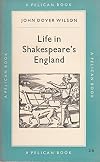
Author of Life in Shakespeare's England
About the Author
Image credit: John Dover Wilson
Works by John Dover Wilson
The manuscript of Shakespeare's Hamlet and the problems of its transmission; an essay in critical bibliography, 2 volumes (2009) 3 copies
The Cambridge Anthologies. Life in Shakespeare's England: A Book of Elizabethan Prose (2016) 3 copies
Martin Marprelate and Shakespeare's Fluellen; a new theory of the authorship of the Marprelate tracts (2008) 2 copies
Poetry and the child 1 copy
The Elizabethan Shakespeare 1 copy
Associated Works
The Wounds of Civil War (Regents Renaissance Drama) (1969) — Editor, some editions — 14 copies, 1 review
Shakespeare's Hand in the Play of Sir Thomas More: Papers (Bol1 Pr English Literature) (2013) — Contributor — 5 copies
The resurrection of our Lord — Editor, some editions — 2 copies
Tagged
Common Knowledge
- Birthdate
- 1881-07-13
- Date of death
- 1969-01-15
- Gender
- male
- Education
- University of Cambridge
- Occupations
- professor (English Literature)
- Organizations
- King's College London
University of Edinburgh - Nationality
- UK
- Birthplace
- London, England, UK
- Place of death
- Balerno, Midlothian, Scotland, UK
- Associated Place (for map)
- UK
Members
Reviews

[John Lyly, John Dover Wilson]
People who write about John Lyly (Elizabethan playwright and novelist 1553-1606) always seem to have a point to prove. Lyly was the most popular author/playwright of his time: 1590’s and was respected by his peers (Shakespeare et al) but his elaborate writing style labelled Euphuism was open to criticism some 50 years later. The criticism continued in the 18th and 19th centuries to such a point that when he wasn’t neglected he was ridiculed. John Dover show more Wilson’s extended essay from 1905 aims to set matters aright: claiming in his introduction that:
In the first place John Lyly, inasmuch as he was one of the earliest writers who considered prose as an artistic end in itself, and not simply as a medium of expression, may be justly described as a founder, if not the founder, of English prose style.
In the second place he was the author of the first novel of manners in the language.
And in the third place, and from the point of view of Elizabethan literature most important of all, he was one of our very earliest dramatists, and without doubt merits the title of Father of English Comedy.
Wilson then continues with a thoroughgoing analysis of Lyly’s style, which he describes intelligently and succinctly and then goes on to examine how it developed. He makes a good case for Lyly being the high priest of Euphuism rather than the inventor. Wilson’s contention is that there were other writers using a similarly ornate style that was popular with readers (many of whom would have been closely associated with the court of Queen Elizabeth I) and it was Lyly who took it to its best conclusion. I think this makes a lot of sense and would account for the popularity that Lyly enjoyed in the 1590’s.
Wilson claims that Lyly was the first author of prose who aimed to fascinate and entice the reader “not merely by what is said, but also by the manner of saying it”. By the time he published his second book [Euphues and his England] Lyly had identified a new literary public who were prepared to buy his books, and these were the ladies at court; he dedicates his second book to them and so Wilson says discovered the future patrons and purchasers of novels.
Wilson goes on to criticise Lyly’s plays; there are six that have been attributed to him and he finds them witty and amusing even to the modern reader (1905) and says that they must have appeared to the court of Queen Elizabeth I as a marvel of wit and dramatic power compared with what had gone before. There is no doubt that Wilson is beating the drum for Lyly, however I find his criticism intelligent and thoughtful.
I have recently read Andy Keeson’s [John Lyly and early modern authorship] published in 2015 which also makes a case for Lyly’s place in the literary canon. Keeson covers the same ground as Wilson did 110 years ago with the additional theme of authorship; in as much as Lyly was the first author of a book length novel and Keeson examines how and why this came about. Where Keeson and Wilson cover the same ground I find Wilson more convincing in his ability to explain just what the Elizabethans found so special in the work of Lyly. Keeson refers to Wilson’s previous study and can’t resist taking a swipe at him claiming that Wilson’s work was an undergraduate essay and he says that;
”Perhaps most obviously, Dover Wilson appears to be a little in love with Lyly”
It is true that Wilson’s essay started out as an undergraduate essay, but he revised and expanded it for publication. I find Keeson’s comment that Wilson “appears to be a little in love with Lyly” as just sour grapes for a writer who had not only done much of the spade work, but had also written a better description of Lyly’s oeuvre. So Ya boo Sucks to you Andy Keeson Dover Wilson’s is the better book of criticism (and its free on the net) and so 4 stars. show less
People who write about John Lyly (Elizabethan playwright and novelist 1553-1606) always seem to have a point to prove. Lyly was the most popular author/playwright of his time: 1590’s and was respected by his peers (Shakespeare et al) but his elaborate writing style labelled Euphuism was open to criticism some 50 years later. The criticism continued in the 18th and 19th centuries to such a point that when he wasn’t neglected he was ridiculed. John Dover show more Wilson’s extended essay from 1905 aims to set matters aright: claiming in his introduction that:
In the first place John Lyly, inasmuch as he was one of the earliest writers who considered prose as an artistic end in itself, and not simply as a medium of expression, may be justly described as a founder, if not the founder, of English prose style.
In the second place he was the author of the first novel of manners in the language.
And in the third place, and from the point of view of Elizabethan literature most important of all, he was one of our very earliest dramatists, and without doubt merits the title of Father of English Comedy.
Wilson then continues with a thoroughgoing analysis of Lyly’s style, which he describes intelligently and succinctly and then goes on to examine how it developed. He makes a good case for Lyly being the high priest of Euphuism rather than the inventor. Wilson’s contention is that there were other writers using a similarly ornate style that was popular with readers (many of whom would have been closely associated with the court of Queen Elizabeth I) and it was Lyly who took it to its best conclusion. I think this makes a lot of sense and would account for the popularity that Lyly enjoyed in the 1590’s.
Wilson claims that Lyly was the first author of prose who aimed to fascinate and entice the reader “not merely by what is said, but also by the manner of saying it”. By the time he published his second book [Euphues and his England] Lyly had identified a new literary public who were prepared to buy his books, and these were the ladies at court; he dedicates his second book to them and so Wilson says discovered the future patrons and purchasers of novels.
Wilson goes on to criticise Lyly’s plays; there are six that have been attributed to him and he finds them witty and amusing even to the modern reader (1905) and says that they must have appeared to the court of Queen Elizabeth I as a marvel of wit and dramatic power compared with what had gone before. There is no doubt that Wilson is beating the drum for Lyly, however I find his criticism intelligent and thoughtful.
I have recently read Andy Keeson’s [John Lyly and early modern authorship] published in 2015 which also makes a case for Lyly’s place in the literary canon. Keeson covers the same ground as Wilson did 110 years ago with the additional theme of authorship; in as much as Lyly was the first author of a book length novel and Keeson examines how and why this came about. Where Keeson and Wilson cover the same ground I find Wilson more convincing in his ability to explain just what the Elizabethans found so special in the work of Lyly. Keeson refers to Wilson’s previous study and can’t resist taking a swipe at him claiming that Wilson’s work was an undergraduate essay and he says that;
”Perhaps most obviously, Dover Wilson appears to be a little in love with Lyly”
It is true that Wilson’s essay started out as an undergraduate essay, but he revised and expanded it for publication. I find Keeson’s comment that Wilson “appears to be a little in love with Lyly” as just sour grapes for a writer who had not only done much of the spade work, but had also written a better description of Lyly’s oeuvre. So Ya boo Sucks to you Andy Keeson Dover Wilson’s is the better book of criticism (and its free on the net) and so 4 stars. show less

A thoroughly engaging exploration of Shakespeare's Hamlet that takes one scene by scene through the play.
Originally published in 1897-98. This volume from the Cornell University Library's print collections was scanned on an APT BookScan and converted to JPG 2000 format by Kirtas Technologies. All titles scanned cover to cover and pages may include marks, notations and other marginalia present in the original volume.
Lists
You May Also Like


Associated Authors
Statistics
- Works
- 21
- Also by
- 21
- Members
- 616
- Popularity
- #40,814
- Rating
- 4.1
- Reviews
- 5
- ISBNs
- 40
- Languages
- 1
- Favorited
- 1