
Georg Henrik von Wright (1916–2003)
Author of Vetenskapen och förnuftet
About the Author
Disambiguation Notice:
von Wright used to tell British friends that the anglophone pronunciation was correct, since the name derived from a Scotsman (i.e., rhyming with "bright" not “tricked”). The Institute for the Languages of Finland, however, promotes the rendering of the Von Wright surname as "fånvrikt"
Series
Works by Georg Henrik von Wright
Logiikka, filosofia ja kieli : ajattelijoita ja ajatussuuntia nykyajan filosofiassa (1957) 53 copies, 1 review
Philosophical Logic: Philosophical Papers (Philosophical Papers of Georg Henrik Von Wright) (Volume 2) (1983) 15 copies
Truth, Knowledge and Modality (Philosophical Papers of Georg Henrik Von Wright, Vol 3) (Vol.3) (1984) 6 copies
An essay in deontic logic and the general theory of action : with a bibliography of deontic and imperative logic (1968) 6 copies
Den logiska empirismen 2 copies
Den okände von Wright. Tidskritik och andra texter av Georg Henrik von Wright 19261997 (2023) — Author — 2 copies
Spiegazione e comprensione 1 copy
Explanation and Understanding (Contemporary Philosophy Series,) by G. H. Von Wright (1971-06-03) 1 copy
Practical Reason: Philosophical Papers (Philosophical Papers of Georg Henrik Von Wright) (Volume 1) 1 copy
Le Mythe du progrès 1 copy
Framfaragoðsögnin 1 copy
What is Humanism? 1 copy
"Skriv så ofta du kan" : brevväxlingen mellan Georg Henrik von Wright och Eino Kaila 1937-1958 1 copy
Handla! : om förändring, välfärd, arbete, lärande, konsumtion, arkitektur, design, kultur, framtid (1997) 1 copy
LOGIK, FILOSOFI OCH SPRÅK 1 copy
Associated Works
Last Writings on the Philosophy of Psychology: The Inner and the Outer, 1949 - 1951, Volume 2 (1993) — Editor — 42 copies
Ludwig Wittgenstein, Cambridge Letters: Correspondence With Russell, Keynes, Moore, Ramsey and Sraffa (1995) — Editor — 12 copies
The Philosophy of Georg Henrik von Wright (Library of Living Philosophers) (1989) — Contributor — 10 copies
Tagged
Common Knowledge
- Canonical name
- Wright, Georg Henrik von
- Legal name
- Wright, Georg Henrik von
- Birthdate
- 1916-06-14
- Date of death
- 2003-06-16
- Gender
- male
- Education
- University of Helsinki (Ph.D.|1941)
University of Cambridge - Occupations
- philosopher
- Organizations
- University of Helsinki (Professor of Philosophy)
University of Cambridge (Professor of Philosophy) - Relationships
- Kaila, Eino (teacher)
Wittgenstein, Ludwig (teacher)
Hintikka, Jaakko (student) - Nationality
- Finland
- Birthplace
- Helsinki, Finland
- Places of residence
- Helsinki, Finland
Cambridge, Cambridgeshire, England, UK - Place of death
- Helsinki, Finland
- Disambiguation notice
- von Wright used to tell British friends that the anglophone pronunciation was correct, since the name derived from a Scotsman (i.e., rhyming with "bright" not “tricked”). The Institute for the Languages of Finland, however, promotes the rendering of the Von Wright surname as "fånvrikt"
- Associated Place (for map)
- Helsinki, Finland
Members
Reviews

Ludwig Wittgenstein was G. H. von Wright’s professor, mentor, and friend. After Wittgenstein died in 1951, Wright became literary executor and spent thirty years collecting, compiling, editing, and publishing the works. Wittgenstein wrote a lot, but published very little during his lifetime, so the task of the literary executor was long and painstaking. Upon publishing the complete works in various editions from 1951 to 1981, Wright wrote the present book as a tribute to his friend and show more mentor.
The present book, Wittgenstein, focuses on geistige Erscheinung, the overall personality and spiritual makeup of the man. Many people know Wittgenstein as the most influential and brilliant philosopher of logic, language, mathematics, and epistemology of the twentieth century. He invented the philosophical notions of language-games, picture theory and family resemblance. But he had an interesting variety of paths in life.
Wittgenstein, a native of Austria, was an engineer and held a patent for jet propeller design and created a sewing machine design and built it himself. He was also an architect. He played clarinet and considered becoming a conductor. He spoke fluent German, English, and Norwegian. He was an elementary school teacher in remote Austrian villages for several years, and a gardener at a monastery near Vienna. He also studied the psychology of music, rhythm, and aesthetics in the Cambridge Psychological Laboratory. He fought in WWI, was decorated and spent a year in an Italian prison camp. Between battles, and while in the prison camp, he wrote his famous first breakthrough work in the philosophy of language, Tractatus Logico-Philosophicus (luckily he had the manuscript in his bag when he was captured).
Wright spends a lot of time on Wittgenstein’s views of logic and language. He also delves into the character. Wittgenstein inherited a vast fortune from his father, but felt that wealth corrupted intellectual activity and integrity. So he gave all his money away. To avoid corrupting the virtuous poor, he gave it to his already-wealthy sister.
Ludwig Wittgenstein believed a correct understanding of language-games might even solve most of the day’s social problems. He lived through two world wars, and feared civilization would become a heap of rubble and ashes, with spirits hovering over it. He rigorously studied the Gospels and his spiritual life was influenced by Tolstoy.
Wittgenstein was never at peace with society. He found it “alien and uncongenial.” Before the war, Wittgenstein retreated from society and lived in a hut in Norway for about a year. He said he could not find a home for his work, nor a home for himself.
About ten years after WWI, he became a professor at Cambridge University in England on the strength of the Tractatus. He explained to a potential publisher when shopping the manuscript, that the work “consists of two parts: 1) the one presented here, plus 2) all that I have not written…this second part is the important one.” This publisher and many others declined the honor of publishing the book, which took many years to finally get in print.
Wittgenstein partly inspired the founding principles and creation of the famous Vienna Circle of logical positivists (via Moritz Schlick) in the 1920s and 1930s, then typical for him, declined to be part of it and largely disagreed with them. In many other cases, he expressed dislike for the views of people who claimed to be “followers of Wittgenstein.”
One follower, or at least student, was the author of the present book, G. H. von Wright, who remained lifelong friends with Wittgenstein, and proved to be most well equipped to articulate his mentor’s thinking.
Later, G. H. von Wright himself was mentor to the next generation’s most famous philosopher in language and logic, Professor Jaakko Hintikka (both natives of Finland). Hintikka is the founder of formal epistemic logic and game semantics for logic.
In turn, as a side note, Jaakko Hintikka became the major professor of a younger philosophy-of-language student from 1981 to 1985, Robert Rose-Coutré (me).
Wright’s expansive and generous tribute to Wittgenstein highlights the intensity of Wittgenstein’s sincere belief in his work. The typical intellectual’s “label of ‘Cool Objectivity’ did not fit Wittgenstein. He put his whole soul into everything he did.”
It is obvious that Wright himself put his whole soul into the work as literary executor. Wright spent thirty years searching Europe and the United States for manuscripts, notes, fragments, all scattered across universities, publishers, former students, and other archives. He pieced together timelines, versions, revisions, margin notes, with endless collations. The present book is called a Tribute to Ludwig Wittgenstein, and it is an admirable one. But the real tribute was Wright’s thirty years’ labor ensuring the great mind’s output could be shared with everyone. show less
The present book, Wittgenstein, focuses on geistige Erscheinung, the overall personality and spiritual makeup of the man. Many people know Wittgenstein as the most influential and brilliant philosopher of logic, language, mathematics, and epistemology of the twentieth century. He invented the philosophical notions of language-games, picture theory and family resemblance. But he had an interesting variety of paths in life.
Wittgenstein, a native of Austria, was an engineer and held a patent for jet propeller design and created a sewing machine design and built it himself. He was also an architect. He played clarinet and considered becoming a conductor. He spoke fluent German, English, and Norwegian. He was an elementary school teacher in remote Austrian villages for several years, and a gardener at a monastery near Vienna. He also studied the psychology of music, rhythm, and aesthetics in the Cambridge Psychological Laboratory. He fought in WWI, was decorated and spent a year in an Italian prison camp. Between battles, and while in the prison camp, he wrote his famous first breakthrough work in the philosophy of language, Tractatus Logico-Philosophicus (luckily he had the manuscript in his bag when he was captured).
Wright spends a lot of time on Wittgenstein’s views of logic and language. He also delves into the character. Wittgenstein inherited a vast fortune from his father, but felt that wealth corrupted intellectual activity and integrity. So he gave all his money away. To avoid corrupting the virtuous poor, he gave it to his already-wealthy sister.
Ludwig Wittgenstein believed a correct understanding of language-games might even solve most of the day’s social problems. He lived through two world wars, and feared civilization would become a heap of rubble and ashes, with spirits hovering over it. He rigorously studied the Gospels and his spiritual life was influenced by Tolstoy.
Wittgenstein was never at peace with society. He found it “alien and uncongenial.” Before the war, Wittgenstein retreated from society and lived in a hut in Norway for about a year. He said he could not find a home for his work, nor a home for himself.
About ten years after WWI, he became a professor at Cambridge University in England on the strength of the Tractatus. He explained to a potential publisher when shopping the manuscript, that the work “consists of two parts: 1) the one presented here, plus 2) all that I have not written…this second part is the important one.” This publisher and many others declined the honor of publishing the book, which took many years to finally get in print.
Wittgenstein partly inspired the founding principles and creation of the famous Vienna Circle of logical positivists (via Moritz Schlick) in the 1920s and 1930s, then typical for him, declined to be part of it and largely disagreed with them. In many other cases, he expressed dislike for the views of people who claimed to be “followers of Wittgenstein.”
One follower, or at least student, was the author of the present book, G. H. von Wright, who remained lifelong friends with Wittgenstein, and proved to be most well equipped to articulate his mentor’s thinking.
Later, G. H. von Wright himself was mentor to the next generation’s most famous philosopher in language and logic, Professor Jaakko Hintikka (both natives of Finland). Hintikka is the founder of formal epistemic logic and game semantics for logic.
In turn, as a side note, Jaakko Hintikka became the major professor of a younger philosophy-of-language student from 1981 to 1985, Robert Rose-Coutré (me).
Wright’s expansive and generous tribute to Wittgenstein highlights the intensity of Wittgenstein’s sincere belief in his work. The typical intellectual’s “label of ‘Cool Objectivity’ did not fit Wittgenstein. He put his whole soul into everything he did.”
It is obvious that Wright himself put his whole soul into the work as literary executor. Wright spent thirty years searching Europe and the United States for manuscripts, notes, fragments, all scattered across universities, publishers, former students, and other archives. He pieced together timelines, versions, revisions, margin notes, with endless collations. The present book is called a Tribute to Ludwig Wittgenstein, and it is an admirable one. But the real tribute was Wright’s thirty years’ labor ensuring the great mind’s output could be shared with everyone. show less
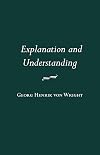
An excellent account of scientific explanation in natural science. Also contains thoughts on understanding in the human sciences, especially history, but I didn't find that part equally interesting. In any case, von Wright's writing is always exemplary in terms of clarity and definitely worth reading.

Probably one of the deservedly bet known Finnish scientific works.
You May Also Like


Associated Authors
Statistics
- Works
- 62
- Also by
- 16
- Members
- 858
- Popularity
- #29,813
- Rating
- 4.1
- Reviews
- 7
- ISBNs
- 127
- Languages
- 11
- Favorited
- 1