

Spalding Rockwell Gray (1941–2004)
Author of Swimming to Cambodia
About the Author
Actor and performer Spalding Gray is the author of It's a Slippery Slope (Noonday, 1997), Swimming to Cambodia, and Monster in a Box, among other works. He has appeared on PBS and HBO, and in numerous films. He lives with his family in Sag Harbor, New York. (Bowker Author Biography)
Works by Spalding Rockwell Gray
PAJ #16 1 copy
Associated Works
Drinking, Smoking and Screwing: Great Writers on Good Times (1994) — Contributor — 354 copies, 5 reviews
The Undiscovered Chekhov: Forty-Three New Stories (1998) — Foreword, some editions — 89 copies, 1 review
Take My Advice: Letters to the Next Generation from People Who Know a Thing or Two (2002) — Contributor — 50 copies
A Lifetime of Wisdom: Essential Writings By and About the Dalai Lama (2002) — Contributor — 27 copies
Performing Arts Journal: 16 (Volume VI / Number 1) — Contributor — 1 copy
Performing Arts Journal: 13 (Volume V / Number 1) — Contributor — 1 copy
Tagged
Common Knowledge
- Canonical name
- Gray, Spalding Rockwell
- Other names
- Victor Alexander
- Birthdate
- 1941-06-05
- Date of death
- 2004-01-10
- Gender
- male
- Education
- Emerson College (BA)
- Occupations
- writer
actor - Organizations
- Wooster Group (1969)
- Awards and honors
- Guggenheim fellowship (1985)
artist in residence at Mark Taper Forum LA (1986-87) - Relationships
- Renee Shafransky (former spouse)
Kathie Russo (spouse)
Channing Gray (brother)
Rockwell Gray (brother) - Cause of death
- suicide
- Nationality
- USA (birth)
- Birthplace
- Providence, Rhode Island, USA
- Place of death
- New York, New York, USA
- Burial location
- Oakland Cemetery, Sag Harbor, New York, USA
- Associated Place (for map)
- New York, USA
Members
Reviews
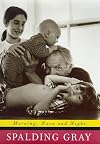
I have read most of Spalding Gray's previous books, and I liked all of them. Some of them I much more than liked, which is why I kept coming back.
This one I did not finish, but not because I am yet another disillusioned or oddly angry fan who feels artistically betrayed by Gray's later suicide. On that point, I think it might be instructive for other readers to know that the depression that brought him so low that he took his life appears to have come on, at least in part, because of brain show more injury he suffered after a car accident in Ireland. For more on that, see the posthumous book LIFE, INTERRUPTED, which includes an unfinished (and rather interesting) monologue about the incident. I have also heard Gray's widow on This American Life explaining what life was like for him after the accident, and I think it's an element of his life story worth considering. Dismissing this book because the author's life ended in suicide seems strangely judgmental. A writer's works should not be discounted just because his last decision was misguided and irrevocable.
All that said, my problem with the book is somewhat summarized in Gray's own fears about the direction of his monologues: happiness and contentment can make for dull reading. The challenges of parenthood don't create quite the same kind of tension as his earlier problems, and it seems clear that he is also telling stories with greater self-consciousness. I don't blame him for taking into consideration the feelings of his wife and children when writing about them, but as a reader, I also don't feel compelled to read the results. I left this one unfinished, which was disappointing after following his work for so many years. It was more disappointing still since there will be no more monologues to look forward to, but I did appreciate the central story in LIFE, INTERRUPTED, and I think that one's definitely worth a read. show less
This one I did not finish, but not because I am yet another disillusioned or oddly angry fan who feels artistically betrayed by Gray's later suicide. On that point, I think it might be instructive for other readers to know that the depression that brought him so low that he took his life appears to have come on, at least in part, because of brain show more injury he suffered after a car accident in Ireland. For more on that, see the posthumous book LIFE, INTERRUPTED, which includes an unfinished (and rather interesting) monologue about the incident. I have also heard Gray's widow on This American Life explaining what life was like for him after the accident, and I think it's an element of his life story worth considering. Dismissing this book because the author's life ended in suicide seems strangely judgmental. A writer's works should not be discounted just because his last decision was misguided and irrevocable.
All that said, my problem with the book is somewhat summarized in Gray's own fears about the direction of his monologues: happiness and contentment can make for dull reading. The challenges of parenthood don't create quite the same kind of tension as his earlier problems, and it seems clear that he is also telling stories with greater self-consciousness. I don't blame him for taking into consideration the feelings of his wife and children when writing about them, but as a reader, I also don't feel compelled to read the results. I left this one unfinished, which was disappointing after following his work for so many years. It was more disappointing still since there will be no more monologues to look forward to, but I did appreciate the central story in LIFE, INTERRUPTED, and I think that one's definitely worth a read. show less
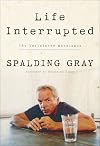
I hate how Spalding's life ended. Already a man known for fits of depression, a car accident in Ireland left him in grave pain with blinding headaches that wouldn't subside. So, one day, he stepped off the Staten Island Ferry and into the East River, ending a life of neurotic brilliance.
This book is a collection of a handful of scattered unpublished and unperformed works - mainly the monologue Spalding was working on at the time of his death, about the accident and his attempts to bounce show more back from the wreck. It's haunting, as is the subsequent "The Anniversary", a piece about 9/11.
Spalding had a gift - the trouble was, and he readily admitted it, that he had to keep having things 'happen to him' to give him his material for his monologues. The accident, sadly, was more than he could bear. show less
This book is a collection of a handful of scattered unpublished and unperformed works - mainly the monologue Spalding was working on at the time of his death, about the accident and his attempts to bounce show more back from the wreck. It's haunting, as is the subsequent "The Anniversary", a piece about 9/11.
Spalding had a gift - the trouble was, and he readily admitted it, that he had to keep having things 'happen to him' to give him his material for his monologues. The accident, sadly, was more than he could bear. show less
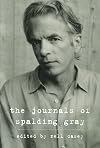
Interesting, if harrowing companion to his famous monologues. By the time I got to the sad ending I didn’t wonder why he had taken his life but instead how he held on as long as he did.
Of course, not a very pleasant read but an interesting experience of going deep under the psychic skin of a very brilliant narcissist. I think what surprised me was the extent to which Gray was compulsive and fairly thoughtless about his constant need to find sex and have affairs. I wonder how much his fame played a role in his behavior.
Gray's becoming a father helped him for once to care about other people. I found this part of his life very touching.
Gray's becoming a father helped him for once to care about other people. I found this part of his life very touching.
Lists
Read This Next (1)
Awards

You May Also Like


Associated Authors
Statistics
- Works
- 22
- Also by
- 15
- Members
- 2,128
- Popularity
- #12,098
- Rating
- 3.8
- Reviews
- 28
- ISBNs
- 63
- Languages
- 4
- Favorited
- 12


