
Jacek Dukaj
Author of Ice
About the Author
Image credit: Credit: Szymona Sokoła, 2003, Kraków, Poland
Series
Works by Jacek Dukaj
Led 2 copies
D'autres chants (French Edition) 2 copies
Lód. 2 1 copy
Ojciec - opowiadania 1 copy
The apocrypha of Lem by Dan Tukagawa, J.B. Krupsky and Aaron Orvits [short fiction] 1 copy, 1 review
Lód. 3 1 copy
Associated Works
Zachcianki — Contributor — 1 copy
Tagged
Common Knowledge
- Canonical name
- Dukaj, Jacek
- Birthdate
- 1974-07-30
- Gender
- male
- Education
- Jagiellonian University
- Nationality
- Poland
- Birthplace
- Tarnów, Poland
- Associated Place (for map)
- Tarnów, Poland
Members
Reviews

For unknown reasons, all protein-based life on Earth is being destroyed by a death ray shot from deep space. Bartek, a hardware engineer in Poland, races to download his memory into an online storage service; by doing so, he becomes one of a few thousand humans to survive the extinction level event. 'The Old Axolotl' documents the years that follow, as humanity seeks to rebuild civilisation and learn what it means to be human in a world without bodies.
Dukaj's story is full of ideas, the show more futurological cup literally running over. The only problem here is the writing. Dukaj knows the value of the maxim 'show, don't tell', but doesn't quite follow the ruling, instead opting for a weird halfway-house of showing, leaving the reader confused, and then telling him in a massive, paragraphs-long exposition dump. These are actually some of the best-written passages in the book, and are genuinely thought-provoking, but at the same time they serve to undermine whatever slim investment the reader has in the characters. These never develop - this being practically a requirement, since shorn of their imperfect fleshy brains, the survivors cannot truly evolve or learn anything new - and as a result your attachment is slight, your concern ticking over at ten percent. show less
Dukaj's story is full of ideas, the show more futurological cup literally running over. The only problem here is the writing. Dukaj knows the value of the maxim 'show, don't tell', but doesn't quite follow the ruling, instead opting for a weird halfway-house of showing, leaving the reader confused, and then telling him in a massive, paragraphs-long exposition dump. These are actually some of the best-written passages in the book, and are genuinely thought-provoking, but at the same time they serve to undermine whatever slim investment the reader has in the characters. These never develop - this being practically a requirement, since shorn of their imperfect fleshy brains, the survivors cannot truly evolve or learn anything new - and as a result your attachment is slight, your concern ticking over at ten percent. show less
Ice by Jacek Dukaj
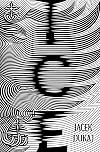
I have very mixed feelings about this book. On the one hand, I really like his prose and the philosophical ideas that are presented. Unfortunately, these are the book's achille's heel, for example, the philosophy is pretty long-winded and becomes a chore to read at certain points. The prose itself is also equally to blame since paragraphs go on for multiple pages. I think if the book were significantly smaller and they cut down a lot on the multi-page paragraphs, along with getting a bit show more more to the point with the philosophy, I would have been able to finish it. show less

An interesting book. A bit philosophical, a bit high literature but a great SF from the beginning to the end. As I said, an interesting book.

A thoroughly bizarre yet apposite tribute to Lem posing as a review of the 'posthumous works' of future Lems, created by various artificial means.
Lists
Awards


You May Also Like


Associated Authors
Statistics
- Works
- 35
- Also by
- 6
- Members
- 755
- Popularity
- #33,681
- Rating
- 4.1
- Reviews
- 9
- ISBNs
- 72
- Languages
- 6
- Favorited
- 11