
Jim DeFelice
Author of Deep Black
About the Author
Jim DeFelice has written over a dozen works of fiction and nonfiction for young people. His works include: Havana Strike, published in 1997, and Brother's Keeper published in 2000. He is the co-author of Dreamland with Dale Brown. He also co-authored best sellers American Sniper and American Gun show more with Chris Kyle. In 2014, his nonfiction ebook made the New York Times bestseller list; it was entitled Code Name: Johnny Walker. DeFelice co-authored 2015 New York Times and Publisher's Weelky bestseller American Wife with Chris Kyle's widow, Taya Kyle. (Bowker Author Biography) show less
Series
Works by Jim DeFelice
Rogue Warrior 2 copies
Associated Works
Every Man a Hero: A Memoir of D-Day, the First Wave at Omaha Beach, and a World at War (2019) 148 copies
Code Name: Johnny Walker: The Extraordinary Story of the Iraqi Who Risked Everything to Fight with the U.S. Navy SEALs (2014) 113 copies, 6 reviews
A Date Which Will Live in Infamy: An Anthology of Pearl Harbor Stories That Might Have Been (2001) — Contributor — 16 copies
Tagged
Common Knowledge
- Other names
- Ferro, James
- Birthdate
- 1956-08-23
- Gender
- male
- Occupations
- journalist
Political columnist
editor - Nationality
- USA (birth)
- Birthplace
- New York, New York, USA
- Associated Place (for map)
- New York, USA
Members
Reviews
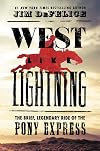
I wasn't sure what to expect from this book, and delayed starting it, fearing that it might be a bit dry. I was pleasantly surprised to find that it was very well-written and was very readable and entertaining. I knew about the Pony Express, of course, but I certainly did not know the details, nor even that it lasted for such a short time. The author makes the point that it has reached an almost mythological level in American history, but it was quite short-lived and very quickly supplanted show more by the telegraph and railroads.
The story begins with a rider anxiously awaiting the news of the election results of 1860. The author immediately pulls the reader into the tense excitement of this time, as well as the circumstances of the riders, who were admired for their courage and fortitude. The author introduces us to some of the riders, but with the caution that much of the information concerning the riders, and the Pony Express itself, is uncertain. The route from Missouri to California is traced, and the author provides a great deal of information about the stations along the way, the background of the enterprise, and the general historical context of both the nation as a whole, and of the West in particular. He divides his book into sections of stories, such as about the riders' encounters with Mormons out west, or with the Paiutes and other Indians, as well as stories of various famous figures of the West, including Wild Bill Hickok, Buffalo Bill, and Jack Slade. The author includes the description of Slade written by Mark Twain with all of his customary wit and style.
I truly enjoyed this book and I'm happy to have learned more about this unique time in American history. I would recommend to anyone who has an interest in the West or American history of the 1860s. show less
The story begins with a rider anxiously awaiting the news of the election results of 1860. The author immediately pulls the reader into the tense excitement of this time, as well as the circumstances of the riders, who were admired for their courage and fortitude. The author introduces us to some of the riders, but with the caution that much of the information concerning the riders, and the Pony Express itself, is uncertain. The route from Missouri to California is traced, and the author provides a great deal of information about the stations along the way, the background of the enterprise, and the general historical context of both the nation as a whole, and of the West in particular. He divides his book into sections of stories, such as about the riders' encounters with Mormons out west, or with the Paiutes and other Indians, as well as stories of various famous figures of the West, including Wild Bill Hickok, Buffalo Bill, and Jack Slade. The author includes the description of Slade written by Mark Twain with all of his customary wit and style.
I truly enjoyed this book and I'm happy to have learned more about this unique time in American history. I would recommend to anyone who has an interest in the West or American history of the 1860s. show less
 This review was written for LibraryThing Early Reviewers.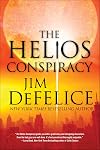
The Helios Conspiracy (2012) by Jim DeDelice. When the woman he had loved in college and, truthfully, all the time since, is murdered, FBI special agent Andy Fisher becomes determined to solve her murder. Part of this is the crime that was committed just moments from where he was at the time, partially due to his lingering attachment even years later, but mostly due to the voice mail that he had ignored in which she had asked to see him about something important.
Naturally his guilt is show more resting firmly with the message that was left with him just minutes prior to her murder. It is Andy’s knowledge that had he responded immediately she might not be dead that now drives the novel. Katherine Feder had worked as VP of finance for the Icarus Sun Works, a company on the brink of injecting a satellite into orbit. That satellite would convert the sun’s energy into microwave energy that would then be send down to multiple antennae here on Earth. Pollution free fuel for anyone to use and massive income for the company that owns the technology would be the outcome.
All Andy knows is that there is something wrong within the Icarus project that starts with the oddness of the Chief Operating Officer and radiates out to include any and every one associated with the project. That includes many Russian and Chinese agents as well as competing tech companies covetous of the designs held by Icarus.
Andy Fisher isn’t the usually depiction of an FBI man. Crusty but brilliant in many ways, hard to work with and leery of those he works for, he is a bit of a lone wolf who is only interested in finding the guilty. But with Katherine’s murder, he is interesting in not only finding the guilty, but perhaps extracting his own justice.
Racing to many locations across America, using his wise cracking manners and disregardful of what those in rank above him think or feel, Andy, cigarette in hand, will take whatever path is needed to bring closure to the pains he is feeling.
This is a well-paced thriller, the technology is well researched, the characters are more than stereotypes but fleshed out people and the action is tough, surprising and in many ways, novel. This is not the usual Jim DeFelice type of novel and some of his faithful readers may be disappointed, but I went into this with no preconceptions and found a book that I thoroughly enjoyed. show less
Naturally his guilt is show more resting firmly with the message that was left with him just minutes prior to her murder. It is Andy’s knowledge that had he responded immediately she might not be dead that now drives the novel. Katherine Feder had worked as VP of finance for the Icarus Sun Works, a company on the brink of injecting a satellite into orbit. That satellite would convert the sun’s energy into microwave energy that would then be send down to multiple antennae here on Earth. Pollution free fuel for anyone to use and massive income for the company that owns the technology would be the outcome.
All Andy knows is that there is something wrong within the Icarus project that starts with the oddness of the Chief Operating Officer and radiates out to include any and every one associated with the project. That includes many Russian and Chinese agents as well as competing tech companies covetous of the designs held by Icarus.
Andy Fisher isn’t the usually depiction of an FBI man. Crusty but brilliant in many ways, hard to work with and leery of those he works for, he is a bit of a lone wolf who is only interested in finding the guilty. But with Katherine’s murder, he is interesting in not only finding the guilty, but perhaps extracting his own justice.
Racing to many locations across America, using his wise cracking manners and disregardful of what those in rank above him think or feel, Andy, cigarette in hand, will take whatever path is needed to bring closure to the pains he is feeling.
This is a well-paced thriller, the technology is well researched, the characters are more than stereotypes but fleshed out people and the action is tough, surprising and in many ways, novel. This is not the usual Jim DeFelice type of novel and some of his faithful readers may be disappointed, but I went into this with no preconceptions and found a book that I thoroughly enjoyed. show less
I received this book through Goodreads giveaways, and I suspect the publisher will regret that choice lol.
I majored in American history, and studied western history in grad school, but never completed my master's thesis (I received a graduate certificate and unexpectedly found a full-time job right away).
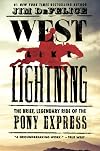
The blurb on the cover is "A groundbreaking work."--True West. What is True West? It's a magazine for fans of the "history of the American frontier". It's a magazine that romanticizes show more western history and westerners of today (as long as they fit the rancher, western artist, western author, musician, gatekeeper of Western Lore theme). Anyway, I couldn't read the blurb when I entered the giveaway. And I fail to see how this is groundbreaking. DeFelice may have combined the works of others into one book, but honestly this feels like a high school history paper. It doesn't even have a map! If any book needed a map, it's this one.
The book starts off in a promising fashion--Lincoln has just been elected, and we are going to follow the riders as they take that news West to Utah and California. Only then the book spins out of control. The chapters are all over the place. The book actually follows no timeline--the creation of the Pony is in the middle, Buffalo Bill is nearer the beginning when his chapter should be at the end (where he currently has a page or 2), discussing in full how his show was so important to the romanticization of the Pony Express. Yes, there are chapters following the riders, with a lot of mention of "we don't know where this station was, or if this was a station." There is also a chapter on Buffalo Bill (who was not involved in the Pony Express until he put it in his show many years later). There is a chapter about the LDS church and how/why they ended up in Utah. There is a lot of Civil War background. There is the Donner Party. There is the Comstock Lode.
DeFelice's original research seems to have been his trip driving the route and visiting museums. He relies very heavily on Richard Burton, a British traveler who recorded his experiences in depth. He is liberally quoted. DeFelice "liberally paraphrases" two chapters of an 1879 book on Buffalo Bill. In the acknowledgments, he says "previous stories and studies of the Pony were a foundation I've tried to build on." He has taken some primary sources, a lot of secondary sources that also use those primary sources, some newspapers and censuses, and a road trip to put this book together. He does not seem to have done any new work to attempt to locate stations (or to determine if some stations really were stations at all), he mentions looking at Congressional records to try to determine the exact nature of the house of cards (house of bonds, really) to keep the Pony afloat. He writes rumor as fact and then backs off in the notes (how many people read the notes? see page 129 and note 8). He also has a number of statements like "...and probably questions about whether they would be paid or not" (250)--regarding the service continuing even as the offices were in financial turmoil. Probably? Is there any evidence one way or the other? Had they ever not paid? Did the riders even know of the turmoil? He makes statements like this and provides no citations, no mention of research attempted, nothing.
I also struggle to take seriously a history book that characterizes real people in the past as "a rough SOB", "a world class hard-ass", "badass", "government being government", and "verifiably awesome".
And the errors. So many errors! p 12 implant instead of transplant; p 19 William Russell is a native of Missouri p 20 he was born in Vermont; p 31 describes a log cabin quilt as "patchwork...in various shapes"--no, just squares and rectangles, this is a very common pattern to this day; 121 midfall instead of mid-fall; and honestly I stopped keeping track. My copy is not an ARC.
Overall, just painfully disappointing. This is not a self-published book, it's from Wm Morrow! show less
I majored in American history, and studied western history in grad school, but never completed my master's thesis (I received a graduate certificate and unexpectedly found a full-time job right away).
The blurb on the cover is "A groundbreaking work."--True West. What is True West? It's a magazine for fans of the "history of the American frontier". It's a magazine that romanticizes show more western history and westerners of today (as long as they fit the rancher, western artist, western author, musician, gatekeeper of Western Lore theme). Anyway, I couldn't read the blurb when I entered the giveaway. And I fail to see how this is groundbreaking. DeFelice may have combined the works of others into one book, but honestly this feels like a high school history paper. It doesn't even have a map! If any book needed a map, it's this one.
The book starts off in a promising fashion--Lincoln has just been elected, and we are going to follow the riders as they take that news West to Utah and California. Only then the book spins out of control. The chapters are all over the place. The book actually follows no timeline--the creation of the Pony is in the middle, Buffalo Bill is nearer the beginning when his chapter should be at the end (where he currently has a page or 2), discussing in full how his show was so important to the romanticization of the Pony Express. Yes, there are chapters following the riders, with a lot of mention of "we don't know where this station was, or if this was a station." There is also a chapter on Buffalo Bill (who was not involved in the Pony Express until he put it in his show many years later). There is a chapter about the LDS church and how/why they ended up in Utah. There is a lot of Civil War background. There is the Donner Party. There is the Comstock Lode.
DeFelice's original research seems to have been his trip driving the route and visiting museums. He relies very heavily on Richard Burton, a British traveler who recorded his experiences in depth. He is liberally quoted. DeFelice "liberally paraphrases" two chapters of an 1879 book on Buffalo Bill. In the acknowledgments, he says "previous stories and studies of the Pony were a foundation I've tried to build on." He has taken some primary sources, a lot of secondary sources that also use those primary sources, some newspapers and censuses, and a road trip to put this book together. He does not seem to have done any new work to attempt to locate stations (or to determine if some stations really were stations at all), he mentions looking at Congressional records to try to determine the exact nature of the house of cards (house of bonds, really) to keep the Pony afloat. He writes rumor as fact and then backs off in the notes (how many people read the notes? see page 129 and note 8). He also has a number of statements like "...and probably questions about whether they would be paid or not" (250)--regarding the service continuing even as the offices were in financial turmoil. Probably? Is there any evidence one way or the other? Had they ever not paid? Did the riders even know of the turmoil? He makes statements like this and provides no citations, no mention of research attempted, nothing.
I also struggle to take seriously a history book that characterizes real people in the past as "a rough SOB", "a world class hard-ass", "badass", "government being government", and "verifiably awesome".
And the errors. So many errors! p 12 implant instead of transplant; p 19 William Russell is a native of Missouri p 20 he was born in Vermont; p 31 describes a log cabin quilt as "patchwork...in various shapes"--no, just squares and rectangles, this is a very common pattern to this day; 121 midfall instead of mid-fall; and honestly I stopped keeping track. My copy is not an ARC.
Overall, just painfully disappointing. This is not a self-published book, it's from Wm Morrow! show less
For one who knew nothing about the Pony Express save that it once existed, Jim DeFelice's chronicle, "Fast Like Lightning" will be a joyous read. DeFelice traces "the Pony"'s Missouri to California route by using the 1860 election as his base. A whole lot of miles lay between St. Joe and Sacramento. Not unlike today, in a pivotal election, with the country on the precipice of civil war, folks in 1860 wanted to know what was going on NOW, if not yesterday. Conventional mail delivery from the show more Mississippi to the Pacific could take literally months; the technological wonder of the time, the telegraph, didn't connect the coasts (yet). So, with Mr DeFelice's superb writing, we are off with the Pony riders, news of Lincoln's election in hand (or mail satchel, to be precise), from Missouri to California. Along the route, we learn about who came up with the idea of a Pony Express (today's American Express and Wells Fargo are descendants), how it was financed, how the company's executives parlayed with the banks and played with the politicians. We visit the Pony's stations, learn how they were established, staffed, and managed. We get to know some of the young riders -- the "face of the franchise," after all -- who they were and how they worked. Even though much of the documentary history is lost, Mr DeFelice doesn't have to resort to hyperbole: facts are supported by sources and citations; if, on the other hand, a person, place, or event is conjecture or myth (or fact joined with embellishment), he tells you.
The American West was being mythologized almost simultaneously as it was being explored and exploited. And this mythology, like the music beat, goes on. The Pony Express quickly became a dashing and daring part of that national saga. Mr DeFelice has gifted readers with a delightful book that both takes us back in time and brings "the Pony" to the here and now. Highly recommended. Enjoy! show less
The American West was being mythologized almost simultaneously as it was being explored and exploited. And this mythology, like the music beat, goes on. The Pony Express quickly became a dashing and daring part of that national saga. Mr DeFelice has gifted readers with a delightful book that both takes us back in time and brings "the Pony" to the here and now. Highly recommended. Enjoy! show less
This review was written for LibraryThing Early Reviewers.Lists
Awards

You May Also Like


Associated Authors
Statistics
- Works
- 40
- Also by
- 10
- Members
- 1,856
- Popularity
- #13,864
- Rating
- 3.6
- Reviews
- 34
- ISBNs
- 141
- Languages
- 4
