
Sarah Beth Durst
Author of The Spellshop
About the Author
Image credit: Photo by Adam Durst
Series
Works by Sarah Beth Durst
Sweet Nothings 1 copy
Almost a Jedi 1 copy
Associated Works
Mind-Rain: Your Favorite Authors on Scott Westerfeld's Uglies Series (2009) — Contributor — 125 copies, 2 reviews
Through the Wardrobe: Your Favorite Authors on C. S. Lewis's Chronicles of Narnia (2008) — Contributor — 61 copies, 3 reviews
Tagged
Common Knowledge
- Other names
- Angelini, Sarah Beth (birth)
- Birthdate
- 1974-05-23
- Gender
- female
- Education
- Princeton University (English)
- Organizations
- Broad Universe
- Agent
- Andrea Somberg
- Nationality
- USA
- Birthplace
- Massachusetts, USA
- Places of residence
- Stony Brook, New York, USA
Northborough, Massachusetts, USA - Associated Place (for map)
- Massachusetts, USA
Members
Reviews
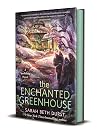
It was so hard not to immediately dive into this because I loved the Spell Shop — worth holding out for a hot minute so I could really savor it, and I did. Love that we get to have a follow up on Terlu’s story. Loved the greenhouse setting and the spectacular imagination that goes into this particular set of greenhouses. Loved the slow unfolding romance, the great ways the characters end up being there for each other, and the community that they end up creating. Everything I wanted as a show more follow up to the previous book. I hope there will be more.
Revisited this as an audio book -- yep, still delightful. There were a couple of times where Terlu's anxiety was hard to listen to, as it started to feel triggering, and a few moments when things got repetitive, but on the whole, as magical as ever.
Advanced Readers Copy provided by edelweiss show less
Revisited this as an audio book -- yep, still delightful. There were a couple of times where Terlu's anxiety was hard to listen to, as it started to feel triggering, and a few moments when things got repetitive, but on the whole, as magical as ever.
Advanced Readers Copy provided by edelweiss show less
I think, more than anything else in this book, I felt connected to Daleina. Here is a girl who, as a child, did something extraordinary (saved her family from a brutal attack by the spirits in her hometown) and who has been told ‘this makes you special’, but who understands she is just not special. She understands that yes she has this power, and through hardwork and effort she is able to learn to control it and bend it to her will, but she is not the one who is the most special of them show more all. And she’s okay with that, as long as she still has the power to help people.
Power in and of itself doesn’t draw Daleina in, its the ability to use that power to help her people that draws Daleina in. And its hard. Especially after her closest friend leaves the Academy, when people start dying and Daleina is chosen as an Heir by the most difficult guy ever. When she sees the one person who SHOULD be saving them all repeatedly step back and give in. As her friends and mentors die.
The easiest time that Daleina has is when Ven is training her. When they’re traipsing through the trees and he’s pushing her to focus, concentrate, do better. Its coming back and learning hard truths that really make her work. Recognizing that her best is still not the best.
Ven annoyed me at times – he’s quite blind to many of the Queen’s flaws and illogic. Even if we didn’t know what the Queen was up to on the sidelines, she is just so…so compromised. Vain. Ambitious. Glory-hungry. She wants to always be the Miracle Queen and will not let anyone stop her. Ven, who spoke up ONCE and pissed her off ONCE, wants to believe his banishment was part of a larger plan of hers. And it was. Just not the one he thought it was.
Merecot, who leaves early on, but manages to be a thorn in the side of the Queen anyhow, I wanted to know more about. I wanted to know who she was, what she was about. All the power and so little imagination and willingness to understand. She’s a bit of a sociopath (she recognized what she was wrong, but at the same time so what?).
And there’s a romance, of a kind. Daleina manages it as pragmatically as she can. She doesn’t fall into sudden overwhelming lust. She doesn’t let it go to her head. She enjoys herself, enjoys the romance and doesn’t let it get in the way of her larger plans in life. Its not a do or die situation for her.
I’ll warn for one particular kind of death…it made me extremely claustrophobic and while I applaud Durst for making it so REAL feeling, I also want to send her my therapy bill for the nightmares it induced.
As an opening to a new series this worked really well. It gave us such a wonderful idea of the world (the spirits want to kill youuuuu), a heroine who isn’t perfect and doesn’t want to be perfect and a rather staggering body count considering. show less
Power in and of itself doesn’t draw Daleina in, its the ability to use that power to help her people that draws Daleina in. And its hard. Especially after her closest friend leaves the Academy, when people start dying and Daleina is chosen as an Heir by the most difficult guy ever. When she sees the one person who SHOULD be saving them all repeatedly step back and give in. As her friends and mentors die.
The easiest time that Daleina has is when Ven is training her. When they’re traipsing through the trees and he’s pushing her to focus, concentrate, do better. Its coming back and learning hard truths that really make her work. Recognizing that her best is still not the best.
Ven annoyed me at times – he’s quite blind to many of the Queen’s flaws and illogic. Even if we didn’t know what the Queen was up to on the sidelines, she is just so…so compromised. Vain. Ambitious. Glory-hungry. She wants to always be the Miracle Queen and will not let anyone stop her. Ven, who spoke up ONCE and pissed her off ONCE, wants to believe his banishment was part of a larger plan of hers. And it was. Just not the one he thought it was.
Merecot, who leaves early on, but manages to be a thorn in the side of the Queen anyhow, I wanted to know more about. I wanted to know who she was, what she was about. All the power and so little imagination and willingness to understand. She’s a bit of a sociopath (she recognized what she was wrong, but at the same time so what?).
And there’s a romance, of a kind. Daleina manages it as pragmatically as she can. She doesn’t fall into sudden overwhelming lust. She doesn’t let it go to her head. She enjoys herself, enjoys the romance and doesn’t let it get in the way of her larger plans in life. Its not a do or die situation for her.
I’ll warn for one particular kind of death…it made me extremely claustrophobic and while I applaud Durst for making it so REAL feeling, I also want to send her my therapy bill for the nightmares it induced.
As an opening to a new series this worked really well. It gave us such a wonderful idea of the world (the spirits want to kill youuuuu), a heroine who isn’t perfect and doesn’t want to be perfect and a rather staggering body count considering. show less
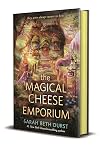
** spoiler alert ** Sitting firmly in the nexus of all my professional and nerd interests, this book has it all -- librarians, printing, bookbinding, cheesemaking and mongering, magic, trauma recovery, transparency in government, romance and some delightfully stabby new side characters. I love the Midnight Knitters, the inventions, the quest for new and ridiculous sources of magical milk for cheesemaking. I love the characters and their challenges and the ways they grow and heal and show more eventually triumph. The Spellshop books remain as the very best in cozy reading, and an absolutely reliable balm to my soul.
Advanced Readers' Copy provided by Edelweiss.
TL:DR for those who are interested, my extra picky nerd notes, which alas were too late to change before publication. SBD was extremely gracious about this feedback.
In case you were wondering, Archivists and Conservators are 2 totally different jobs — totally possible to be both, but archivists don’t bind books as part of their jobs: they catalogue and arrange collections. Book conservators bind books.
Bookbinding by hand: Sew, then Glue, always. Or do a non adhesive binding and just sew, but it's always sew first.
Btw, I have a lot of opinions on glue and this book handled that subject well.
Western style Printing ink is generally not water soluble — it’s almost all linseed oil or rapeseed or soy based, so the clean up isn’t by washing in a sink -- you either need to loosen it with more oil and wipe it up or use a solvent to remove it. I laughed so hard at the image of pouring the ink into a bowl — horrifying! What a horrifying sticky mess!! -- the viscosity means that you use a knife to spread a small amount on a non-porous surface and then either dab it onto printers' balls or roll it onto a brayer (roller) and transfer it to the type that way. I love the iteration of ideas that Garyn works through — 5 stars for inventing printing in a way that doesn’t make me cry.
If you do want to know about water soluble printing ink with historical precedent, look into Mokuhanga -- Japanese style woodblock printing. I don't think that type of ink would work very well in the type of printing process the book describes, because it dries out too quickly. The reason oil base works so well is that you have time to ink and print and ink and print for several hours before it dries out and ruins the type.
Also, all the praise for not attempting any solution to papermaking outside of import. It’s such a huge subject, mostly not made of wood until after the industrial revolution and by far one of the harder things to invent. Both the British and the Americans took more than a hundred years to establish a working paper mill on their soil because of the availability of linen/cotton/hemp based rags. A recent scholar has suggested that one of the reasons papermaking was so centralized in Venice and Fabriano was proximity to worn out sails -- this is a whole other rabbit hole that might be useful for future books.
The blacksmith figuring out how to cast type and do it in 3 days — my partner is a blacksmith and I have done typecasting by hand, so I know the process for creating the punches and the molds and the type — we salute this optimism and laughed really hard and enjoyed the mental puzzle of figuring out whether that would be possible. We think maybe so, under extraordinary circumstances. Mostly it's a question of whether they would have had alphabetical punches already on hand and would "only" have had to invent the hand casting mould -- which is a really genius bit of engineering.
Finally, general note to everyone not to have lead type and food prep in the same space. Or at least make a big deal of anyone messing with type washing their hands thoroughly. It was kind of unclear to me what part of the cheese barn the print shop was set up in -- upstairs? weight can be an issue at some point because lead, but that would be better separation of poison from food. I have been worried about how the little crocheted animals manage to clean their paws after typesetting -- handling lead type leaves a lot of dirt on the fingers. Honestly, handling lead isn't too dangerous, but eating lead is very very bad, as we know.
Yeah, wow, I really liked this book and spent waaaay too much time thinking about all the details. show less
Advanced Readers' Copy provided by Edelweiss.
TL:DR for those who are interested, my extra picky nerd notes, which alas were too late to change before publication. SBD was extremely gracious about this feedback.
In case you were wondering, Archivists and Conservators are 2 totally different jobs — totally possible to be both, but archivists don’t bind books as part of their jobs: they catalogue and arrange collections. Book conservators bind books.
Bookbinding by hand: Sew, then Glue, always. Or do a non adhesive binding and just sew, but it's always sew first.
Btw, I have a lot of opinions on glue and this book handled that subject well.
Western style Printing ink is generally not water soluble — it’s almost all linseed oil or rapeseed or soy based, so the clean up isn’t by washing in a sink -- you either need to loosen it with more oil and wipe it up or use a solvent to remove it. I laughed so hard at the image of pouring the ink into a bowl — horrifying! What a horrifying sticky mess!! -- the viscosity means that you use a knife to spread a small amount on a non-porous surface and then either dab it onto printers' balls or roll it onto a brayer (roller) and transfer it to the type that way. I love the iteration of ideas that Garyn works through — 5 stars for inventing printing in a way that doesn’t make me cry.
If you do want to know about water soluble printing ink with historical precedent, look into Mokuhanga -- Japanese style woodblock printing. I don't think that type of ink would work very well in the type of printing process the book describes, because it dries out too quickly. The reason oil base works so well is that you have time to ink and print and ink and print for several hours before it dries out and ruins the type.
Also, all the praise for not attempting any solution to papermaking outside of import. It’s such a huge subject, mostly not made of wood until after the industrial revolution and by far one of the harder things to invent. Both the British and the Americans took more than a hundred years to establish a working paper mill on their soil because of the availability of linen/cotton/hemp based rags. A recent scholar has suggested that one of the reasons papermaking was so centralized in Venice and Fabriano was proximity to worn out sails -- this is a whole other rabbit hole that might be useful for future books.
The blacksmith figuring out how to cast type and do it in 3 days — my partner is a blacksmith and I have done typecasting by hand, so I know the process for creating the punches and the molds and the type — we salute this optimism and laughed really hard and enjoyed the mental puzzle of figuring out whether that would be possible. We think maybe so, under extraordinary circumstances. Mostly it's a question of whether they would have had alphabetical punches already on hand and would "only" have had to invent the hand casting mould -- which is a really genius bit of engineering.
Finally, general note to everyone not to have lead type and food prep in the same space. Or at least make a big deal of anyone messing with type washing their hands thoroughly. It was kind of unclear to me what part of the cheese barn the print shop was set up in -- upstairs? weight can be an issue at some point because lead, but that would be better separation of poison from food. I have been worried about how the little crocheted animals manage to clean their paws after typesetting -- handling lead type leaves a lot of dirt on the fingers. Honestly, handling lead isn't too dangerous, but eating lead is very very bad, as we know.
Yeah, wow, I really liked this book and spent waaaay too much time thinking about all the details. show less
THE ENCHANTED GREENHOUSE by Sarah Beth Durst is the biggest, best bear hug from your favorite person in the world, except in book form. I smile when I look at the cover. I smile when I think about the story. It is a happy little book that makes all your pain and suffering go away for a while.
While I didn't read Ms. Durst's The Spellshop, I am going to make sure I remedy that situation immediately because I now know I need more cozy fantasy in my life, and the world could do with more as show more well. THE ENCHANTED GREENHOUSE did more to validate my feelings about childhood trauma than my therapist ever did. Terlu Perna is the sweetest character without being saccharine or fake. Her delight at the greenhouses mirrors your own, just as her self-doubts about her ability to do magic follow the same doubts you have when you try something new.
The story itself is sweet. It is a place not just of comfort but of rest, where you can heal some long-ago hurts and feel safe doing so. I know that's a weird thing to say about a book, but THE ENCHANTED GREENHOUSE made me feel better about some things I've been holding onto for a long time. It's like Ms. Durst saw what was still hurting me and included some sentences that allowed me to heal. It is an experience I've never had with a book, self-help or otherwise. When someone says that books have the power to heal the world, I believe it is books like THE ENCHANTED GREENHOUSE that will do just that. show less
While I didn't read Ms. Durst's The Spellshop, I am going to make sure I remedy that situation immediately because I now know I need more cozy fantasy in my life, and the world could do with more as show more well. THE ENCHANTED GREENHOUSE did more to validate my feelings about childhood trauma than my therapist ever did. Terlu Perna is the sweetest character without being saccharine or fake. Her delight at the greenhouses mirrors your own, just as her self-doubts about her ability to do magic follow the same doubts you have when you try something new.
The story itself is sweet. It is a place not just of comfort but of rest, where you can heal some long-ago hurts and feel safe doing so. I know that's a weird thing to say about a book, but THE ENCHANTED GREENHOUSE made me feel better about some things I've been holding onto for a long time. It's like Ms. Durst saw what was still hurting me and included some sentences that allowed me to heal. It is an experience I've never had with a book, self-help or otherwise. When someone says that books have the power to heal the world, I believe it is books like THE ENCHANTED GREENHOUSE that will do just that. show less
Lists
Awards


You May Also Like


Associated Authors
Statistics
- Works
- 40
- Also by
- 6
- Members
- 11,820
- Popularity
- #1,986
- Rating
- 3.9
- Reviews
- 467
- ISBNs
- 264
- Languages
- 9
- Favorited
- 15


