
Peter A. Levine
Author of Waking the Tiger: Healing Trauma
About the Author
Image credit: via psychotherapy.net
Works by Peter A. Levine
In an Unspoken Voice: How the Body Releases Trauma and Restores Goodness (2010) 426 copies, 2 reviews
Trauma and Memory: Brain and Body in a Search for the Living Past: A Practical Guide for Understanding and Working with Traumatic Memory (2015) 145 copies
Trauma-Proofing Your Kids: A Parents' Guide for Instilling Confidence, Joy and Resilience (2008) 79 copies, 1 review
Sanar El Trauma: Un programa pionero para restaurar la sabiduría de tu cuerpo (Neo-Psique) (2013) 3 copies
Associated Works
In the Realm of Hungry Ghosts: Close Encounters with Addiction (2008) — Foreword — 1,311 copies, 45 reviews
Tagged
Common Knowledge
- Birthdate
- 1942-02-19
- Gender
- male
- Education
- University of Michigan (BS|Engineering Physics|1964)
University of California, Berkeley (PhD|Biophysics|1977)
International University, Los Angeles (PhD|Psychology|1978) - Occupations
- psychologist
writer
therapist - Organizations
- National Aeronautics and Space Administration
Institute for World Affairs - Awards and honors
- Lifetime Achievement Award, United States Association for Body Psychotherapy (2010)
- Nationality
- USA
- Places of residence
- Ann Arbor, Michigan, USA
Berkeley, California, USA
Los Angeles, California, USA - Associated Place (for map)
- California, USA
Members
Reviews
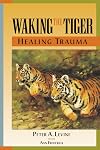
I love this book! Waking the Tiger completely changed the way I understand trauma and the body’s natural ability to heal. Peter Levine’s approach is both compassionate and insightful, showing how trauma isn’t just a mental experience but a physical one too. The exercises and examples make the concepts feel tangible, and I found myself pausing often to reflect on my own experiences.
That said, some sections can feel dense or overly technical, especially when describing physiological show more processes. It may take multiple readings to fully grasp the material, which can be challenging for readers looking for a quick, practical guide.
Despite this, the book is deeply empowering. It offers hope and practical strategies for anyone struggling with trauma, encouraging self-awareness and gentle, body-focused healing. It’s not a quick fix, but it’s a profoundly valuable resource for anyone ready to engage with their healing journey. show less
That said, some sections can feel dense or overly technical, especially when describing physiological show more processes. It may take multiple readings to fully grasp the material, which can be challenging for readers looking for a quick, practical guide.
Despite this, the book is deeply empowering. It offers hope and practical strategies for anyone struggling with trauma, encouraging self-awareness and gentle, body-focused healing. It’s not a quick fix, but it’s a profoundly valuable resource for anyone ready to engage with their healing journey. show less

This is a mix of science, psychology and mindfulness that seems very compassionate and wise. I haven't put everything into place that they recommend, but it's easy to follow and I look forward to trying. I especially found some of the information about anger and pain to be illuminating.
Waking the Tiger : Healing Trauma : The Innate Capacity to Transform Overwhelming Experiences by Peter A. Levine
Waking the Tiger is Peter Levine's book on healing traumas. Although I am not a psychologist or therapist, its powerful and natural method is intensely appealing. Everybody in his or her life is bound to obtain traumas. This need not be due to serious accidents or maltreatment, even supposedly harmless events suffice to shock our system. Not only people are subject to trauma, the animal world is full of it.
And it is this world Levine put his attention to. He observed the ways in which an show more animal 'shakes off' the intense energies after the traumatising event subsided. A human on the other hand has a tendency to thwart these instinctive reaction. Our reasoning neo-cortex comes in the way. As a result the intense energies have no way to discharge and the body has to find other ways to stay in balance. Symptoms arise that can seriously and structurally impede a person's healthy and joyful experience of life.
Levine's method to heal does not involve longterm therapy in which the traumatising event is relived again and again. It involves sensing your body and tracking the trauma energies. Once these are discovered you are encouraged to make the instinctive and natural body movements needed to discharge the energies. Levine's method is as simple as it is effective because it knows how to harness our instinctive and natural capacity to heal. show less
And it is this world Levine put his attention to. He observed the ways in which an show more animal 'shakes off' the intense energies after the traumatising event subsided. A human on the other hand has a tendency to thwart these instinctive reaction. Our reasoning neo-cortex comes in the way. As a result the intense energies have no way to discharge and the body has to find other ways to stay in balance. Symptoms arise that can seriously and structurally impede a person's healthy and joyful experience of life.
Levine's method to heal does not involve longterm therapy in which the traumatising event is relived again and again. It involves sensing your body and tracking the trauma energies. Once these are discovered you are encouraged to make the instinctive and natural body movements needed to discharge the energies. Levine's method is as simple as it is effective because it knows how to harness our instinctive and natural capacity to heal. show less
Waking the Tiger offers a new and hopeful vision of trauma. It views the human animal as a unique being, endowed with an instinctual capacity to heal as well as an intellectual spirit to harness this innate capacity. It asks and answers an intriguing question - why are animals in the wild, though threatened routinely, rarely traumatized? By understanding the dynamics that make wild animals virtually immune to traumatic symptoms, the mystery of human trauma is revealed.
Lists
You May Also Like


Associated Authors
Statistics
- Works
- 24
- Also by
- 2
- Members
- 2,083
- Popularity
- #12,335
- Rating
- 4.2
- Reviews
- 13
- ISBNs
- 85
- Languages
- 13