
Eileen Chang (1920–1995)
Author of Love in a Fallen City
About the Author
Image credit: From presby.edu
Works by Eileen Chang
Dui zhao ji (Reflections: Words and Pictures, in Traditional Chinese, NOT in English) (1994) 7 copies
張愛玲小說集 2 copies
Lust. Caution disconsolate Hutchison (Zhang Ailing Portfolio) [recorded 6](Chinese Edition) (2000) 1 copy
都市的人生 1 copy
Flower Faded in the Sea-Corpora of Zhang Ailing-10-Chinese Version of Fiction in Dialect (Chinese Edition) (2012) 1 copy
雷峰塔(The Fall of the Pagoda) 1 copy
海上花 1 copy
傳奇 增訂本 1 copy
傾城之戀 1 copy
餘韻 1 copy
红玫瑰与白玫瑰 1 copy
Un amour dévastateur 1 copy
Chuyện tình giai nhân 1 copy
傳奇 1 copy
张爱玲小说集 (套装共5册) / Eileen Chang's classic novel set / full package/ 5 volumes /(Chinese Edition) (2012) 1 copy
Zhang Ailing xiao shuo ji 1 copy
張愛玲短篇小說集 1 copy
Associated Works
Tagged
Common Knowledge
- Canonical name
- Chang, Eileen
- Legal name
- 張愛玲
- Other names
- Zhang Ying (birth)
张煐
Zhang Ailing - Birthdate
- 1920-09-30
- Date of death
- 1995-09-08
- Gender
- female
- Education
- University of Hong Kong
Saint John's University, Shanghai
Saint Maria Girls' School - Occupations
- writer
novelist
translator - Organizations
- United States Information Service
- Short biography
- Eileen Chang [born Zhang Ying, renamed Zhang Ailing] (September 30, 1920 – September 8, 1995) was one of the most influential modern Chinese writers.
Chang is noted for her fiction writings that deal with the tensions between men and women in love, and are considered by some scholars to be among the best Chinese literature of the period. Chang's portrayal of life in 1940s Shanghai and Japanese-occupied Hong Kong is remarkable in its focus on everyday life and the absence of the political subtext which characterised many other writers of the period. The Taiwanese author Yuan Chiung-chiung drew inspiration from Chang. The poet and University of Southern California professor Dominic Cheung commented "had it not been for the political division between the Nationalist and Communist Chinese, she would have almost certainly won a Nobel Prize".
Eileen Chang in Wikipedia - Nationality
- China (birth)
USA - Birthplace
- Shanghai, China
- Places of residence
- Shanghai, China
Los Angeles, California, USA
Hong Kong, China - Place of death
- Westwood, California, USA
- Map Location
- China
Members
Reviews
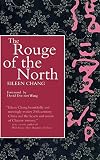
Eileen Chang's The Rouge of the North is actually the fourth iteration of a story that she wrote and re-wrote through her life. It was published first in 1943 in Chinese as The Golden Cangue; cangue being a sort of wooden pillory, used to penalise criminals in imperial China. The story had some success at the time; she subsequently translated into English and published it, and it can still be found (with difficulty) in anthologies of her stories. Much later, in 1967, not long after the death show more of her second husband and amid financial troubles, she substantially rewrote the same story in English as the The Rouge of the North, an expanded version of her well-received short story. It did not do well in English at the time, but a serialised Chinese version saw substantial success, sparking a brief revival of her career before a long, slow, lonely decline, both professionally and personally. I learned much about this process of writing and rewriting from a detailed introductory essay by David Der-Wei Wang in this Harvard University Press edition of the English version of The Rouge of the North, although looking back, I wish I had read the novel first and the essay after because it undoubtedly shaped my understanding of the book. With that said, I think for non-Chinese readers like myself, the essay is vital, because this is a story full of complex allusion and metaphor, and would have been much harder to appreciate without the context and explanations he provides.
The Rouge of the North traces the life of Yindi, a beautiful woman, born into an impoverished family. Living with her brother and sister-in-law, and their children, she sells sesame oil, and resists, enraged, the overtures of local men, who come by the shop to tease the 'Sesame Oil Beauty'. Although she harbours an interest in the quiet, reclusive pharmacist's assistant who works across the road, she recognises his utter lack of ambition does not match her own desires for a better, richer life. She accordingly accepts a proposal from a wealthy, aristocratic family to marry their second son, described to her as a blind man, but kind and gentle. On marriage, of course, she discovers that she has wedded an invalid, addicted to opium and in no way a suitable partner, and the life of wealth and comfort she had imagined is instead a cold, dispiriting prison from which she can't escape. A southerner in a northern family, a poor girl amidst rich people, her marriage is a series of humiliations, to which she reacts by becoming increasingly selfish, arrogant, and rebellious. Desperate for romantic love, which her husband cannot fulfill, she embarks on a doomed affair with one of her brothers-in-law; he in turn, ultimately rejects her. Through the story, we see her ire directed towards the matriarch of the house, her mother-in-law, who holds the keys to her fate. As the novel progresses, Yindi slowly becomes the woman she despises: the family's wealth crumbling, her unhappiness spiraling. Towards the end of the book, she is matriarch of a small household, respected but not loved, deferred to, but friendless, and defined by her strict adherence to the customs and traditions that she once strained against. Sitting on her bed, she drifts back into memories of being a young unmarried girl, fending off suitors at the sesame oil shop. "Everything she drew comfort from was gone, had never happened. Nothing much had happened to her yet."
In David Der-Wei Weng's preface to this story of Yindi's spiraling decline, he asks what we are to make of the way Chang wrote, and rewrote, and wrote again the same story, over and over, wrestling with ideas of female agency and victimization, of the way in which women sought to reach for power within constrained domestic spheres. It's too facile, he argues, to suggest that she is, through this story, reshaping and retelling her own life's story in different ways. Rather, he looks at the way she didn't just write and rewrite, but also how she moved between two languages, creating and recreating the same story (translation does not seem to be an appropriate word here) to create a more realistic account. Weng writes that the character of Yindi goes from the first version of the story to the last in progression, changing from "...a tragic monster into a desolate woman." As I have only read one of four versions, I can't confirm: but in The Rouge of the North, Chang writes almost dispassionately, recording Yindi's eventual ensnaring into the traditions she tried unsuccessfully to escape. As Weng put it, "She wants to find her own man and is rewarded by a living dead man; she is torn by adulterous desires in her younger days only to settle into her widowed life with formidable stoicism; she seeks to end her life in the middle of the novel, but outlives all the other major characters. Shuttling between the possibilities and impossibilities of her life, Yindi is never what she appears or wants to be; her transgressive desires continually throw her back into the closure of repetition."
Even though this is a short novel, really a novella, it is a challenging read because each sentence is carefully crafted, and I'm not surprised it took me most of the month to get through this carefully. For all that Yindi is increasingly unlikeable, it is difficult not to feel your heart break for her, or to be transported by Chang's very evocative account of her life. show less
The Rouge of the North traces the life of Yindi, a beautiful woman, born into an impoverished family. Living with her brother and sister-in-law, and their children, she sells sesame oil, and resists, enraged, the overtures of local men, who come by the shop to tease the 'Sesame Oil Beauty'. Although she harbours an interest in the quiet, reclusive pharmacist's assistant who works across the road, she recognises his utter lack of ambition does not match her own desires for a better, richer life. She accordingly accepts a proposal from a wealthy, aristocratic family to marry their second son, described to her as a blind man, but kind and gentle. On marriage, of course, she discovers that she has wedded an invalid, addicted to opium and in no way a suitable partner, and the life of wealth and comfort she had imagined is instead a cold, dispiriting prison from which she can't escape. A southerner in a northern family, a poor girl amidst rich people, her marriage is a series of humiliations, to which she reacts by becoming increasingly selfish, arrogant, and rebellious. Desperate for romantic love, which her husband cannot fulfill, she embarks on a doomed affair with one of her brothers-in-law; he in turn, ultimately rejects her. Through the story, we see her ire directed towards the matriarch of the house, her mother-in-law, who holds the keys to her fate. As the novel progresses, Yindi slowly becomes the woman she despises: the family's wealth crumbling, her unhappiness spiraling. Towards the end of the book, she is matriarch of a small household, respected but not loved, deferred to, but friendless, and defined by her strict adherence to the customs and traditions that she once strained against. Sitting on her bed, she drifts back into memories of being a young unmarried girl, fending off suitors at the sesame oil shop. "Everything she drew comfort from was gone, had never happened. Nothing much had happened to her yet."
In David Der-Wei Weng's preface to this story of Yindi's spiraling decline, he asks what we are to make of the way Chang wrote, and rewrote, and wrote again the same story, over and over, wrestling with ideas of female agency and victimization, of the way in which women sought to reach for power within constrained domestic spheres. It's too facile, he argues, to suggest that she is, through this story, reshaping and retelling her own life's story in different ways. Rather, he looks at the way she didn't just write and rewrite, but also how she moved between two languages, creating and recreating the same story (translation does not seem to be an appropriate word here) to create a more realistic account. Weng writes that the character of Yindi goes from the first version of the story to the last in progression, changing from "...a tragic monster into a desolate woman." As I have only read one of four versions, I can't confirm: but in The Rouge of the North, Chang writes almost dispassionately, recording Yindi's eventual ensnaring into the traditions she tried unsuccessfully to escape. As Weng put it, "She wants to find her own man and is rewarded by a living dead man; she is torn by adulterous desires in her younger days only to settle into her widowed life with formidable stoicism; she seeks to end her life in the middle of the novel, but outlives all the other major characters. Shuttling between the possibilities and impossibilities of her life, Yindi is never what she appears or wants to be; her transgressive desires continually throw her back into the closure of repetition."
Even though this is a short novel, really a novella, it is a challenging read because each sentence is carefully crafted, and I'm not surprised it took me most of the month to get through this carefully. For all that Yindi is increasingly unlikeable, it is difficult not to feel your heart break for her, or to be transported by Chang's very evocative account of her life. show less
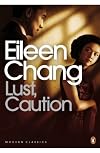
I picked this up at the library on a whim and was happy I did.
Lust, Caution and Other Stories is a series of short stories set in 1940's Shanghai. A stark political backdrop, a time of turmoil where food rations are real and travel is limited.
And yet, Eileen Chang decides instead to focus precisely, intently on the minutiae of life for the characters in her stories. I found some of the stories difficult or slow because of how little plot there is, but then there were so many other things I show more enjoyed about her writing. I want to say that it reminds me a little of Raymond Carver -- his fascination with the mundane is similar to hers but that's where the similarities end. Chang is all about details, details, details.
I liked the dialogue, the gossipy old cooks and cleaning ladies and I loved some of the ways Chang described her characters. Her prose has its own delicate beauty like a fine, bitter tea. There's a part about a character's eyes being downcast, the beige colour of moth's wings -- I was completely swept up in that moment, in her prose. It was wonderful.
Also, Chang's photo on the back of this book is just great. She looks like such a powerhouse and someone I'd love to know but also be afraid of.
I liked this book. I'm really sad it took me as long to read as it did but I'm happy I read it. I do feel like I need a break between this book and the next one, though. show less
Lust, Caution and Other Stories is a series of short stories set in 1940's Shanghai. A stark political backdrop, a time of turmoil where food rations are real and travel is limited.
And yet, Eileen Chang decides instead to focus precisely, intently on the minutiae of life for the characters in her stories. I found some of the stories difficult or slow because of how little plot there is, but then there were so many other things I show more enjoyed about her writing. I want to say that it reminds me a little of Raymond Carver -- his fascination with the mundane is similar to hers but that's where the similarities end. Chang is all about details, details, details.
I liked the dialogue, the gossipy old cooks and cleaning ladies and I loved some of the ways Chang described her characters. Her prose has its own delicate beauty like a fine, bitter tea. There's a part about a character's eyes being downcast, the beige colour of moth's wings -- I was completely swept up in that moment, in her prose. It was wonderful.
Also, Chang's photo on the back of this book is just great. She looks like such a powerhouse and someone I'd love to know but also be afraid of.
I liked this book. I'm really sad it took me as long to read as it did but I'm happy I read it. I do feel like I need a break between this book and the next one, though. show less
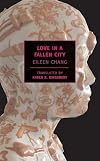
I read Love in a Fallen City and the Golden Cangue for class and loved both of them. I read the rest later and enjoyed them as well. I preferred the stories that focused on women, as the male perspectives were often much more unpleasant, which I guess makes sense. Aloeswood Incense, Love in a Fallen City, and The Golden Cangue were definitely my favorites. All three were wonderful. I also enjoyed the story Sealed Off, although it was quite short. The other two, Jasmine Tea and Red Rose, show more White Rose weren't necessarily bad but both had protagonists that were rude, unpleasant, and unkind to women. That's not to say the stories were bad or that the characters were poorly written. I think the way Eileen Chang writes about people is very believable, but that doesn't make the perspectives of unlikable characters any more pleasant to read. Overall though, as a collection I think all the stories were good and the collection is cohesive. All the stories and all the relationships within them are sad in some way. The way in which Eileen Chang writes love and despair and heartbreak is really profound. All of her stories feel tangibly real and there's something beautiful about them. I also think that my experience reading two of them in class was really beneficial because I didn't know much about this period in Chinese history at the time and although that knowledge isn't necessary to understand these stories (they really feel timeless), I think it was helpful context. show less
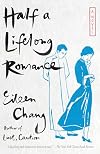
I really hoped to like this but it seemed more like a soap opera than novel: boy meets girl, boy/girl fall in love, life repeatedly conspires to keep them apart. Although Chang wrote some of her works in English, she wrote this particular novel in Chinese and, sadly, I found the translation—although it read easily—a constant issue. The translator’s word choices and her syntax regularly made Chang’s writing appear stilted, a problem I have not had reading her works before. Worse, show more although the characters were well-drawn and believable, the situations were almost constantly melodramatic and only seemed to become more so as the book went on. According to the translator’s (useful) Introduction, this is “by almost any count, Eileen Chang’s most popular novel.” If so (and I have no reason to doubt it), I can only assume that the Chinese audience has wholly different expectations and reads the novel in a context that I simply cannot appreciate. Disappointing. show less
Lists
Awards


You May Also Like


Associated Authors
Statistics
- Works
- 81
- Also by
- 3
- Members
- 2,206
- Popularity
- #11,624
- Rating
- 3.7
- Reviews
- 49
- ISBNs
- 208
- Languages
- 11
- Favorited
- 13