
Kenneth Sylvan Guthrie (–1940)
Author of The Pythagorean Sourcebook
About the Author
Works by Kenneth Sylvan Guthrie
Plotinus: Complete Works: In Chronological Order, Grouped in Four Periods. [single volume, unabridged] (2017) 15 copies
Numenius of Apamea [microform], the Father of Neo-Platonism; Works, Biography, Message, Sources, and Influence (2008) 8 copies
Of the Presence of God: The Classic Guide to Turning Loneliness and Problems into Good through a Life with God (2013) 1 copy
Associated Works
Porphyry's Launching-Points to the Realm of the Mind An Introduction to the Neoplatonic Philosophy of Plotinus (1988) — Translator — 21 copies, 1 review
Tagged
Common Knowledge
Members
Reviews
The Pythagorean Sourcebook and Library: An Anthology of Ancient Writings Which Relate to Pythagoras and Pythagorean Philosophy by Kenneth Sylvan Guthrie
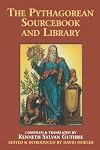
So, this is my first foray into Pythagoreanism and I may have bitten off more than I can chew. I really enjoyed most of this book, but it is DENSE and is probably better for academics and researchers rather than a lay reader. That being said, most of it was understandable and enjoyable to get a fairly in depth knowledge of Pythagoreanism as well as multiple accounts of the life of Pythagoras. It is all very interesting and has a lot in common with early Christian beliefs as well as being an show more influencer on Plato/Aristotle. I mean, except for some of the weird beliefs about beans. I'm still not sure what beans hurt Pythagoras but he clearly felt some way about them. show less


PLOTINOS COMPLETE WORKS , VOLUME 3
LITTLE NOTE ABOUT THE AUTHOR
Although Eunapio maintains that he was born in Licón and Suidas, he assures that in Licópolis, his place of birth is not known with certainty. Natural of the Roman province Egypt, saw the light towards the 203 or 204 d. J. C. In 232 he entered the circle of Ammonius Saccas (or Sakkas) in Alexandria, of whom Origen (the heathen), 2 Longinus and Erenius were also disciples. He embarked on 242 in the war expedition of Emperor show more Gordianus III to Persia for the purpose of knowing Persian philosophy. Failed the expedition and killed the emperor, he managed to find refuge in Antioch. He opened a school in Rome (246) where he soon enjoyed the favor of the most conspicuous court figures, including Emperor Gallienus and his wife Cornelia Salonina.
He used to pick up orphaned children in his house and he served as their guardian and, although he personally led a very ascetic life, he was a sweet and affectionate person, a vegetarian, he did not marry or let himself be portrayed "so as not to give rise to shadow of another shadow "[citation needed]. He was credited with mystical gifts as a visionary. His disciple Porfirio, author of his biography Life of Plotinus and the systematization and publication of his central work Enéadas, says that in the six years he was with him, Plotinus came to "join and join the God omnitranscendente" up to four times.
From 254 he begins to put his works in writing. Their treaties are in total 54 and they are arranged in six books of nine chapters, result of which they receive the name of Enéadas. It is considered as one of the most solid Treaties of Antiquity, together with those of Plato and those of Aristotle. He died suffering from a painful disease (leprosy) in 270 AD. at 66, in Campania.
Defined as mystic Neoplatonic, Plotinus realizes a new foundation of classical metaphysics, taking paths more linked to the mystic of Pythagorean and Platonic roots than to the path followed by Aristotle.
We should start from the idea that the philosophy of Plotinus is a kind of Cosmogony linked to a Physics. The theoretical form assumed by his discourse is metaphysics. In that sense he is heir of Aristotle, but above all of Plato.
ABOUT THE WORK
F NUMBERS SIXTH ENNEAD, BOOK SIx.Of Numbers.NIFOLDNESS IS DISTANCE FROM UNITY, AND
2 Is infinity this distarice carried to the extremenifold? (That is probable) or every being beMAEVIL
Does manifoldness consist in' distance fromunity se it is an innumerable manitoldness? Is then an evil, and are we ourselves evil when we are manifold when, not being able to remain turned it blossoms out; it extends while dividnd thus losing all unity in its expansion, it be-
comes manifoldness, because there is nothing that holds ertheless, there still towards itself, is Dan something that holds its parts mutually united, remain then, though blossoming out, (the essence) rem and becomes manifoldness
HOW MANITOLDNESS IS AN EVIL
But what is there to be feared in magnitude? If (the essence) that has increased could feel (it would feel that which in itself has become evil; for) it would feel that it had issued from itself, and had even gone to a great distance (from itself). No (essence), in deed, seeks that which is other than itself; every (essence) secks itself.. The movement by which (an essence) issues from itself is caused either by "audac ity," or necessity. Every (being) exists in the highest degree not when it becomes manifold or great, but when it belongs to itself; now this occurs when it ... show less
LITTLE NOTE ABOUT THE AUTHOR
Although Eunapio maintains that he was born in Licón and Suidas, he assures that in Licópolis, his place of birth is not known with certainty. Natural of the Roman province Egypt, saw the light towards the 203 or 204 d. J. C. In 232 he entered the circle of Ammonius Saccas (or Sakkas) in Alexandria, of whom Origen (the heathen), 2 Longinus and Erenius were also disciples. He embarked on 242 in the war expedition of Emperor show more Gordianus III to Persia for the purpose of knowing Persian philosophy. Failed the expedition and killed the emperor, he managed to find refuge in Antioch. He opened a school in Rome (246) where he soon enjoyed the favor of the most conspicuous court figures, including Emperor Gallienus and his wife Cornelia Salonina.
He used to pick up orphaned children in his house and he served as their guardian and, although he personally led a very ascetic life, he was a sweet and affectionate person, a vegetarian, he did not marry or let himself be portrayed "so as not to give rise to shadow of another shadow "[citation needed]. He was credited with mystical gifts as a visionary. His disciple Porfirio, author of his biography Life of Plotinus and the systematization and publication of his central work Enéadas, says that in the six years he was with him, Plotinus came to "join and join the God omnitranscendente" up to four times.
From 254 he begins to put his works in writing. Their treaties are in total 54 and they are arranged in six books of nine chapters, result of which they receive the name of Enéadas. It is considered as one of the most solid Treaties of Antiquity, together with those of Plato and those of Aristotle. He died suffering from a painful disease (leprosy) in 270 AD. at 66, in Campania.
Defined as mystic Neoplatonic, Plotinus realizes a new foundation of classical metaphysics, taking paths more linked to the mystic of Pythagorean and Platonic roots than to the path followed by Aristotle.
We should start from the idea that the philosophy of Plotinus is a kind of Cosmogony linked to a Physics. The theoretical form assumed by his discourse is metaphysics. In that sense he is heir of Aristotle, but above all of Plato.
ABOUT THE WORK
F NUMBERS SIXTH ENNEAD, BOOK SIx.Of Numbers.NIFOLDNESS IS DISTANCE FROM UNITY, AND
2 Is infinity this distarice carried to the extremenifold? (That is probable) or every being beMAEVIL
Does manifoldness consist in' distance fromunity se it is an innumerable manitoldness? Is then an evil, and are we ourselves evil when we are manifold when, not being able to remain turned it blossoms out; it extends while dividnd thus losing all unity in its expansion, it be-
comes manifoldness, because there is nothing that holds ertheless, there still towards itself, is Dan something that holds its parts mutually united, remain then, though blossoming out, (the essence) rem and becomes manifoldness
HOW MANITOLDNESS IS AN EVIL
But what is there to be feared in magnitude? If (the essence) that has increased could feel (it would feel that which in itself has become evil; for) it would feel that it had issued from itself, and had even gone to a great distance (from itself). No (essence), in deed, seeks that which is other than itself; every (essence) secks itself.. The movement by which (an essence) issues from itself is caused either by "audac ity," or necessity. Every (being) exists in the highest degree not when it becomes manifold or great, but when it belongs to itself; now this occurs when it ... show less
Jan 2, 2018 (Edited)Spanish

PLOTINOS COMPLETE WORKS , VOLUME IV
ANIMALS TERMED HAPPY 1019 FIRST ENNEAD, BOOK FOUR.ether Animals May Be Termed Happy
DEFINITIONS OF HAPPINESS.Aristotelian) ideal of living well
4The hapiness are (practically) identical. Shond hap.account, grant even to animals the prvilege of on that
ls the privilege of achieccount, grant even to animing happiness? Why might wev-not say that they liveeil. if it be granted them, in their lives, to follow course of nature, Without obstacles? For, if, to live show more well consist either in pleasure (pleasant passions, ás the Epicureans taught) ,,or in realizing one's own individual aim (the Stoic ideal), then this living well is, in either case, possible for animals, who can both enjoy pleasure d accomplish their peculiar aim.
Thus singing birds oy pleasure live a life desirable for them, if they en and sing conformably to their nature. if further we uld define happiness as achieving the supreme purpose towards which nature aspires (the Stoic ideal we should, even in this case, admit that animals share in happiness when they accomplish this supreme purpose. Then nature arouses in them no further desires
because their whole career is completed, and their life is filled from beginning to end.
WHETHER PLANTS MAY BE TERMED HAPPY
There are no doubt some who may object to our admitting to happiness living beings other than man They might even point out that on this basis happiness could not be refused to even the lowest beings, such as... show less
ANIMALS TERMED HAPPY 1019 FIRST ENNEAD, BOOK FOUR.ether Animals May Be Termed Happy
DEFINITIONS OF HAPPINESS.Aristotelian) ideal of living well
4The hapiness are (practically) identical. Shond hap.account, grant even to animals the prvilege of on that
ls the privilege of achieccount, grant even to animing happiness? Why might wev-not say that they liveeil. if it be granted them, in their lives, to follow course of nature, Without obstacles? For, if, to live show more well consist either in pleasure (pleasant passions, ás the Epicureans taught) ,,or in realizing one's own individual aim (the Stoic ideal), then this living well is, in either case, possible for animals, who can both enjoy pleasure d accomplish their peculiar aim.
Thus singing birds oy pleasure live a life desirable for them, if they en and sing conformably to their nature. if further we uld define happiness as achieving the supreme purpose towards which nature aspires (the Stoic ideal we should, even in this case, admit that animals share in happiness when they accomplish this supreme purpose. Then nature arouses in them no further desires
because their whole career is completed, and their life is filled from beginning to end.
WHETHER PLANTS MAY BE TERMED HAPPY
There are no doubt some who may object to our admitting to happiness living beings other than man They might even point out that on this basis happiness could not be refused to even the lowest beings, such as... show less
Jan 2, 2018 (Edited)Spanish
You May Also Like


Associated Authors
Statistics
- Works
- 21
- Also by
- 2
- Members
- 335
- Popularity
- #71,018
- Rating
- 4.4
- Reviews
- 4
- ISBNs
- 20
- Favorited
- 1