
Nicomachus of Gerasa
Author of Britannica Great Books: Euclid, Archimedes, Apollonius, Nicomachus
About the Author
Image credit: Image © ÖNB/Wien
Works by Nicomachus of Gerasa
Britannica Great Books: Euclid, Archimedes, Apollonius, Nicomachus (1952) — Contributor — 426 copies
Tagged
Common Knowledge
- Canonical name
- Nicomachus of Gerasa
- Birthdate
- c. 60
- Date of death
- c. 120
- Gender
- male
- Nationality
- Roman Empire
- Associated Place (for map)
- Roman Empire
Members
Reviews
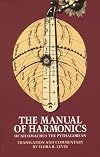
A rather difficult book. Without musical training in the past, it would be a rather unbearable read. Fortunately the comments are methodically enlightening. I find ancient works to have an impulse of curiosity, therefore before submersing my mind into modern musical theory, it is wonderful to think in the "ancient mode" inasmuch as possible, attempting to re-discover it in philosophical manner on our own - such a brilliant enterprise! It is opening new paths to ideas and sometimes gets us show more into places no one ventured since ages. Surveying my mind for hints from modern cymatics, electro-magnetic synergy, planetary ratios in the Solar System, astronomy, astrology, and the "Seven Pillared Mighty House", as Lawrence of Arabia put it, it is also a quest for the platonic divine - if not - pure and simple - for the Numinous. A fragment from Nichomachus at the very end proves the essence of the ancients' quest - to relate to the world, cosmos and the Divine, it was not just a journey and mental gymnastics in music, it was theology and music as a form of theurgy and goetia that was the goal - uniting the High with the low. Theories thus were mere refinements of these methods of thinking for the purpose of grasping the harmonia of the universe better. show less
A rather difficult book. Without musical training in the past, it would be a rather unbearable read. Fortunately the comments are methodically enlightening. I find ancient works to have an impulse of curiosity, therefore before submersing my mind into modern musical theory, it is wonderful to think in the "ancient mode" inasmuch as possible, attempting to re-discover it in philosophical manner on our own - such a brilliant enterprise! It is opening new paths to ideas and sometimes gets us show more into places no one ventured since ages. Surveying my mind for hints from modern cymatics, electro-magnetic synergy, planetary ratios in the Solar System, astronomy, astrology, and the "Seven Pillared Mighty House", as Lawrence of Arabia put it, it is also a quest for the platonic divine - if not - pure and simple - for the Numinous. A fragment from Nichomachus at the very end proves the essence of the ancients' quest - to relate to the world, cosmos and the Divine, it was not just a journey and mental gymnastics in music, it was theology and music as a form of theurgy and goetia that was the goal - uniting the High with the low. Theories thus were mere refinements of these methods of thinking for the purpose of grasping the harmonia of the universe better. show less
A rather difficult book. Without musical training in the past, it would be a rather unbearable read. Fortunately the comments are methodically enlightening. I find ancient works to have an impulse of curiosity, therefore before submersing my mind into modern musical theory, it is wonderful to think in the "ancient mode" inasmuch as possible, attempting to re-discover it in philosophical manner on our own - such a brilliant enterprise! It is opening new paths to ideas and sometimes gets us show more into places no one ventured since ages. Surveying my mind for hints from modern cymatics, electro-magnetic synergy, planetary ratios in the Solar System, astronomy, astrology, and the "Seven Pillared Mighty House", as Lawrence of Arabia put it, it is also a quest for the platonic divine - if not - pure and simple - for the Numinous. A fragment from Nichomachus at the very end proves the essence of the ancients' quest - to relate to the world, cosmos and the Divine, it was not just a journey and mental gymnastics in music, it was theology and music as a form of theurgy and goetia that was the goal - uniting the High with the low. Theories thus were mere refinements of these methods of thinking for the purpose of grasping the harmonia of the universe better. show less
A rather difficult book. Without musical training in the past, it would be a rather unbearable read. Fortunately the comments are methodically enlightening. I find ancient works to have an impulse of curiosity, therefore before submersing my mind into modern musical theory, it is wonderful to think in the "ancient mode" inasmuch as possible, attempting to re-discover it in philosophical manner on our own - such a brilliant enterprise! It is opening new paths to ideas and sometimes gets us show more into places no one ventured since ages. Surveying my mind for hints from modern cymatics, electro-magnetic synergy, planetary ratios in the Solar System, astronomy, astrology, and the "Seven Pillared Mighty House", as Lawrence of Arabia put it, it is also a quest for the platonic divine - if not - pure and simple - for the Numinous. A fragment from Nichomachus at the very end proves the essence of the ancients' quest - to relate to the world, cosmos and the Divine, it was not just a journey and mental gymnastics in music, it was theology and music as a form of theurgy and goetia that was the goal - uniting the High with the low. Theories thus were mere refinements of these methods of thinking for the purpose of grasping the harmonia of the universe better. show less
Lists
You May Also Like


Associated Authors
Statistics
- Works
- 5
- Members
- 597
- Popularity
- #42,084
- Rating
- 3.6
- Reviews
- 7
- ISBNs
- 4
- Favorited
- 1