

Charlotte Huck
Author of Princess Furball
About the Author
Image credit: via University of Redlands
Works by Charlotte Huck
Associated Works
Beauty, Brains, and Brawn: The Construction of Gender in Children's Literature (2001) — Introduction — 23 copies
Tagged
Common Knowledge
- Birthdate
- 1923
- Gender
- female
- Education
- Wellesley College
Northwestern University
Ohio State University - Awards and honors
- Ohio State Distinguished Teaching Award 1972
May Hill Arbuthnot Lecturer (1992) - Nationality
- USA
- Associated Place (for map)
- USA
Members
Reviews

The delicious thrills and chills of the Halloween season are highlighted in this counting book from author Charlotte Huck and illustrator Jos. A. Smith, as the numbers proceed from one to ten, and then back down again. Starting with one tall scarecrow standing on a hill, the rhyming text describes everything from lumpy toads to glowing jack-o-lanterns, skinny witches to ghastly ghosts, before culminating with ten tiny mice who give a surprise greeting, thereby precipitating the countdown show more back to one...
With a sprightly text that reads well and has a jaunty rhyme, A Creepy Countdown would make an excellent read-aloud for the Halloween season, featuring so many of the creatures associated with this time of year. What elevates it, and makes it truly stand out however, is the gorgeous artwork from Smith, done in black ink on scratchboard, with watercolor overlays. Detailed and spooky, these visuals are a real treat—expressive, beautiful, and (yes) creepy. My favorite (unsurprisingly, given my interest in witchy material) were the scenes featuring the six skinny witches, but truthfully, all of the artwork here is memorable. Recommended to anyone looking for scary (and also humorous) counting books for Halloween. show less
With a sprightly text that reads well and has a jaunty rhyme, A Creepy Countdown would make an excellent read-aloud for the Halloween season, featuring so many of the creatures associated with this time of year. What elevates it, and makes it truly stand out however, is the gorgeous artwork from Smith, done in black ink on scratchboard, with watercolor overlays. Detailed and spooky, these visuals are a real treat—expressive, beautiful, and (yes) creepy. My favorite (unsurprisingly, given my interest in witchy material) were the scenes featuring the six skinny witches, but truthfully, all of the artwork here is memorable. Recommended to anyone looking for scary (and also humorous) counting books for Halloween. show less
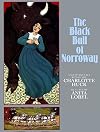
The Black Bull of Norroway, by Charlotte Huck, is a retelling of a popular Scottish folktale. I enjoyed this book for two reasons.
First, I liked reading about the story’s heroin, Peggy Ann. In the beginning of the story, Peggy Ann and her sisters visit a ‘wise woman’ in the hopes of finding husbands. While Peggy Ann’s sisters are concerned with wealth and status, Peggy Ann strives to find a man with gentility and kindness. After her sisters are matched with wealthy men, Peggy Ann show more is told to leave her village on the back of a large Black Bull. Peggy Ann’s acceptance of the Black Bull exemplifies her non-judgmental nature and her ability to see past the superficial. Later in the story, when Peggy Ann is forced to search for her lost love, readers can clearly see her perseverance and resolve.
Second, I liked how Huck used authentic historical details and language. For example, Huck writes, “Mother, bake me a bannock and roast me a collop.” The definitions of both Bannock (a flat cake made of oatmeal) and Callop (sliced bacon) are footnoted at the bottom of the page. Also, the illustrations of the various glens and castles creates a lush historical landscape. Even the the title uses traditional spelling (Norroway instead of Norway). Ultimately, these small details pay tribute to this folktale's origins. show less
First, I liked reading about the story’s heroin, Peggy Ann. In the beginning of the story, Peggy Ann and her sisters visit a ‘wise woman’ in the hopes of finding husbands. While Peggy Ann’s sisters are concerned with wealth and status, Peggy Ann strives to find a man with gentility and kindness. After her sisters are matched with wealthy men, Peggy Ann show more is told to leave her village on the back of a large Black Bull. Peggy Ann’s acceptance of the Black Bull exemplifies her non-judgmental nature and her ability to see past the superficial. Later in the story, when Peggy Ann is forced to search for her lost love, readers can clearly see her perseverance and resolve.
Second, I liked how Huck used authentic historical details and language. For example, Huck writes, “Mother, bake me a bannock and roast me a collop.” The definitions of both Bannock (a flat cake made of oatmeal) and Callop (sliced bacon) are footnoted at the bottom of the page. Also, the illustrations of the various glens and castles creates a lush historical landscape. Even the the title uses traditional spelling (Norroway instead of Norway). Ultimately, these small details pay tribute to this folktale's origins. show less

Author/illustrator team Charlotte Huck and Anita Lobel, who previously collaborated on two other folkloric picture books, Princess Furball and Toads and Diamonds, joined forces again in this third title from 2001, a retelling of a traditional Scottish folktale set in Norway. Peggy Ann, the youngest of three daughters, insists that she doesn't need a wealthy aristocrat as a husband like her sisters, provided her bridegroom is kind and loves her. She even claims she would marry the Black Bull show more of Norroway. When that taurine figure turns up, Peggi Ann must ride off on his back, slowly becoming accustomed to her unusual but considerate steed and potential husband. They stop at three castles where they are entertained by the bull's brothers, until finally an act of kindness reveals that the bull is none other than an enchanted duke. Now truly in love, Peggy Ann loses her duke when a thoughtless act separates them, and a glass mountain separates them. Working seven years for a blacksmith to earn the shoes which will carry her over the mountain, Peggy Ann finally finds her love, only to discover that the witch who initially cast a spell on him has plan to marry him to her daughter. Can our heroine overcome this new challenge, with the help of the magic tokens given to her by her duke's brothers...?
Although set in Norway (or Norroway), the story related in The Black Bull of Norroway: A Scottish Tale comes from Scotland, and can be found in a number of folktale collections, including Robert Chambers' Popular Rhymes of Scotland (1842), Andrew Lang's The Blue Fairy Book (1889), Joseph Jacobs' English Fairy Tales (1890), and Flora Annie Steel's English Fairy Tales (1918). That said, it is clearly a variant of the Norwegian East o' the Sun, West o' the Moon, with a black bull instead of a white polar bear, and a witch instead of an ogress. It has elements that recall the Cupid and Psyche story, and various folktales about scaling glass mountains. I found the story quite enjoyable, appreciating both its similarity to other tales of this type, and its differences. I particularly liked the witchy element here—unsurprisingly, given my interest in witchy picture books and early readers, the scenes depicting the witch in her witchy hat were some of my favorites, visually speaking. The illustrations overall, done in watercolor and black pen, were quite expressive, and I found them very appealing. I'm sorry to have come to the end of the books created by this duo, as I would have liked to see more from them. In any case, this is one I would recommend to young folk and fairy-tale lovers. show less
Although set in Norway (or Norroway), the story related in The Black Bull of Norroway: A Scottish Tale comes from Scotland, and can be found in a number of folktale collections, including Robert Chambers' Popular Rhymes of Scotland (1842), Andrew Lang's The Blue Fairy Book (1889), Joseph Jacobs' English Fairy Tales (1890), and Flora Annie Steel's English Fairy Tales (1918). That said, it is clearly a variant of the Norwegian East o' the Sun, West o' the Moon, with a black bull instead of a white polar bear, and a witch instead of an ogress. It has elements that recall the Cupid and Psyche story, and various folktales about scaling glass mountains. I found the story quite enjoyable, appreciating both its similarity to other tales of this type, and its differences. I particularly liked the witchy element here—unsurprisingly, given my interest in witchy picture books and early readers, the scenes depicting the witch in her witchy hat were some of my favorites, visually speaking. The illustrations overall, done in watercolor and black pen, were quite expressive, and I found them very appealing. I'm sorry to have come to the end of the books created by this duo, as I would have liked to see more from them. In any case, this is one I would recommend to young folk and fairy-tale lovers. show less

Author Charlotte Huck and illustrator Anita Lobel retell the English fairy-tale of Princess Furball—a variant of the Cinderella tale type—in this gorgeous picture book. Orphaned at a young age, our princess heroine is raised by her nurse, and gains many important skills through her education, both practical and intellectual. When her father betroths her to an ogre, she comes up with a variety of impossible tasks—demanding dresses as golden as the sun, as silvery as the moon and as show more glittering as the stars, as well as a fur coat made from a thousand different furs—to delay this horrific event. When these demands are met, she runs away, eventually ending up a lowly kitchen maid in another king's palace. Here, by attending three balls in her gorgeous dresses, and by cooking delicious soups in which she leaves golden items, Princess Furball enchants and intrigues the king, who eventually seeks her out...
As Huck notes in her brief introductory note, the story in Princess Furball is quite similar to the English story of Catskin, as well as the Brothers Grimm tale, Many Furs. I am not familiar with any individual retelling of the former, although it can be found in collections, such as Joseph Jacobs' 1893 More English Fairy Tales. As for the latter, it can be found in collections of Grimm tales, as well as in Jacquelyn Ilya Sage's picture book, Many Furs. Unlike the Grimm tale, here there is no theme of incest (thankfully), but rather an unwanted bridegroom, and a clever princess who finds a way to evade a terrible fate. I enjoyed this retelling quite a bit, and also enjoyed the accompanying artwork, done in watercolor and gouache, from Anita Lobel. This pair would go on to collaborate on another folkloric picture book, Toads and Diamonds, which I also great enjoyed. Recommended to young folk and fairy-tale lovers, or to readers looking for less famous variants of the Cinderella story. show less
As Huck notes in her brief introductory note, the story in Princess Furball is quite similar to the English story of Catskin, as well as the Brothers Grimm tale, Many Furs. I am not familiar with any individual retelling of the former, although it can be found in collections, such as Joseph Jacobs' 1893 More English Fairy Tales. As for the latter, it can be found in collections of Grimm tales, as well as in Jacquelyn Ilya Sage's picture book, Many Furs. Unlike the Grimm tale, here there is no theme of incest (thankfully), but rather an unwanted bridegroom, and a clever princess who finds a way to evade a terrible fate. I enjoyed this retelling quite a bit, and also enjoyed the accompanying artwork, done in watercolor and gouache, from Anita Lobel. This pair would go on to collaborate on another folkloric picture book, Toads and Diamonds, which I also great enjoyed. Recommended to young folk and fairy-tale lovers, or to readers looking for less famous variants of the Cinderella story. show less
Lists
Awards


You May Also Like


Associated Authors
Statistics
- Works
- 37
- Also by
- 2
- Members
- 1,831
- Popularity
- #14,053
- Rating
- 4.0
- Reviews
- 48
- ISBNs
- 67
- Languages
- 1
- Favorited
- 1