

Richmal Crompton (1890–1969)
Author of Just William
About the Author
Series
Works by Richmal Crompton
Just William Boxed Set: "Just William", "More William", "William Again", "William the Fourth", "Still William", "William the Conqueror", "William the Outlaw", ... in Trouble",… (1983) 43 copies, 1 review
Just William Box Set: Just William, More William, William Again, William the Fourth (2005) 12 copies
Guillermo y la bruja 3 copies
Just William's Greatest Hits: The Definitive Collection of Just William Stories (BBC Audio) (2006) 3 copies
Los apuros de Guillermo 2 copies
Bill den fantastiske 2 copies
Just William Series Richmal Crompton 10 Books Set Collection (Just William, More William, William Again, (2015) 2 copies
Guilherme Veterinário 2 copies
Guillermo en dias felices 2 copies
Jimmy the Third 2 copies
The Innermost Room 2 copies
The House Behind The Wood 1 copy
Bill, den oslagbare 1 copy
JUNIOR PRINTERS' PIE 1 copy
Bill utmanaren 1 copy
The Hidden Light 1 copy
WILLIAMS BAD RESOLUTION 1 copy
Oh, Clare! 1 copy
WILLIAM - THE THE GANGSTER 1 copy
Rosalind 1 copy
Bill i knipa 1 copy
Bill, den otrolige 1 copy
Just williamas seenon tv 1 copy
Guillermo el empresario 1 copy
Caribbean Colouring Books: Caribbean Flowers Trees and Bushes (Macmillan Caribbean Colouring Books) (1985) 1 copy
Guillermo y la guerra 1 copy
Guillermo el ganial 1 copy
Jimmy upptågsmakaren 1 copy
A Monstrous Regiment 1 copy
Guillermo en el tejado 1 copy
Associated Works
Tagged
Common Knowledge
- Legal name
- Lamburn, Richmal Crompton
- Birthdate
- 1890-11-15
- Date of death
- 1969-01-11
- Gender
- female
- Education
- Royal Holloway College
St Elphin's girls' boarding school (Darley Dale, Derbyshire, England, UK) - Occupations
- teacher
writer - Awards and honors
- Blue Plaque
- Relationships
- Lambourne, John (brother)
- Short biography
- Having become disabled following an illness Richmal Crompton gave up teaching and became an author. She was the sister of John Lambourne, the author of The Kingdom That Was. She never married or had children of her own. During the war she volunteered in fire safety. From writing she earned enough money to build a house for herself and her mother within three years of becoming an author. She is most remembered for her William stories. She died in 1969.
- Nationality
- UK
- Birthplace
- Bury, Lancashire, England, UK
- Places of residence
- Bury, Lancashire, England, UK
Bromley Common, London, Middlesex, England, UK
Chislehurst, London, Middlesex, England, UK - Place of death
- Chislehurst, Borough of Bromley, London, Middlesex, England, UK
- Map Location
- England, UK
Members
Reviews
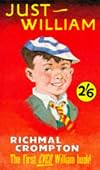
It's impressive for a children's book published in 1922 to hold out so well, but there's a timeless quality to the Just William stories. They are about the joy of boyhood, about how impossible it is to conciliate it with the adult way of thinking. William Brown is a surprisingly modern young hero. One would expect such a series of books from that past time to try to teach something to their young readers, to give them some moral lesson. Not so with Just William. As a boy, I immediately show more detected that these books were not trying to sell me anything, that William was genuine. He was rude, untidy and utterly impossible in the adults' eyes, but as a boy I understood him very well. To borrow some words from The Prince of Tides, he is "brave, defiant, not for sale". Stuck forever in his literary universe at the age of eleven, he is like a Peter Pan immune to the attempts of the adults in his life to civilize him.
Like some of the best children's fiction, it still works well when reading it as an adult. Richmal Crompton's humor still works a century later. You appreciate the fond parody of the adult world more, while still being able to appreciate William's boyish spirit. I hope these books will not be forgotten, because they deserve a place among the classics of children literature. show less
Like some of the best children's fiction, it still works well when reading it as an adult. Richmal Crompton's humor still works a century later. You appreciate the fond parody of the adult world more, while still being able to appreciate William's boyish spirit. I hope these books will not be forgotten, because they deserve a place among the classics of children literature. show less
I've read Just William several times, but I've never reviewed it, thinking perhaps it was too familiar (at least to British readers). But Just William is a book that makes me laugh out loud consistently, and not just me: I remember we listened to the audio version (wonderfully narrated by Martin Jarvis) on a journey through France many years ago and Mr SandDune having to stop the car because he was laughing so much that he couldn't safely drive. (Incidentally, the story 'The Show' in this show more book is the one that prompted that.)
William Brown is 11. He is always 11 (despite the first book being written in 1922 and the last in 1970). He lives with his very long-suffering mother, his bewildered father, and his much more grown-up siblings Ethel and Robert (and a cook and a housemaid and a gardener as well) in a small town somewhere in the South of England. William doesn't exactly mean to be bad, at times he has a definite sense of morality, but in practice everything William touches turns to chaos. He just doesn't understand the adult world and the adult world, especially the genteel middle-class world inhabited by the Browns, most definitely does not understand him.
In 'A Question of Grammar' William persuades himself that his father has given permission for him to have a party when his family is out:
'The party then proceeded.
It fulfilled the expectations of the guests that it was to be a party unlike any other party. At other parties they played "Hide and Seek”—with smiling but firm mothers and aunts and sisters stationed at intervals with damping effects upon one’s spirits, with “not in the bedrooms, dear,” and “mind the umbrella stand,” and “certainly not in the drawing-room,” and “don’t shout so loud, darling.” But this was Hide and Seek from the realms of perfection. Up the stairs and down the stairs, in all the bedrooms, sliding down the balusters, in and out of the drawing-room, leaving trails of muddy boots and shattered ornaments as they went! Ginger found a splendid hiding-place in Robert’s bed, where his boots left a perfect impression of their muddy soles in several places. Henry found another in Ethel’s wardrobe, crouching upon her satin evening shoes among her evening dresses. George banged the drawing-room door with such violence that the handle came off in his hand. Douglas became entangled in the dining-room curtain, which yielded to his struggles and descended upon him and an old china bowl upon the sideboard. It was such a party as none of them had dreamed of; it was bliss undiluted. The house was full of shouting and yelling, of running to and fro of small boys mingled with subterranean murmurs of cook’s rage.'
Recommended for all ages - as long that is as you don't expect your children's fiction to have an improving quality! show less
William Brown is 11. He is always 11 (despite the first book being written in 1922 and the last in 1970). He lives with his very long-suffering mother, his bewildered father, and his much more grown-up siblings Ethel and Robert (and a cook and a housemaid and a gardener as well) in a small town somewhere in the South of England. William doesn't exactly mean to be bad, at times he has a definite sense of morality, but in practice everything William touches turns to chaos. He just doesn't understand the adult world and the adult world, especially the genteel middle-class world inhabited by the Browns, most definitely does not understand him.
In 'A Question of Grammar' William persuades himself that his father has given permission for him to have a party when his family is out:
'The party then proceeded.
It fulfilled the expectations of the guests that it was to be a party unlike any other party. At other parties they played "Hide and Seek”—with smiling but firm mothers and aunts and sisters stationed at intervals with damping effects upon one’s spirits, with “not in the bedrooms, dear,” and “mind the umbrella stand,” and “certainly not in the drawing-room,” and “don’t shout so loud, darling.” But this was Hide and Seek from the realms of perfection. Up the stairs and down the stairs, in all the bedrooms, sliding down the balusters, in and out of the drawing-room, leaving trails of muddy boots and shattered ornaments as they went! Ginger found a splendid hiding-place in Robert’s bed, where his boots left a perfect impression of their muddy soles in several places. Henry found another in Ethel’s wardrobe, crouching upon her satin evening shoes among her evening dresses. George banged the drawing-room door with such violence that the handle came off in his hand. Douglas became entangled in the dining-room curtain, which yielded to his struggles and descended upon him and an old china bowl upon the sideboard. It was such a party as none of them had dreamed of; it was bliss undiluted. The house was full of shouting and yelling, of running to and fro of small boys mingled with subterranean murmurs of cook’s rage.'
Recommended for all ages - as long that is as you don't expect your children's fiction to have an improving quality! show less
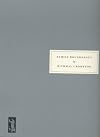
The Fowlers and the Willoughbys are two families deeply embedded into the life of the country town of Bellington in England between the wars. Both are headed by widowed matriarchs with five largely grown-up children apiece, but there the resemblance ends:
When Max Willoughby and Helen Fowler marry, and Helen turns out to be more of a Willoughby in nature than she ever was a Fowler, the families are brought closer together. Family Roundabout follows their fortunes between 1920 and 1939, as births, marriages, deaths and divorce follow one another quickly, and Mrs Fowler and Mrs Willoughby come to appreciate each other's strengths.
In my mind Richmal Crompton is forever associated with the Just William books, but this is one that she wrote for adults, now republished by Persephone. This is a pleasant enough book but I think I was expecting something a little more light hearted from the author of the hilarious Just William series, and in the main the lives of the Fowlers and Willoughbys seem to have rather more downs than ups. I came away with the distinct impression (which I've also had from other books from this time period) that I would not like to have been a middle-class woman between the wars one little bit. The narrative jumps from one member of the family to another, and would have been improved on focusing on rather fewer main characters. So a reasonable read overall, but not one that's going to make me search out more of Richmal Crompton's adult fiction. show less
The Fowlers were of the county, while the Willoughbys were of the town. They sat on the same committees, attended the same public functions, but did not visit each other. Mrs Fowler suspected that the Willoughbys felt the same contempt forshow more
Henry as Henry, half unconsciously, felt for them. Henry was in their eyes a useless member of the community, while the Willoughbys were the community itself. They were its mayors, its town councillors, its Guardians of the Poor. They organised its Christmas treats, its Poor Children's Holidays, its Old People's Parties. And it was Mrs Willoughby, eagle-eyed, eagle-beaked, built on the formidable lines of a dreadnought, who was the ruling spirit of the clan.
When Max Willoughby and Helen Fowler marry, and Helen turns out to be more of a Willoughby in nature than she ever was a Fowler, the families are brought closer together. Family Roundabout follows their fortunes between 1920 and 1939, as births, marriages, deaths and divorce follow one another quickly, and Mrs Fowler and Mrs Willoughby come to appreciate each other's strengths.
In my mind Richmal Crompton is forever associated with the Just William books, but this is one that she wrote for adults, now republished by Persephone. This is a pleasant enough book but I think I was expecting something a little more light hearted from the author of the hilarious Just William series, and in the main the lives of the Fowlers and Willoughbys seem to have rather more downs than ups. I came away with the distinct impression (which I've also had from other books from this time period) that I would not like to have been a middle-class woman between the wars one little bit. The narrative jumps from one member of the family to another, and would have been improved on focusing on rather fewer main characters. So a reasonable read overall, but not one that's going to make me search out more of Richmal Crompton's adult fiction. show less

I've heard about the Just William stories for years now, but for whatever reason, they haven't penetrated American shores. I was pleased and delighted, then, when a close friend sent me this edition of the original Just William collection for my birthday. Now, I'm more surprised than ever these are so unknown in the USA: William, while resolutely a British boy of the 1920s, clearly has the blood of Mark Twain's Tom Sawyer and O. Henry's Red Chief in his veins. Because the stories are show more British, there is no need to see William get more than a trifling comeuppance for his behavior; instead, Richmal Crompton's prose has a wonderfully dry way of both understating and slyly winking at everything William does. As a long-time fan of P.G. Wodehouse's Jeeves and Wooster stories, these were right up my alley, and I enjoyed them tremendously. show less
Lists
Awards


You May Also Like


Associated Authors
Statistics
- Works
- 201
- Also by
- 11
- Members
- 6,083
- Popularity
- #4,047
- Rating
- 4.1
- Reviews
- 90
- ISBNs
- 596
- Languages
- 7
- Favorited
- 12


