
Günter Eich (1907–1972)
Author of Angina Days: Selected Poems
About the Author
Works by Günter Eich
Träume : Hörspiel Lehrerh. [...] 2 copies
Abgelegene Gehöfte Gedichte 1 copy
Ausgewählte Gedichte 1 copy
Poems 1 copy
Phantastische Geschichten 1 copy
Träume -- vier Spiele 1 copy
Der Tiger Jussuf 1 copy
Gedichte, Prosa, Hörspiele 1 copy
Über Günter Eich 1 copy
Fünfzehn Hörspiele 1 copy
Mes taupes 1 copy
Literature and alienation 1 copy
Unter Wasser 1 copy
Associated Works
Against Forgetting: Twentieth-Century Poetry of Witness (1993) — Contributor — 377 copies, 2 reviews
German Radio Plays: Jurgen Becker, Gunter Eich, Peter Handke, and others (German Library) (1991) — Contributor — 12 copies
Moderne Erzahler 1 — Author — 4 copies
Tagged
Common Knowledge
- Canonical name
- Eich, Günter
- Other names
- EICH, Günter
EICH, Guenter
EICH, Gunter - Birthdate
- 1907-02-01
- Date of death
- 1972-12-20
- Gender
- male
- Occupations
- lawyer
orientalist
poet
audio dramatist - Organizations
- Reichsschrifttumskammer
Gruppe 47 - Awards and honors
- Georg Büchner Preis (1959)
- Relationships
- Aichinger, Ilse (wife)
Eich, Clemens (son) - Nationality
- Germany
- Birthplace
- Lebus, Brandenburg, Deutschland
Lebus, Germany - Place of death
- Salzburg, Salzburg, Österreich
- Associated Place (for map)
- Germany
Members
Reviews
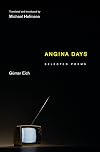
Gunter Eich was a German poet who lived 1907-1972 and who was known for the simplicity of his poems. Translator Michael Hofmann presents a unique picture of Eich in his introduction to Angina Days (a title in reference to his health in later years). In some cases, an introduction reveals too much and tries to interpret too much. Hofmann’s biography of Eich resists that and instead focuses on Eich’s personal life and allows the reader to contemplate and define the poetry on their own. He show more calls Eich’s poems “humble and lived-in and somehow practical” and this collection reflects that. While the poetry is not oversimplified, each reader can likely feel as if they can successfully understand the emotions portrayed.
Hofmann also says that in translating the works, ranging over Eich’s lifetime, he discovered in them “for me the source of the quiet and immense and eerie power of each: words are like stray, chance, isolated survivals after some catastrophe, of unpredictable utility and beauty.” As a side note, Eich’s poetry is compared to the art of Paul Klee.
Within the poetry itself, broken into sections of Eich’s life, there is an array of symbolism with a focus on plants, food, landscape, and travel. Some are romantic, as in Munich-Frankfurt Express where he describes a train trip to see his beloved and “my desire to grow old in the vicinity of your voice.” He can also reflect on WWII with grief in Memorial:
The moors we wanted to hike have been drained.
Their turf has warmed our evenings.
The wind is full of black dust.
It scours the names off the gravestones
and etches this day
into us.
In Dreams he combines the symbolism of travel on the earth with travel in the heart:
There are road signs,
and easily discernible river course,
lookout points in elevated positions,
maps where the lakes are in blue and the forests in green-
It’s easy to find one’s way around in the world.
But you, companion at my side, how hidden from me
is the landscape of your heart!
Feeling my way in the fog, I am often overcome with fear
of the thickets and the hidden precipice.
I know you don’t like your thoughts to be traced,
the echo of your words is intended to mislead-
Roads going nowhere,
pathless terrain, lapsed signage.
This collection is comprehensive and reveals how Eich's outlook changes from youth through illness as he ages, since the poems are spread across 1948-1972. I found this a great exploration of German poetry. show less
Hofmann also says that in translating the works, ranging over Eich’s lifetime, he discovered in them “for me the source of the quiet and immense and eerie power of each: words are like stray, chance, isolated survivals after some catastrophe, of unpredictable utility and beauty.” As a side note, Eich’s poetry is compared to the art of Paul Klee.
Within the poetry itself, broken into sections of Eich’s life, there is an array of symbolism with a focus on plants, food, landscape, and travel. Some are romantic, as in Munich-Frankfurt Express where he describes a train trip to see his beloved and “my desire to grow old in the vicinity of your voice.” He can also reflect on WWII with grief in Memorial:
The moors we wanted to hike have been drained.
Their turf has warmed our evenings.
The wind is full of black dust.
It scours the names off the gravestones
and etches this day
into us.
In Dreams he combines the symbolism of travel on the earth with travel in the heart:
There are road signs,
and easily discernible river course,
lookout points in elevated positions,
maps where the lakes are in blue and the forests in green-
It’s easy to find one’s way around in the world.
But you, companion at my side, how hidden from me
is the landscape of your heart!
Feeling my way in the fog, I am often overcome with fear
of the thickets and the hidden precipice.
I know you don’t like your thoughts to be traced,
the echo of your words is intended to mislead-
Roads going nowhere,
pathless terrain, lapsed signage.
This collection is comprehensive and reveals how Eich's outlook changes from youth through illness as he ages, since the poems are spread across 1948-1972. I found this a great exploration of German poetry. show less

Günter Eich (1907 - 1972) was a German author of poetry and plays. In 1968 he published a collection of very short prose pieces, under the title Maulwürfe. These very short pieces of prose, some would in other countries be considered poetry, have no clear topic. They are neither fiction nor essays (although essays might actually be a good denominator). In 1970, a second collection was published, under the title Ein Tibeter in meinem Büro – 49 Maulwürfe. This Suhrkamp edition combines show more these two publications, together with similar pieces collected from other sources.
Although seemingly insignificant, the Maulwürfe belong to Eich's defining work, and are characteristic of literary trends of the period they were published. show less
Although seemingly insignificant, the Maulwürfe belong to Eich's defining work, and are characteristic of literary trends of the period they were published. show less

I try to read poetry the way I look at a fine painting in the museum. I don't try to interpret it. I just try to enjoy it for what it is. I enjoyed this poetry by a less-well-known German author.
Jul 25, 2025 (Edited)English (UK)
Lists
Awards


You May Also Like


Associated Authors
Statistics
- Works
- 64
- Also by
- 12
- Members
- 271
- Popularity
- #85,375
- Rating
- 4.1
- Reviews
- 3
- ISBNs
- 56
- Languages
- 4
- Favorited
- 3