
About the Author
Spike Walker has spent more than twenty seasons working as a deckhand aboard commercial fishing boats in Alaska. He has voyaged across storm-tossed seas from the ports of Kodiak in the Gulf of Alaska to Dutch Harbor in the Aleutian Islands and north, across the Bering Sea, to the edge of the polar show more ice cap in search of king crab, halibut, and codfish. His first book, Working on the Edge, was hailed by James Michener as "masterful...this will become the definitive account of this perilous trade." With his books Nights of Ice and Coming Back Alive, Spike Walker has firmly established his reputation as one of America's greatest authors of true Alaskan adventure tales show less
Works by Spike Walker
Working on the Edge: Surviving In the World's Most Dangerous Profession: King Crab Fishing on Alaska's HighSeas (1991) 140 copies, 5 reviews
Coming Back Alive: The True Story of the Most Harrowing Search and Rescue Mission Ever Attempted on Alaska's High Seas (2001) 111 copies, 3 reviews
On the Edge of Survival: A Shipwreck, a Raging Storm, and the Harrowing Alaskan Rescue That Became a Legend (2010) 63 copies, 3 reviews
Associated Works
Tagged
Common Knowledge
Members
Reviews
Coming Back Alive: The True Story of the Most Harrowing Search and Rescue Mission Ever Attempted on Alaska's High Seas by Spike Walker
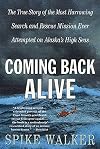
*** Contains multiple spoilers. ** Walker celebrates the Coast Guard SAR (Search and Rescue — not to be confused with SARS) teams that operate in Alaska's forbidding winters. These people risk their lives to save those who have usually made some really dumb decisions. Flying at any time in Alaska is difficult because of the terrain and sudden weather changes, but virtually no one flies at night. SAR teams are often called out at night and usually in the worst weather. Sensory deprivation show more is common, especially in the whiteout conditions of blizzards, when pilots can only depend on their fluorescent radar screens and instruments to keep them from "a controlled collision with terrain." The other members of the team, a flight mechanic, a rescue swimmer, and a navigator often make the difference between life and death. One such team was returning to base after having successfully rescued the survivors of a plane crash. The pilot was a newcomer to the area and had just made a ninetydegree course correction when "his navigator, who was seated behind him, suddenly inquired, 'Hey, is there a reason we're flying at only sixteen feet?'"
About half the book is dedicated to a truly extraordinary rescue. A fishing boat with five crewmen had been caught in a fierce, very fierce winter storm. (The crew had warned the captain to leave the area earlier, but he wanted to collect as much of his fishing gear as possible and ignored their warnings, a decision that would cost him his life.) Soon their boat was being tossed around by one-hundred-foot seas and nasty rogue waves that could come from any direction. The wind chill approached 100 degrees below zero. The boat soon foundered, but the men were able to don their survival suits, and to tie themselves together to the EPIRB, a floating emergency beacon that had a strobe light and radio transmission that could be picked up by satellite. They struggled to stay alive in the freezing water until the first SAR chopper arrived. It was pitch dark, and only the strobe light of the beacon helped the SAR team to find them. The Coast Guard team maneuvered for almost two hours, fighting against tremendous winds and waves that would occasionally tower over the helicopter, forcing them to rapidly rise before being inundated. The basket kept being blown toward the back of the chopper at risk of becoming entangled in the tail rotor blades. Finally, low on fuel and with the flight mechanic, whose job it was to control the metal basket they were trying to lower, suffering from hypothermia, they were forced to turn back. A second rescue chopper was dispatched to no avail. The waves were so high and the wind so strong that getting a basket anywhere near those in the water was impossible. Again they were forced to return to base. By this time, the men had been in the water for many hours and one man had slipped off the rope and died. The boat's skipper was unconscious, being held up by one of the crewmen, ironically a former coast guardsman, someone familiar with survival techniques. By the time a third chopper arrived, the situation was desperate. A C-130 was flying high overhead to relay messages, since the atmosphere was so turbulent their signals could not get through. This SAR team, benefiting from the insights gained information relayed by the first rescue crew, brought extra flares and an extra crewman to help with the winch. The base commander, the only other available pilot, was flying in the co-pilot's seat. After seeing how difficult things were for the pilot to try to maintain position, he hit upon an inspiration. He would manipulate the collective, the device that controls the helicopter's altitude, while the other pilot flew the machine. It went against everything they had been taught and trained, but was precisely what was needed. It relieved the pilot of one extra duty, and he could now concentrate on the directions of the flight mechanic. Tragically, as they lifted two of the survivors from the water, the skipper, who had regained consciousness and was being held on to the side of the basket, fell off and drowned. His body was recovered later by a rescue swimmer from yet another chopper. Three men were saved. The story of the rescue and the odds against it was spellbinding. I could not put the book down. show less
About half the book is dedicated to a truly extraordinary rescue. A fishing boat with five crewmen had been caught in a fierce, very fierce winter storm. (The crew had warned the captain to leave the area earlier, but he wanted to collect as much of his fishing gear as possible and ignored their warnings, a decision that would cost him his life.) Soon their boat was being tossed around by one-hundred-foot seas and nasty rogue waves that could come from any direction. The wind chill approached 100 degrees below zero. The boat soon foundered, but the men were able to don their survival suits, and to tie themselves together to the EPIRB, a floating emergency beacon that had a strobe light and radio transmission that could be picked up by satellite. They struggled to stay alive in the freezing water until the first SAR chopper arrived. It was pitch dark, and only the strobe light of the beacon helped the SAR team to find them. The Coast Guard team maneuvered for almost two hours, fighting against tremendous winds and waves that would occasionally tower over the helicopter, forcing them to rapidly rise before being inundated. The basket kept being blown toward the back of the chopper at risk of becoming entangled in the tail rotor blades. Finally, low on fuel and with the flight mechanic, whose job it was to control the metal basket they were trying to lower, suffering from hypothermia, they were forced to turn back. A second rescue chopper was dispatched to no avail. The waves were so high and the wind so strong that getting a basket anywhere near those in the water was impossible. Again they were forced to return to base. By this time, the men had been in the water for many hours and one man had slipped off the rope and died. The boat's skipper was unconscious, being held up by one of the crewmen, ironically a former coast guardsman, someone familiar with survival techniques. By the time a third chopper arrived, the situation was desperate. A C-130 was flying high overhead to relay messages, since the atmosphere was so turbulent their signals could not get through. This SAR team, benefiting from the insights gained information relayed by the first rescue crew, brought extra flares and an extra crewman to help with the winch. The base commander, the only other available pilot, was flying in the co-pilot's seat. After seeing how difficult things were for the pilot to try to maintain position, he hit upon an inspiration. He would manipulate the collective, the device that controls the helicopter's altitude, while the other pilot flew the machine. It went against everything they had been taught and trained, but was precisely what was needed. It relieved the pilot of one extra duty, and he could now concentrate on the directions of the flight mechanic. Tragically, as they lifted two of the survivors from the water, the skipper, who had regained consciousness and was being held on to the side of the basket, fell off and drowned. His body was recovered later by a rescue swimmer from yet another chopper. Three men were saved. The story of the rescue and the odds against it was spellbinding. I could not put the book down. show less
Working on the Edge: Surviving In the World's Most Dangerous Profession: King Crab Fishing on Alaska's HighSeas by Spike Walker
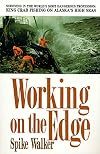
To maximize the sensation of coldness and wetness while reading Spike Walker's Working on the Edge you should really listen to Ralph Vaughn-Williams Antarctic Symphony. It captures the loneliness, hard work and intense cold of the crab industry off Alaska's Bering Strait shores. Walker's book is about the meteoric rise and precipitous fall of an industry which has an occupational mortality rate 20 times that of the coal mining industry. Working conditions were frightful. Crewmen had to show more muscle 750 lb. crab pots over icy decks in 40 – 80 knot winds with seas often running over 30 feet. They were constantly drenched with frigid water for periods of up to 40 hours with no rest. The rewards, however, were extraordinary. During the late 70's the king crab population simply exploded. In the peak year of 1980 the 130,000,000 lb. quota was filled in 29 days by some 230 crab boats (a record high.) A regular crewman pulling the standard full share of 7% of the boat's take might top $50,000 for those 29 days. He (or she) could then go on to fish for tanner crab and pull in additional enormous sums.
Walker was lucky. He had been working in the timber industry, got tired and heard they were hiring up in Alaska. He was a strong worker and despite a predilection for seasickness Learned to love the hard work. In fact, when back in the "lower 48" for a visit he was disgusted to find people whose only desire was to get out of work. He couldn't wait to get back to Alaska and its raw living on the edge. Raw living it was. Bar house brawls were common, and the vast amounts of cash attracted enormous amounts of cocaine. By the 1981 season, however, only 28,000,000 lbs. were taken, and in 1983 the season was totally closed. It was determined that crabs had succumbed to a disease that was making the majority of females sterile.
In between descriptions of how one baits a crab pot and the relative merits of various crew mates, Walker peppers his book with vivid descriptions of calamities and near deaths at sea. He interviewed many of these survivors for the book, and his retelling is spell-binding. From September 1982 through September I983, 68 vessels sank in Alaskan waters with 46 crewmen killed. Storms were ubiquitous and particularly vicious. You gotta be nuts. Great account for us Walter Mittys. show less
Walker was lucky. He had been working in the timber industry, got tired and heard they were hiring up in Alaska. He was a strong worker and despite a predilection for seasickness Learned to love the hard work. In fact, when back in the "lower 48" for a visit he was disgusted to find people whose only desire was to get out of work. He couldn't wait to get back to Alaska and its raw living on the edge. Raw living it was. Bar house brawls were common, and the vast amounts of cash attracted enormous amounts of cocaine. By the 1981 season, however, only 28,000,000 lbs. were taken, and in 1983 the season was totally closed. It was determined that crabs had succumbed to a disease that was making the majority of females sterile.
In between descriptions of how one baits a crab pot and the relative merits of various crew mates, Walker peppers his book with vivid descriptions of calamities and near deaths at sea. He interviewed many of these survivors for the book, and his retelling is spell-binding. From September 1982 through September I983, 68 vessels sank in Alaskan waters with 46 crewmen killed. Storms were ubiquitous and particularly vicious. You gotta be nuts. Great account for us Walter Mittys. show less
Working on the Edge: Surviving In the World's Most Dangerous Profession: King Crab Fishing on Alaska's HighSeas by Spike Walker
Working on the Edge is a true tale written by a commercial fisherman who worked his way up through the ranks, during the epic King crab seasons of the 1980’s off the Aleutians in the Bering Sea. We all know that you shouldn’t judge a book by its cover, or certainly the author by his picture. From the picture of the rough-looking, mountain-of-a-man author, I admit that I expected simplistic sentences, heavy on action and minimal on character. It was an unfounded bias, as I enjoyed his show more vivid descriptions of the people, the feelings, the unbelievable weather and of course, the spirited adventures that he endured.
However, there are some books that become even larger than they are because of the moment in time you receive the book, who gave it to you, even the circumstances that surround the physical book itself. Having recently toured Southeastern Alaska, on a boat chartered from two commercial fishermen, I happened to meet another transplanted Alaskan fisherman as a patient in the hospital where I work. He said, “If you love Alaska and are interested in the commercial fishing trade, you’ll love this book. I’m even mentioned in it! I know all those guys!” I sought out the book, and though I couldn’t clearly identify my new friend in it, I found it to be a well-written book about a wild time in our recent past. Over the years, I kept in touch with my friend and his family, and was sorry to hear recently that he ultimately succumbed to his illness. My copy of this book, passed around my coworkers, with his kind inscription to me inside the cover, has grown new meaning and has earned a precious spot on my bookshelf. show less
However, there are some books that become even larger than they are because of the moment in time you receive the book, who gave it to you, even the circumstances that surround the physical book itself. Having recently toured Southeastern Alaska, on a boat chartered from two commercial fishermen, I happened to meet another transplanted Alaskan fisherman as a patient in the hospital where I work. He said, “If you love Alaska and are interested in the commercial fishing trade, you’ll love this book. I’m even mentioned in it! I know all those guys!” I sought out the book, and though I couldn’t clearly identify my new friend in it, I found it to be a well-written book about a wild time in our recent past. Over the years, I kept in touch with my friend and his family, and was sorry to hear recently that he ultimately succumbed to his illness. My copy of this book, passed around my coworkers, with his kind inscription to me inside the cover, has grown new meaning and has earned a precious spot on my bookshelf. show less
Coming Back Alive: The True Story of the Most Harrowing Search and Rescue Mission Ever Attempted on Alaska's High Seas by Spike Walker
This is a fascinating account of a harrowing rescue attempt in appalling conditions in the Gulf of Alaska. While the story is an amazing one, it is hindered a bit in its telling by the author, who is (if memory serves) an Alaskan crab fisherman by trade. As such, his knowledge of his subject material is excellent, but the mechanics of the writing do leave something to be desired. Nonetheless, if you are interested in these sorts of stories, by all means this is worth reading.
You May Also Like


Associated Authors
Statistics
- Works
- 5
- Also by
- 1
- Members
- 409
- Popularity
- #59,483
- Rating
- 3.6
- Reviews
- 11
- ISBNs
- 19