
Joan Druett
Author of Island of the Lost: Shipwrecked at the Edge of the World
About the Author
Joan Druett's previous books have won many awards, including a New York Public Library Book to Remember citation, a John Lyman Award for Best Book of American Maritime History, and the Kendall Whaling Museum's L. Byrne Waterman Award
Image credit: Courtesy of Allen and Unwin
Series
Works by Joan Druett
The Notorious Captain Hayes: The Remarkable True Story of The Pirate of The Pacific (2016) 16 copies, 1 review
Tagged
Common Knowledge
- Birthdate
- 1939-04-11
- Gender
- female
- Education
- Victoria University of Wellington, New Zealand
- Occupations
- maritime historian
- Nationality
- New Zealand
- Birthplace
- Nelson, New Zealand
- Places of residence
- Wellington, New Zealand
- Associated Place (for map)
- New Zealand
Members
Reviews

This is a true story of perseverance and endurance in the face of extreme natural conditions. I was fascinated by the survivor's account. Contrasting the story of the Grafton castaways is the story of the crew of the Invercauld, whose shipwreck coincided in time with the Grafton's. Their fate however was starkly different as there was complete apathy and absence of leadership from the ship's captain George Delgarno and his mate Andrew Smith. Out of the original 19 survivors of that ship only show more 3 survived and that was in no small part due to the ingenuity of one seaman Robert Holding who was more capable of leading than any of the high-ranking officers. The Grafton castaways all survived by forming a tight democratic group and by sharing labour and responsibilities equally, while the remaining group of the Invercauld experienced strife, in-fighting and even cannibalised their dead. The retrospective telling of both their stories makes for a fascinating study of human behaviour. I admired most the second officer of the Grafton Francois Raynal who took the role of carpenter, blacksmith and cobbler in addition to hunting. The after-story of publishing his memoirs on the island links the work with the social and political mood at the time and is also very fascinating. This book is highly recommended and will probably drive me to read the story of Robert Holding, Wake of the Invercauld. Some of his story is also told and I was glad to see that his hard work and ingenuity paid off as he became a pub owner later in life and wrote his memoirs at the great age of 86. show less
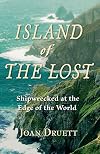
Very, very satisfying; I do love a good disaster nonfiction! And this is such a bizarre story! Five men are shipwrecked on a forbidding, frozen lump of land (the ship being outfitted with shoddy equipment by landlubbing jerks); they surv-thrive through the sort of gumption that one associates with redheaded orphans.
Four months later there comes another shipwreck to the island -- although the terrain is frustrating enough, and the habitations separated enough that the groups never meet (!) show more even when a ship comes (!!) and takes away one party but not the other (!!!).
HEARTBREAKING.
A certain amount of fictionalization necessarily creeps into non-fiction and it usually aggravates me -- but in this case the main sailors kept (threadbare) journals and wrote memoirs, so. It helps. I appreciate the author's afterword, too; she explains which castaway's journal she chose to follow in which instance, how she determined likely veracity (sometimes by using sea lion breeding schedules), all that.
It's good to admit to uncertainty.
Especially because THESE PEOPLE MADE SOAP AND CONCRETE AND BUILT A BELLOWS AND SHIT. I mean. Who would believe that? except ... they left the tannery and forge and everything on the island, so clearly they actually did it. Ridiculous, and humbling. I can't keep my laundry on-track.
read this in an afternoon. show less
Four months later there comes another shipwreck to the island -- although the terrain is frustrating enough, and the habitations separated enough that the groups never meet (!) show more even when a ship comes (!!) and takes away one party but not the other (!!!).
HEARTBREAKING.
A certain amount of fictionalization necessarily creeps into non-fiction and it usually aggravates me -- but in this case the main sailors kept (threadbare) journals and wrote memoirs, so. It helps. I appreciate the author's afterword, too; she explains which castaway's journal she chose to follow in which instance, how she determined likely veracity (sometimes by using sea lion breeding schedules), all that.
It's good to admit to uncertainty.
Especially because THESE PEOPLE MADE SOAP AND CONCRETE AND BUILT A BELLOWS AND SHIT. I mean. Who would believe that? except ... they left the tannery and forge and everything on the island, so clearly they actually did it. Ridiculous, and humbling. I can't keep my laundry on-track.
read this in an afternoon. show less
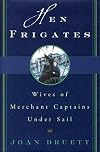
A delight. The book opens with a ghost story, or an ancestor-story: Druett falls into the grave of a sailing lady, recently reopened by a man acting in obedience to a dream of his ancestor. i love ghost stories and ocean-stories and i am quite fond of Druett as well; i want her eloquence & dry wit at my dinner parties.
An entire chapter on sex ("Sex and the Seafaring Wife"), which notes that marital relations must be difficult at sea due to the tossing of the ship in the waves ("opportunity show more for satisfaction was an uncertain matter on board") and also has this gem, direct from a seafaring lady's private journal: "I shall not be a fellatrix, Captain, oh my Captain, and if that be mutiny, make the most of it."
Well!
And then: the terrible, grieving, triggering story of Margaret Fraser, who was trapped at sea for years with an abusive husband, and writes a journal with the upmost caution (even so, he scribbled derisively over entries); what options did she have, after boarding?
Wives stopped joining their husbands with the age of steam boats: the presence of women is distracting. Odd, says Druett, "for no one has ever said that about a man who ... works on shore."
DROP MIKE. show less
An entire chapter on sex ("Sex and the Seafaring Wife"), which notes that marital relations must be difficult at sea due to the tossing of the ship in the waves ("opportunity show more for satisfaction was an uncertain matter on board") and also has this gem, direct from a seafaring lady's private journal: "I shall not be a fellatrix, Captain, oh my Captain, and if that be mutiny, make the most of it."
Well!
And then: the terrible, grieving, triggering story of Margaret Fraser, who was trapped at sea for years with an abusive husband, and writes a journal with the upmost caution (even so, he scribbled derisively over entries); what options did she have, after boarding?
Wives stopped joining their husbands with the age of steam boats: the presence of women is distracting. Odd, says Druett, "for no one has ever said that about a man who ... works on shore."
DROP MIKE. show less
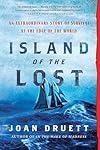
Not only a fascinating survival story, but an interesting study in who survives and who doesn't. As others have noted, there is a lot of gory detail about hunting sea lions; I found it appropriate, though, as the experiences of these men were quite brutal and it does them an injustice to ignore the realities of what surviving actually involves. The ingenuity of the crew of the Grafton is impressive, although I think their unity owes far more to Raynal than to Captain Musgrove, whose show more depressive nature prevented him being an effective leader. The contrasting story of the crew of the Invercauld very clearly sets out the personal attributes that promote survival without ignoring the element of chance.
Druett balances the stories effectively and keeps the narrative moving at an engaging clip. I hate to call this tale enjoyable, steeped as it is in the very real suffering of real people, but it is an entertaining read. show less
Druett balances the stories effectively and keeps the narrative moving at an engaging clip. I hate to call this tale enjoyable, steeped as it is in the very real suffering of real people, but it is an entertaining read. show less
Lists
Awards


You May Also Like


Associated Authors
Statistics
- Works
- 33
- Members
- 1,883
- Popularity
- #13,664
- Rating
- 3.8
- Reviews
- 85
- ISBNs
- 103
- Languages
- 2
- Favorited
- 3
