
Emunah Elon
Author of House on Endless Waters
About the Author
Image credit: Wikipedia
Works by Emunah Elon
Tagged
Common Knowledge
- Canonical name
- Elon, Emunah
- Birthdate
- 1955
- Gender
- female
- Nationality
- Israel
- Associated Place (for map)
- Israel
Members
Reviews
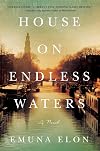
This substantial, multi-tiered novel takes place in two realms: Amsterdam during WW II, and the same city current day, when a renowned Israeli writer on a promotional tour makes a startling discovery in a museum. Yoel Blum always knew he had been born in the Netherlands, but his mother Sonia and older sister Nettie were silent about the circumstances that led to their migration to Palestine. When he sees images of his family projected on the wall in a Jewish museum slide show, with his show more mother holding a little boy bearing no resemblance to Yoel’s own baby pictures, he confronts his sister, forcing her to reveal what his mother had kept hidden from him throughout her life. The novel is structured to send the reader of a winding path to discover what Yoel now knows. Seeking physical remnants of his childhood, he settles into an old Amsterdam hotel that looks out on a building where his family was living as the war began. As Yoel moves throughout the city, sensing and recreating the horrors of life during wartime, he writes his new novel and confronts his enormous failures as a "child of ice", one whose emotional growth was stunted by the circumstances of being hidden away with sympathetic strangers to avoid certain death at the hands of Nazis and local enablers. The dual journeys are equally and remarkably rendered, as the reader knows what doom awaits the Jews of Amsterdam, while Yoel's discoveries about his own family, in the city of canals and bicycles, unwind with shocking surprises. This is a stunning literary achievement, comparable to Sophie's Choice.
Quotes: "It's ridiculous to be a human being, a cluster of organs that wear out constantly."
"He wants her to alleviate the burden of the loneliness that has enshrouded him throughout his life like another layer of skin."
"Their language sounds to him like a jumble of mud and gravel." show less
Quotes: "It's ridiculous to be a human being, a cluster of organs that wear out constantly."
"He wants her to alleviate the burden of the loneliness that has enshrouded him throughout his life like another layer of skin."
"Their language sounds to him like a jumble of mud and gravel." show less
Just when you think you might have read every story possible about the treatment of Jews during World War II, some remarkably talented author will produce a book that addresses a new and different experience. Then you realize the variations are endless, myriad, just like the souls caught up in the horrors of the Holocaust, because when 11 million people die, there are 11 million stories that could be told.
In Emuna Elon’s novel, House on Endless Waters, Yoel Blum is an Israeli writer whose show more publisher sends him to The Netherlands to promote his latest release. Although his mother was Dutch, she always made him promise that he would never go there, so he feels a bit of guilt stepping off the plane into a country that is his birthplace but has always been forbidden to him. What he discovers in Amsterdam is that his mother had another life before the war than the one he knows of, and that much of what he has believed all of his life is not entirely true.
The story is told in two timelines, not an unusual device, but Elon does it is what seemed to me a very unique way. The timelines run almost parallel to one another, so that we might be in the past with Sonia and in the present with Yoel in the same paragraph. It sounds as if it might be confusing, but I did not find it to be at all. In fact, it made the two characters seem more closely connected and gave the book a flow that is often missing in a dual timeline story that bounces between the two stories from chapter to chapter.
Besides being deftly written, this story was entirely engaging. There were moments in which I found myself breathing shallow breaths in anticipation of the next event. Sometimes familiarity with the history of the period can make the most shocking cruelties seem all too commonplace, but Elon knows exactly how to make you feel, rather than just know, what is occuring. She never overplays her hand, rather she allows it to sneak up on you, just as it did on those who were engulfed in it.
In the end, the novel raises many important questions. Some of them have been asked over and over again, without getting any closer to an answer. Why did no one see where this could go? Why did Jewish leaders comply so readily with each step in the process, right up to the bitter end? What would you do if you found yourself in this situation? To what extent would you go to save your child? Who would you sacrifice to protect yourself and yours?
Whatever was, was. Those waters have already flowed onward. Sonia tells Yoel early on. But what we discover, with Yoel, is that the waters that have flowed have changed the terrain as they passed. The past informs the future. We are altered by it, and everyone touched by this becomes a different person than they would otherwise have been. Not all waters are cleansing.
Thanks to Atria Books and Emuna Elon for allowing me an advanced copy of this marvelous book. show less
In Emuna Elon’s novel, House on Endless Waters, Yoel Blum is an Israeli writer whose show more publisher sends him to The Netherlands to promote his latest release. Although his mother was Dutch, she always made him promise that he would never go there, so he feels a bit of guilt stepping off the plane into a country that is his birthplace but has always been forbidden to him. What he discovers in Amsterdam is that his mother had another life before the war than the one he knows of, and that much of what he has believed all of his life is not entirely true.
The story is told in two timelines, not an unusual device, but Elon does it is what seemed to me a very unique way. The timelines run almost parallel to one another, so that we might be in the past with Sonia and in the present with Yoel in the same paragraph. It sounds as if it might be confusing, but I did not find it to be at all. In fact, it made the two characters seem more closely connected and gave the book a flow that is often missing in a dual timeline story that bounces between the two stories from chapter to chapter.
Besides being deftly written, this story was entirely engaging. There were moments in which I found myself breathing shallow breaths in anticipation of the next event. Sometimes familiarity with the history of the period can make the most shocking cruelties seem all too commonplace, but Elon knows exactly how to make you feel, rather than just know, what is occuring. She never overplays her hand, rather she allows it to sneak up on you, just as it did on those who were engulfed in it.
In the end, the novel raises many important questions. Some of them have been asked over and over again, without getting any closer to an answer. Why did no one see where this could go? Why did Jewish leaders comply so readily with each step in the process, right up to the bitter end? What would you do if you found yourself in this situation? To what extent would you go to save your child? Who would you sacrifice to protect yourself and yours?
Whatever was, was. Those waters have already flowed onward. Sonia tells Yoel early on. But what we discover, with Yoel, is that the waters that have flowed have changed the terrain as they passed. The past informs the future. We are altered by it, and everyone touched by this becomes a different person than they would otherwise have been. Not all waters are cleansing.
Thanks to Atria Books and Emuna Elon for allowing me an advanced copy of this marvelous book. show less
This book has a brilliance about it. There is a moment where you just can’t help but go “AHA”. The author lives his plot through all the murk, confusion, and hatred that is nazism in WW II Holland. I started out being totally disconnected from this story and where it was going and in a thunderclap I became so connected I totally got it and knew where it was going and that was the brilliance.
Yoel Blum is a writer, born in Holland, who lives in “the Israeli reality” and because of show more this all his characters “are connected with that reality as well.” But the stories he tells are “about Man wherever he breathes....wherever he loves...wherever he yearns.” Although his stories may be precise in their detail and exploration of the human condition Blum is a fuzzy man. He is a man who can sit cross legged on a carpet in a hotel room immediately aware of his ignorance and his inability to really “see” people. He doesn’t relate in detail to his wife and family, doesn’t remember their names, doesn’t remember their physical touch. He wanders, looking into windows spying on his characters as they develop his story. Never doubt it is always his story. Despite a long ago promise to his Mother to never return, his story takes him back to his birthplace, Amsterdam. Trying to ascertain anything about his past he begs his sister for background. She warns that the Dutch “don’t talk about waters that have flowed onward...being Dutch is no simple matter.”
Researching, digging deeper until his characters take on their own reality Blum challenges you to imagine being kept out of a park because of your religion, to not even be allowed to stand on the outskirts and peek in. Each day to be deprived of another necessity of life, liberty, transportation, food, shelter, and finally your bicycle. And this is the brightest of the horror, the rest is so much darker. This book inspires such unbelievable heartbreak, tragedy yet also fierce determination to protect and survive. This book doesn’t overlook humor even while it is steeped in reflection. Baum’s one truth is that he doesn’t “know how to separate his life in his imagination from reality, which to him was imaginary as well.” Brilliant.
“Realistic writing - to describe things exactly as they look. Surrealistic writing - to describe things not the way they look but they way they actually are.” What? So brilliant.
I loved this book. Thank you NetGalley and Atria Books for a copy. show less
Yoel Blum is a writer, born in Holland, who lives in “the Israeli reality” and because of show more this all his characters “are connected with that reality as well.” But the stories he tells are “about Man wherever he breathes....wherever he loves...wherever he yearns.” Although his stories may be precise in their detail and exploration of the human condition Blum is a fuzzy man. He is a man who can sit cross legged on a carpet in a hotel room immediately aware of his ignorance and his inability to really “see” people. He doesn’t relate in detail to his wife and family, doesn’t remember their names, doesn’t remember their physical touch. He wanders, looking into windows spying on his characters as they develop his story. Never doubt it is always his story. Despite a long ago promise to his Mother to never return, his story takes him back to his birthplace, Amsterdam. Trying to ascertain anything about his past he begs his sister for background. She warns that the Dutch “don’t talk about waters that have flowed onward...being Dutch is no simple matter.”
Researching, digging deeper until his characters take on their own reality Blum challenges you to imagine being kept out of a park because of your religion, to not even be allowed to stand on the outskirts and peek in. Each day to be deprived of another necessity of life, liberty, transportation, food, shelter, and finally your bicycle. And this is the brightest of the horror, the rest is so much darker. This book inspires such unbelievable heartbreak, tragedy yet also fierce determination to protect and survive. This book doesn’t overlook humor even while it is steeped in reflection. Baum’s one truth is that he doesn’t “know how to separate his life in his imagination from reality, which to him was imaginary as well.” Brilliant.
“Realistic writing - to describe things exactly as they look. Surrealistic writing - to describe things not the way they look but they way they actually are.” What? So brilliant.
I loved this book. Thank you NetGalley and Atria Books for a copy. show less
Emunah Elon’s aim in HOUSE ON ENDLESS WATERS is to tell about Amsterdam’s wartime history with the Holocaust. She treats Dutch cooperation with the Nazis, along with their resistance in the form of hiding Jews and sequestering Jewish children with Christian families.
What makes her novel unique, however, is Elon’s use of an intriguing literary construct. Her protagonist is a famous Israeli writer, Yoel Blum. By immersing himself into daily life in Amsterdam, he researches his next novel show more about an unusual mystery that surrounds his mother, Sophie. Although recently deceased in Israel, Sophie lived in Amsterdam with her husband and two children during the war. Elon emphasizes Yoel’s research activity by dividing her novel into a series of “notebooks” that Yoel fills during his time in the city. He collects elements for his novel by observing Sophie’s neighborhood from his hotel room balcony, wandering the city’s streets and canals, visiting its famous museums, and even going to a former collection site where Jews were deported to the camps. Elon alternates these contemporary scenes with historical sequences evoking what must have been Sophie’s lived experience with the ever-tightening net ensnaring Dutch Jews. Elon begins the novel by separating these two plot lines but slowly merges them as the novel progresses. His research clearly also changes Yoel. He begins to feel paranoid about being a Jew; develops a deeper understanding of his mother’s post-war behavior; becomes more attached to his own family and feels more empathy toward the Dutch children he sees while wandering the city.
The novel explores the notion that past and present are linked. Although often obscure, the past inevitably shapes the present. While on a book tour, Yoel visits the Jewish Historical Museum where he finds a photograph of his family during the war. Inexplicably, the young boy in the picture is not him. He learns the meaning of this shocking revelation from his older sister, Nettie. He then seeks to discover more by an extended sojourn to Amsterdam. “He would have to weave the story of his life with the few torn threads Nettie handed him.” Of course, there is little there for him to learn for sure. Yet, with the powerful imagination of a gifted writer, Yoel fills in the blanks. Using elements that he sees in the city, he congers Sophie as a carefree young woman who eventually loses her entire family and freedom. He conceives a wealthy Jewish banker, living above his family, who enforces Nazi decrees. He sees the different treatment of the well-connected banker’s daughter and her family. In the final analysis, Elon gives the reader a remarkably personal depiction of the Nazi occupation of Holland while providing an intimate view of how a novelist works. show less
What makes her novel unique, however, is Elon’s use of an intriguing literary construct. Her protagonist is a famous Israeli writer, Yoel Blum. By immersing himself into daily life in Amsterdam, he researches his next novel show more about an unusual mystery that surrounds his mother, Sophie. Although recently deceased in Israel, Sophie lived in Amsterdam with her husband and two children during the war. Elon emphasizes Yoel’s research activity by dividing her novel into a series of “notebooks” that Yoel fills during his time in the city. He collects elements for his novel by observing Sophie’s neighborhood from his hotel room balcony, wandering the city’s streets and canals, visiting its famous museums, and even going to a former collection site where Jews were deported to the camps. Elon alternates these contemporary scenes with historical sequences evoking what must have been Sophie’s lived experience with the ever-tightening net ensnaring Dutch Jews. Elon begins the novel by separating these two plot lines but slowly merges them as the novel progresses. His research clearly also changes Yoel. He begins to feel paranoid about being a Jew; develops a deeper understanding of his mother’s post-war behavior; becomes more attached to his own family and feels more empathy toward the Dutch children he sees while wandering the city.
The novel explores the notion that past and present are linked. Although often obscure, the past inevitably shapes the present. While on a book tour, Yoel visits the Jewish Historical Museum where he finds a photograph of his family during the war. Inexplicably, the young boy in the picture is not him. He learns the meaning of this shocking revelation from his older sister, Nettie. He then seeks to discover more by an extended sojourn to Amsterdam. “He would have to weave the story of his life with the few torn threads Nettie handed him.” Of course, there is little there for him to learn for sure. Yet, with the powerful imagination of a gifted writer, Yoel fills in the blanks. Using elements that he sees in the city, he congers Sophie as a carefree young woman who eventually loses her entire family and freedom. He conceives a wealthy Jewish banker, living above his family, who enforces Nazi decrees. He sees the different treatment of the well-connected banker’s daughter and her family. In the final analysis, Elon gives the reader a remarkably personal depiction of the Nazi occupation of Holland while providing an intimate view of how a novelist works. show less
Lists
Awards


You May Also Like


Associated Authors
Statistics
- Works
- 12
- Members
- 310
- Popularity
- #76,068
- Rating
- 4.2
- Reviews
- 26
- ISBNs
- 26
- Languages
- 5
- Favorited
- 1