
Goldie Goldbloom
Author of The Paperbark Shoe
Works by Goldie Goldbloom
Associated Works
Tagged
Common Knowledge
- Birthdate
- 1964
- Gender
- female
- Relationships
- Hunt, Dorrit (grandmother)
- Nationality
- Australia (birth)
- Birthplace
- Perth, Australia
- Places of residence
- Chicago, Illinois, USA
- Map Location
- Australia
Members
Reviews
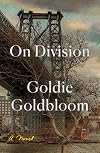
On Division from Goldie Goldbloom is a very well-written novel that in many ways goes beyond being 'just' a novel. This is both an interesting narrative and a glimpse into a community that is largely closed to outsiders.
The main protagonist is Surie Eckstein, a Chasidic Jew living in Brooklyn who is experiencing a late in life pregnancy. This raises many questions and issues for her and her community. I call her the main protagonist because in many ways the Chasidic community is also a main show more character, though largely presented at through the dynamic of Surie's thoughts and her community's (real or anticipated) response to her pregnancy. Through the need to venture outside the closed community, more and more questions are raised in Surie's mind about what is and is not "right."
This is probably one of the most aptly named books in recent memory. This book largely takes place on and around Division Avenue and is very much a meditation on division. While in this case the various types of division have to do with the strict orthodoxy of this particular religion it also speaks to the way we can all get so caught up in our own orthodoxies that we are either mistaken or misunderstand those who hold other views. This may largely be the realm of religion it is far from being limited to it. Theoretical and political schools of thought can be every bit as limiting as any strict religious orthodoxy.
It is easy, and far too often encouraged, to judge harshly any insular group, especially one based on religion that goes largely against the grain of the society, both secular and religious, surrounding it. The beauty, I think, in Goldbloom's approach is that we are shown many of the problematic, from an outsider's viewpoint, issues of Chasidic life while we also see many of the positives of their lifestyle. There are far more questions than answers here as far as what demands a community (religious or otherwise) can and should make of its members. I found that approach to be wonderful, I felt invested in Surie without ever feeling I had to either approve or condemn the community within which she lived. I was able to appreciate parts of the Chasidic life while also not liking other aspects. Far too many books, fiction or nonfiction, want to make a reader choose one or the other.
I would recommend this to a wide range of readers. If, like me, you enjoy learning about communities you know little to nothing about, but don't want to be pushed to either approve or disapprove, you will likely find this an enjoyable read. If you simply enjoy novels that show a character struggling with who they are, why they are, and their role in their community, you'll also likely enjoy this.
Reviewed from a copy made available through Goodreads First Reads. show less
The main protagonist is Surie Eckstein, a Chasidic Jew living in Brooklyn who is experiencing a late in life pregnancy. This raises many questions and issues for her and her community. I call her the main protagonist because in many ways the Chasidic community is also a main show more character, though largely presented at through the dynamic of Surie's thoughts and her community's (real or anticipated) response to her pregnancy. Through the need to venture outside the closed community, more and more questions are raised in Surie's mind about what is and is not "right."
This is probably one of the most aptly named books in recent memory. This book largely takes place on and around Division Avenue and is very much a meditation on division. While in this case the various types of division have to do with the strict orthodoxy of this particular religion it also speaks to the way we can all get so caught up in our own orthodoxies that we are either mistaken or misunderstand those who hold other views. This may largely be the realm of religion it is far from being limited to it. Theoretical and political schools of thought can be every bit as limiting as any strict religious orthodoxy.
It is easy, and far too often encouraged, to judge harshly any insular group, especially one based on religion that goes largely against the grain of the society, both secular and religious, surrounding it. The beauty, I think, in Goldbloom's approach is that we are shown many of the problematic, from an outsider's viewpoint, issues of Chasidic life while we also see many of the positives of their lifestyle. There are far more questions than answers here as far as what demands a community (religious or otherwise) can and should make of its members. I found that approach to be wonderful, I felt invested in Surie without ever feeling I had to either approve or condemn the community within which she lived. I was able to appreciate parts of the Chasidic life while also not liking other aspects. Far too many books, fiction or nonfiction, want to make a reader choose one or the other.
I would recommend this to a wide range of readers. If, like me, you enjoy learning about communities you know little to nothing about, but don't want to be pushed to either approve or disapprove, you will likely find this an enjoyable read. If you simply enjoy novels that show a character struggling with who they are, why they are, and their role in their community, you'll also likely enjoy this.
Reviewed from a copy made available through Goodreads First Reads. show less
I absolutely loved Goldie Goldbloom's other novel, THE PAPERBARK SHOE, a real literary potboiler, with its abandoned albino artistic heroine, set in the unforgiving Outback of Australia during WWII. It was a book of considerable scope with a number of unexpected twists and turns, filled with cruelty, despair, quirky characters and even some kinky sex. It was - IS - a real one-of-a-kind sort of book. And now, several years later, we have this book, ON DIVISION, and lemme tell ya, it is show more NOTHING like her first book. But that doesn't matter. I absolutely loved this one too.
ON DIVISION takes its title from the main street running through Williamsburg, the Jewish section of Brooklyn, the book's setting. The time is the present, and the book's heroine, Surie Eckstein, is a devoutly Chassidic Jew, mother of ten, grandmother many times over, and wife of Yidel, a much sought after and respected scribe who creates traditional Torahs, employing careful calligraphy on animal skins. At fifty-seven, Surie has a secret. She is pregnant, with twins. Her youngest child is now thirteen. Since then she has survived cancer and a double mastectomy. She feels, at first, mostly shame, and is afraid to tell her husband - indeed, she is afraid to tell anyone. She forms an alliance with Val, the single, childless midwife who has delivered all of her children. Val urges Surie to tell Yidel, but Surie resists telling, putting it off repeatedly. In the meantime, she becomes Val's helper in the Manhattan clinic just across the bridge, and even begins to study midwifery. Books and study, and even any talk of sex or pregnancy, we learn, are strictly forbidden, but Surie continues to progress and learn about all of it. She becomes a valuable asset as a Yiddish interpreter for all the pregnant Jewish mothers who come to the clinic.
Unlike Goldbloom's previous book, Surie's story is intensely local and very personal. We get a crash course in the life of Chassidic Jewish women, a very cloistered, "apart" sort of life, where the men grow beards and the sidelocks, while the women must shave their heads and wear wigs and scarves, or cloth turbans. They have their own stores and temples and adhere strictly to the teachings of the Torah. Surie's other secret sorrow is her son, Lipa, gay and flamboyant, who was banished not just by their community, but even by his father. Because the Chassidic community has both its good and bad sides. On the good side, children are all-important. Here's how Surie herself put it, remembering the birth of her tenth child -
"Why should I scream, why should I moan, when I am doing the exact thing I was made for? When I am fulfilling my part in creation? Thank God I know my place in the world. The Torah speaks about many things, but always, always it talks about the children that come forth, the children that one is to sacrifice for. Every part of my life is turned towards children, the having of children, the raising of children."
But the community is unforgiving and intolerant of those who are "different," and so Lipa, with his flagrantly gay ways, was forced out. He was Surie's favorite (though she knows 'favorites' are also forbidden), and, though she is supposed to act as though he never existed, she cannot get Lipa out of her heart and mind, reasoning -
"... what, after all, was so terrible about loving a man instead of a woman? Did the Torah forbid loving? She did not know, did not want to know, what Lipa had done behind closed doors. But then, she did not know what her friends, women she had known for fifty years, did behind closed doors either. None of them spoke about such things. How she wished the veil of secrecy had remained drawn for Lipa too."
In a conversation she has with Val, Surie blurts out her secret, along with her real feelings -
"I had a child who was both gay and not religious, and though he pushed me hard, though everything he did felt like he took a razor to my flesh, I could not stop loving him. And if I had the chance again, I would bring him home and put him to sleep in the best bed, and I would tell him to bring home his boyfriend and I would tell all of my children and my grandchildren to smile at him and to love him and never to stop. And that is because a parent's love does not end. Should not end."
Yes. But the Chassidic community was not that forgiving, could be cruel even, and Surie knows this. She sees this again in the case of a thirteen year-old girl who comes to the clinic, impregnated by an "unlicensed" therapist she had been sent to, a community elder in his sixties. And when she tries to report the man, she is further disappointed, as she is by Yidel, who disapproves of her studying to be a midwife. She is also extremely disappointed in his inability to see that she herself is pregnant again.
The focus in this book is a very narrow one, centered as it is in this small, insular religious community of Brooklyn. I do not want to give anything else away, but trust me, there is unbelievable tension - and suspense - in Surie's very personal story. I was quickly caught up in it. And I suspect anyone who appreciates good writing and, especially, good characters, will love this book as much as I did. My very highest recommendation. Bravo, Ms Goldbloom!
- Tim Bazzett, author of the memoir, BOOKLOVER show less
ON DIVISION takes its title from the main street running through Williamsburg, the Jewish section of Brooklyn, the book's setting. The time is the present, and the book's heroine, Surie Eckstein, is a devoutly Chassidic Jew, mother of ten, grandmother many times over, and wife of Yidel, a much sought after and respected scribe who creates traditional Torahs, employing careful calligraphy on animal skins. At fifty-seven, Surie has a secret. She is pregnant, with twins. Her youngest child is now thirteen. Since then she has survived cancer and a double mastectomy. She feels, at first, mostly shame, and is afraid to tell her husband - indeed, she is afraid to tell anyone. She forms an alliance with Val, the single, childless midwife who has delivered all of her children. Val urges Surie to tell Yidel, but Surie resists telling, putting it off repeatedly. In the meantime, she becomes Val's helper in the Manhattan clinic just across the bridge, and even begins to study midwifery. Books and study, and even any talk of sex or pregnancy, we learn, are strictly forbidden, but Surie continues to progress and learn about all of it. She becomes a valuable asset as a Yiddish interpreter for all the pregnant Jewish mothers who come to the clinic.
Unlike Goldbloom's previous book, Surie's story is intensely local and very personal. We get a crash course in the life of Chassidic Jewish women, a very cloistered, "apart" sort of life, where the men grow beards and the sidelocks, while the women must shave their heads and wear wigs and scarves, or cloth turbans. They have their own stores and temples and adhere strictly to the teachings of the Torah. Surie's other secret sorrow is her son, Lipa, gay and flamboyant, who was banished not just by their community, but even by his father. Because the Chassidic community has both its good and bad sides. On the good side, children are all-important. Here's how Surie herself put it, remembering the birth of her tenth child -
"Why should I scream, why should I moan, when I am doing the exact thing I was made for? When I am fulfilling my part in creation? Thank God I know my place in the world. The Torah speaks about many things, but always, always it talks about the children that come forth, the children that one is to sacrifice for. Every part of my life is turned towards children, the having of children, the raising of children."
But the community is unforgiving and intolerant of those who are "different," and so Lipa, with his flagrantly gay ways, was forced out. He was Surie's favorite (though she knows 'favorites' are also forbidden), and, though she is supposed to act as though he never existed, she cannot get Lipa out of her heart and mind, reasoning -
"... what, after all, was so terrible about loving a man instead of a woman? Did the Torah forbid loving? She did not know, did not want to know, what Lipa had done behind closed doors. But then, she did not know what her friends, women she had known for fifty years, did behind closed doors either. None of them spoke about such things. How she wished the veil of secrecy had remained drawn for Lipa too."
In a conversation she has with Val, Surie blurts out her secret, along with her real feelings -
"I had a child who was both gay and not religious, and though he pushed me hard, though everything he did felt like he took a razor to my flesh, I could not stop loving him. And if I had the chance again, I would bring him home and put him to sleep in the best bed, and I would tell him to bring home his boyfriend and I would tell all of my children and my grandchildren to smile at him and to love him and never to stop. And that is because a parent's love does not end. Should not end."
Yes. But the Chassidic community was not that forgiving, could be cruel even, and Surie knows this. She sees this again in the case of a thirteen year-old girl who comes to the clinic, impregnated by an "unlicensed" therapist she had been sent to, a community elder in his sixties. And when she tries to report the man, she is further disappointed, as she is by Yidel, who disapproves of her studying to be a midwife. She is also extremely disappointed in his inability to see that she herself is pregnant again.
The focus in this book is a very narrow one, centered as it is in this small, insular religious community of Brooklyn. I do not want to give anything else away, but trust me, there is unbelievable tension - and suspense - in Surie's very personal story. I was quickly caught up in it. And I suspect anyone who appreciates good writing and, especially, good characters, will love this book as much as I did. My very highest recommendation. Bravo, Ms Goldbloom!
- Tim Bazzett, author of the memoir, BOOKLOVER show less
Here's the flip side of Unorthodox: the woman who stays. Mother of ten, grandmother of thirty two, almost a great-grandmother. Married at 16, deeply settled into and revered in her Chassidic community in Williamsburg, Brooklyn - and Surie Eckstein is pregnant again, with twins, at age 57. Medical or religious miracle and embarrassing and disastrous for the status of her family, Surie cannot bring herself to tell her loving husband Yidel, a Torah scribe. She chooses her non-Jewish midwife as show more her confidante and stretches the boundaries of life outside her home, learns English and anatomy, and risks losing everything. Surie's melange of courage and foolishness make this an endearing portrait of a woman who daringly reaches beyond her cocoon. The author is divorced, has eight children of her own and is a member of the Chassidic community of Chicago. show less

I'm not quite sure why I've been so lucky to get all these 5-star reads lately, but I'm sure not complaining. Hell, THE PAPERBARK SHOE is one of those books that would be a 10-star if there were one.
Goldie Goldbloom's first novel has already won some awards and I can easily see why. THE PAPERBARK SHOE is one of the most unique - i.e. "different" - stories to come down the pike in many years, with its protagonist-narrator Gin (Hoyle) Toad, an albino woman (and classically trained pianist) show more who was discarded into an asylum by an abusive stepfather to be rescued from there by an ugly, physically and emotionally flawed outback sheepman and farmer, Agrippas Toad.
There are so many things about this strange and beautiful novel that appealed to me: its remote outback setting in the wheat belt of western Australia is only one. And if there were any justice in the literary world, this book would be the biggest Aussie bestseller since THE THORN BIRDS. (And I could certainly see it as a movie too. Meryl Streep would have been perfect as Gin Toad - the Streep of 20-30 years ago, that is.) The World War II time frame and the forbidden love element with the Italian POWs are other reasons this story is so compelling and un-put-downable. Oh, don't get me wrong; this is no Harlequin bodice-ripper. Quite the opposite - the grit, dirt, drought and sometime near-grinding poverty of Toad's place is real enough at times to make you want to go take a shower. There is kinky sex here too, hetero-, homo- and maybe even bisexual, but never presented in an offensive manner. No, Goldbloom manages to pull off these elements of the plot in such a way that you will probably feel only sympathy (if not empathy) for these twisted, emotionally scarred and often desperately unhappy people. (The book's original title was TOADS' MUSEUM OF FREAKS AND WONDERS, which was probably a more apt and descriptive moniker, if a bit unwieldy.)
And the characters are what make this book as good as it is - and once again, lemme tell ya, books don't come much better than this one. First and foremost is Gin, the albino anti-heroine (abused misfit, brilliant musician, bereaved and sometimes reluctant mother, wife to an ugly little army reject whose mixed sexual inclinations and kinky habits are often repugnant and, finally, mistress and runaway). Then there is Toad, her husband, ugly and often cruel, but who becomes a curiously sympathetic character by book's end. And there is the enigmatic and sweet-talking Antonio, the Italian POW whose handsomeness and sympathy are too powerful for poor Gin to ignore. And the outback itself becomes a character here, in its cruel indifference and harsh and unforgiving weather which can starve and kill crops and stock alike - and do.
What more can I tell you about this book? Maybe only that I was sad to see it end. It is that good. If you're reading this review, then you must enjoy books. My advice? DO NOT MISS THIS BOOK! Goldie Goldbloom writes like an angel that has been to hell and got to know its denizens and then came back to tell their story. THE PAPERBARK SHOE is simply top-notch in every way. show less
Goldie Goldbloom's first novel has already won some awards and I can easily see why. THE PAPERBARK SHOE is one of the most unique - i.e. "different" - stories to come down the pike in many years, with its protagonist-narrator Gin (Hoyle) Toad, an albino woman (and classically trained pianist) show more who was discarded into an asylum by an abusive stepfather to be rescued from there by an ugly, physically and emotionally flawed outback sheepman and farmer, Agrippas Toad.
There are so many things about this strange and beautiful novel that appealed to me: its remote outback setting in the wheat belt of western Australia is only one. And if there were any justice in the literary world, this book would be the biggest Aussie bestseller since THE THORN BIRDS. (And I could certainly see it as a movie too. Meryl Streep would have been perfect as Gin Toad - the Streep of 20-30 years ago, that is.) The World War II time frame and the forbidden love element with the Italian POWs are other reasons this story is so compelling and un-put-downable. Oh, don't get me wrong; this is no Harlequin bodice-ripper. Quite the opposite - the grit, dirt, drought and sometime near-grinding poverty of Toad's place is real enough at times to make you want to go take a shower. There is kinky sex here too, hetero-, homo- and maybe even bisexual, but never presented in an offensive manner. No, Goldbloom manages to pull off these elements of the plot in such a way that you will probably feel only sympathy (if not empathy) for these twisted, emotionally scarred and often desperately unhappy people. (The book's original title was TOADS' MUSEUM OF FREAKS AND WONDERS, which was probably a more apt and descriptive moniker, if a bit unwieldy.)
And the characters are what make this book as good as it is - and once again, lemme tell ya, books don't come much better than this one. First and foremost is Gin, the albino anti-heroine (abused misfit, brilliant musician, bereaved and sometimes reluctant mother, wife to an ugly little army reject whose mixed sexual inclinations and kinky habits are often repugnant and, finally, mistress and runaway). Then there is Toad, her husband, ugly and often cruel, but who becomes a curiously sympathetic character by book's end. And there is the enigmatic and sweet-talking Antonio, the Italian POW whose handsomeness and sympathy are too powerful for poor Gin to ignore. And the outback itself becomes a character here, in its cruel indifference and harsh and unforgiving weather which can starve and kill crops and stock alike - and do.
What more can I tell you about this book? Maybe only that I was sad to see it end. It is that good. If you're reading this review, then you must enjoy books. My advice? DO NOT MISS THIS BOOK! Goldie Goldbloom writes like an angel that has been to hell and got to know its denizens and then came back to tell their story. THE PAPERBARK SHOE is simply top-notch in every way. show less
 This review was written for LibraryThing Early Reviewers.
Lists
Awards


You May Also Like


Associated Authors
Statistics
- Works
- 5
- Also by
- 2
- Members
- 280
- Popularity
- #83,033
- Rating
- 3.7
- Reviews
- 36
- ISBNs
- 29
- Languages
- 3
