
Nathacha Appanah
Author of The Last Brother
About the Author
Works by Nathacha Appanah
La notte nel cuore (Italian Edition) 3 copies
Tagged
Common Knowledge
- Legal name
- Pathareddy Appanah, Nathacha Devi
- Other names
- Appanah-Mouriquand, Nathacha
- Birthdate
- 1973-05-24
- Gender
- female
- Occupations
- journalist
- Nationality
- Mauritius
- Birthplace
- Mauritius
- Places of residence
- Paris, France
- Map Location
- Mauritius
Members
Reviews
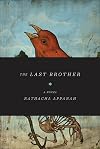
In September of 1940 a European ship filled with Jewish refugees was denied entry into Palestine. They were without entry permits and the British sent them to a detainee camp on the Island of Mauritius. This short, poignant, book tells this story through the memories of a native man who befriended another boy, who was in this camp.
When Raj, our narrator, first sees David he is confused as to why the young boy is in jail. Lacking language skills to communicate, their eyes and hand signals show more draw them into a beautiful relationship built on the innocence of childhood.
Nathacha Appanah was born and lived in Mauritius most of her life. Her vivid descriptions of the landscape on the island drew me in to the point where I could feel the wind, and hear the rustle on forest floor.
This book won't be for everyone. The sadness and despair was strong enough to prevent me from reading too much at one time. At only 169 pages, it should have been a quick read-took me all month. Well worth the time, effort and sadness. Beautiful. show less
When Raj, our narrator, first sees David he is confused as to why the young boy is in jail. Lacking language skills to communicate, their eyes and hand signals show more draw them into a beautiful relationship built on the innocence of childhood.
Nathacha Appanah was born and lived in Mauritius most of her life. Her vivid descriptions of the landscape on the island drew me in to the point where I could feel the wind, and hear the rustle on forest floor.
This book won't be for everyone. The sadness and despair was strong enough to prevent me from reading too much at one time. At only 169 pages, it should have been a quick read-took me all month. Well worth the time, effort and sadness. Beautiful. show less
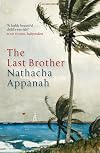
We very rarely notice changes within ourselves at the time, we perceive them later, in the light of events and our reactions to them, but, sitting there as I did, motionless in the dark, I sensed it, a change in myself, I felt as if I were getting bigger, growing, like the trees around me, and it seemed to me that the exhalation of the green, dark forest had something to do with it.
This gorgeous and deeply touching novel is set on the island nation of Mauritius off the coast of east Africa, show more which is isolated from the horrors of World War II but not from the harshness of life under British colonial rule. It is narrated by Raj, a nine year old boy whose family was among the thousands of Indians that were brought to the island decades before to work in its sugar cane fields for subsistence wages. After a tragic accident he and his parents have moved to a safer town, where his father finds work in a prison that supposedly houses hardened convicts. Raj is a sickly and stick thin boy, who is loved dearly by his mother but is not immune from his father's frequent wrathful and violent outbursts after he returns from his demeaning job. He is bored and lonely in his new home, with no close friends and little to occupy his fertile mind.
One day Raj watches the prison from nearby woods out of curiosity of the men who are housed there, and he is surprised to see a boy who is similar to him in age and size, although his blond hair and blue eyes set him apart. The two make eye contact, and later meet in a local hospital, where they quickly become friends despite their language differences. Raj learns that David is part of a group of approximately 1500 Jewish émigrés who attempted to travel from Eastern Europe to Palestine to escape the Nazis in 1940, but were refused admission because they did not have proper immigration documents. The British government determined that they were illegal immigrants, and condemned them to internment in the prison.
David is returned to the prison after his hospitalization, and Raj continues to observe his new friend from the woods. He escapes after a skirmish within the compound, and Raj helps him to flee from his pursuers. Unfortunately David is not well, and the two boys struggle to find food and shelter, as David's health rapidly declines.
The Last Brother is a wonderful coming of age novel, narrated by Raj as he nears the end of his life, which also highlights a little known chapter of Jewish history. The love and friendship that the two boys share rivals that of the most intimate couples, and these two characters will stay close to my heart for a long time to come. show less
This gorgeous and deeply touching novel is set on the island nation of Mauritius off the coast of east Africa, show more which is isolated from the horrors of World War II but not from the harshness of life under British colonial rule. It is narrated by Raj, a nine year old boy whose family was among the thousands of Indians that were brought to the island decades before to work in its sugar cane fields for subsistence wages. After a tragic accident he and his parents have moved to a safer town, where his father finds work in a prison that supposedly houses hardened convicts. Raj is a sickly and stick thin boy, who is loved dearly by his mother but is not immune from his father's frequent wrathful and violent outbursts after he returns from his demeaning job. He is bored and lonely in his new home, with no close friends and little to occupy his fertile mind.
One day Raj watches the prison from nearby woods out of curiosity of the men who are housed there, and he is surprised to see a boy who is similar to him in age and size, although his blond hair and blue eyes set him apart. The two make eye contact, and later meet in a local hospital, where they quickly become friends despite their language differences. Raj learns that David is part of a group of approximately 1500 Jewish émigrés who attempted to travel from Eastern Europe to Palestine to escape the Nazis in 1940, but were refused admission because they did not have proper immigration documents. The British government determined that they were illegal immigrants, and condemned them to internment in the prison.
David is returned to the prison after his hospitalization, and Raj continues to observe his new friend from the woods. He escapes after a skirmish within the compound, and Raj helps him to flee from his pursuers. Unfortunately David is not well, and the two boys struggle to find food and shelter, as David's health rapidly declines.
The Last Brother is a wonderful coming of age novel, narrated by Raj as he nears the end of his life, which also highlights a little known chapter of Jewish history. The love and friendship that the two boys share rivals that of the most intimate couples, and these two characters will stay close to my heart for a long time to come. show less
In this beautiful novel, a 70-year-old Mauritian looks back at a particularly tormented time in his childhood: after a terrible tragedy, he comes to meet a Jewish boy his own age (around 10) who has been "interned"/imprisoned as part of a little known World War 2 episode in which a group of refugee Jews who attempted to land by ship in British-run Haifa were turned away and held on Mauritius, then a British colony. The descriptions of the forest, the often drastic weather, and the ways a boy show more explores and comes to know this natural environment inside out are breath-taking, and the psychological insight into loss, despair, memory, and hope compelling. I read this book in almost one sitting. show less
As World War II starts to wind down, Raj, a 9-year-old living in poverty in Mauritius, knows nothing about the war or, it seems, anything else outside of his immediate experience; given that survival for his family is a day-to-day matter, it’s hardly a surprise. One day he is badly beaten and is taken to the hospital of a nearby prison camp where his father is a guard. There he meets David, a boy his own age. David, we learn (though Raj doesn’t until later), is a refugee, one of a group show more of Jews whose escape from Nazi Germany ended in their extended internment in this camp in Mauritius. A highly destructive island-wide storm allows David to escape with Raj's help. Eventually, the boys flee into the forest which leads in turn to the central tragedy of the story. The story is told by the aging Raj through recollection, interspersed with current-day reflections on aging and (particularly on) loss. I enjoyed this more than I expected and found that the book resonated…and has stayed with me. Recommended. show less
Lists
Awards


You May Also Like


Associated Authors
Statistics
- Works
- 13
- Members
- 689
- Popularity
- #36,712
- Rating
- 3.9
- Reviews
- 55
- ISBNs
- 71
- Languages
- 10
- Favorited
- 2