
Julie Orringer
Author of The Invisible Bridge
About the Author
Julie Orringer was born in Miami, Florida on June 12, 1973. She is a graduate of Cornell University and the Iowa Writers' Workshop. Her books include the short-story collection How to Breathe Underwater: Stories (2003) and the novel The Invisible Bridge (2010). Her stories have appeared in numerous show more publications including The Paris Review, McSweeney's, Ploughshares, The Pushcart Prize Anthology, and The Best New American Voices. She received the Paris Review's Discovery Prize and two Pushcart Prizes. (Bowker Author Biography) show less
Works by Julie Orringer
Luna, Phoenix, Queen: A Novel 3 copies
Associated Works
McSweeney's 12: Unpublished, Unknown, and/or Unbelievable (2003) — Contributor — 290 copies, 4 reviews
The Worst Years of Your Life: Stories for the Geeked-Out, Angst-Ridden, Lust-Addled, and Deeply Misunderstood Adolescent in All of Us (2007) — Contributor — 94 copies, 1 review
The New Diaspora: The Changing Landscape of American Jewish Fiction (2015) — Contributor — 17 copies
Tagged
Common Knowledge
- Birthdate
- 1973-06-12
- Gender
- female
- Education
- Cornell University
University of Iowa (Iowa Writers' Workshop) - Occupations
- writer
- Relationships
- Harty, Ryan (husband)
- Nationality
- USA
- Birthplace
- Miami, Florida, USA
- Places of residence
- Miami, Florida, USA
Ann Arbor, Michigan, USA
Brooklyn, New York, USA - Map Location
- USA
Members
Reviews
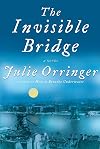
Wow, what an accomplishment! OK, I wouldn't classify this as "literary" fiction, but it's a very accomplished and thoughtful saga/novel of the kind that I thought wasn't being written any more. It dealt in a straightforward manner with people and characters and historic events, with love, war and death; and yet never lapsed into cheap sentiment or glib recitations. If anything, it's a non-Holocaust focused Holocaust novel; while the two main families, the Levis and the Haszs, are Hungarian show more Jews and most of their friends are Jewish as well, and all are caught up in the turmoil of the period from 1938 until 1945, the story is exceptionally well-told on a very human level. I don't know how she did it, but Orringer managed to keep all the threads of a long and complex novel organized and well managed, in much the same way that a composer might conduct a Mahler symphony. No mean feat, especially when she also managed to maintain a sense of time and place.
A few words about the plot: at the outset, we meet Andras Levi, the central character, about to embark on the adventure of his life: studying architecture in Paris. Within the first few pages, we encounter everyone who will play a critical role in his world throughout the next several years, from Novak, the fellow Hungarian who befriends him on the train and offers him a job; the Hasz family, who ask him to deliver a box to their son Jozsef, also in Paris; his brothers, Tibor and Matyas; his circle of Jewish friends at the architecture school. It's a vivid portrayal of a world on the verge of disappearing and crumbling; as it does, Andras clings as long as he can to his dreams of building, in particular building a dream house that he and the woman he loves, Klara, can share. "In his mind he could page through a deep stack of them, those ghostly blueprints of a life they had not yet lived and might never" share.
The only major flaw with this novel, in my eyes at least, is that the ending felt rushed and was recounted indirectly -- almost as if the author became exhausted with her leisurely pace earlier on (this is a long novel...) and just really wanted it to be done, or because she couldn't figure out a way to tell the story she needed to about the eventual fate of many of the characters. It's OK, I suppose, but the big jump covers the most traumatic period for Hungary's Jews, from the summer of 1944 until the end of the war, and it's told after the event, mostly, by some characters to others. That's all that stopped this "thumping good read" from being a five-star book for me -- as it is, I'm awarding it 4.7 stars, a place on my memorable reads for the year and a recommendation to run out and read it, if historical sagas are your cup of tea. show less
A few words about the plot: at the outset, we meet Andras Levi, the central character, about to embark on the adventure of his life: studying architecture in Paris. Within the first few pages, we encounter everyone who will play a critical role in his world throughout the next several years, from Novak, the fellow Hungarian who befriends him on the train and offers him a job; the Hasz family, who ask him to deliver a box to their son Jozsef, also in Paris; his brothers, Tibor and Matyas; his circle of Jewish friends at the architecture school. It's a vivid portrayal of a world on the verge of disappearing and crumbling; as it does, Andras clings as long as he can to his dreams of building, in particular building a dream house that he and the woman he loves, Klara, can share. "In his mind he could page through a deep stack of them, those ghostly blueprints of a life they had not yet lived and might never" share.
The only major flaw with this novel, in my eyes at least, is that the ending felt rushed and was recounted indirectly -- almost as if the author became exhausted with her leisurely pace earlier on (this is a long novel...) and just really wanted it to be done, or because she couldn't figure out a way to tell the story she needed to about the eventual fate of many of the characters. It's OK, I suppose, but the big jump covers the most traumatic period for Hungary's Jews, from the summer of 1944 until the end of the war, and it's told after the event, mostly, by some characters to others. That's all that stopped this "thumping good read" from being a five-star book for me -- as it is, I'm awarding it 4.7 stars, a place on my memorable reads for the year and a recommendation to run out and read it, if historical sagas are your cup of tea. show less
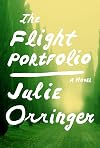
There appears to be a flood of new novels about World War II in the offing, many focusing on those who resisted Nazi ideology or military occupation, in one way or another. Julie Orringer's new novel is likely to stand out from the crowd precisely because it doesn't over-emphasize derring-do -- Varian Fry, in her telling, is a reluctant hero as he tries to save Marc Chagall and others from an evil that he and others are only beginning to understand will become known as the Holocaust. show more Instead, Orringer emphasizes character development: the stress that living in a quasi-occupied world (Vichy France) places on Fry and his motley group of helpers and on those desperately trying to find a way out of Europe before it's too late.
Orringer blends fact with fiction here, and deals with questions such as which lives are most worth saving -- and how one should make that assessment. When Fry's college lover calls on him to help a young man -- whom the lover describes as a brilliant scientist -- those issues come front and center. Who gets saved -- and at what price?
I found this a little slow to get into, in spite of my existing interest in Fry and his activities. And I'd still urge anyone interested in the tale to read "Villa Air-Bel" by Rosemary Sullivan, the immensely readable non-fiction account of these events. Orringer draws on it heavily but has taken some creative license, in ways that sometimes worked for me, and sometimes felt like they were a step too far. But overall, this was a tremendously readable novel. Best of all, Orringer doesn't adopt that slyly knowing stance that too many of those writing about World War II do -- her characters understand that there is serious threat to those they are helping leave Europe, but there aren't any anachronistic hints about exactly WHAT was about to happen in Poland and eastern Europe, or overly-heavy foreshadowing. Her characters know what they could have known at the time, no more and no less. They understand the serious threats to those who think and speak freely, even as they struggle to understand how it could have gone so wrong. And it's to Orringer's credit that she has found ways to combine a sense of personal vulnerability on Fry's part -- she emphasizes his sexuality, and the background of his lover as main plot threads -- with the broader story.
I received an advance e-galley from the publisher via Edelweiss; my views are my own... show less
Orringer blends fact with fiction here, and deals with questions such as which lives are most worth saving -- and how one should make that assessment. When Fry's college lover calls on him to help a young man -- whom the lover describes as a brilliant scientist -- those issues come front and center. Who gets saved -- and at what price?
I found this a little slow to get into, in spite of my existing interest in Fry and his activities. And I'd still urge anyone interested in the tale to read "Villa Air-Bel" by Rosemary Sullivan, the immensely readable non-fiction account of these events. Orringer draws on it heavily but has taken some creative license, in ways that sometimes worked for me, and sometimes felt like they were a step too far. But overall, this was a tremendously readable novel. Best of all, Orringer doesn't adopt that slyly knowing stance that too many of those writing about World War II do -- her characters understand that there is serious threat to those they are helping leave Europe, but there aren't any anachronistic hints about exactly WHAT was about to happen in Poland and eastern Europe, or overly-heavy foreshadowing. Her characters know what they could have known at the time, no more and no less. They understand the serious threats to those who think and speak freely, even as they struggle to understand how it could have gone so wrong. And it's to Orringer's credit that she has found ways to combine a sense of personal vulnerability on Fry's part -- she emphasizes his sexuality, and the background of his lover as main plot threads -- with the broader story.
I received an advance e-galley from the publisher via Edelweiss; my views are my own... show less
I spent a great deal of this book wondering how the author, younger than I, came to write this epic tale of World War II, and forced myself not to skip to the ending or the acknowlegements. I had my guesses, but in the last pages of the story, the full force of it hit me and I finally understood. The main character, a Hungarian boy, travels to Paris in 1937 to study architecture on scholarship. It's the tale of his studies there, his work on the side at theater companies, and his unexpected show more love story. Warning signals of the war and anti-Semitism haunt Paris and the characters in the story, forcing Andras and others back to Hungary. It's a devastating portrait of the war, yet ultimately warming and uplifting. At 750+ pages, the full force of the war on individual lives comes bearing down, and one has to ask the question, why did it take the U.S. and the bombing of Pearl Harbor till 1941 to enter the war in Europe. show less
The Flight Portfolio - Orringer
Audio performance by Ballerini
5 stars
"An artist cannot bear witness if he's dead.”
This book begins with a meeting between Marc Chagall and Varian Fry. Fry is attempting, without success, to convince Chagall that he is in danger, that he must find a way out of France before Vichy arrests him. Before he can be handed over to the Nazis to an eventual death in a concentration camp. Even though I already knew the historical fact that Chagall and his wife do leave show more France safely, I could still feel the fear and tension that they would not.
Flight Portfolio is detailed historical fiction. Today, Chagall’s art is widely known. Varian Fry has international recognition for his part in saving the lives of Jewish artists, writers, and political dissidents. That’s the history. Recreating history, Orringer dropped other famous names into the conversation of her fictionalized characters; Jacques Lipchitz, Max Ernst. She also added one completely fictional Jewish artist, Lev Zilberman. Zilberman becomes a fractional, but morally important, part of a fictional plot that Orringer has inserted into the historical accomplishments of Varian Fry and the Emergency Rescue Committee.
The content of Orringer’s fictional plot line has been criticized and is a topic of some discussion.* She gives her fictional Varian Fry a fictional lover, Elliott Grant. Historically, it is clear that Fry was bisexual, or a closeted homosexual. Orringer isn’t guilty of outing the man with her fiction. But, is it important? And, why make it the focus of a novel? It is a major focus of this novel. The desperate activity and life threatening crisis of the rescue committee run parallel to a fraught love story and Fry’s psychological angst.
Orringer discusses her decision to highlight Fry’s sexual orientation in this book. “A novelist, free to extrapolate, may draw the veil aside. In these pages, I’ve portrayed a real history - Varian Fry’s heroic lifesaving mission in France - alongside an imagined one, his relationship with the entirely fictional Elliott Grant. …….I envision Varian Fry as a brave and brilliant person whose sexuality happened to resist easy categorization. My hope is that he’ll be celebrated that way in the twenty-first century and beyond”
I am usually unhappy with authors who mess with historical facts in their novels. It so often turns a good story into something that is awkwardly contrived. That didn’t happen with this book. It is not a step by step recounting of clandestine activities providing details of each refugee escape.There’s plenty of artistic name dropping although few of the artists become major characters. Orringer depicts the intense interactions of a diverse set of highly gifted individuals. I enjoyed the surrealist dinner party as stage managed by Andre Breton. The author’s inclusion of the homosexual, biracial, Elliott Grant, among the artists and writers housed at Villa Air Bel seemed entirely natural given the unnatural set of dangerous circumstances.
This book has all the tension of a spy thriller. That is not what made it a great book. Orringer makes her characters grapple with the moral consequences of their choices. It’s no accident that Elliott Grant is passing as white, while passing as straight. The author forces her fictional Varian Fry to confront the elitist bias of his priority listing of refugees. She forces him to question his personal choices along with his political choices. She allows him to be a vulnerable, flawed human being. Even if she does mess with historical accuracy, it can’t be too far out of line. It was definitely compelling and thought provoking for this reader. I did not feel that the sexual content of this book was exploitative or prurient. I never felt that the fictional content of this book was disrespectful of Varian Fry’s heroic accomplishments.
*
https://www.nytimes.com/2019/05/17/books/review/was-varian-fry-gay-julie-orringe...
https://www.nytimes.com/2019/05/02/books/review/flight-portfolio-julie-orringer.... show less
Audio performance by Ballerini
5 stars
"An artist cannot bear witness if he's dead.”
This book begins with a meeting between Marc Chagall and Varian Fry. Fry is attempting, without success, to convince Chagall that he is in danger, that he must find a way out of France before Vichy arrests him. Before he can be handed over to the Nazis to an eventual death in a concentration camp. Even though I already knew the historical fact that Chagall and his wife do leave show more France safely, I could still feel the fear and tension that they would not.
Flight Portfolio is detailed historical fiction. Today, Chagall’s art is widely known. Varian Fry has international recognition for his part in saving the lives of Jewish artists, writers, and political dissidents. That’s the history. Recreating history, Orringer dropped other famous names into the conversation of her fictionalized characters; Jacques Lipchitz, Max Ernst. She also added one completely fictional Jewish artist, Lev Zilberman. Zilberman becomes a fractional, but morally important, part of a fictional plot that Orringer has inserted into the historical accomplishments of Varian Fry and the Emergency Rescue Committee.
The content of Orringer’s fictional plot line has been criticized and is a topic of some discussion.* She gives her fictional Varian Fry a fictional lover, Elliott Grant. Historically, it is clear that Fry was bisexual, or a closeted homosexual. Orringer isn’t guilty of outing the man with her fiction. But, is it important? And, why make it the focus of a novel? It is a major focus of this novel. The desperate activity and life threatening crisis of the rescue committee run parallel to a fraught love story and Fry’s psychological angst.
Orringer discusses her decision to highlight Fry’s sexual orientation in this book. “A novelist, free to extrapolate, may draw the veil aside. In these pages, I’ve portrayed a real history - Varian Fry’s heroic lifesaving mission in France - alongside an imagined one, his relationship with the entirely fictional Elliott Grant. …….I envision Varian Fry as a brave and brilliant person whose sexuality happened to resist easy categorization. My hope is that he’ll be celebrated that way in the twenty-first century and beyond”
I am usually unhappy with authors who mess with historical facts in their novels. It so often turns a good story into something that is awkwardly contrived. That didn’t happen with this book. It is not a step by step recounting of clandestine activities providing details of each refugee escape.There’s plenty of artistic name dropping although few of the artists become major characters. Orringer depicts the intense interactions of a diverse set of highly gifted individuals. I enjoyed the surrealist dinner party as stage managed by Andre Breton. The author’s inclusion of the homosexual, biracial, Elliott Grant, among the artists and writers housed at Villa Air Bel seemed entirely natural given the unnatural set of dangerous circumstances.
This book has all the tension of a spy thriller. That is not what made it a great book. Orringer makes her characters grapple with the moral consequences of their choices. It’s no accident that Elliott Grant is passing as white, while passing as straight. The author forces her fictional Varian Fry to confront the elitist bias of his priority listing of refugees. She forces him to question his personal choices along with his political choices. She allows him to be a vulnerable, flawed human being. Even if she does mess with historical accuracy, it can’t be too far out of line. It was definitely compelling and thought provoking for this reader. I did not feel that the sexual content of this book was exploitative or prurient. I never felt that the fictional content of this book was disrespectful of Varian Fry’s heroic accomplishments.
*
https://www.nytimes.com/2019/05/17/books/review/was-varian-fry-gay-julie-orringe...
https://www.nytimes.com/2019/05/02/books/review/flight-portfolio-julie-orringer.... show less
Lists
Awards


You May Also Like


Associated Authors
Statistics
- Works
- 9
- Also by
- 9
- Members
- 3,730
- Popularity
- #6,790
- Rating
- 4.0
- Reviews
- 181
- ISBNs
- 61
- Languages
- 11
- Favorited
- 5