
Anne Berest
Author of The Postcard
About the Author
Image credit: Anne Berest, french writer, Brive la Gaillarde book fair, France, 2010 11 06 By Le grand Cricri - Own work, CC BY-SA 3.0, https://commons.wikimedia.org/w/index.php?curid=19158155
Works by Anne Berest
Cartea poștală 1 copy
Tagged
Common Knowledge
- Birthdate
- 1979-09-15
- Gender
- female
- Education
- Lycée Fénelon, Paris
- Occupations
- writer
actor
novelist
screenwriter
playwright
biographer - Organizations
- Collectif 50/50
- Relationships
- Berest, Claire (sister)
Baer, Édouard (co-author)
Buffet-Picabia, Gabriële (great-grandmother)
Picabia, Francis (great-grandfather) - Short biography
- Anne Berest grew up in Sceaux, a suburb south of Paris. She earned her baccalauréat after studying French literature in high school and went to work at the Théatre du Rond-Point in Paris. She left the theater in 2006 to co-found a small publishing house called Porte-plume that produced micro-editions of biographies for families. In 2008-2010, she adapted Patrick Modiano's short autobiography Un Pedigree as a play with Édouard Baer. She published her debut novel, La Fille de son père (Her Father's Daughter) in 2010. Denis Westhoff, the son of Françoise Sagan, commissioned her to write a book for the 60th anniversary of his mother's most famous novel, Bonjour Tristesse. The result was Sagan 1954 (2014), a novel that was well-received by critics. In 2017, with her sister Claire Berest, she wrote a biography of their maternal great-grandmother Gabrièle Buffet-Picabia. The Berest sisters succeeded in bringing attention to their ancestor's often overlooked life and influence in the art world, specifically within the Dada movement. La carte postale (2021; The Postcard, 2023), is "un roman vrai" (a true novel), a mostly nonfiction exploration of her Jewish family's past during World War II. The book won the inaugural Goncourt Prize USA in 2021. Ms. Berest is also the co-author with Audrey Diwan and Caroline de Maigret of the bestselling How to Be Parisian Wherever You Are (2014). She is also a screenwriter and a member of Collectif 50/50, which aims to promote equality between women and men and diversity in cinema and audiovisual arts.
- Nationality
- France
- Places of residence
- Paris, France
Sceaux, Hauts-de-Seine, France - Associated Place (for map)
- France
Members
Reviews
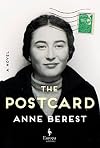
In January 2003, an unsigned postcard is delivered to the Berest home with a picture of the Opera Garnier in Paris addressed to the author’s late grandmother. Handwritten, on the back of the postcard were four names – Ephraïm, Emma, Jacques, and Noémie – the names of four members of the Rabinovitch family, all of whom lost their lives during the Holocaust at Auschwitz. Ephraïm and Emma were the parents of Anne’s grandmother Myriam who was the only member of the Rabinovitch family show more who survived the Holocaust. However, that traumatic era in family history was seldom discussed at the Berest home and though Anne and her mother were Jewish, faith did not play a significant role in Anne’s upbringing. In fact, after the postcard arrived, it was filed away without much thought given to it. This novel is inspired by the author’s investigation of her family’s history.
Fifteen years later, after an uncomfortable Passover gathering at a friend's home and an unfortunate incident with her six-year-old daughter at school, Anne begins to ponder over her family history and more importantly her identity as a Jew. She recalls the postcard with the names of her ancestors and decides to use that as a starting point for research realizing that by understanding her painful family history and the struggles her mother and grandmother endured will she be able to begin to understand her legacy and how it has impacted her life. What follows is an in-depth exploration of the history of the Rabinovich family spanning four generations from 1918-19 to the present day. Anne’s research begins with whatever information she can glean from her mother, existing documentation and her mother’s own research into Myriam’s family. Anne’s journey is one of looking backward in an effort to move forward.
“I found myself confronted with a latent contradiction. On one side, there was the utopia my parents described as a model society to be built, instilling in us, day after day, the idea that religion was an evil to be fought against. And on the other side, hidden away in some dark crevice of our family life, was the existence of a hidden identity, a mysterious heritage, a strange lineage that drew its raison d’être from the very heart of religion. We were all one big family, no matter the color of our skin or our country of origin; we were all connected to one another through our humanity. But, in the midst of this enlightened discourse, there was that word that kept returning, circling back like a dark star, like some bizarre constellation, surrounded by a halo of mystery. Jew.”
Meticulously researched, informative and insightful, thought-provoking and profoundly moving, The Postcard by Anne Berest (translated by Tina Kover from the original French) is the story of a family, the story of war-torn Europe, the Holocaust and the story of survival and generational trauma. The author also explores anti-Semitism both in the context of the Holocaust as well as in contemporary times. The narrative moves between past and present with the past timeline tracing the family history beginning in the pre-WWII years and how Ephraim and Emma moved their family from Russia to Latvia, with a few years in Palestine, and finally, France from where they were deported to Auschwitz, where they perished in 1942. The author vividly describes the oppression of Jews in Nazi-occupied France and the atrocities exacted upon the Jewish population per the dictates of the Nazi regime. Myriam’s story in the later years of the war gives us a glimpse into the Resistance movement in France and the post-war years after the liberation of the concentration camps. Much of what we learn of Myriam's later life is from memories shared by Lelia. The present-day timeline follows Anne and Lelia as they leave no stone unturned in trying to track down the identity of the person who sent the postcard. The author skillfully weaves the different timelines and characters into a gripping and well-paced narrative. Part –memoir, part historical fiction, this is an important book that I would not hesitate to recommend. A must-read for those who enjoy historical fiction with an element of mystery and appreciate stories inspired by true events.
Many thanks to Europa Editions and NetGalley for the digital review copy of this extraordinary novel. All opinions expressed in this review are my own.
“I see obstacles where others do not. I struggle endlessly to make a connection between the thought of my family and the mythologized occurrence that is genocide. And that struggle is what constitutes me. It is the thing that defines me. For almost forty years, I have tried to draw a shape that resembles me, but without success. Today, though, I can connect those disparate dots. I can see, in the constellation of fragments scattered over the page, a silhouette in which I recognize myself at last: I am the daughter, and the granddaughter, of survivors.” show less
One of my best reads of the year. Difficult (as it should be) and worth it. Heart-shattering, impactful, and tragic both beyond comprehension and across generations.
The worst and hardest part: the blithe promise of 'never again' that seems, increasingly, to have been well-intentioned, false hope as patterns of history seem to be on repeat.
Wholly recommend.
The worst and hardest part: the blithe promise of 'never again' that seems, increasingly, to have been well-intentioned, false hope as patterns of history seem to be on repeat.
Wholly recommend.
What a sensational read, immensely traumatic, and yet, not off-putting. The story arises from the viewpoint of descendants of Holocaust survivors.
There's no Holocaust horror porn in this book, but there is a lot of detail, not so much about their fates but more about who they were and how much was lost to us all in this period. In lots of ways it brings home the tragedy more than the likes of those other Holocaust novels.
There's much here to upset anyone who wants to read this book. I show more don't know what else to say except that I could not put it down and I am so glad I read it. show less
There's no Holocaust horror porn in this book, but there is a lot of detail, not so much about their fates but more about who they were and how much was lost to us all in this period. In lots of ways it brings home the tragedy more than the likes of those other Holocaust novels.
There's much here to upset anyone who wants to read this book. I show more don't know what else to say except that I could not put it down and I am so glad I read it. show less
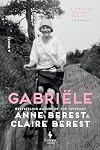
In 1985 …(our great-grandmother) Gabriële Buffet-Picabia died of natural causes at age 104. We didn’t go to her funeral, for the simple reason that we didn’t know she existed. from Gabriële by Anne and Claire Berest
It is likely, like Anne and Claire Berest, you haven’t heard of Gabriële Buffet. The sisters had to research and imagine their great-grandmother’s life to write this novel. They discovered a complicated woman, a failure as a mother and grandmother while she inspired show more the birth of art movements that changed the world.
Gabriële is a fascinating character and I loved delving into her life and world. Her intelligence and charisma shines through the book, enchanting readers as she did the men whose art challenged the status quo.
She won enty to music school to study composition at a time few women were admitted, but her life plans were upended when her brother introduced her to a successful Impressionist artist, Francis Picabia. An instant hit in the art world, Picabia now felt stifled by his commercially successful work. Gabriële encouraged him to do what she wanted to do in music, turning to abstraction as an art form. And Picabia paints the first abstract painting ever.
Picabia swept her off her feet and for decades she was his muse, his critic, his inspiration. He was impetuous, with manic and depressive phases, a charmer who entangled men in deep friendships and women in passionate affairs. They were intellectual equals, soulmates of the mind.
She knows she’s in the process of setting a match to gunpowder. from Gabriële by Anne and Claire Berest
Picabia needed Gabriële like a selfish child, with no consideration for her career or personal needs. Depleted by her husband’s manic life fueled by drugs and alcohol, Gabriële needed to retreat to the mountains and to see their children placed in boarding school.
They knew all the movers and shakers of the early 20th c art world. The couple became close to Marcel Duchamp, who fell in love with Gabriële and later became her lover, and with the poet Guillaume Apollinaire, Gabriële’s lifelong friend. Gabriële became close friends with the future fashion designer Elsa Schiaparelli. She was at the premier of The Rite of Spring and later became involved with Igor Stravinsky.
I knew Duchamp’s major works from our many visits to the Philadelphia Museum of Art. But Picabia’s I had to find online. He was “the hero” of the legendary 1913 Armory Show in New York City which turned the art world around, yet I had not come across him before! I recognized Gabriële’s face in some of his art, her prominent cheekbones and slanted eyes.
I was like a man. I didn’t want to put any limits on my life. from Gabriële by Anne and Claire Berest
I loved this exploration of the writers’ family history and what it revealed about a pivotal age in art.I couldn’t put it down, and I hope they write a second volume about Gabriële’s later life.
Thanks to the publisher for a free book through NetGalley. show less
It is likely, like Anne and Claire Berest, you haven’t heard of Gabriële Buffet. The sisters had to research and imagine their great-grandmother’s life to write this novel. They discovered a complicated woman, a failure as a mother and grandmother while she inspired show more the birth of art movements that changed the world.
Gabriële is a fascinating character and I loved delving into her life and world. Her intelligence and charisma shines through the book, enchanting readers as she did the men whose art challenged the status quo.
She won enty to music school to study composition at a time few women were admitted, but her life plans were upended when her brother introduced her to a successful Impressionist artist, Francis Picabia. An instant hit in the art world, Picabia now felt stifled by his commercially successful work. Gabriële encouraged him to do what she wanted to do in music, turning to abstraction as an art form. And Picabia paints the first abstract painting ever.
Picabia swept her off her feet and for decades she was his muse, his critic, his inspiration. He was impetuous, with manic and depressive phases, a charmer who entangled men in deep friendships and women in passionate affairs. They were intellectual equals, soulmates of the mind.
She knows she’s in the process of setting a match to gunpowder. from Gabriële by Anne and Claire Berest
Picabia needed Gabriële like a selfish child, with no consideration for her career or personal needs. Depleted by her husband’s manic life fueled by drugs and alcohol, Gabriële needed to retreat to the mountains and to see their children placed in boarding school.
They knew all the movers and shakers of the early 20th c art world. The couple became close to Marcel Duchamp, who fell in love with Gabriële and later became her lover, and with the poet Guillaume Apollinaire, Gabriële’s lifelong friend. Gabriële became close friends with the future fashion designer Elsa Schiaparelli. She was at the premier of The Rite of Spring and later became involved with Igor Stravinsky.
I knew Duchamp’s major works from our many visits to the Philadelphia Museum of Art. But Picabia’s I had to find online. He was “the hero” of the legendary 1913 Armory Show in New York City which turned the art world around, yet I had not come across him before! I recognized Gabriële’s face in some of his art, her prominent cheekbones and slanted eyes.
I was like a man. I didn’t want to put any limits on my life. from Gabriële by Anne and Claire Berest
I loved this exploration of the writers’ family history and what it revealed about a pivotal age in art.I couldn’t put it down, and I hope they write a second volume about Gabriële’s later life.
Thanks to the publisher for a free book through NetGalley. show less
Lists
Awards


You May Also Like


Associated Authors
Statistics
- Works
- 13
- Members
- 1,487
- Popularity
- #17,271
- Rating
- 4.0
- Reviews
- 65
- ISBNs
- 71
- Languages
- 12