
Rodney K. Engen
Author of Randolph Caldecott: 'Lord of the Nursery'
About the Author
Works by Rodney K. Engen
Tagged
Common Knowledge
Members
Reviews
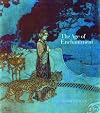
This is the catalogue of one of the Dulwich Picture Gallery's small but generally informative exhibitions and it covers the art of 'fantastic' book illustration in London from the 1890s to the 1920s.
The exhibition probably tried to do much in its attempt both to demonstrate the enormous influence of Beardsley and to give an overview of fairy and folk tale illustration for the gift book market.
Market is the operative word here - an opportunity for illustrative genius starts with a fashion show more product ('decadence') and becomes a market offer for children and families rather than adults quite quickly.
The fantastic in art is superficially an escape from reality but little of the work would have existed if publishers had not been highly realistic in their appraisal of the wants and desires of customers.
Perhaps not wholly intentionally, the book is a case study for those who want one in the business of the creative arts and how a creative 'star' can rise and fall not on talent but on the competition.
The works presented here are all worthy but the exhibition is not the whole of the story. Dulwich gives solid biographies and background but the reader should be ready to go online and search out the wealth of material on these illustrators and many others not mentioned.
Beardsley is, of course, one influence (influenced in turn by Japanese art) but there is also the longer tradition of Victorian 'faery art' and the rediscovery of folk tales and, for adults, Wagnerian epic.
It could be argued that Beardley's influence is less important than that of the pre-Raphaelites and William Morris although the argument that Art Deco is an adaptation of Art Nouveau and decadent line stands.
The point is that no illustrator was unaware of the market and of fashion just as each had his or her distinctive vision that the book (with some gaps) demonstrates.
Many of these artists knew each other well and responded to the work of others. London became such a centre of excellence that it soon attracted talented foreigners - Pogany, Dulac, Nielsen, Henning Voight.
This market never quite recovered in the wake of the First World War and it shifted into a more mass market model with less room for 'excellence', in competition with cinema as well as other art forms.
Some (notably Pogany, Nielsen and Henning Voight) simply moved on to where the popular cultural action was (America) while the indigenes either had to accept relative nonentity or move into new arts.
We get a sense of a peaking empire deciding to abandon fantasy as a luxury, even for children, during the interwar years, treated here as a sort of parable in the rejection of Frank Brangwyn's murals.
Brangwyn was the establishment figure par excellence of imperial arts but his romantic floral fantasy simply failed to cut the mustard with the committee men of the Commons ... the imperial fantasy was over.
British illustration does not start with Beardsley nor end with the Detmolds. The Exhibition probably overplays the distinctiveness of the period but there was a magical enchantment in the illustrative arts.
Some themes recur - the peacock, the naked nubility of the young, elongated forms, a fake eighteenth century ambience, chivalry, innocence, the grotesque, orientalism, mermaids and undines.
This was elfland, dreamland, pegana and fairy land, made dark by Poe and serious by Wagner. What it was not was the here and now for a repressed culture of duty marked in the middle by war sacrifice.
The book thus gives us a remarkable insight into a culture that provided a fantasy outlet that began to spread out into the lower middle classes and upper working classes through faery tale books.
For thirty years, the English were looking away from their own world, trying to protect children from their own future by embedding them in pasts made up of knights, princesses, genies, fairies and what not.
It was a studied attempt to re-construct innocence out of a style made by decadents for sin, voluptuousness and horror. The trajectory from Salome and Harry Clarke's Poe to Pogany's Disney work is mediated here. show less
The exhibition probably tried to do much in its attempt both to demonstrate the enormous influence of Beardsley and to give an overview of fairy and folk tale illustration for the gift book market.
Market is the operative word here - an opportunity for illustrative genius starts with a fashion show more product ('decadence') and becomes a market offer for children and families rather than adults quite quickly.
The fantastic in art is superficially an escape from reality but little of the work would have existed if publishers had not been highly realistic in their appraisal of the wants and desires of customers.
Perhaps not wholly intentionally, the book is a case study for those who want one in the business of the creative arts and how a creative 'star' can rise and fall not on talent but on the competition.
The works presented here are all worthy but the exhibition is not the whole of the story. Dulwich gives solid biographies and background but the reader should be ready to go online and search out the wealth of material on these illustrators and many others not mentioned.
Beardsley is, of course, one influence (influenced in turn by Japanese art) but there is also the longer tradition of Victorian 'faery art' and the rediscovery of folk tales and, for adults, Wagnerian epic.
It could be argued that Beardley's influence is less important than that of the pre-Raphaelites and William Morris although the argument that Art Deco is an adaptation of Art Nouveau and decadent line stands.
The point is that no illustrator was unaware of the market and of fashion just as each had his or her distinctive vision that the book (with some gaps) demonstrates.
Many of these artists knew each other well and responded to the work of others. London became such a centre of excellence that it soon attracted talented foreigners - Pogany, Dulac, Nielsen, Henning Voight.
This market never quite recovered in the wake of the First World War and it shifted into a more mass market model with less room for 'excellence', in competition with cinema as well as other art forms.
Some (notably Pogany, Nielsen and Henning Voight) simply moved on to where the popular cultural action was (America) while the indigenes either had to accept relative nonentity or move into new arts.
We get a sense of a peaking empire deciding to abandon fantasy as a luxury, even for children, during the interwar years, treated here as a sort of parable in the rejection of Frank Brangwyn's murals.
Brangwyn was the establishment figure par excellence of imperial arts but his romantic floral fantasy simply failed to cut the mustard with the committee men of the Commons ... the imperial fantasy was over.
British illustration does not start with Beardsley nor end with the Detmolds. The Exhibition probably overplays the distinctiveness of the period but there was a magical enchantment in the illustrative arts.
Some themes recur - the peacock, the naked nubility of the young, elongated forms, a fake eighteenth century ambience, chivalry, innocence, the grotesque, orientalism, mermaids and undines.
This was elfland, dreamland, pegana and fairy land, made dark by Poe and serious by Wagner. What it was not was the here and now for a repressed culture of duty marked in the middle by war sacrifice.
The book thus gives us a remarkable insight into a culture that provided a fantasy outlet that began to spread out into the lower middle classes and upper working classes through faery tale books.
For thirty years, the English were looking away from their own world, trying to protect children from their own future by embedding them in pasts made up of knights, princesses, genies, fairies and what not.
It was a studied attempt to re-construct innocence out of a style made by decadents for sin, voluptuousness and horror. The trajectory from Salome and Harry Clarke's Poe to Pogany's Disney work is mediated here. show less
Pre-Raphaelite Prints: The Graphic Art of Millais, Holman Hunt, Rossetti and Their Followers by Rodney Engen

Being a rather technical study of a backwater theme among the Pre-Raphaelite movement and its outgrowths. The book takes its time in getting around to its subject and is not especially well-illustrated.
sorry to be finished. mostly book illustrators.
You May Also Like


Statistics
- Works
- 15
- Members
- 178
- Popularity
- #120,888
- Rating
- 4.4
- Reviews
- 3
- ISBNs
- 24