David Larkin (1936–2020)
Author of Faeries
About the Author
Disambiguation Notice:
(June 2011) According to the Library of Congress, David Larkin 1936- is a designer of illustrated documentary books. It appears that the wide range of books on this page are all his work, as author or editor, and therefore the page need not be split.
Image credit: via Babelio
Works by David Larkin
The Fantastic Kingdom: A Collection of Illustrations from the Golden Days of Storytelling (1974) 171 copies, 1 review
The Ages of the Earth: Foundations of Palaeogeography and Palaeontology (1966) — Joint Author. — 17 copies
Working Wagons: 1985-1992 v. 4: A Pictorial Review of Freight Stock on the B.R. System (Model Railway) (2002) 10 copies
BR Parcels and Passenger-Rated Stock: Full Brakes, Parcels & Miscellaneous Vans and Car-carrying Vehicles Vol 1 (2014) 6 copies
BR Parcels and Passenger-Rated Stock: Vol 2: Horse Boxes, Special Cattle Vans & Vehicles for Fish, Fruit and Milk Traffic (2015) 5 copies
BR Parcels and Passenger-Rated Stock: Self-Propelled Parcels Vans, TPOs and Car-Carrying Vehicles for Motorail Services: 3 (2016) 5 copies
Working Wagons: 1980-1984 v. 3: A Pictorial Review of Freight Stock on the B.R.System (2001) 5 copies
Wagons of the Final Years of British Railways: A Pictorial Study of the 1962-1968 Period (2008) 4 copies
The Acquired Wagons of British Railways Volume 7: Hopper Wagons (Coal, Loco Coal, Coke, Iron Ore & Ballast) and Ballast Plough Brake Vans (2025) 3 copies
The Acquired Wagons of British Railways Volume 6: Minerals, Opens & Vehicle-carriers (2024) 3 copies
The Acquired Wagons of British Railways Volume 4: General Merchandise Vans & Containers, Special Purpose Vans & Cattle Wagons (2022) 3 copies
Irish Research Compendium 2 copies
Speedlink Volume 1: A comprehensive pictorial study of the rolling stock used on this service 1977-91 (2023) 2 copies
Wagons of the Middle British Railways Era: A Pictorial Study of the 1955-1961 Period (British Railways Goods Wagons Series) (2007) 2 copies
Irish Surname Variants 1 copy
Irish Genealogy at QFHS 1999 1 copy
Associated Works
Peanuts: A Golden Celebration: The Art and the Story of the World's Best-Loved Comic Strip (1999) — Editor — 764 copies, 2 reviews
Mission: The History and Architecture of the Missions of North America (1993) — Editor — 61 copies, 1 review
Tagged
Common Knowledge
- Canonical name
- Larkin, David
- Birthdate
- 1936-10-14
- Date of death
- 2020-12-02
- Gender
- male
- Occupations
- art director
book designer
editor - Organizations
- David Larkin Books
Pan Books
Granada Publishing
Panther Books
Pulford Publicity
Studio Erwin (show all 7)
British Army Intelligence - Relationships
- Larkin, Colin (brother)
- Nationality
- UK
- Birthplace
- Dagenham, Essex, England, UK
- Places of residence
- Cherry Plain, New York, USA
- Place of death
- Cherry Plain, New York, USA
- Disambiguation notice
- (June 2011) According to the Library of Congress, David Larkin 1936- is a designer of illustrated documentary books. It appears that the wide range of books on this page are all his work, as author or editor, and therefore the page need not be split.
- Associated Place (for map)
- UK
Members
Reviews
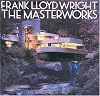
If there is a heaven, then Frank Lloyd Wright is busy designing homes for the god and angels. It constantly amazes me that this man who was born in the heart of Wisconsin could have designed what can only be called Livable Art.
He was the first architect to take the location of the building into consideration while he designed it. Wright not only designed the house, but he also mandated what kind of furniture should be in it and then realized that mandate by designing it. He would have been show more comfortable in a loft since his houses were very often built in such a way that the walls created all the separation needed. Living rooms merged with bedrooms, and dining rooms segued into living rooms.
When we look through his designs (both those that were built and those for which the engineering has not yet caught up), we see motifs and construction details that are now common, but did not exist before Wright picked up his pen. And let us also remember that, when a great earthquake destroyed practically every building in Japan in the early 1920s, his hotel remained standing. This is an amazing feat given that research into making buildings resistant to moving earth did not begin until 30 years after the architect died.
I live in Madison, Wisconsin, less than 40 miles from where he spent his childhood and to which he returned as a husband and father. He lost his family near here, but changed that grief into new designs. He legacy still lives in the first Usonian church ever created -- a place that makes one feel tiny in contrast to the god worshiped there. And many other buildings, designed by his followers and students dot the city.
This book doesn't look at all of Wright's designs, only at those which the author considers to be Wright's masterworks.But it took 300 pages to cover this small number of his designs. Paging through it, looking at the beauty he created, can refresh one's head and soul. show less
He was the first architect to take the location of the building into consideration while he designed it. Wright not only designed the house, but he also mandated what kind of furniture should be in it and then realized that mandate by designing it. He would have been show more comfortable in a loft since his houses were very often built in such a way that the walls created all the separation needed. Living rooms merged with bedrooms, and dining rooms segued into living rooms.
When we look through his designs (both those that were built and those for which the engineering has not yet caught up), we see motifs and construction details that are now common, but did not exist before Wright picked up his pen. And let us also remember that, when a great earthquake destroyed practically every building in Japan in the early 1920s, his hotel remained standing. This is an amazing feat given that research into making buildings resistant to moving earth did not begin until 30 years after the architect died.
I live in Madison, Wisconsin, less than 40 miles from where he spent his childhood and to which he returned as a husband and father. He lost his family near here, but changed that grief into new designs. He legacy still lives in the first Usonian church ever created -- a place that makes one feel tiny in contrast to the god worshiped there. And many other buildings, designed by his followers and students dot the city.
This book doesn't look at all of Wright's designs, only at those which the author considers to be Wright's masterworks.But it took 300 pages to cover this small number of his designs. Paging through it, looking at the beauty he created, can refresh one's head and soul. show less
Clearly this is just meant to be an introduction to the wonder that is Arthur Rackham’s artwork, since it misses a lot of what I consider his seminal works. Nothing from his Peter Pan, Wagner’s Ring, or Grimm’s series are included, so I was left feeling like this book kind of missed the point, even though some examples of his silhouettes, Alice in Wonderland, and lesserknown fairytale series are included. I was pleased to see some examples of the Arthurian myths represented, since show more these are quite difficult to find elsewhere (I have yet to see a copy of his illustrated Morte D’Arthur entirely), and was relieved to see that even though the volume is slim the reproductions are very high quality. Maybe I’m just spoiled with the wealth of Rackham work that I have in my own collection or have borrowed from the library! show less
Dali by David Larkin
Compared to the previous book I read about Salvador Dali, this one was a much more enjoyable read. Surprising, I know, considering that the other book is a Taschen publication, but sometimes even the great publishers mess up. This book, like all of the others in the same art-focused series, contains a short essay (in this case by J.G. Ballard, the novelist) which gives an extremely brief overview of the artist in question before diving straight into the artwork. This simple format works in show more the book's favour, because the essay serves more to set the mood for the forthcoming illustrations. Ballard's short piece barely even discusses Dali's life, but instead provides a whimsical personal interpretation of the artist's personality and persona, which I felt provided more context (and left the reader to determine their own opinions about Dali's artwork) than a typical academic essay. As for the artwork, it is clear why this book stood above - presenting each piece on their own page, with accompanying details zoomed in, is clearly the best way for each artwork to impact the reader. show less
VIDEO VERSION:
Faeries by Brian Froud
-------------
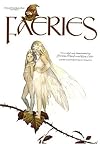
Faeries by Brian Froud is unique among any books I've ever read. The book is part reference manual, part artist sketchbook, part short story compendium, and some would dare say, part anthropological fieldguide. Faeries isn't a book that can be neatly tucked into a tidy description. Like the author Brian Froud, Faeries is truly in a class by itself.
Written and illustrated by Brian Froud and Alan Lee (mostly known for his conceptual design work show more on The Lord of The Rings films and his uncredited design of Legend by Ridley Scott), Brian is a world-renown fantasy artist and author of several books featuring his second-sight hypnogogic images of the realms of faerie. In addition to his wonderful illustrative talents, Brian Froud is also responsible for the conceptual design of timeless films such as Labyrinth and The Dark Crystal. He also worked on the wonderful Jim Henson television series The Storyteller.
During the summer of 2003, I had the great honor of meeting Brian Froud, two days in a row. The first time we met was at the illustrious Labyrinth Masquerade Ball (which took place in Santa Monica that year) and the next time we met was at a little curio shop where he was doing a book signing, I believe somewhere over in Brentwood.
Wonderful gentleman. At the Masquerade Ball, I hung out with Brian, and his lovely wife Wendy, and I chatted with their son Toby for a time as well. Wendy is an incredible artist in her own right, helping design characters such as Yoda in The Empire Strikes Back and the gelflings Jen and Kira in The Dark Crystal. Wendy and I discovered that I actually used to take family vacations up near the little town in Michigan where she was born, Traverse City. We reminisced about that for awhile and had a great chat. We hung out for a good hour or so, just talking. That was when they told me about the signing the next day and invited me to come along. Strangely enough, no one seemed to recognize Brian or Wendy Froud, so they weren't being swarmed by people pleading for autographs or anything. We were kicking back in a little lounge area, all by ourselves, overlooking a wrought-iron balcony onto hundreds of people who were milling about on the dancefloor and socializing in other parts of the ball.
The next day, I arrived at the book signing about 2 hours early, because I wasn't interested in getting anything signed, but I simply wanted to hang out with Brian and Wendy again. And it was wonderful because, once again, no one had shown up yet. We had the shop all to ourselves on a quiet Saturday morning and we sat around having a charming conversation in this quaint and lovely little store for a good hour or so. And that was it. I never kept in touch with the Froud family. I never saw them or met them again. On two unassuming summer days in 2003 in Los Angeles, I just had one pleasant evening and one serene morning of hanging out with some of the greatest fantasy artists of my time.
I know what you're thinking.
You're wondering why the hell I'm talking about hanging out with Brian Froud when this is supposed to be a review of his Faeries book. What does my stupid Hollywood namedropping have to do with the book? Right? But talking about hanging out with Brian Froud does make for a legitimate review of the Faeries book, because his visionary talent ties into who he is as a person, as well as the artwork of the book. When an author like myself is writing a novel, that's a makebelieve story that may only reflect a fractional facet of my own personality. Faeries is the type of book that reflects an integral part of who Brian Froud happens to be. So, telling you that he and I shared a delightful discussion during a magical moment is very relevant to reviewing Faeries.
Faeries has been in print for over 20 years and for good reason. Faeries is an endless well of inspiration, influencing the imagination of tattoo artists and novelists alike. Brian Froud images have ended up on the hips of beautiful women and the Celtic legends have imbued novels like my own. The stories and faerie tales contained in Faeries are dreamy and compelling and stand as an enchanting combination of newly invented fiction combined with age old folklore. The artwork is enrapturing and every pencil-line, every brush-stroke promises to reveal new secrets each time the book is opened. You will constantly find yourself discovering a treasure trove of images and imaginings you never saw before. Imbued with the magic to constantly unveil itself to you, the book is something you will return to again and again. Because the images hold such richness and detail, everytime you read the book, it will feel like you are opening up to pages you had never noticed before.
Movies like Labyrinth and The Dark Crystal and Legend are loathed and derided by most of the world because most of the world is filled with zombies and devils and those who are dead to all magic. The few of us who love these movies and these worlds are of a different breed. Labyrinth and The Dark Crystal and Legend speak to a very particular and peculiar type of person. Those films are still cherished as the favorite movies of certain people, even 30 years after they were made. To me, that kind of ageless appeal correlates directly to the spirit imbued into those motion pictures though the magic of Brian Froud's vision. Brian Froud sees the world in a way that all of us instinctively understood as children, yet we soon forget. Brian has never forgotten. Brian never lost sight of how the world looked when we were still young enough to know that magic truly exists. Only when we become older do we become stupid and uneducated and robbed of our wisdom. As children, we are still insightful enough to recall what the world really looks like. That is why all of Brian Froud's artwork looks so familiar. From movies to television to books like Faeries, we have all seen these worlds before. We know them. We remember them. Somewhere in our collective subconscious, we remember when The Crystal cracked. We were there when the Skeksis and the Mystics appeared. We have been lost in that very same labyrinth before. We know those walls. We can still feel their texture.
How is it that we know those things?
Why do we remember that stuff?
How does Brian Froud recall enough to reconstruct those dreamscapes on movie sets and in the pages of Faeries?
Pick up a copy of Faeries for yourself and you'll start to find the answers. I'm willing to bet the images will all look a little familiar to you. You've seen these seelie and unseelie courts before. In dreams. In nightmares. In childhood memories you're not sure really happened or did you make them up? You know you've seen these creatures somewhere before. For some of us, you'll love a book like Faeries, because it always reminds you of home. show less
Faeries by Brian Froud
-------------
Faeries by Brian Froud is unique among any books I've ever read. The book is part reference manual, part artist sketchbook, part short story compendium, and some would dare say, part anthropological fieldguide. Faeries isn't a book that can be neatly tucked into a tidy description. Like the author Brian Froud, Faeries is truly in a class by itself.
Written and illustrated by Brian Froud and Alan Lee (mostly known for his conceptual design work show more on The Lord of The Rings films and his uncredited design of Legend by Ridley Scott), Brian is a world-renown fantasy artist and author of several books featuring his second-sight hypnogogic images of the realms of faerie. In addition to his wonderful illustrative talents, Brian Froud is also responsible for the conceptual design of timeless films such as Labyrinth and The Dark Crystal. He also worked on the wonderful Jim Henson television series The Storyteller.
During the summer of 2003, I had the great honor of meeting Brian Froud, two days in a row. The first time we met was at the illustrious Labyrinth Masquerade Ball (which took place in Santa Monica that year) and the next time we met was at a little curio shop where he was doing a book signing, I believe somewhere over in Brentwood.
Wonderful gentleman. At the Masquerade Ball, I hung out with Brian, and his lovely wife Wendy, and I chatted with their son Toby for a time as well. Wendy is an incredible artist in her own right, helping design characters such as Yoda in The Empire Strikes Back and the gelflings Jen and Kira in The Dark Crystal. Wendy and I discovered that I actually used to take family vacations up near the little town in Michigan where she was born, Traverse City. We reminisced about that for awhile and had a great chat. We hung out for a good hour or so, just talking. That was when they told me about the signing the next day and invited me to come along. Strangely enough, no one seemed to recognize Brian or Wendy Froud, so they weren't being swarmed by people pleading for autographs or anything. We were kicking back in a little lounge area, all by ourselves, overlooking a wrought-iron balcony onto hundreds of people who were milling about on the dancefloor and socializing in other parts of the ball.
The next day, I arrived at the book signing about 2 hours early, because I wasn't interested in getting anything signed, but I simply wanted to hang out with Brian and Wendy again. And it was wonderful because, once again, no one had shown up yet. We had the shop all to ourselves on a quiet Saturday morning and we sat around having a charming conversation in this quaint and lovely little store for a good hour or so. And that was it. I never kept in touch with the Froud family. I never saw them or met them again. On two unassuming summer days in 2003 in Los Angeles, I just had one pleasant evening and one serene morning of hanging out with some of the greatest fantasy artists of my time.
I know what you're thinking.
You're wondering why the hell I'm talking about hanging out with Brian Froud when this is supposed to be a review of his Faeries book. What does my stupid Hollywood namedropping have to do with the book? Right? But talking about hanging out with Brian Froud does make for a legitimate review of the Faeries book, because his visionary talent ties into who he is as a person, as well as the artwork of the book. When an author like myself is writing a novel, that's a makebelieve story that may only reflect a fractional facet of my own personality. Faeries is the type of book that reflects an integral part of who Brian Froud happens to be. So, telling you that he and I shared a delightful discussion during a magical moment is very relevant to reviewing Faeries.
Faeries has been in print for over 20 years and for good reason. Faeries is an endless well of inspiration, influencing the imagination of tattoo artists and novelists alike. Brian Froud images have ended up on the hips of beautiful women and the Celtic legends have imbued novels like my own. The stories and faerie tales contained in Faeries are dreamy and compelling and stand as an enchanting combination of newly invented fiction combined with age old folklore. The artwork is enrapturing and every pencil-line, every brush-stroke promises to reveal new secrets each time the book is opened. You will constantly find yourself discovering a treasure trove of images and imaginings you never saw before. Imbued with the magic to constantly unveil itself to you, the book is something you will return to again and again. Because the images hold such richness and detail, everytime you read the book, it will feel like you are opening up to pages you had never noticed before.
Movies like Labyrinth and The Dark Crystal and Legend are loathed and derided by most of the world because most of the world is filled with zombies and devils and those who are dead to all magic. The few of us who love these movies and these worlds are of a different breed. Labyrinth and The Dark Crystal and Legend speak to a very particular and peculiar type of person. Those films are still cherished as the favorite movies of certain people, even 30 years after they were made. To me, that kind of ageless appeal correlates directly to the spirit imbued into those motion pictures though the magic of Brian Froud's vision. Brian Froud sees the world in a way that all of us instinctively understood as children, yet we soon forget. Brian has never forgotten. Brian never lost sight of how the world looked when we were still young enough to know that magic truly exists. Only when we become older do we become stupid and uneducated and robbed of our wisdom. As children, we are still insightful enough to recall what the world really looks like. That is why all of Brian Froud's artwork looks so familiar. From movies to television to books like Faeries, we have all seen these worlds before. We know them. We remember them. Somewhere in our collective subconscious, we remember when The Crystal cracked. We were there when the Skeksis and the Mystics appeared. We have been lost in that very same labyrinth before. We know those walls. We can still feel their texture.
How is it that we know those things?
Why do we remember that stuff?
How does Brian Froud recall enough to reconstruct those dreamscapes on movie sets and in the pages of Faeries?
Pick up a copy of Faeries for yourself and you'll start to find the answers. I'm willing to bet the images will all look a little familiar to you. You've seen these seelie and unseelie courts before. In dreams. In nightmares. In childhood memories you're not sure really happened or did you make them up? You know you've seen these creatures somewhere before. For some of us, you'll love a book like Faeries, because it always reminds you of home. show less
Lists
Awards
You May Also Like
Associated Authors
Statistics
- Works
- 93
- Also by
- 17
- Members
- 6,762
- Popularity
- #3,616
- Rating
- 4.2
- Reviews
- 55
- ISBNs
- 206
- Languages
- 6
- Favorited
- 1