
Irene Radford
Author of The Glass Dragon
About the Author
Series
Works by Irene Radford
Super Squirrel to the Rescue 1 copy
Alien Voices 1 copy
More to Truth Than Proof 1 copy
First Contact Cafe 1 copy
The Barefoot Sheriff 1 copy
Museum Hauntings 1 copy
The Final Choice 1 copy
Walk the Wild With Me 1 copy
Associated Works
Nevertheless, She Persisted: A Book View Cafe Anthology (2017) — Contributor — 48 copies, 18 reviews
Alternative Theologies: Parables for a Modern World (Alternatives Book 3) (2018) — Contributor — 13 copies
Tagged
Common Knowledge
- Legal name
- Karr, Phyllis Irene Radford
- Other names
- Bentley, C.F.
Frost, P.R.
Radford, Irene
Radford, Phyllis Irene
Atwood, Rachel
Ames, Phyllis (show all 7)
St John, Julia Verne - Birthdate
- 1950-09-17
- Gender
- female
- Education
- Lewis and Clark College (BA|History)
- Occupations
- author
- Nationality
- USA
- Birthplace
- Portland, Oregon, USA
- Places of residence
- Mt. Hood, Oregon, USA
- Associated Place (for map)
- Oregon, USA
Members
Discussions
(M35) Guardian of the Vision, Irene Radford in World Reading Circle (August 2013)
Reviews
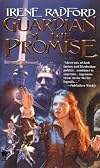
A continuation of the earlier volume [Guardian of the Vision], with the nearly-grown children from that earlier time who set off on adventures of their own. There are a lot of children, and while this works well at the beginning it does leave some strands caught waving in an English gale.
The book starts well, with the main/narrated character, Deirdre, taking the action with "I". She is the daughter of Father Griffin and Roanna of Scotland, and is fostered by her uncle, Donovan. Donovan is show more father to three children: Beth (by his first wife) and twins Hal and Griffin. So, keeping all these characters straight and with their own story arcs is one of the challenges this book faces.
What Radford does well is concentrate on the most central characters and on Queens Elizabeth and Mary, Queen of Scots, as well as introducing a new evil element: werewolves. She's able as an author to see where a storyline might go stale and resolves that conundrum with something other than demons or (the obvious) vampires. And the werewolves here have their own social structure and a mad master, El Lobison, who controls them through their priestess, Yassimine.
Another thing I liked about this book was that Radford does not shy away from making central characters dis-likeable, while still weaving a story around them. Donovan is pretty wishy-washy and not as capable with his magic to throw off his spell-cast love for Mary. And Yassimine, who in her captivity longs to kill El Lobison, she instead realizes after many years that he has made all decisions for her and she does not wish to do so for herself.
As with others in this series, this book goes to many different locales in key moments in Western European history, such as the aftermath of the St. Bartholomew's Day massacre (orchestrated by El Lobison) and brings in the tensions and friction of the time (Protestant vs. Catholic). And while there are sections with fast-paced action at the beginning, introducing the key plot elements, the last third slows down to a number of years, when Deirdre and Michael are married and running their pub that helps gather information for Sir Francis Walsingham on Queen Elizabeth's behalf. show less
The book starts well, with the main/narrated character, Deirdre, taking the action with "I". She is the daughter of Father Griffin and Roanna of Scotland, and is fostered by her uncle, Donovan. Donovan is show more father to three children: Beth (by his first wife) and twins Hal and Griffin. So, keeping all these characters straight and with their own story arcs is one of the challenges this book faces.
What Radford does well is concentrate on the most central characters and on Queens Elizabeth and Mary, Queen of Scots, as well as introducing a new evil element: werewolves. She's able as an author to see where a storyline might go stale and resolves that conundrum with something other than demons or (the obvious) vampires. And the werewolves here have their own social structure and a mad master, El Lobison, who controls them through their priestess, Yassimine.
Another thing I liked about this book was that Radford does not shy away from making central characters dis-likeable, while still weaving a story around them. Donovan is pretty wishy-washy and not as capable with his magic to throw off his spell-cast love for Mary. And Yassimine, who in her captivity longs to kill El Lobison, she instead realizes after many years that he has made all decisions for her and she does not wish to do so for herself.
As with others in this series, this book goes to many different locales in key moments in Western European history, such as the aftermath of the St. Bartholomew's Day massacre (orchestrated by El Lobison) and brings in the tensions and friction of the time (Protestant vs. Catholic). And while there are sections with fast-paced action at the beginning, introducing the key plot elements, the last third slows down to a number of years, when Deirdre and Michael are married and running their pub that helps gather information for Sir Francis Walsingham on Queen Elizabeth's behalf. show less

Book Review: Chicory Up: The Pixie Chronicles (2020) Irene Radford
Reviewed by: Patricia M. Muhammad, January 2021
*I received this ebook in exchange for an honest review
*CONTAINS SPOILERS*
Two worlds exist, one that of Faeries and another of Pixies. Their tradition is steeped in Celtic and British lore but have become a mainstay in contemporary American fiction as well. Author Irene Radford crafts a tale in which these magical beings do not live alone. These small creatures actually live and show more tarry daily among the human world. Traditionally, Pixies and Faeries were once considered characters of fables populated in bedtime stories for children. Radford changes the dynamic of the reader's expectation, combining whimsy with the hard lives of humans in the American northwest. The author skillfully describes the fickle nature of these creatures through dialogue, combat and throughout the course of their normal activity. Implied is the likely parallel of their natural character with that of human children; curious and easily able to perceive matters at a superficial level.
Within these two worlds exist a war. The Faeries and Pixies have long been in conflict with one another. Though they have magical powers which they only appear to use on each other; their small lives crossover into that of the humans—in more than one way. (*spoiler alert* for this paragraph): Take for instance the character Thistle, once a Pixie, she now appears in human form due to a curse, losing her power and wings. It is not clearly stated whether this disability will ever be lifted, but for most of the book she engages in the everyday endeavours of an actual human. Thistle works, adopts or at least is able to deduce human notions with traditions of being a Pixie and she accepts the proposal of a human, Benedict. Radford further blurs the world of the magical creatures and human beings as one character, Haywood is part Faery. Centrally important to both human and winged creatures alike is an area known as Ten Acre Wood. Pixies and Faeries primarily establish their lives throughout this area by erecting habitats within trees and flowers. Many in this small town do not know of them, yet these small creatures rely on the kindness of those humans who are aware—and some of their own cunning. Their nearly undetectable stature allows for them to spy on the humans and report to the others whom they trust will use it to help another person. Other times they use the information to their advantage. The Pixies' toil is rewarded with permission to have a habitat within a resident's yard or gardens. Yet the nature of their tarry causes them to further curate the lands of their newfound homes which also benefits their human hosts.
The author subtly depicts hierarchy and class which seems to be the foundation of both worlds. For instance, among a pivotal Pixie tribe is a queen who has authority to banish those who displease her though not judiciously. Dialogue indicates that Pixies divided themselves into tribes, describing garden varieties, woodland sorts and those of the valley. Some believing they are more civilized than the other Pixies. However, an undergirding theme resonates among these creatures—they are all better than Faeries whom they considered prone to violence. However, the human world is much more bleak. Radford juxtaposes the imminent war between Faeries and Pixies with the everyday crimes which plague American society such as arson and the abduction of children. Yet, some of the mischief among the magical creatures morphs into conflict with their human counterparts as well. Most of the main characters are either law enforcement or somehow support social work throughout the town. Their work is to help others. Pixies primarily help a child in peril if called upon. The humans rely on reports, eyewitness accounts, and most importantly the spying eyes of the lesser known Pixies. The reader may make a cursory presumption that the lives of human appear more complicated than those of Pixies or Faeries. This town has to address teen betrayals which lead to resentful revenge of adults, weddings and strained parent-child relationships. However, this is not too unlike what the creatures' of earthen abodes experience. The author refers to their weddings as "mating flights", hostilities appears to be a constant between Pixies and Faeries and strained relationships lead to the creation of new tribes and the shatter of a Pixie rulership. In addition, the author discusses the importance of lineage whether it be a Pixie and Faerie who unusually mate or the realization of a bastard human child whohas now become a runaway and found herself in a hideaway room of a home in this small town.
This is not a book of pure fantasy. The author displays a clever imagination with the use of fantastical characters that tend to mirror those of the mundane. Whether human, Pixie, or Faerie, Radford has the ability to clearly portray each of their personalities. The creatures seem to be human in their jest or conflict while the humans would revel in the ability to simply fly away from their everyday problems or the people they perceive who are the source of them.
Chicory Up is a work of fiction in which Radford interweaves traditional mythical characters with human ones, yet still manages to keep their daily manner of living and culture distinctively separate from one another. It is a nod to European lore which heavily contrasts with the plagues of everyday human society. The author feeds both the child-like curiosity and wonder in adults while providing a contemporary story of human characters who in some ways have yet to still grow up. show less
Reviewed by: Patricia M. Muhammad, January 2021
*I received this ebook in exchange for an honest review
*CONTAINS SPOILERS*
Two worlds exist, one that of Faeries and another of Pixies. Their tradition is steeped in Celtic and British lore but have become a mainstay in contemporary American fiction as well. Author Irene Radford crafts a tale in which these magical beings do not live alone. These small creatures actually live and show more tarry daily among the human world. Traditionally, Pixies and Faeries were once considered characters of fables populated in bedtime stories for children. Radford changes the dynamic of the reader's expectation, combining whimsy with the hard lives of humans in the American northwest. The author skillfully describes the fickle nature of these creatures through dialogue, combat and throughout the course of their normal activity. Implied is the likely parallel of their natural character with that of human children; curious and easily able to perceive matters at a superficial level.
Within these two worlds exist a war. The Faeries and Pixies have long been in conflict with one another. Though they have magical powers which they only appear to use on each other; their small lives crossover into that of the humans—in more than one way. (*spoiler alert* for this paragraph): Take for instance the character Thistle, once a Pixie, she now appears in human form due to a curse, losing her power and wings. It is not clearly stated whether this disability will ever be lifted, but for most of the book she engages in the everyday endeavours of an actual human. Thistle works, adopts or at least is able to deduce human notions with traditions of being a Pixie and she accepts the proposal of a human, Benedict. Radford further blurs the world of the magical creatures and human beings as one character, Haywood is part Faery. Centrally important to both human and winged creatures alike is an area known as Ten Acre Wood. Pixies and Faeries primarily establish their lives throughout this area by erecting habitats within trees and flowers. Many in this small town do not know of them, yet these small creatures rely on the kindness of those humans who are aware—and some of their own cunning. Their nearly undetectable stature allows for them to spy on the humans and report to the others whom they trust will use it to help another person. Other times they use the information to their advantage. The Pixies' toil is rewarded with permission to have a habitat within a resident's yard or gardens. Yet the nature of their tarry causes them to further curate the lands of their newfound homes which also benefits their human hosts.
The author subtly depicts hierarchy and class which seems to be the foundation of both worlds. For instance, among a pivotal Pixie tribe is a queen who has authority to banish those who displease her though not judiciously. Dialogue indicates that Pixies divided themselves into tribes, describing garden varieties, woodland sorts and those of the valley. Some believing they are more civilized than the other Pixies. However, an undergirding theme resonates among these creatures—they are all better than Faeries whom they considered prone to violence. However, the human world is much more bleak. Radford juxtaposes the imminent war between Faeries and Pixies with the everyday crimes which plague American society such as arson and the abduction of children. Yet, some of the mischief among the magical creatures morphs into conflict with their human counterparts as well. Most of the main characters are either law enforcement or somehow support social work throughout the town. Their work is to help others. Pixies primarily help a child in peril if called upon. The humans rely on reports, eyewitness accounts, and most importantly the spying eyes of the lesser known Pixies. The reader may make a cursory presumption that the lives of human appear more complicated than those of Pixies or Faeries. This town has to address teen betrayals which lead to resentful revenge of adults, weddings and strained parent-child relationships. However, this is not too unlike what the creatures' of earthen abodes experience. The author refers to their weddings as "mating flights", hostilities appears to be a constant between Pixies and Faeries and strained relationships lead to the creation of new tribes and the shatter of a Pixie rulership. In addition, the author discusses the importance of lineage whether it be a Pixie and Faerie who unusually mate or the realization of a bastard human child whohas now become a runaway and found herself in a hideaway room of a home in this small town.
This is not a book of pure fantasy. The author displays a clever imagination with the use of fantastical characters that tend to mirror those of the mundane. Whether human, Pixie, or Faerie, Radford has the ability to clearly portray each of their personalities. The creatures seem to be human in their jest or conflict while the humans would revel in the ability to simply fly away from their everyday problems or the people they perceive who are the source of them.
Chicory Up is a work of fiction in which Radford interweaves traditional mythical characters with human ones, yet still manages to keep their daily manner of living and culture distinctively separate from one another. It is a nod to European lore which heavily contrasts with the plagues of everyday human society. The author feeds both the child-like curiosity and wonder in adults while providing a contemporary story of human characters who in some ways have yet to still grow up. show less
 This review was written for LibraryThing Early Reviewers.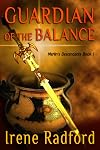
Once I'd realised this was solely an Arthurian fantasy, and wasn't going to jump into the future (descendants implies a longer timescale) I could enjoy it properly. It's a very well worked retelling of some of the myths. The choice of protagonist as an unknown childhood friend worked very well.
Wren is Merlin's secret daughter. The gods forgave his one night of passion on Beltane, and charged him to look after her in addition to his responsibilities to Britain. Wren has grown up knowing her show more father's love, and gained only some of his secrets, and a few of the Morrigan's and a few of her own. Fairies speak to her, when the conditions are right, and she remains steadfast in her obedience to the Old Gods despite the spread of christianity. As the years pass, Britain grows more troubled and the old king Uther finally dies. Her father reveals that Wren's old playmate is truly Arthur, but by this time Wren has been married off to a husband not of her choosing. The only was Merlin can assure her safety in these wild times. Wren's husband is more brute than any expected and has ties to the demon worshipping Naeme and Morgaine. He is often away, and Wren manages to carve an oasis of calm in the small caer she rules in his name.
It's complex. You do need some familiarity with the more common interpretations to get the best out of this I think. The story is always Wren's rather than Arthur's and better for it, but it does mean that some of the more famous events only get a passing mention. Wren endures a lot, but remains a wonderfully inspiring character, honest to herself and the world around her, and always mindful of the required balance between the elements and powers around her. there's very little magic as such, a little faerie that creeps in, and the demons. It's not fast, and covers an entire life, but the pacing is well done with enough action and time covered to always keep you interested. Some actions have long consequences as they should do.
I enjoyed this, I'm not sure there is sufficient for a series of 5 but I will certainly try the next. show less
Wren is Merlin's secret daughter. The gods forgave his one night of passion on Beltane, and charged him to look after her in addition to his responsibilities to Britain. Wren has grown up knowing her show more father's love, and gained only some of his secrets, and a few of the Morrigan's and a few of her own. Fairies speak to her, when the conditions are right, and she remains steadfast in her obedience to the Old Gods despite the spread of christianity. As the years pass, Britain grows more troubled and the old king Uther finally dies. Her father reveals that Wren's old playmate is truly Arthur, but by this time Wren has been married off to a husband not of her choosing. The only was Merlin can assure her safety in these wild times. Wren's husband is more brute than any expected and has ties to the demon worshipping Naeme and Morgaine. He is often away, and Wren manages to carve an oasis of calm in the small caer she rules in his name.
It's complex. You do need some familiarity with the more common interpretations to get the best out of this I think. The story is always Wren's rather than Arthur's and better for it, but it does mean that some of the more famous events only get a passing mention. Wren endures a lot, but remains a wonderfully inspiring character, honest to herself and the world around her, and always mindful of the required balance between the elements and powers around her. there's very little magic as such, a little faerie that creeps in, and the demons. It's not fast, and covers an entire life, but the pacing is well done with enough action and time covered to always keep you interested. Some actions have long consequences as they should do.
I enjoyed this, I'm not sure there is sufficient for a series of 5 but I will certainly try the next. show less

Initially I thought Steampunk Voyages was an anthology of short stories by different writers. I enjoy the variety of such collections, and if any story is not to my taste, at least it's only one of many. However, this turned out to be a book of short stories all by one author and I was soon regretting that as I began reading.
Radford’s writing is clumsy and awkward, bland at best and laughably trite at worst. The characters are unconvincing, the action is boring, and the dialogue is show more cringe-inducing - completely artificial and particularly painful in any attempt at dialect. I forced myself to read the first few stories in their entirety, but ended up having to skim the rest; I could not bring myself to wade through the graceless, boring prose. The stories read like self-indulgent fanfic, heavy on the superficial trappings of steampunk but light on any actual significance. This is especially disappointing in light of the introduction, in which Radford says that steampunk is more than “just lace, velvet, goggles and grease.” Yet it seems like this is all that she is able to draw on with her stories.
Steampunk has unfortunately acquired a reputation as a genre of style and no substance, and even that style has become cliched and embarrassing - just glue some cogs on stuff and wear goggles on your top hat, right? It seems the punk aspect of the concept has been forgotten; instead creating subversive, challenging ideas, the genre has fallen into staid banality, a sorry state for what could be a vibrant and exciting subculture. Steampunk Voyages seems to embody this lame condition, and the result is an insipid and mortifying book. show less
Radford’s writing is clumsy and awkward, bland at best and laughably trite at worst. The characters are unconvincing, the action is boring, and the dialogue is show more cringe-inducing - completely artificial and particularly painful in any attempt at dialect. I forced myself to read the first few stories in their entirety, but ended up having to skim the rest; I could not bring myself to wade through the graceless, boring prose. The stories read like self-indulgent fanfic, heavy on the superficial trappings of steampunk but light on any actual significance. This is especially disappointing in light of the introduction, in which Radford says that steampunk is more than “just lace, velvet, goggles and grease.” Yet it seems like this is all that she is able to draw on with her stories.
Steampunk has unfortunately acquired a reputation as a genre of style and no substance, and even that style has become cliched and embarrassing - just glue some cogs on stuff and wear goggles on your top hat, right? It seems the punk aspect of the concept has been forgotten; instead creating subversive, challenging ideas, the genre has fallen into staid banality, a sorry state for what could be a vibrant and exciting subculture. Steampunk Voyages seems to embody this lame condition, and the result is an insipid and mortifying book. show less
This review was written for LibraryThing Early Reviewers.Lists
You May Also Like


Associated Authors
Statistics
- Works
- 68
- Also by
- 36
- Members
- 4,439
- Popularity
- #5,640
- Rating
- 3.5
- Reviews
- 319
- ISBNs
- 167
- Languages
- 2
- Favorited
- 3
