
Robert Marasco (1936–1998)
Author of Burnt Offerings
About the Author
Image credit: Photo by Alan Carey
Works by Robert Marasco
Associated Works
Tagged
Common Knowledge
- Birthdate
- 1936-09-22
- Date of death
- 1998-12-06
- Gender
- male
- Education
- Fordham University
- Occupations
- playwright
novelist
teacher (high school English, Latin, Greek) - Short biography
- Robert Marasco (1936-1998) was an American horror writer best known for the 1970 Broadway play Child's Play.
- Nationality
- USA
- Birthplace
- The Bronx, New York, USA
- Places of residence
- High Falls, New York, USA
- Place of death
- Manhasset, New York, USA
- Associated Place (for map)
- New York, USA
Members
Reviews
‘’Drive by the house you’re interested in at night, I say. Watch the windows. See if anybody’s watching for you there. And then drive home with the dome light on, and check that back seat as often as you can.
It won’t be often enough.’’
Stephen Graham Jones
I will readily admit that one of the things that bring me to the highest levels of anxiety is visiting a house I’ve never stepped foot into before. I’m 100% certain that I’ll sound like a superstitious ignorant, but bear show more with me:) Being quite the introvert type, it’s always a toil to find myself in ‘’unexplored’’ grounds but I wasn’t always such a lunatic over houses. Four-five years ago, we visited some friends in their new house, in a quaint seaside village, relatively close to Athens. The house was beautifully decorated, in an old-fashioned but nostalgic and inspired way, the family has been friends of ours for years, so no worries there. Yet, not long after we had comfortably placed ourselves in the lovely living room, I wanted to leave. I mean, an urgent open-the-door- or I’ll pass out kind of feeling. Just like that. I remember the headache and the feeling of heaviness as intensely as if I’m experiencing it right now. And the weird thing is that my parents felt it as well. There was nothing dark in the history of the house and the family still lives there happily and yet, I’ve never experienced such an unpleasant (to put it mildly) feeling in an indoors space since that day. It seemed to drain out every bit of energy in us…
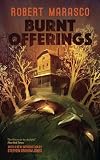
In this exquisite thriller by Robert Marasco, the vast mansion becomes a summer refuge for the Rolfe family. At least, this is what Marian wants it to be. Fed up with their noisy New York apartment and the draining city life, she convinces Ben to spend two months in an estate beyond her wildest dream. The elderly siblings, the owners of the house, ask for a miniscule price and the only obligation the family has is to prepare a tray for the ‘’darling’’ mother who lives in the remotest part of the local floor, unseen by all who have rented the estate throughout the years. ‘’What could be more perfect?’’ is the only thought in Marian’s empty head….
It’s possible that you know all about the heart of the plot of this brilliant thriller. You may have watched the film version. It won’t matter, I assure you, The way the book is s written will definitely absorb you. It made my heart pounding as I was approaching the conclusion, I was appalled and fascinated and under the grip of the tense influence of watching everything falling apart. The descriptions are razor sharp, building the story and the feeling of a foreboding darkness grows page by page. The dialogue could want for more, but let us not forget that the novel was written in the 70s, a decade that was fascinating and exciting but with colloquations that make us cringe now. And it seemed to me that the main theme was obsession. The craving for a different life, for what we perceive as mirrors of our identity and how far can we go in order to satisfy it. What if we have to make the most impossible choice? Would we succumb to an obsession or rise up against it? It all comes down to choices or at least, the illusion that we have a choice and this is exactly what attracted me to this finely woven plot.
The characters are overshadowed by the House which is the undoubtable protagonist of Marasco’s novel. Marian is highly unsympathetic. Self-centered, manipulative, an all-around bad mother. I never felt sorry for her. Not even for a moment...Ben starts out as a bit indifferent, verging on irritating but I found that he was quite complex as the story progressed and in truth? He was the only one who had a passable percentage of common sense and logical thinking in his mind. Aunt Elizabeth was sympathetic enough, quirky and compassionate. But this isn’t the kind of story where the characters have to be complex and sympathetic and what not. It is the setting, the ambiance of the writing that matters and this is as exceptional as we’ll ever find in the genre.
This is a psychological, paranormal thriller that does absolute justice to the genre that is being relentlessly tortured in our current times. There are no gore, no ghosts or jumpscares. But there is something far more frightening than any of these. Human obsession. The root for most evils in our lives. The way we choose to blind ourselves to sustain our illusions, the price we sometimes have to pay for not listening to our instinct and run….. show less
It won’t be often enough.’’
Stephen Graham Jones
I will readily admit that one of the things that bring me to the highest levels of anxiety is visiting a house I’ve never stepped foot into before. I’m 100% certain that I’ll sound like a superstitious ignorant, but bear show more with me:) Being quite the introvert type, it’s always a toil to find myself in ‘’unexplored’’ grounds but I wasn’t always such a lunatic over houses. Four-five years ago, we visited some friends in their new house, in a quaint seaside village, relatively close to Athens. The house was beautifully decorated, in an old-fashioned but nostalgic and inspired way, the family has been friends of ours for years, so no worries there. Yet, not long after we had comfortably placed ourselves in the lovely living room, I wanted to leave. I mean, an urgent open-the-door- or I’ll pass out kind of feeling. Just like that. I remember the headache and the feeling of heaviness as intensely as if I’m experiencing it right now. And the weird thing is that my parents felt it as well. There was nothing dark in the history of the house and the family still lives there happily and yet, I’ve never experienced such an unpleasant (to put it mildly) feeling in an indoors space since that day. It seemed to drain out every bit of energy in us…
In this exquisite thriller by Robert Marasco, the vast mansion becomes a summer refuge for the Rolfe family. At least, this is what Marian wants it to be. Fed up with their noisy New York apartment and the draining city life, she convinces Ben to spend two months in an estate beyond her wildest dream. The elderly siblings, the owners of the house, ask for a miniscule price and the only obligation the family has is to prepare a tray for the ‘’darling’’ mother who lives in the remotest part of the local floor, unseen by all who have rented the estate throughout the years. ‘’What could be more perfect?’’ is the only thought in Marian’s empty head….
It’s possible that you know all about the heart of the plot of this brilliant thriller. You may have watched the film version. It won’t matter, I assure you, The way the book is s written will definitely absorb you. It made my heart pounding as I was approaching the conclusion, I was appalled and fascinated and under the grip of the tense influence of watching everything falling apart. The descriptions are razor sharp, building the story and the feeling of a foreboding darkness grows page by page. The dialogue could want for more, but let us not forget that the novel was written in the 70s, a decade that was fascinating and exciting but with colloquations that make us cringe now. And it seemed to me that the main theme was obsession. The craving for a different life, for what we perceive as mirrors of our identity and how far can we go in order to satisfy it. What if we have to make the most impossible choice? Would we succumb to an obsession or rise up against it? It all comes down to choices or at least, the illusion that we have a choice and this is exactly what attracted me to this finely woven plot.
The characters are overshadowed by the House which is the undoubtable protagonist of Marasco’s novel. Marian is highly unsympathetic. Self-centered, manipulative, an all-around bad mother. I never felt sorry for her. Not even for a moment...Ben starts out as a bit indifferent, verging on irritating but I found that he was quite complex as the story progressed and in truth? He was the only one who had a passable percentage of common sense and logical thinking in his mind. Aunt Elizabeth was sympathetic enough, quirky and compassionate. But this isn’t the kind of story where the characters have to be complex and sympathetic and what not. It is the setting, the ambiance of the writing that matters and this is as exceptional as we’ll ever find in the genre.
This is a psychological, paranormal thriller that does absolute justice to the genre that is being relentlessly tortured in our current times. There are no gore, no ghosts or jumpscares. But there is something far more frightening than any of these. Human obsession. The root for most evils in our lives. The way we choose to blind ourselves to sustain our illusions, the price we sometimes have to pay for not listening to our instinct and run….. show less
"Burnt Offerings" is nineteen-seventies classic horror. It's not in a hurry, It's not looking for the quick spike of fear that comes from slash-and-splash action. It's a slow burn read designed to build the kind of terror that comes from extended exposure to a threat you can't name, that you may even blame yourself for and which you can't escape.
Marasco takes a relatively normal domestic "What if?", adds an element of the supernatural and then unfolds events with dreadful implacability, show more leaving me feeling like I was watching flies struggling in the web of a spider that I hadn't yet seen. The "What if?" is: what if you had chance to have your dream house but the price was putting your marriage under strain and leaving you with no energy left over to do anything else? Would you pay the price? Would it be worth it? Could you NOT pay the price once you've started?
I suspect that, if this were being converted to a movie today, there would be a rush to get the young family to the haunted house so bad things could start to happen before people lose interest. Marasco goes a different route. He makes the oppression of living in a crowded, noisy apartment block in Queens in the summer heat and humidity come alive. He gives us time to look at wife and husband and to see how they are alone and apart. This achieves two things: it makes the decisions each of them make later more believable and it lays the foundation for believing that what befalls them is, somehow, their own fault.
When we finally get to the huge, remote house in up-State New York that the couple is thinking of renting for the summer, there is a strong sense of threat being masked in the same way that a spicy sauce is used to hide the tainted meat it covers. The masking is done partly by the weirdly charismatic Alerdices, who own the house but the couple themselves actively collude in not seeing anything wrong.
As the reader, hearing the Alerdices say that the house will be rented to "The right people'" felt like a doom or a curse, as if they were identifying "the right people" the same way that a predator uses the barely-there-but-bound-to-get-worse lameness to mark one of the herd as prey.
To me, the rental house seems a twist on the fairy tale gingerbread house: part lure, part trap. The Alerdices, brother and sister, seem at first to be the wicked witch, yet something speaks to priest or acolyte which opens the question of who or what is being worshipped.
Yet the Alerdices do not force the house on this couple. The wife lusts after it, not just blind but antagonistic to any suggestion of a problem. The husband senses the taint of something rotten beneath the surface but will not stand behind his judgement. If the house is a trap then these two have chosen to ensnare themselves. This self-ensnarement provides an element of guilt that will make them distrust themselves and each other and which made me less sympathetic to them.
As time goes by and various spooky, tension-inducing things happen, I found myself starting to dislike both the husband and the wife. They were never particularly engaging but I could feel the best parts of them leaching away like topsoil in a rainstorm, as they came under the influence of the house. I think the power of Marasco's writing is shown by how my perceptions as the reader where manipulated, letting me slide from being neutral about this couple at the start of the novel to experiencing a kind of grim schadenfreude-driven satisfaction at what happens to them at the end.
I won't give away what happens. The ending was not a surprise but that amplified rather than reduce the level of horror.
I listened to the audiobook, read by R.C Bray, who I always think of as having a "Joe Friday" voice although his range is much broader than that. He's the perfect choice for this low key but relentless horror story. show less
Marasco takes a relatively normal domestic "What if?", adds an element of the supernatural and then unfolds events with dreadful implacability, show more leaving me feeling like I was watching flies struggling in the web of a spider that I hadn't yet seen. The "What if?" is: what if you had chance to have your dream house but the price was putting your marriage under strain and leaving you with no energy left over to do anything else? Would you pay the price? Would it be worth it? Could you NOT pay the price once you've started?
I suspect that, if this were being converted to a movie today, there would be a rush to get the young family to the haunted house so bad things could start to happen before people lose interest. Marasco goes a different route. He makes the oppression of living in a crowded, noisy apartment block in Queens in the summer heat and humidity come alive. He gives us time to look at wife and husband and to see how they are alone and apart. This achieves two things: it makes the decisions each of them make later more believable and it lays the foundation for believing that what befalls them is, somehow, their own fault.
When we finally get to the huge, remote house in up-State New York that the couple is thinking of renting for the summer, there is a strong sense of threat being masked in the same way that a spicy sauce is used to hide the tainted meat it covers. The masking is done partly by the weirdly charismatic Alerdices, who own the house but the couple themselves actively collude in not seeing anything wrong.
As the reader, hearing the Alerdices say that the house will be rented to "The right people'" felt like a doom or a curse, as if they were identifying "the right people" the same way that a predator uses the barely-there-but-bound-to-get-worse lameness to mark one of the herd as prey.
To me, the rental house seems a twist on the fairy tale gingerbread house: part lure, part trap. The Alerdices, brother and sister, seem at first to be the wicked witch, yet something speaks to priest or acolyte which opens the question of who or what is being worshipped.
Yet the Alerdices do not force the house on this couple. The wife lusts after it, not just blind but antagonistic to any suggestion of a problem. The husband senses the taint of something rotten beneath the surface but will not stand behind his judgement. If the house is a trap then these two have chosen to ensnare themselves. This self-ensnarement provides an element of guilt that will make them distrust themselves and each other and which made me less sympathetic to them.
As time goes by and various spooky, tension-inducing things happen, I found myself starting to dislike both the husband and the wife. They were never particularly engaging but I could feel the best parts of them leaching away like topsoil in a rainstorm, as they came under the influence of the house. I think the power of Marasco's writing is shown by how my perceptions as the reader where manipulated, letting me slide from being neutral about this couple at the start of the novel to experiencing a kind of grim schadenfreude-driven satisfaction at what happens to them at the end.
I won't give away what happens. The ending was not a surprise but that amplified rather than reduce the level of horror.
I listened to the audiobook, read by R.C Bray, who I always think of as having a "Joe Friday" voice although his range is much broader than that. He's the perfect choice for this low key but relentless horror story. show less

A haunted house/ghost story, as featured in Paperbacks From Hell, of the slow burn/Amtyville variety. This is from the era/genre of stories involving an urban or suburban (in this case NYC) couple getting an unbelievable deal on buying/renting/caretaking a giant old house or mansion...but something is wrong. The book isn't recent, and there was a feature film (that I actually prefer to the book) made, but I'll still try to avoid spoilers here.
The writing itself is skillful, there's some show more great foreshadowing that something may be amiss with the couple even before their exposure to the mansion and its owners/inhabitants. The husband, a professor, is almost dangerously absent-minded and oblivious. The wife is already obsessed with living beyond their means when it comes antiques and vacationing, and is leaning into the obsessive-compulsive when it comes to cleaning even in their own home. And of course there's a relatively young child, to add an extra level of threat to events.
Our first really creepy event is the brother and sister who own the mansion the majority of the story takes place in. Their characterization and the interactions involving them are some of the best written parts of the book.
The slow descent into madness of the wife, due to her natural inclinations combined with the subtle infiltration by the forces contained in the house, are really the focus of the novel. Quite frankly, this is a little too slow-burn and atmospheric for a novel for my taste. Despite the quality of the writing (which is why it got 3 instead of two stars), I had a number of false starts on this one before finishing it. I think the pacing and atmosphere work a lot better as a film than they do on the page, where a lot of protracted, albeit beautifully worded, descriptions of various antiques and parts of the house really drag. And while I fully realize some descriptions and experiences of the wife are supposed to be ominous, they sometimes don't read that way. If you read it all, read it for the language, not for the plot. show less
The writing itself is skillful, there's some show more great foreshadowing that something may be amiss with the couple even before their exposure to the mansion and its owners/inhabitants. The husband, a professor, is almost dangerously absent-minded and oblivious. The wife is already obsessed with living beyond their means when it comes antiques and vacationing, and is leaning into the obsessive-compulsive when it comes to cleaning even in their own home. And of course there's a relatively young child, to add an extra level of threat to events.
Our first really creepy event is the brother and sister who own the mansion the majority of the story takes place in. Their characterization and the interactions involving them are some of the best written parts of the book.
The slow descent into madness of the wife, due to her natural inclinations combined with the subtle infiltration by the forces contained in the house, are really the focus of the novel. Quite frankly, this is a little too slow-burn and atmospheric for a novel for my taste. Despite the quality of the writing (which is why it got 3 instead of two stars), I had a number of false starts on this one before finishing it. I think the pacing and atmosphere work a lot better as a film than they do on the page, where a lot of protracted, albeit beautifully worded, descriptions of various antiques and parts of the house really drag. And while I fully realize some descriptions and experiences of the wife are supposed to be ominous, they sometimes don't read that way. If you read it all, read it for the language, not for the plot. show less
Well, now I'm a little upset that Marasco didn't write a whole whack of horror novels after this one. It's a bit of a slow burn up to the horror, and the horror isn't overt, but more psychological, but it's a great tale, nonetheless.
As I went through this novel, I couldn't help but think of it as the slightly more shy older brother of Stephen King's The Shining. Similar set up, similar situations at times. The difference is, as good as Burnt Offerings is, it feels like King read it, then show more thought, it's good, but it could be better.
But though this has a lighter touch, and only scratches the surface where King's follow-up dug deep, it's still a great read, with excellent writing. In fact, I'd say King took some cues when it came to dialogue as well. If someone told me this was an early King novel, up until about halfway, I'd believe them.
Great novel. show less
As I went through this novel, I couldn't help but think of it as the slightly more shy older brother of Stephen King's The Shining. Similar set up, similar situations at times. The difference is, as good as Burnt Offerings is, it feels like King read it, then show more thought, it's good, but it could be better.
But though this has a lighter touch, and only scratches the surface where King's follow-up dug deep, it's still a great read, with excellent writing. In fact, I'd say King took some cues when it came to dialogue as well. If someone told me this was an early King novel, up until about halfway, I'd believe them.
Great novel. show less
Lists
Awards


You May Also Like


Associated Authors
Statistics
- Works
- 3
- Also by
- 2
- Members
- 780
- Popularity
- #32,629
- Rating
- 3.6
- Reviews
- 33
- ISBNs
- 27
- Languages
- 7
- Favorited
- 2