
Jay Anson (1921–1980)
Author of The Amityville Horror: A True Story
About the Author
Works by Jay Anson
The Amityville Horror 1 1 copy
Associated Works
Tagged
Common Knowledge
- Birthdate
- 1921-11-04
- Date of death
- 1980-03-12
- Gender
- male
- Short biography
- Jay Anson was born in New York. He wrote his first book when he was 54 years of age, while being a New York documentary film writer. Anson died at the age of 58 after heart surgery.
- Nationality
- USA
- Birthplace
- New York, New York, USA
- Places of residence
- Roslyn, Long Island, New York, USA
- Place of death
- Palo Alto, California, USA
- Associated Place (for map)
- New York, USA
Members
Reviews

Really? This is it? The great book that spawned a movie franchise and endless ripoffs?
A family out of their depth financially have a stressful move to a crappy new house with poor insulation and some bad smells. The house was sold cheap because someone got murdered there. They stay there for about a month before having worked themselves up in a lather about the place being haunted.
The author keeps insisting these are normal and skeptical people. Within that single month they have contacted show more a priest to do a blessing of the house, they've had a medium there to talk to the spirits, they've gone around the place trying to "bless" the house by randomly chanting the Lord's Prayer because that's how they imagined it should be done. They're talking about exorcisms. These are some amazingly credulous people, despite the author's insistence. Their 'encounters' often come in the form of dreams that bear a striking resemblance to books and movies like The Exorcist (book 1971, movie 1973) with floating off the bed, or Rosemary's Baby (book 1967, movie 1968) with hidden rooms and some mumbo jumbo about satanists. These events supposedly take place in 1975 which gives everyone plenty of time to know exactly what to expect from a spooky house from some of the most successful (and infinitely better) horror stories of that time.
If they aren't just lying outright, everyone involved is going hysterical and expressing what they've been programmed to see by popular media. It's also a product of its time, like the aforementioned books, in that it treats parapsychology as science, along with ESP and other spooky goodness. That didn't age very well, and neither did this book.
If anything it actually gets worse if you take it seriously. The suggestion is made repeatedly that this is the work of the devil and/or some demons and apparently can, from a phone line, slap a priest around with its evil power (apparently working for God gave him no power to even resist let alone fight this demonic force) but by the end of the book we find out these hauntings can be defeated by a new family moving in and rearranging furniture (as to explain nobody else ever having experienced anything from this same house). Oh sure. The devil haunts a fireplace but is ill equipped to handle a new set of chairs. show less
A family out of their depth financially have a stressful move to a crappy new house with poor insulation and some bad smells. The house was sold cheap because someone got murdered there. They stay there for about a month before having worked themselves up in a lather about the place being haunted.
The author keeps insisting these are normal and skeptical people. Within that single month they have contacted show more a priest to do a blessing of the house, they've had a medium there to talk to the spirits, they've gone around the place trying to "bless" the house by randomly chanting the Lord's Prayer because that's how they imagined it should be done. They're talking about exorcisms. These are some amazingly credulous people, despite the author's insistence. Their 'encounters' often come in the form of dreams that bear a striking resemblance to books and movies like The Exorcist (book 1971, movie 1973) with floating off the bed, or Rosemary's Baby (book 1967, movie 1968) with hidden rooms and some mumbo jumbo about satanists. These events supposedly take place in 1975 which gives everyone plenty of time to know exactly what to expect from a spooky house from some of the most successful (and infinitely better) horror stories of that time.
If they aren't just lying outright, everyone involved is going hysterical and expressing what they've been programmed to see by popular media. It's also a product of its time, like the aforementioned books, in that it treats parapsychology as science, along with ESP and other spooky goodness. That didn't age very well, and neither did this book.
If anything it actually gets worse if you take it seriously. The suggestion is made repeatedly that this is the work of the devil and/or some demons and apparently can, from a phone line, slap a priest around with its evil power (apparently working for God gave him no power to even resist let alone fight this demonic force) but by the end of the book we find out these hauntings can be defeated by a new family moving in and rearranging furniture (as to explain nobody else ever having experienced anything from this same house). Oh sure. The devil haunts a fireplace but is ill equipped to handle a new set of chairs. show less
Review: 666 by Jay Anson
Rating: ★★★★★
I’m giving Jay Anson’s 666 a full five stars, not just because it’s a relentless page-turner—the first book I’ve been able to read cover to cover this year—but because it touches on a concept that is deeply unsettling to me: the idea that the paranormal is not just a random occurrence, but something dependent upon, or revealed through, architecture.
In Anson’s world, evil isn't just a shadow in the corner; it is built into the show more floorboards and the foundation. But as the story unfolds, the horror shifts from the structural to the philosophical, and that is where I begin to imagine this book may not be total fiction after all.
The Rule of Gold
The pivot point for me is the exchange between Paul Olson, the assistant rector, and Lawrence Fisher, the local coven leader. When Fisher explains the "Gold Rule of Fulfilled Desire," he isn't just talking about a spooky ritual; he is outlining a blueprint for the total erosion of morality through the accumulation of "power." Granted power is not clearly defined here, but I take it to be a measure of social dominance.
Fisher argues that the strongest rule is not the one we are taught in Sunday school, but the one that rewards the actor with an incremental increase in power every time a desire is fulfilled. This "energy" allows one to focus entirely on a new objective until, as Fisher puts it:
"Once you are strong enough, there isn't any law of God or man that you have to obey."
A Reflection of Reality?
This may seem far afield, but hear me out. Every day, we pull back the curtain on the "dark pasts" of powerful figures in our own society—individuals who, through immense political and financial leverage, have reached a level in this game that is seemingly beyond the reach of justice.
We see them engage in acts of shocking depravity that far exceed the banal indiscretions of the average man on the street. These aren't just "mistakes"; they are the actions of people who have lived by the Rule of Gold for so long that they have transcended the social contract. The guardrails of law enforcement, morality, social morays, and religious institutions suddenly operate at a different level as if the services those institutions serve to the common person are merely a distracting rouse.
I find myself asking: How have these people gotten away with sinister crimes committed over years, with increasing depravity, as if there were not a single law they had to obey? Anson suggests that when you focus entirely on the fulfillment of desire, you eventually overpower the traditional structures of "God and man."
Final Thoughts
Anson has written a fast, gripping read, but the real "ghost" in these pages is the realization that the Archangel’s "philosophy" isn't confined to a haunted house. Is it a chillingly accurate description of how power functions when it becomes untethered from consequence? Dear reader, please tell me another way to make sense of the current situation. This one keeps me up at night. show less
Rating: ★★★★★
I’m giving Jay Anson’s 666 a full five stars, not just because it’s a relentless page-turner—the first book I’ve been able to read cover to cover this year—but because it touches on a concept that is deeply unsettling to me: the idea that the paranormal is not just a random occurrence, but something dependent upon, or revealed through, architecture.
In Anson’s world, evil isn't just a shadow in the corner; it is built into the show more floorboards and the foundation. But as the story unfolds, the horror shifts from the structural to the philosophical, and that is where I begin to imagine this book may not be total fiction after all.
The Rule of Gold
The pivot point for me is the exchange between Paul Olson, the assistant rector, and Lawrence Fisher, the local coven leader. When Fisher explains the "Gold Rule of Fulfilled Desire," he isn't just talking about a spooky ritual; he is outlining a blueprint for the total erosion of morality through the accumulation of "power." Granted power is not clearly defined here, but I take it to be a measure of social dominance.
Fisher argues that the strongest rule is not the one we are taught in Sunday school, but the one that rewards the actor with an incremental increase in power every time a desire is fulfilled. This "energy" allows one to focus entirely on a new objective until, as Fisher puts it:
"Once you are strong enough, there isn't any law of God or man that you have to obey."
A Reflection of Reality?
This may seem far afield, but hear me out. Every day, we pull back the curtain on the "dark pasts" of powerful figures in our own society—individuals who, through immense political and financial leverage, have reached a level in this game that is seemingly beyond the reach of justice.
We see them engage in acts of shocking depravity that far exceed the banal indiscretions of the average man on the street. These aren't just "mistakes"; they are the actions of people who have lived by the Rule of Gold for so long that they have transcended the social contract. The guardrails of law enforcement, morality, social morays, and religious institutions suddenly operate at a different level as if the services those institutions serve to the common person are merely a distracting rouse.
I find myself asking: How have these people gotten away with sinister crimes committed over years, with increasing depravity, as if there were not a single law they had to obey? Anson suggests that when you focus entirely on the fulfillment of desire, you eventually overpower the traditional structures of "God and man."
Final Thoughts
Anson has written a fast, gripping read, but the real "ghost" in these pages is the realization that the Archangel’s "philosophy" isn't confined to a haunted house. Is it a chillingly accurate description of how power functions when it becomes untethered from consequence? Dear reader, please tell me another way to make sense of the current situation. This one keeps me up at night. show less
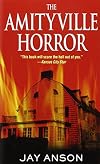
I thought I would start October with a 'horror' story, but this was just ridiculous. Based on a true story - well, the murders were real, I couldn't swear by George and Kathy Lutz's cliched 'haunting' - the Amityville urban legend has spawned a whole vault of terrible films, cashing in on the tragic fate of a whole family and 'excusing' the killer through tales of soured land and demonic possession.
What. Bollocks.
Here's what I think: the Lutz family bought a murder house for a song but show more found themselves in financial trouble and tried to make the most of a bad situation by claiming that they were living in a Hammer House of Horrors. I mean, every single 'incident' reported in this book is a tired old trope - the cold spots, the smell of blood, the slime oozing down the walls, the unseen forces, the levitating! Poltergeist did all this schtick with style. And why, if the reader actually believes any of this happened, did the family stay there for so long? Why the dependency on the family priest to fight the 'evil' - I though the story was set in 1976 not 1776? And why, most critically, has no other resident of the house, which is still standing and still lived in, reported any further supernatural shenanigans?
Look, this is a great story for a horror film, don't get me wrong, but I hate that the violent deaths of six people have been used to generate a mediocre horror franchise. show less
What. Bollocks.
Here's what I think: the Lutz family bought a murder house for a song but show more found themselves in financial trouble and tried to make the most of a bad situation by claiming that they were living in a Hammer House of Horrors. I mean, every single 'incident' reported in this book is a tired old trope - the cold spots, the smell of blood, the slime oozing down the walls, the unseen forces, the levitating! Poltergeist did all this schtick with style. And why, if the reader actually believes any of this happened, did the family stay there for so long? Why the dependency on the family priest to fight the 'evil' - I though the story was set in 1976 not 1776? And why, most critically, has no other resident of the house, which is still standing and still lived in, reported any further supernatural shenanigans?
Look, this is a great story for a horror film, don't get me wrong, but I hate that the violent deaths of six people have been used to generate a mediocre horror franchise. show less

Ever since Satan incited Nero to scapegoat the Christians for Rome's burning, and then ordered them massacred via the most grotesque means possible, Satan, so the premise goes, in Jay Anson's, 666, has been operating out of a Victorian mansion framed with the very blood splattered wood of those long ago martyrs.
Why did Satan have his Victorian mansion framed with such gore? Because, according to one of the self-styled satanists in 666, a young man named Lawrence — just "Lawrence," not Welk show more — who's also a bunny and bird sacrificing bozo pretending to be a wholesome church boy on Sundays, Satan's in terrible pain. And since Satan is in such terrible pain, he feels more at home in his two-story Victorian knowing that his house was literally built, beam by beam — every beam of it — drenched in the ancient blood of innocent victims. Supposedly, such architectural acoutrements help to ameliorate Satan's pain, if we're to believe Lawrence, who obeys the commands of an infernal voice named "Damon." Damon (get it?) sounds an awful lot like Daemon or even (gasp) Damien! from The Omen! Damien was the anti-Christ!, remember? Satan, obviously, is very shrewd and subtle in masking his real identity in the world of 666, by giving such non-dead-giveaway names to the voices he uses to command his adherents. Good grief, "Damon," I just realized, is only one letter removed from being...unholy cow!...Demon! Wow!
Satan also goes by the name of "Mr. Coste". Should a Mr. Coste ever call me up out of nowhere, like he did David Carmichael, an antiques dealer, informing Mr. Carmichael that his Victorian mansion was available for rent at a ridiculously reduced rate, I hope to God I wouldn't take the bait and rent it. Because, if I did, after having read 666, I'm convinced I'd never see my deposit, or let alone the light of another day again!
Satan only lives at the street address of 666, no matter what street or what city he lives in. Satan moves his house around about once every three years or so, and the address is always 666 (insert street name). In 666, it's 666 Sunset Brook Lane, but before that, back in 1973, when the first mysterious murders occurred in his wicked house (only nobody knew it was a wicked house of Satan), it was 666 Bremerton Road.
Satan's not in his house all the time. He's not omnipresent like God. Which means he can't exist everywhere all the time. But when he is in that house, look out! Look out especially if you live across the street from that house like poor Keith and Jennifer Olsen! And when, God forbid, the six-sided conservatory of the house, the hexagonal sided room facing the west, with its leaded windows etched with human faces, begins casting a red glow for no rational reason around sundown, and then when the glowing not only glows but (get me out of here!) starts to pulsate like an eerie satanic strobe, that means for certain that Satan is presently occupying the house, luring hapless people - and birds - to their doom.
Why these characters in this surprisingly fun read - 666 - don't get that; why they don't get that they should always stay away from any house whenever it begins pulsating in any color, is beyond me! Didn't they read Jay Anson's first bestseller, The Amityville Horror, and know what was going to happen if they went back inside the literally godforsaken house? Hadn't they seen Halloween? Stay out of the goddamned house, People!, and you'll be fine, but step inside...nice knowing you.
Sadly, the Olsen's stepped back inside the house at 666 Sunset Brook Lane one too many times, and met their fate. But at least they got to meet Satan face to face too, before they died, which must have been a real treat for them. Satan stands about nine feet tall, described by Anson. He's got the head of an overgrown goat (like maybe the goat got too close to a nuclear reactor maybe?), and in place of horns, Satan's got a nice head of antlers, like an elk's. His legs are furry, but his arms have scales. He's one ugly, evil looking, evil entity, for sure.
Did I mention that in Satan's house, there's a thirty foot long lightning rod made out of iron running up alongside the chimney (presumably dating back to the Iron Age, lettered in Latin?) That way, lightning, even though it serves no purpose to further the plot of 666, will nevertheless routinely strike Satan's house, and thereby create an even more spooky aura of menace. As if a house with a creepy conservatory that throbs redredred every night weren't spooky or menacing enough!
Jay Anson died in 1980, just before 666 was published. A coincidence? Perhaps. Or maybe Satan didn't like the idea of his house being an Open House for the whole world to see (it was like Jay Anson outted him by writing 666), and so Satan iced him just like he iced everybody who ever had anything to do with his house. Might be. But we'll probably never know for sure.
For novels about the devil, 666 is probably not as good as, say, Mikhail Bulgakov's classic, The Master and Margarita, but I liked it nonetheless. show less
Why did Satan have his Victorian mansion framed with such gore? Because, according to one of the self-styled satanists in 666, a young man named Lawrence — just "Lawrence," not Welk show more — who's also a bunny and bird sacrificing bozo pretending to be a wholesome church boy on Sundays, Satan's in terrible pain. And since Satan is in such terrible pain, he feels more at home in his two-story Victorian knowing that his house was literally built, beam by beam — every beam of it — drenched in the ancient blood of innocent victims. Supposedly, such architectural acoutrements help to ameliorate Satan's pain, if we're to believe Lawrence, who obeys the commands of an infernal voice named "Damon." Damon (get it?) sounds an awful lot like Daemon or even (gasp) Damien! from The Omen! Damien was the anti-Christ!, remember? Satan, obviously, is very shrewd and subtle in masking his real identity in the world of 666, by giving such non-dead-giveaway names to the voices he uses to command his adherents. Good grief, "Damon," I just realized, is only one letter removed from being...unholy cow!...Demon! Wow!
Satan also goes by the name of "Mr. Coste". Should a Mr. Coste ever call me up out of nowhere, like he did David Carmichael, an antiques dealer, informing Mr. Carmichael that his Victorian mansion was available for rent at a ridiculously reduced rate, I hope to God I wouldn't take the bait and rent it. Because, if I did, after having read 666, I'm convinced I'd never see my deposit, or let alone the light of another day again!
Satan only lives at the street address of 666, no matter what street or what city he lives in. Satan moves his house around about once every three years or so, and the address is always 666 (insert street name). In 666, it's 666 Sunset Brook Lane, but before that, back in 1973, when the first mysterious murders occurred in his wicked house (only nobody knew it was a wicked house of Satan), it was 666 Bremerton Road.
Satan's not in his house all the time. He's not omnipresent like God. Which means he can't exist everywhere all the time. But when he is in that house, look out! Look out especially if you live across the street from that house like poor Keith and Jennifer Olsen! And when, God forbid, the six-sided conservatory of the house, the hexagonal sided room facing the west, with its leaded windows etched with human faces, begins casting a red glow for no rational reason around sundown, and then when the glowing not only glows but (get me out of here!) starts to pulsate like an eerie satanic strobe, that means for certain that Satan is presently occupying the house, luring hapless people - and birds - to their doom.
Why these characters in this surprisingly fun read - 666 - don't get that; why they don't get that they should always stay away from any house whenever it begins pulsating in any color, is beyond me! Didn't they read Jay Anson's first bestseller, The Amityville Horror, and know what was going to happen if they went back inside the literally godforsaken house? Hadn't they seen Halloween? Stay out of the goddamned house, People!, and you'll be fine, but step inside...nice knowing you.
Sadly, the Olsen's stepped back inside the house at 666 Sunset Brook Lane one too many times, and met their fate. But at least they got to meet Satan face to face too, before they died, which must have been a real treat for them. Satan stands about nine feet tall, described by Anson. He's got the head of an overgrown goat (like maybe the goat got too close to a nuclear reactor maybe?), and in place of horns, Satan's got a nice head of antlers, like an elk's. His legs are furry, but his arms have scales. He's one ugly, evil looking, evil entity, for sure.
Did I mention that in Satan's house, there's a thirty foot long lightning rod made out of iron running up alongside the chimney (presumably dating back to the Iron Age, lettered in Latin?) That way, lightning, even though it serves no purpose to further the plot of 666, will nevertheless routinely strike Satan's house, and thereby create an even more spooky aura of menace. As if a house with a creepy conservatory that throbs redredred every night weren't spooky or menacing enough!
Jay Anson died in 1980, just before 666 was published. A coincidence? Perhaps. Or maybe Satan didn't like the idea of his house being an Open House for the whole world to see (it was like Jay Anson outted him by writing 666), and so Satan iced him just like he iced everybody who ever had anything to do with his house. Might be. But we'll probably never know for sure.
For novels about the devil, 666 is probably not as good as, say, Mikhail Bulgakov's classic, The Master and Margarita, but I liked it nonetheless. show less
Lists
1970s Horror (1)
1970s (1)
To Read - Horror (1)
Ghosts (1)
Overdue Podcast (1)
DELETE (1)
Gen X Library (1)
Awards


You May Also Like


Associated Authors
Statistics
- Works
- 5
- Also by
- 3
- Members
- 3,377
- Popularity
- #7,545
- Rating
- 3.3
- Reviews
- 104
- ISBNs
- 41
- Languages
- 7
- Favorited
- 5
