

Margaret Erhart
Author of Unusual Company
Works by Margaret Erhart
Associated Works
Women on Women: An Anthology of American Lesbian Short Fiction (1990) — Contributor — 261 copies, 1 review
Tagged
Common Knowledge
- Gender
- female
- Occupations
- creative writing teacher
novelist
hiking guide - Nationality
- USA
- Places of residence
- Flagstaff, Arizona, USA
- Associated Place (for map)
- Arizona, USA
Members
Reviews

Margaret Erhart's fiction has been compared to that of Jane Austen. I've never joined that club, although I have tried a couple of times, unsuccessfully, to read EMMA, never getting more than fifty or so pages in before losing interesting. Well, the heroine of THE BUTTERFLIES OF GRAND CANYON is named Jane, if that means anything. And she is an Emma-like character, I think, based on my aborted attempts at that Austen book.
Set in 1951, BUTTERFLIES has several major characters and encompasses show more as many points of view, making it all that much more interesting. There's Jane Merkle, married to Morris, old enough to be her father. There's Oliver Hedquist and his wife Dottie (Morris's sister). And there is Elzada Clover, a University of Michigan botanist who comes across as a kind of trousered Miss Marple, and is a repressed lesbian with unrequited tender feelings for her younger, married assistant, Lois Jotter Cutter.
Euell Wigglesworth (does that sound Austen-ian?) is the young park ranger, an entomologist who falls crazy in love with Jane, who falls in too - love, I mean, with Euell. So all these various points of view come into play in the course of the story.
There is a murder mystery here too, although it takes something of a back seat to the love stories. Yes, plural, because there are a few going on here, both requited and "un-". The mystery gradually gets sorted out and is fully explained by story's end, although the explanations seemed to me a bit contrived and tacked on as an afterthought. The love stories though - Jane and Euell, Oliver and Dotty, Dotty and Lowell, Morris and Martin (huh?). Well, they too get sorted out in the end.
Jane is probably the most interesting of the characters as the reader watches her slowly transform, unfold her wings and fly - just like those butterflies they are all pursuing. The pace of the story is a gently unfolding walk, picking up to perhaps a canter or trot by the end. The early fifties and that era's attitude toward sex and marriage are accurately reflected. But there is a kind of openness here too. Consider Euell's private thoughts about Jane, who he knows is a married woman, but still -
"Her bottom reminds him of a ripe pear. Her breasts are plump, like two peaches ... If a man finds beauty in a woman's body, what's the harm in it. If he wants to see her naked, wants to hold her and press his skin against hers and ..."
Whew! But hell, what's the harm indeed? There is, in fact, a kind of overt innocence running throughout the story, despite its continuous overtones of adultery and sexual longing. Turns out the buttoned-up fifties weren't quite so buttoned up after all.
This Margaret Erhart knows how to write, how to create sympathetic and memorable characters. I may have given up on Austen, but I may have to one day try another from Erhart. A most enjoyable read. show less
Set in 1951, BUTTERFLIES has several major characters and encompasses show more as many points of view, making it all that much more interesting. There's Jane Merkle, married to Morris, old enough to be her father. There's Oliver Hedquist and his wife Dottie (Morris's sister). And there is Elzada Clover, a University of Michigan botanist who comes across as a kind of trousered Miss Marple, and is a repressed lesbian with unrequited tender feelings for her younger, married assistant, Lois Jotter Cutter.
Euell Wigglesworth (does that sound Austen-ian?) is the young park ranger, an entomologist who falls crazy in love with Jane, who falls in too - love, I mean, with Euell. So all these various points of view come into play in the course of the story.
There is a murder mystery here too, although it takes something of a back seat to the love stories. Yes, plural, because there are a few going on here, both requited and "un-". The mystery gradually gets sorted out and is fully explained by story's end, although the explanations seemed to me a bit contrived and tacked on as an afterthought. The love stories though - Jane and Euell, Oliver and Dotty, Dotty and Lowell, Morris and Martin (huh?). Well, they too get sorted out in the end.
Jane is probably the most interesting of the characters as the reader watches her slowly transform, unfold her wings and fly - just like those butterflies they are all pursuing. The pace of the story is a gently unfolding walk, picking up to perhaps a canter or trot by the end. The early fifties and that era's attitude toward sex and marriage are accurately reflected. But there is a kind of openness here too. Consider Euell's private thoughts about Jane, who he knows is a married woman, but still -
"Her bottom reminds him of a ripe pear. Her breasts are plump, like two peaches ... If a man finds beauty in a woman's body, what's the harm in it. If he wants to see her naked, wants to hold her and press his skin against hers and ..."
Whew! But hell, what's the harm indeed? There is, in fact, a kind of overt innocence running throughout the story, despite its continuous overtones of adultery and sexual longing. Turns out the buttoned-up fifties weren't quite so buttoned up after all.
This Margaret Erhart knows how to write, how to create sympathetic and memorable characters. I may have given up on Austen, but I may have to one day try another from Erhart. A most enjoyable read. show less

Since I've taken to calling myself a botanist, I had to read this novel w/a botanist character. Also I was intriuged by the author's note that her inspiration was the collectors names on labels from a real museum butterfly collection. I started imagining someone wondering about some of my labels.
For those of you who aren't biologists, never fear. This book is more of a mystery novel, with the intrepid Miss Elzada Clover called in to solve the identity of the corpse found in Emery Kolb's show more garage. And not just a mystery novel, it is the growing awareness of a young wife about the quality (or lack thereof) of her marriage, and her attraction to a park naturalist.
I was not too happy with the Sklodowska Institute, mentioned briefly in the beginning and brought up once more near the end. It seems to have no point in the novel, other than to try to make us have a different opinion of Emery Kolb, who was actually a minor character.
I am interested in looking forward to further novels about Ms Clover, to see if her repressed interest in Miss Jotter ever comes to fruition. show less
For those of you who aren't biologists, never fear. This book is more of a mystery novel, with the intrepid Miss Elzada Clover called in to solve the identity of the corpse found in Emery Kolb's show more garage. And not just a mystery novel, it is the growing awareness of a young wife about the quality (or lack thereof) of her marriage, and her attraction to a park naturalist.
I was not too happy with the Sklodowska Institute, mentioned briefly in the beginning and brought up once more near the end. It seems to have no point in the novel, other than to try to make us have a different opinion of Emery Kolb, who was actually a minor character.
I am interested in looking forward to further novels about Ms Clover, to see if her repressed interest in Miss Jotter ever comes to fruition. show less
A slow-moving novel set in the 1950's in the Grand Canyon. There are several subplots: two women scientists are visiting Grand Canyon to investigate the discovery of a skeleton, a young woman is visitng Grand Canyon and is tempted to commit adultery with a handsome ranger, and two married people deal with the woman's on-going not-so-secret affair.
The story moved from subplot to subplot, without ever really pulling me into any one of them. The author's voice is kind of "distant", so I never show more really connected with the characters, either. And while the beauty of the Grand Canyon and it's flora and fauna (particularly butterflies) is mentioned repeatedly, I never encountered the kind of descriptive prose that would paint a vivid mental picture. show less
The story moved from subplot to subplot, without ever really pulling me into any one of them. The author's voice is kind of "distant", so I never show more really connected with the characters, either. And while the beauty of the Grand Canyon and it's flora and fauna (particularly butterflies) is mentioned repeatedly, I never encountered the kind of descriptive prose that would paint a vivid mental picture. show less
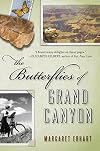
There are people who talk to hear themselves think, and Erhart seems to be the author’s equivalent. Things like a random query about what the things mountain climbers use with their hands (pitons) jump from an explanation to morning conversation between two women who weren’t even participating in the first discussion. Characters throw scientific names of critters back and forth without the reader having a clue whether they even relate to the main interest (for most, butterflies and show more related) of the characters.
This book was very slow to develop, and, after the prologue teaser, I basically had to force myself through most of the book for the prize of figuring out who they were. And I feel cheated because the prologue clearly mention one gun, not used, and no indication of any other. The book was actually more interesting when I went through it to get my facts straight to write this review than it was in the initial reading.
Nitpicks:
Erhart spends time acknowledging all the help she had getting her butterflies right, but apparently she didn’t put so much effort into genetic history. On page 24, she’s got Elzada talking about selective breeding leading to (cross cows and fireflies to get glow-in-the-dark cows) “when we finally understand the configuration of DNA”--when DNA wasn’t proven to be the molecule of heredity until ___.
Just discovered as I’m typing this: The book starts with Jand AND Morris arriving, but a few chapters later, (p51, to be exact, and again p 141, and then he “arrives” mourning the loss of his dog, Martin) Morris is home, without Jane, or any explanation as to why he is no longer at the Hedquists. How’d the editors miss that?
(Personal pet peeve: "They were Galloway boats, shallow hulled, with a covered deck and lapstrake sides, built in Racine, Wisconsin, far from the sea. But seaworthy they were..." --Apparently Erhart, for all her research, is unaware that the Great Lakes have legally been "seas" since 1871.) show less
This book was very slow to develop, and, after the prologue teaser, I basically had to force myself through most of the book for the prize of figuring out who they were. And I feel cheated because the prologue clearly mention one gun, not used, and no indication of any other. The book was actually more interesting when I went through it to get my facts straight to write this review than it was in the initial reading.
Nitpicks:
Erhart spends time acknowledging all the help she had getting her butterflies right, but apparently she didn’t put so much effort into genetic history. On page 24, she’s got Elzada talking about selective breeding leading to (cross cows and fireflies to get glow-in-the-dark cows) “when we finally understand the configuration of DNA”--when DNA wasn’t proven to be the molecule of heredity until ___.
Just discovered as I’m typing this: The book starts with Jand AND Morris arriving, but a few chapters later, (p51, to be exact, and again p 141, and then he “arrives” mourning the loss of his dog, Martin) Morris is home, without Jane, or any explanation as to why he is no longer at the Hedquists. How’d the editors miss that?
(Personal pet peeve: "They were Galloway boats, shallow hulled, with a covered deck and lapstrake sides, built in Racine, Wisconsin, far from the sea. But seaworthy they were..." --Apparently Erhart, for all her research, is unaware that the Great Lakes have legally been "seas" since 1871.) show less
Awards


You May Also Like


Associated Authors
Statistics
- Works
- 6
- Also by
- 1
- Members
- 183
- Popularity
- #118,258
- Rating
- 2.7
- Reviews
- 7
- ISBNs
- 12