
Bill Minutaglio
Author of Dallas 1963
About the Author
Bill Minutaglio is a Clinical Professor of Journalism at the University of Texas at Austin. His books include Molly Ivins: A Rebel Life; First Son: George W. Bush the Bush Family Dynasty; City on Fire: The Forgotten Disaster That Devastated a Town and Ignited a Landmark Legal Battle; and The show more President's Counselor: The Rise to Power of Alberto Gonzales. He has also written for the Rhythm, High Fidelity, and many other publications. show less
Image credit: http://inkwellmanagement.com/client/bill-minutaglio
Works by Bill Minutaglio
City on Fire: The Forgotten Disaster That Devastated a Town and Ignited a Landmark Legal Battle (2003) 112 copies, 2 reviews
The Most Dangerous Man in America: Timothy Leary, Richard Nixon and the Hunt for the Fugitive King of LSD (2018) 102 copies, 7 reviews
Tagged
Common Knowledge
- Birthdate
- 1955
- Gender
- male
- Nationality
- USA
- Places of residence
- Austin, Texas, USA
- Associated Place (for map)
- Texas, USA
Members
Reviews
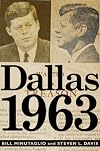
"Dallas 1963 is not meant to address the many conspiracy theories surrounding the murder of President Kennedy". This from the Author's Note. In the years since Kennedy's death more than 2,000 books have been written about the assassination, many of which espouse one or more conspiracy theories. That's fine. I doubt I will ever tire of reading them. Among all that noise, this recent contribution manages to be unique by ignoring any conspiracy theories while painting a picture of a city so show more awash in Kennedy-loathing, racism, and hyper-conservatism as to be a hotbed of conspiracy potential. Dimensions to this include General Walker fomenting hostile and reactionary demonstrations largely against the U.N. and integration while apparently being in the closet; segregationist preacher Billy James Hargis; Dallas oilman H.L. Hunt preaching oilman elitism, plutocracy, his genetic supremacy, and quirky health cures; Minding the Store author Stanley Marcus trying to server the affluent at the Dallas retailer while being both innovative and segregated.
After reading this, was it recklessness or hubris that brought JFK to Dallas? show less
After reading this, was it recklessness or hubris that brought JFK to Dallas? show less
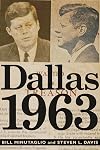
I grew up in Dallas. I was there in 1963 when John F. Kennedy was murdered on its streets. I've read extensively about the assassination, followed all the events from that day in November forward to the wildly varying conclusions that have arisen. But this book isn't about that period. It's about the three years prior to the assassination and about the social and political life of the city in which the assassination occurred. It is one of the most eye-opening things I have ever read, and it show more utterly astonished me with facts and insights about the town I thought I knew. Of course, I was a child when these events were occurring, so it's not completely surprising that I didn't grasp all the nuances. But the not-so-underground life of Dallas as the very heart of right-wing extremism in the 1960s almost completely escaped me until reading this book. The authors bend so far over backwards trying to be objective they almost come full circle. Yet for all that massive effort to impartiality, one is reminded of the old saying that facts have a liberal bent. Only the furthest right of the furthest right can look at the political climate in Dallas in the early 1960s and believe anything but that the city was a bubbling cauldron of hate and fear. In what other city in American history have high government officials been spat on and battered on television as ambassador Stevenson was during an official visit? In what other place in this country could the sitting Vice President of the United States and his wife be physically abused, intimidated, and spat on by a riotous mob of wealthy mink-clad women? That the passions of so many extreme conservatives in one place were tacitly encouraging violence to the American president is, in the end, an extraordinary irony in view of the apparent fact that it was a left-winger who gunned him down. What DALLAS 1963 does is make it crystal clear that the climate of hatred in the city was so intrinsic and deeply rooted that it actually made the assassination almost inevitable, regardless of the political position of the actual shooter. And ultimately, what is most astonishing is that the city fathers who hated Kennedy, the comparatively few high-level figures in the city who loved him, the president's staff and administrative colleagues, and even the president himself saw clearly that Dallas posed an extraordinary threat not only to his political existence and policies, but to his life itself, yet none of them heeded the alarm bells that were clanging from every direction. If there's a problem with this book, it's in a choice to tell it mostly from a present-tense framework, with inconsistent alternations with past tense. But that's a mild caveat. This is a page-turning, pulse-pounding political thriller with its conclusion already known, but with the roots that led to that conclusion now revealed in ugly glory in an innovative and riveting approach. What is perhaps most powerful in this book is the undeniable implications that the massive polarization and bitterness Americans felt toward others of different opinion in the 1960s is not dead. To paraphrase Bertolt Brecht, the bitch isn't dead. In fact, she's in heat again. show less
The Most Dangerous Man in America: Timothy Leary, Richard Nixon and the Hunt for the Fugitive King of LSD by Bill Minutaglio
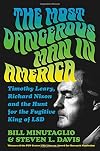
In my early 20s I went through a Leary phase. I didn't take my experimentation anywhere near the level he did, but I got very interested in his philosophy of psychedelics and spiritual and intellectual enlightenment. I majored in religious studies in university and I likened Leary's philosophy and practice to a religion. I think I even heard him speak in the early '90s (though that might have been a hallucination). It has been many years since I visited this history, and this book tells the show more story of a very specific period in Leary's life. It is a very interesting tale, of jailbreak and exile, and the maniacal pursuit executed by Richard Nixon. The Nixon stuff is especially fascinating, seeing it through the lens of Trump's America. I think parallels between Nixon and Trump are inevitable, and indeed this book describes some of Nixon's behaviour as being as erratic and crazed as some have reported Trump to be. The early 70s were a volatile, some might say exciting time, when people rose up and used violent revolutionary acts to express their displeasure with the government. Leary was drawn into that violence because it provided him a means of escape from Nixon's single-minded persecution, but in fact it was exactly counter to his philosophy of joyous contemplation of the universe and humans' place in it. A highly engaging and thought-provoking read. show less
Dallas 1963 is a fascinating look not so much of the Kennedy assassination itself, but of a handful of Dallas residents who were either pro or violently anti-Kennedy. Some residents such as civil rights crusaders Juanita Craft and Rhett James or elegant merchant Stanley Marcus were great fans of JFK and hopeful that his civil rights policies would have a positive effect on the city of Dallas. Others, such as newspaper owner Ted Dealey, Senator Bruce Alger and former general Edwin Walker show more despised Kennedy and the entire civil rights movement. Unfortunately the worst elements of the city all too often took control. LBJ and Lady Bird were harassed and spit on by a mob of upper middle class housewives during an earlier visit to Dallas. U.N. ambassador and two time Presidential nominee Adalai Stevenson and was also spit on and attacked by radical mobs within the city.
Most striking about this novel is how little seems to have changed. The John Birch society has morphed into the Tea Party. Arch conservatives still rail against universal health care and death panels. It's very easy to read entire passages of this book and forget that the events discussed took place in the 1960's instead of today. Dallas 1963 is a warning on what can happen when the worst impulses are allowed to flourish unchecked. show less
Most striking about this novel is how little seems to have changed. The John Birch society has morphed into the Tea Party. Arch conservatives still rail against universal health care and death panels. It's very easy to read entire passages of this book and forget that the events discussed took place in the 1960's instead of today. Dallas 1963 is a warning on what can happen when the worst impulses are allowed to flourish unchecked. show less
Lists
Awards


You May Also Like


Associated Authors
Statistics
- Works
- 9
- Members
- 778
- Popularity
- #32,713
- Rating
- 4.1
- Reviews
- 23
- ISBNs
- 50
- Languages
- 2
