
Debby Applegate
Author of The Most Famous Man in America: The Biography of Henry Ward Beecher
About the Author
Image credit: Courtesy of the Pulitzer Prizes.
Works by Debby Applegate
Tagged
Common Knowledge
- Canonical name
- Applegate, Debby
- Birthdate
- 1968
- Gender
- female
- Education
- Amherst College (B.A. | American Studies | 1989 | summa cum laude)
Yale University (Ph.D. | American Studies | 1998) - Occupations
- writing teacher
- Organizations
- New Haven Review
Yale Summer Cabaret
Friends of the Amherst College Library
Marymount Manhattan College - Awards and honors
- Honorary Doctorate (Letters, Westfield State College, 2008)
- Agent
- Susan Rabiner Literary Agency, New York
- Relationships
- Tulgan, Bruce (husband)
- Nationality
- USA
- Birthplace
- Eugene, Oregon, USA
- Places of residence
- Clackamas, Oregon, USA
New Haven, Connecticut, USA - Associated Place (for map)
- Oregon, USA
Members
Reviews
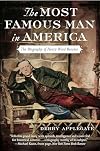
Henry Ward Beecher’s great contribution to the American style of religion seems to be that faith could be a matter of joy, not the fear and self-loathing Beecher learned from his famous Puritanical father Lyman Beecher.
His impact on the American psyche seems to have gone even deeper than his father.
One big reason was that he reached the summit of his powers at yet another turning point in transportation, communications, and the new business of celebrity.
While struggling to make it as a show more minister on America’s frontier, Beecher’s early tract on what a preacher could be found its way into the hands of easterners who had money to invest and a keen sense of what people were willing to pay for.
We’re talking mid-19th century America when the penny press was giving ordinary men outsized reputations. Beecher became a charismatic speaker, a persuasive writer, and eventually great political tool for the then radical new Republican Party.
He wrote or had ghost-written enormously popular and financially rewarding books and articles. And he used the new trains to hopscotch between audiences.
Northerners and Southerners weren’t all that far apart on their opinion of the inferiority of blacks toiling in America’s slave system. But one could argue that the rising abolitionist presses inflamed the differences, much as FOX News inflates differences between Republicans and Democrats today.
There were the clear unreconcilable facts of the US Constitution and societal norms. Americans could see the evidence around them that all men were not born equal. But the country averted its eyes from slavery, and not just the slaveowners.
Then came the political compromises in Washington, most particularly the Fugitive Slave laws and the infamous Dred Scott Supreme Court decision which really stoked radical opinion and drove the country closer to civil war.
The role of the charismatic speaker in public discourse is what makes this biography of Beecher published in 2006 so relevant today.
The many parallels between Beecher and Donald Trump are startling. Both had domineering successful fathers, both were raised with self-loathing and a punishing obsession with making it on their own.
Both took excessive liberties with their celebrity, ran up mountains of debt, and both channelled the political discourse of the nation. show less
His impact on the American psyche seems to have gone even deeper than his father.
One big reason was that he reached the summit of his powers at yet another turning point in transportation, communications, and the new business of celebrity.
While struggling to make it as a show more minister on America’s frontier, Beecher’s early tract on what a preacher could be found its way into the hands of easterners who had money to invest and a keen sense of what people were willing to pay for.
We’re talking mid-19th century America when the penny press was giving ordinary men outsized reputations. Beecher became a charismatic speaker, a persuasive writer, and eventually great political tool for the then radical new Republican Party.
He wrote or had ghost-written enormously popular and financially rewarding books and articles. And he used the new trains to hopscotch between audiences.
Northerners and Southerners weren’t all that far apart on their opinion of the inferiority of blacks toiling in America’s slave system. But one could argue that the rising abolitionist presses inflamed the differences, much as FOX News inflates differences between Republicans and Democrats today.
There were the clear unreconcilable facts of the US Constitution and societal norms. Americans could see the evidence around them that all men were not born equal. But the country averted its eyes from slavery, and not just the slaveowners.
Then came the political compromises in Washington, most particularly the Fugitive Slave laws and the infamous Dred Scott Supreme Court decision which really stoked radical opinion and drove the country closer to civil war.
The role of the charismatic speaker in public discourse is what makes this biography of Beecher published in 2006 so relevant today.
The many parallels between Beecher and Donald Trump are startling. Both had domineering successful fathers, both were raised with self-loathing and a punishing obsession with making it on their own.
Both took excessive liberties with their celebrity, ran up mountains of debt, and both channelled the political discourse of the nation. show less
Born into a poor Jewish family in a shtetl in what is today Belarus, Polly Adler arrived in the US in 1913. Ambitious, clever, and with limited formal education, Adler was determined to make more of herself than earning a pittance for backbreaking, dead-end factory work. By the early 1920s, Adler had set up her own brothel and was soon New York City's "top supplier of party girls". Her establishment was visited by a list of johns who make up a who's who of the great, good, and gruesome of show more the Roaring Twenties: the Marx Brothers, Desi Arnaz, Franklin Roosevelt, mob guys, and European royalty. Adler made a fortune and became a small-time celebrity, before retiring to post-war California where she went back to school and wrote a best-selling memoir.
Debby Applegate writes with clear affection for her subject, but without glossing over the less savory aspects of Adler's career or ignoring the grit that lay beneath the Twenties glamour. There is a lingering sense at the end of Madam that there are key aspects of Adler's life that are now unknowable—as Applegate says, Adler “hid far more of her story than she shared, even from herself.” Still, a briskly readable combination of biography and social history. show less
Debby Applegate writes with clear affection for her subject, but without glossing over the less savory aspects of Adler's career or ignoring the grit that lay beneath the Twenties glamour. There is a lingering sense at the end of Madam that there are key aspects of Adler's life that are now unknowable—as Applegate says, Adler “hid far more of her story than she shared, even from herself.” Still, a briskly readable combination of biography and social history. show less
I have to say Polly Adler was a mighty impressive woman. She started out in a Russian shtetl and ended up being hostess to American politicians (including FDR), gangsters, police, artists, and top businessmen. She got knocked around physically and legally for decades and managed to stay on top. All kinds of deals were made in her homes because men knew they could plot and plan and neither she nor her "girls" would spread their secrets. So, respect for Polly Adler, not much for her Johns.
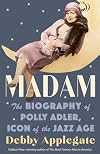
During the Twenties, Thirties and Forties, many of the most prominent people in show business, crime, politics, law enforcement and the literary world knew Polly Adler. The reason lies in the title of Debby Applegate's 2021 biography, “Madam.”
Adler's constantly moving brothel in New York City is where important people, including even many women like Dorothy Parker and Katherine Hepburn, went for fun.
A Russian Jew, she bravely traveled to New York alone in 1913 at the age of 13, although show more most of her family later followed. She struggled to make a living, finally turning to prostitution. She quickly realized this could be her ticket to success. Her plan was to retire early and find a good man to marry. It didn't quite work out that way.
Not a very attractive woman herself, she realized she would do better as a madam, and she worked tirelessly to hire better girls to attract better, meaning richer, customers. Prohibition came at just the right time for her, and soon she was selling illicit booze as well as illicit sex. She made big money, much of which went to bribing cops, many of whom betrayed her.
Later in life, Adler told her own story in her best-selling book “A House Is Not a Home,” published in 1953. The book was ghost-written and left out most of the names and most of the details. Applegate provides these in her account. The men who flocked to Polly's read like a Who's Who for that period of history: among them, George S. Kaufman, Robert Benchley, Milton Berle, the Marx Brothers, Jimmy Durante, Wallace Beery, Paul Whitman, John Garfield, Joe DiMaggio, Huey Long, James Thurber, Desi Arnez, Walter Winchell and even the infamous Judge Crater, as well as such gangsters as Dutch Schultz and Lucky Luciano. Franklin D. Roosevelt didn't come to her, but she claimed she sent girls to him.
Some of the more than 600 women who worked for Polly Adler later became famous, including Martha Raye and Dorothy Lamour.
In the end, Applegate's book is less the story of a notorious madam than a history of an era, or a series of eras — the Roaring Twenties, Prohibition, Broadway, the Jazz Age, organized crime and World War II in America. It is all there in this book, and Polly Adler was right in the center of it all. show less
Adler's constantly moving brothel in New York City is where important people, including even many women like Dorothy Parker and Katherine Hepburn, went for fun.
A Russian Jew, she bravely traveled to New York alone in 1913 at the age of 13, although show more most of her family later followed. She struggled to make a living, finally turning to prostitution. She quickly realized this could be her ticket to success. Her plan was to retire early and find a good man to marry. It didn't quite work out that way.
Not a very attractive woman herself, she realized she would do better as a madam, and she worked tirelessly to hire better girls to attract better, meaning richer, customers. Prohibition came at just the right time for her, and soon she was selling illicit booze as well as illicit sex. She made big money, much of which went to bribing cops, many of whom betrayed her.
Later in life, Adler told her own story in her best-selling book “A House Is Not a Home,” published in 1953. The book was ghost-written and left out most of the names and most of the details. Applegate provides these in her account. The men who flocked to Polly's read like a Who's Who for that period of history: among them, George S. Kaufman, Robert Benchley, Milton Berle, the Marx Brothers, Jimmy Durante, Wallace Beery, Paul Whitman, John Garfield, Joe DiMaggio, Huey Long, James Thurber, Desi Arnez, Walter Winchell and even the infamous Judge Crater, as well as such gangsters as Dutch Schultz and Lucky Luciano. Franklin D. Roosevelt didn't come to her, but she claimed she sent girls to him.
Some of the more than 600 women who worked for Polly Adler later became famous, including Martha Raye and Dorothy Lamour.
In the end, Applegate's book is less the story of a notorious madam than a history of an era, or a series of eras — the Roaring Twenties, Prohibition, Broadway, the Jazz Age, organized crime and World War II in America. It is all there in this book, and Polly Adler was right in the center of it all. show less
Lists
Awards


You May Also Like


Associated Authors
Statistics
- Works
- 2
- Members
- 582
- Popularity
- #43,089
- Rating
- 4.0
- Reviews
- 18
- ISBNs
- 10

