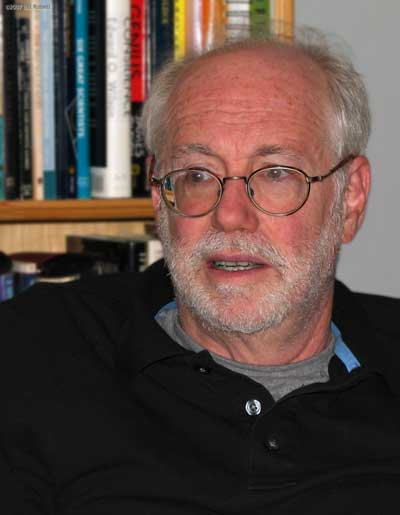
David Nasaw
Author of Andrew Carnegie
About the Author
David Nasaw is currently a professor of history and director of the Center for the Humanities at the Graduate Center of the City University of New York, he lives in Manhattan. (Bowker Author Biography)
Image credit: The Graduate Center, CUNY
Works by David Nasaw
The Patriarch: The Remarkable Life and Turbulent Times of Joseph P. Kennedy (2012) 559 copies, 10 reviews
The Last Million: Europe's Displaced Persons from World War to Cold War (2020) 207 copies, 6 reviews
Tagged
Common Knowledge
- Canonical name
- Nasaw, David
- Birthdate
- 1945-07-18
- Gender
- male
- Education
- Columbia University (PhD|1972)
Bucknell University (BA|1967) - Occupations
- historian
professor
biographer - Organizations
- CUNY Graduate Center (Arthur M. Schlesinger Jr. Professor of History)
American Historical Association
Organization of American Historians - Nationality
- USA
- Birthplace
- Cortland, New York, USA
- Places of residence
- New York, New York, USA
Manhattan, New York, USA - Associated Place (for map)
- New York, USA
Members
Reviews
A wonderful book for readers who enjoy American 20th century political and business stories.
Initially I was skeptical that the author could be objective as the Kennedy family reportedly facilitated the writing of this biography. While they provided author Nasaw unfettered access to JPK's papers, they also reportedly had no final review of the book prior to publication. And it's hard to believe the Kennedy's would approve all that's printed here. It's surprisingly well-balanced, well show more researched, wonderfully written account of one of the most interesting businessmen of the 20th century.
Nasaw tells the not-quite rags to riches story of JPK, including many details of how he built his business empire as a banker, Hollywood producer, importer of Scotch whiskey post Prohibition, real estate tycoon. Many political and even business biographies gloss over the details of their subjects. Nasaw provides just enough of the facts for both the early businesses as well as some of the bigger later ones (how much he paid for the Chicago Merchandise Mart and how he managed the property) to make this of great interest to even a casual business reader. Nasaw also details the terms of the Kennedy family trusts and values.
But what surprises the most is how much more thorough Nasaw is with the political side of JPK's life. Following a successful career in business, JPK supported FDR and became the nation's first SEC administrator. When he completed a brief but almost universally praised tenure there, FDR gave him a second role that eventually earned him a job JPK really coveted: ambassador to England pre-WWII. It was there the first time that JPK stumbled professionally and Nasaw explains in perfect cadence how and why. Mixing the political with the business, Nasaw dissects Kennedy's strengths and weaknesses in a highly readable and entertaining fashion.
Much of the book of course is also about the Kennedy family. Again Nasaw manages to find details about the Kennedy family that are often not reported, but more importantly, Nasaw explains insights into the Kennedy family dynamic that are unique to most of the Kennedy bio-pics previously published. JFK is viewed throughout the book strictly from the viewpoint of his once more famous father as a young boy, teen, young man, young politico and finally president. That slow build itself is worth taking the time to read this fine book.
The book ends, fittingly, with JPK's death with no extended analysis of his life. While there's much commentary about the impact of his life on his children, grandchildren and his country throughout the book, I get the sense that Nasaw had even more to share but realizing he was approaching 900 printed pages (another reason to read this on an digital device), but cut it off a bit short. I'd like to hear more from him. show less
Initially I was skeptical that the author could be objective as the Kennedy family reportedly facilitated the writing of this biography. While they provided author Nasaw unfettered access to JPK's papers, they also reportedly had no final review of the book prior to publication. And it's hard to believe the Kennedy's would approve all that's printed here. It's surprisingly well-balanced, well show more researched, wonderfully written account of one of the most interesting businessmen of the 20th century.
Nasaw tells the not-quite rags to riches story of JPK, including many details of how he built his business empire as a banker, Hollywood producer, importer of Scotch whiskey post Prohibition, real estate tycoon. Many political and even business biographies gloss over the details of their subjects. Nasaw provides just enough of the facts for both the early businesses as well as some of the bigger later ones (how much he paid for the Chicago Merchandise Mart and how he managed the property) to make this of great interest to even a casual business reader. Nasaw also details the terms of the Kennedy family trusts and values.
But what surprises the most is how much more thorough Nasaw is with the political side of JPK's life. Following a successful career in business, JPK supported FDR and became the nation's first SEC administrator. When he completed a brief but almost universally praised tenure there, FDR gave him a second role that eventually earned him a job JPK really coveted: ambassador to England pre-WWII. It was there the first time that JPK stumbled professionally and Nasaw explains in perfect cadence how and why. Mixing the political with the business, Nasaw dissects Kennedy's strengths and weaknesses in a highly readable and entertaining fashion.
Much of the book of course is also about the Kennedy family. Again Nasaw manages to find details about the Kennedy family that are often not reported, but more importantly, Nasaw explains insights into the Kennedy family dynamic that are unique to most of the Kennedy bio-pics previously published. JFK is viewed throughout the book strictly from the viewpoint of his once more famous father as a young boy, teen, young man, young politico and finally president. That slow build itself is worth taking the time to read this fine book.
The book ends, fittingly, with JPK's death with no extended analysis of his life. While there's much commentary about the impact of his life on his children, grandchildren and his country throughout the book, I get the sense that Nasaw had even more to share but realizing he was approaching 900 printed pages (another reason to read this on an digital device), but cut it off a bit short. I'd like to hear more from him. show less
This is a horrible story of WW2 displaced people, that could not or would not go back to their home countries whether because of fear of prosecution by the new government or because they refused to live among the murderers of their loved ones.
The book brings both the detailed unfolding of the events and the personal testimonies of DPs, thus creating a detailed and a very human narrative of the tragedy that is never a focus of any WW2 discussion.
It is very difficult to read and understand, show more that these DPs were rarely considered as living breathing people, but were treated as pawns in the post-war politics. It is especially painful for me as a Jew to read how the survivors of Holocaust were not wanted either in their home countries, where hatred and pogroms awaited them or in any "safe heavens" of western democracies, where they were simply not wanted for being Jews. And at the same time their very abusers: the camp guards, the Waffen-ss officers and other collaborators with the Nazi regime were offered visas to America, Australia and UK in an astonishing perversion of justice.
The book is also a companionate pointer to our current situation: Nasaw doesn't mention the nowadays refugees, but from his narrative of the post-war crisis it is clear that we all have to consider today's refugees with very clear eyes. show less
The book brings both the detailed unfolding of the events and the personal testimonies of DPs, thus creating a detailed and a very human narrative of the tragedy that is never a focus of any WW2 discussion.
It is very difficult to read and understand, show more that these DPs were rarely considered as living breathing people, but were treated as pawns in the post-war politics. It is especially painful for me as a Jew to read how the survivors of Holocaust were not wanted either in their home countries, where hatred and pogroms awaited them or in any "safe heavens" of western democracies, where they were simply not wanted for being Jews. And at the same time their very abusers: the camp guards, the Waffen-ss officers and other collaborators with the Nazi regime were offered visas to America, Australia and UK in an astonishing perversion of justice.
The book is also a companionate pointer to our current situation: Nasaw doesn't mention the nowadays refugees, but from his narrative of the post-war crisis it is clear that we all have to consider today's refugees with very clear eyes. show less
So we learned in school that World War II ended in the European theater on 8 May 1945? For over a million people who had lost homes, wives, husbands, children, jobs, furniture, clothing, keepsakes, and pretty much everything else one can imagine, the turmoil of war was not over. True, artillery ceased to fire, bombs no longer fell, and crematoria grew cold. The specter of brutal death no longer hovered above the concentration camps. However, the multitudes of homeless still remained behind show more wire encircling displaced person camps, food was still in short supply, and jobs were nonexistent.
Making conditions worse was the continued influx of helpless DPs, short for Displaced Persons, as these war victims were called, for months after the “end” of the war. Poles, Lithuanians, Romanians, and Estonians, especially, continued to appear at the DP camps in both American and British zones in Germany, fleeing not the Nazi armies now but the Red Army advancing from the USSR.
For the Jews particularly, there could be no return to their pre-war Baltic homes. Some tried, only to find that pogroms were not things of the past but could still be practiced by their former non-Jewish countrymen. The Allies were somewhat slow to learn these realities and initially stressed repatriating DPs to their native countries, naively believing that one's pre-war nationality was the sole criterion for repatriation.
Why not let the Jewish DPs emigrate to Palestine? After the first world war, Britain accepted a mandate from the United Nations to govern that region, Britain needed Arab oil, and Britain was not about to annoy the Arabs by liberalizing its rules severely limiting Jewish immigration into Palestine. How about letting them emigrate to the United States then? In the 1940s, just as in the 2020s, reactionary Republicans and Democrats from conservative states insisted on severe restrictions on immigration and on keeping out “European riffraff.”
Complicating matters was the growing paranoia in the U.S. over the expanding influence of the USSR. The unfounded belief that Jewish immigration was part of a Soviet plot to infiltrate communist sympathizers into the U.S. ran rampant amidst the conservative elements in Congress, and powerful Senators could block votes on more permissive immigration laws despite President Truman's support of such bills.
I do not mean to summarize David Nasaw's The Last Million, for such is not the purpose of a review, but to suggest the subject matter with which his book deals. Absent this book, I would never have realized that some civilian war victims had to remain in DP camps until December of 1951—fully six years after the “end” of the war! This history is an eye-opener for readers who are likely unaware of the long-lasting impacts of the war on its hapless civilian victims, Jews and non-Jews alike.
I have but two nits to pick with Nasaw's telling of this history. While neither is terribly severe, I did find both rather annoying. First is that a few explanatory footnotes here and there would help the reader's comprehension. For example, the author refers a number of times to “the British Mandate” concerning its refusal to allow increased Jewish immigration into Palestine. He obviously expects his readers to be familiar with that, which I was not. A Google search on the term, of course, enlightened me, but an explanatory footnote in the book would have been appreciated. Another example of this is Nasaw's repeated use of the term “quisling,” sometimes capitalized, sometimes not. Again, putting the book aside and searching for the meaning of the term provided enlightenment but also interrupted the reading.
The second nit is that several syntactical or perhaps typographical errors should have been caught by proofreaders but were not. Just a very few examples of this include such faux pas as: “There is and will also [rather than always] be controversy over....” “...[I]t was difficult, if not impossible, to assembly [rather than assemble] the necessary evidence....” “The last of the Last Million departed Föhrenwald, eleven years and a half years after it had been designated as a camp for Jewish displaced persons [erroneous comma and repetition of the word years].” Such errors are undoubtedly considered very minor by some, but their occurrence significantly weakens the professionalism of the writing.
My nits notwithstanding, I found Nasaw's book quite educational, informative and readable. As Nasaw writes in the introduction, “The violence of war did not end with the signing of ceasefires, truces, or peace treaties. War bled into postwar and millions of innocents who had never taken up arms continued to suffer long after the soldiers had gone home.” The Last Million is a worthy effort to tell us their stories. show less
Making conditions worse was the continued influx of helpless DPs, short for Displaced Persons, as these war victims were called, for months after the “end” of the war. Poles, Lithuanians, Romanians, and Estonians, especially, continued to appear at the DP camps in both American and British zones in Germany, fleeing not the Nazi armies now but the Red Army advancing from the USSR.
For the Jews particularly, there could be no return to their pre-war Baltic homes. Some tried, only to find that pogroms were not things of the past but could still be practiced by their former non-Jewish countrymen. The Allies were somewhat slow to learn these realities and initially stressed repatriating DPs to their native countries, naively believing that one's pre-war nationality was the sole criterion for repatriation.
Why not let the Jewish DPs emigrate to Palestine? After the first world war, Britain accepted a mandate from the United Nations to govern that region, Britain needed Arab oil, and Britain was not about to annoy the Arabs by liberalizing its rules severely limiting Jewish immigration into Palestine. How about letting them emigrate to the United States then? In the 1940s, just as in the 2020s, reactionary Republicans and Democrats from conservative states insisted on severe restrictions on immigration and on keeping out “European riffraff.”
Complicating matters was the growing paranoia in the U.S. over the expanding influence of the USSR. The unfounded belief that Jewish immigration was part of a Soviet plot to infiltrate communist sympathizers into the U.S. ran rampant amidst the conservative elements in Congress, and powerful Senators could block votes on more permissive immigration laws despite President Truman's support of such bills.
I do not mean to summarize David Nasaw's The Last Million, for such is not the purpose of a review, but to suggest the subject matter with which his book deals. Absent this book, I would never have realized that some civilian war victims had to remain in DP camps until December of 1951—fully six years after the “end” of the war! This history is an eye-opener for readers who are likely unaware of the long-lasting impacts of the war on its hapless civilian victims, Jews and non-Jews alike.
I have but two nits to pick with Nasaw's telling of this history. While neither is terribly severe, I did find both rather annoying. First is that a few explanatory footnotes here and there would help the reader's comprehension. For example, the author refers a number of times to “the British Mandate” concerning its refusal to allow increased Jewish immigration into Palestine. He obviously expects his readers to be familiar with that, which I was not. A Google search on the term, of course, enlightened me, but an explanatory footnote in the book would have been appreciated. Another example of this is Nasaw's repeated use of the term “quisling,” sometimes capitalized, sometimes not. Again, putting the book aside and searching for the meaning of the term provided enlightenment but also interrupted the reading.
The second nit is that several syntactical or perhaps typographical errors should have been caught by proofreaders but were not. Just a very few examples of this include such faux pas as: “There is and will also [rather than always] be controversy over....” “...[I]t was difficult, if not impossible, to assembly [rather than assemble] the necessary evidence....” “The last of the Last Million departed Föhrenwald, eleven years and a half years after it had been designated as a camp for Jewish displaced persons [erroneous comma and repetition of the word years].” Such errors are undoubtedly considered very minor by some, but their occurrence significantly weakens the professionalism of the writing.
My nits notwithstanding, I found Nasaw's book quite educational, informative and readable. As Nasaw writes in the introduction, “The violence of war did not end with the signing of ceasefires, truces, or peace treaties. War bled into postwar and millions of innocents who had never taken up arms continued to suffer long after the soldiers had gone home.” The Last Million is a worthy effort to tell us their stories. show less
The best historical works convey moral complexity. By capturing the texture of the times in which events occur, they temper binary notions of right and wrong even as they lead the reader to more sustainable if less definitive judgments.
David Nasaw’s The Last Million is probably the best book I’ve read this year. It recounts the stories of the million souls we have come to know as the “displaced persons” of the Second World War, and of the responses of the United States, United show more Kingdom, and other non-Communist countries to their plight. The book is well-researched, cogently argued, and skillfully constructed, blending high politics with stories of individual survivors.
I deliberately use plural nouns here—stories; responses—to reinforce Nasaw’s fundamental point: there was no single DP-type but rather ethnic streams arriving in Germany for different reasons, from different places, and at different points in time. Each by its wartime conduct stood in a different relationship to good and bad, to moral justice. And the resettlement policies of the United States and other nations featured a similarly complex relation to justice. Simply put, the more Nazi-adjacent the ethnic group, the more likely its members were to find a new home in the West.
But that’s the end of a long and fascinating story, The beginning lies in the bloody and rapidly shifting borders between Hitler’s Germany and Stalin’s Soviet Union. If you were a Balt— Estonian, Latvian, Lithuanian— the devil’s bargain between the two dictators extinguished your freedoms and your national independence. Life under Stalin’s thumb was brutal, and when Hitler turned on his Communist ally in December 1941, many signed on with the new occupiers. That could mean anything from passive cooperation to gleeful Jew killing. And when the Red Army returned in 1944, many Balts fled west, to Germany, where the war’s end saw them among the last million housed in the d.p. camps.
A similar but not identical dynamic played out among ethnic Ukrainians and Poles, except here many found themselves in wartime Germany performing forced labor. After the war, like the Balts, they shared a common goal: to free their homelands from Soviet domination (not going to happen for a half century) and to prevent the Allies from shipping them home to Communist persecution. This last point was complicated by the Anglo-Americans’ Yalta commitment to return DPs whose homes lie within the Soviet Union. As the Yalta Agreement awarded the Soviet Union a goodly chunk of eastern Poland (and compensated Poland with a similar slice of eastern Germany) some Poles were subject to forced relocation, others not.
The situation with the Jews was even more complicated. In 1945, the handful of concentration camp survivors were housed in the same DP camps as the other ethnic groups. In practice, this frequently meant with the very same Nazi collaborators who had oppressed them in Hitler’s death camps. Many Americans were non-plussed, or worse. In his 1945 broadcast from the camps, the sainted Edward R. Murrow interviewed Buchenwald survivors, “identifying Englishmen, Frenchmen, Czechoslovakians, German Communists, ‘professors from Poland, doctors from Vienna, men from all of Europe….’” Only one group missing. Not so for General Patton, who pronounced the Balts “the best of the Displaced persons… extremely clean in all respects.” The Jews, by contrasts, “are lower than animals.”
Most European Jews who survived Hitler’s onslaught had fled east, to Russia. Some took Soviet citizenship. Stalin duly dispatched them westward as cannon fodder. Others he shipped to Siberia, or central Asia to work in war factories. After the war, Stalin permitted these Jews to return home, mostly to Poland. There they were greeted by old-school pogroms, most notably although not uniquely in Kielce, and at the doors of their former homes by new Polish residents who made it clear, at gunpoint, that their return was not welcome.
These Jews thus also fled west to the DP camps, but mostly arrived in 1946. This, argued some American policymakers, meant they weren’t displaced persons at all. The U.S. Department of State argued strenuously to close the border with Poland and halt the westward flow, but this position became untenable after the Kielce Pogrom became known in the West.
Nasaw is strong on life inside the DP camps, which emerged as societies of their own. Ultimately, though, the point was to resettle their residents elsewhere. Many nations faced labor shortages, but all proved choosy in just whom they would admit. Essentially, the Balts were considered most desirable and Jews the least, with the Ukrainians and Poles somewhere in the middle. Partly this was rank prejudice and partly the association of Jews with Bolshevism. (Plug here for Paul Hanebrink’s truly excellent A Spector Haunting Europe.)
One result was the years-long battle to shape the U.S. legislation permitting some DPs to resettle in America. With the Senate in particular determined to keep Jews out, the initial law fixed a December 1945 cutoff date for determining DP status, thus disqualifying 90% of the Jews in the camps. It also added a substantial quota for “agricultural workers.” One guess why.
The fate of the Jewish DPs would largely be determined elsewhere, by those waging Israel’s War of Independence. Here the same American diplomats who fought to keep Jews out of the DP camps then fought with even greater bitterness against partition and the establishment of Israel. Failing in that, the Department of State then tried—fun fact!—to inter male Jewish DPs of fighting age in what Nasaw likens to concentration camps, to prevent them from joining the fight in Palestine.
I am old enough, barely, to recall Apollo-era jokes about “Our Germans are better than their Germans.” This was a back-handed way of acknowledging, belatedly, that one consequence of America’s DP policy was the admission of flat out Nazis, Nazi collaborators, Nazi sympathizers, Iron Guard fascists and similar riff-raff to our shores. Emerging Cold War tension of course had much to do with this, but not all. U.S. intelligence needed the knowledge and skills it **thought** many of these anti-Communist emigres possessed. In truth most of them possessed neither, and the ones who did were more likely found among the Jews we hoped to keep out.
This account greatly simplifies the richness of a major historical work that is both authoritative and accessible to the general reader. 5 stars…. show less
David Nasaw’s The Last Million is probably the best book I’ve read this year. It recounts the stories of the million souls we have come to know as the “displaced persons” of the Second World War, and of the responses of the United States, United show more Kingdom, and other non-Communist countries to their plight. The book is well-researched, cogently argued, and skillfully constructed, blending high politics with stories of individual survivors.
I deliberately use plural nouns here—stories; responses—to reinforce Nasaw’s fundamental point: there was no single DP-type but rather ethnic streams arriving in Germany for different reasons, from different places, and at different points in time. Each by its wartime conduct stood in a different relationship to good and bad, to moral justice. And the resettlement policies of the United States and other nations featured a similarly complex relation to justice. Simply put, the more Nazi-adjacent the ethnic group, the more likely its members were to find a new home in the West.
But that’s the end of a long and fascinating story, The beginning lies in the bloody and rapidly shifting borders between Hitler’s Germany and Stalin’s Soviet Union. If you were a Balt— Estonian, Latvian, Lithuanian— the devil’s bargain between the two dictators extinguished your freedoms and your national independence. Life under Stalin’s thumb was brutal, and when Hitler turned on his Communist ally in December 1941, many signed on with the new occupiers. That could mean anything from passive cooperation to gleeful Jew killing. And when the Red Army returned in 1944, many Balts fled west, to Germany, where the war’s end saw them among the last million housed in the d.p. camps.
A similar but not identical dynamic played out among ethnic Ukrainians and Poles, except here many found themselves in wartime Germany performing forced labor. After the war, like the Balts, they shared a common goal: to free their homelands from Soviet domination (not going to happen for a half century) and to prevent the Allies from shipping them home to Communist persecution. This last point was complicated by the Anglo-Americans’ Yalta commitment to return DPs whose homes lie within the Soviet Union. As the Yalta Agreement awarded the Soviet Union a goodly chunk of eastern Poland (and compensated Poland with a similar slice of eastern Germany) some Poles were subject to forced relocation, others not.
The situation with the Jews was even more complicated. In 1945, the handful of concentration camp survivors were housed in the same DP camps as the other ethnic groups. In practice, this frequently meant with the very same Nazi collaborators who had oppressed them in Hitler’s death camps. Many Americans were non-plussed, or worse. In his 1945 broadcast from the camps, the sainted Edward R. Murrow interviewed Buchenwald survivors, “identifying Englishmen, Frenchmen, Czechoslovakians, German Communists, ‘professors from Poland, doctors from Vienna, men from all of Europe….’” Only one group missing. Not so for General Patton, who pronounced the Balts “the best of the Displaced persons… extremely clean in all respects.” The Jews, by contrasts, “are lower than animals.”
Most European Jews who survived Hitler’s onslaught had fled east, to Russia. Some took Soviet citizenship. Stalin duly dispatched them westward as cannon fodder. Others he shipped to Siberia, or central Asia to work in war factories. After the war, Stalin permitted these Jews to return home, mostly to Poland. There they were greeted by old-school pogroms, most notably although not uniquely in Kielce, and at the doors of their former homes by new Polish residents who made it clear, at gunpoint, that their return was not welcome.
These Jews thus also fled west to the DP camps, but mostly arrived in 1946. This, argued some American policymakers, meant they weren’t displaced persons at all. The U.S. Department of State argued strenuously to close the border with Poland and halt the westward flow, but this position became untenable after the Kielce Pogrom became known in the West.
Nasaw is strong on life inside the DP camps, which emerged as societies of their own. Ultimately, though, the point was to resettle their residents elsewhere. Many nations faced labor shortages, but all proved choosy in just whom they would admit. Essentially, the Balts were considered most desirable and Jews the least, with the Ukrainians and Poles somewhere in the middle. Partly this was rank prejudice and partly the association of Jews with Bolshevism. (Plug here for Paul Hanebrink’s truly excellent A Spector Haunting Europe.)
One result was the years-long battle to shape the U.S. legislation permitting some DPs to resettle in America. With the Senate in particular determined to keep Jews out, the initial law fixed a December 1945 cutoff date for determining DP status, thus disqualifying 90% of the Jews in the camps. It also added a substantial quota for “agricultural workers.” One guess why.
The fate of the Jewish DPs would largely be determined elsewhere, by those waging Israel’s War of Independence. Here the same American diplomats who fought to keep Jews out of the DP camps then fought with even greater bitterness against partition and the establishment of Israel. Failing in that, the Department of State then tried—fun fact!—to inter male Jewish DPs of fighting age in what Nasaw likens to concentration camps, to prevent them from joining the fight in Palestine.
I am old enough, barely, to recall Apollo-era jokes about “Our Germans are better than their Germans.” This was a back-handed way of acknowledging, belatedly, that one consequence of America’s DP policy was the admission of flat out Nazis, Nazi collaborators, Nazi sympathizers, Iron Guard fascists and similar riff-raff to our shores. Emerging Cold War tension of course had much to do with this, but not all. U.S. intelligence needed the knowledge and skills it **thought** many of these anti-Communist emigres possessed. In truth most of them possessed neither, and the ones who did were more likely found among the Jews we hoped to keep out.
This account greatly simplifies the richness of a major historical work that is both authoritative and accessible to the general reader. 5 stars…. show less
Lists
Awards


You May Also Like


Associated Authors
Statistics
- Works
- 11
- Members
- 2,728
- Popularity
- #9,414
- Rating
- 3.9
- Reviews
- 40
- ISBNs
- 51
- Languages
- 2
- Favorited
- 1