
Gordon Corrigan
Author of Mud, Blood and Poppycock
About the Author
Gordon Corrigan is a member of the British Commission for Military History and a Fellow of the Royal Asiatic Society. He is the author of A Great and Glorious Adventure and The Second World War. Gordon lives in England.
Works by Gordon Corrigan
A Great and Glorious Adventure: A History of the Hundred Years War and the Birth of Renaissance England (2013) 133 copies, 2 reviews
Crécy (Finest Hours Book 1) 1 copy
Tipping Points of History 1 copy
Tagged
Common Knowledge
- Other names
- Corrigan, J. G. H.
- Birthdate
- 1942-09-10
- Gender
- male
- Nationality
- UK
- Associated Place (for map)
- UK
Members
Reviews
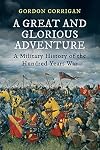
A Great and Glorious Adventure: A History of the Hundred Years War and the Birth of Renaissance England by Gordon Corrigan
Proudly Biased
What was wrong with the French? Why didn’t they just let the English take over their lands? Why did they have to keep fighting? Why did they want to push the English back across the Channel? These are the puzzling questions that led English kings to keep crossing the Channel for over a century to try to get the French to let them rule. All they wanted was everything. Three million Brits wanted control over 16 million French. King after king led sorties and sieges - that show more succeeded. But the English never consolidated their victories by occupying and administering (until about 90 years into it). They swept through the land, destroying anything that was not sufficiently defended, and moved on, returning control to the natives who were left. Then they came back and laid it waste again. And again. This is the essence of the Hundred Years’ War.
It was made a little more difficult because of the Scots who had a treaty with France to come to their aid in the case of an English invasion. The Scots fulfilled their commitment by gleefully attacking northern England, and running away when the English came after them. Even the capture of their king didn’t stop them. It was a labor of love. And it kept English troops in the north, when they were needed on the continent. Eventually, the Scots fought alongside the French in France, such was their love of England.
The English had an advanced military strategy. They had banks of archers who did nothing but shoot arrows into the air – six per minute each. This resulted in a rain of tens of thousands of arrows that not only killed and maimed, but frightened the horses into rearing and fleeing. The English liked to set up where it was advantageous, dig holes and trenches to slow the enemy, and wait to be attacked. It was a requirement that they be attacked. Sometimes they had to taunt the French into attacking. If it wasn’t so bloody, it would seem humorous.
Corrigan is a Sandhurst man, and wallows enthusiastically in the actual battles, which he relates in fine detail. The chronology is treated more summarily, with a lot of begatting and intrigue worthy of any opera, which defined the warring internal politics of England. So much effort went into rearranging the chess pieces that society itself was all but neglected, except for constant taxation (and revolts).
He’s also an Anglophile of the first rank, belittling the French at every opportunity, and singing the praises of Kings Edward III and Henry V, his all time favorite. Anything the French accomplished, particularly the advances with Joan of Arc, Corrigan attributes to dumb luck, while everything the English accomplished was due to professional soldiers, able administrators, strategic diplomats and loyal archers from an unending stream of extraordinary, quality people at the king’s service. This despite protection rackets run by garrisons, pillaging, looting, backstabbing, plots, betrayals, murder and mayhem. Finally, in the epilogue, Corrigan comes clean: “France as a nation has never liked us. The feeling is mutual.” And he ends by claiming the Hundred Years’ War to subjugate France was “a great and righteous cause”.
David Wineberg show less
What was wrong with the French? Why didn’t they just let the English take over their lands? Why did they have to keep fighting? Why did they want to push the English back across the Channel? These are the puzzling questions that led English kings to keep crossing the Channel for over a century to try to get the French to let them rule. All they wanted was everything. Three million Brits wanted control over 16 million French. King after king led sorties and sieges - that show more succeeded. But the English never consolidated their victories by occupying and administering (until about 90 years into it). They swept through the land, destroying anything that was not sufficiently defended, and moved on, returning control to the natives who were left. Then they came back and laid it waste again. And again. This is the essence of the Hundred Years’ War.
It was made a little more difficult because of the Scots who had a treaty with France to come to their aid in the case of an English invasion. The Scots fulfilled their commitment by gleefully attacking northern England, and running away when the English came after them. Even the capture of their king didn’t stop them. It was a labor of love. And it kept English troops in the north, when they were needed on the continent. Eventually, the Scots fought alongside the French in France, such was their love of England.
The English had an advanced military strategy. They had banks of archers who did nothing but shoot arrows into the air – six per minute each. This resulted in a rain of tens of thousands of arrows that not only killed and maimed, but frightened the horses into rearing and fleeing. The English liked to set up where it was advantageous, dig holes and trenches to slow the enemy, and wait to be attacked. It was a requirement that they be attacked. Sometimes they had to taunt the French into attacking. If it wasn’t so bloody, it would seem humorous.
Corrigan is a Sandhurst man, and wallows enthusiastically in the actual battles, which he relates in fine detail. The chronology is treated more summarily, with a lot of begatting and intrigue worthy of any opera, which defined the warring internal politics of England. So much effort went into rearranging the chess pieces that society itself was all but neglected, except for constant taxation (and revolts).
He’s also an Anglophile of the first rank, belittling the French at every opportunity, and singing the praises of Kings Edward III and Henry V, his all time favorite. Anything the French accomplished, particularly the advances with Joan of Arc, Corrigan attributes to dumb luck, while everything the English accomplished was due to professional soldiers, able administrators, strategic diplomats and loyal archers from an unending stream of extraordinary, quality people at the king’s service. This despite protection rackets run by garrisons, pillaging, looting, backstabbing, plots, betrayals, murder and mayhem. Finally, in the epilogue, Corrigan comes clean: “France as a nation has never liked us. The feeling is mutual.” And he ends by claiming the Hundred Years’ War to subjugate France was “a great and righteous cause”.
David Wineberg show less
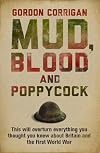
A direct refutation of many myths about the trench war of the Western Front. In particular Clark's "Lions led by Donkeys" and also the idea that trench life was uniformly and constantly awful.
Corrigan instead presents a view where life in much of the trenches, much of the time, was pretty awful but just wasn't at the same peak as the most famous ongoing battles: materiel, logistics and morale simply couldn't have sustained that. Things that might disturb the damp, ratty status quo were show more unwelcome and those on a 'quiet' trench were thus no fans of a nearby trench mortar, or a gung ho raiding party from some new regiment. Such disturbances attracted reprisals and escalation, which neither side wanted.
An essential book, if only to confront the Donkey view. One might disagree, one might indeed see it as "revisionist nonsense", but the question is certainly a real one. It is also rather better supported than Clark's infamously subjective yet influential viewpoint. show less
Corrigan instead presents a view where life in much of the trenches, much of the time, was pretty awful but just wasn't at the same peak as the most famous ongoing battles: materiel, logistics and morale simply couldn't have sustained that. Things that might disturb the damp, ratty status quo were show more unwelcome and those on a 'quiet' trench were thus no fans of a nearby trench mortar, or a gung ho raiding party from some new regiment. Such disturbances attracted reprisals and escalation, which neither side wanted.
An essential book, if only to confront the Donkey view. One might disagree, one might indeed see it as "revisionist nonsense", but the question is certainly a real one. It is also rather better supported than Clark's infamously subjective yet influential viewpoint. show less
Mud, Blood and Poppycock: This Will Overturn Everything You Thought You Knew about Britain and The First World War (Cassell Military Paperbacks) by Gordon Corrigan
Books written about the First World War (WWI) and the Western Front in particular number in the tens of thousands. The vast majority of them decry the useless slaughter of the gallant participants who were led by incompetent generals (“lions led by donkeys”), who avoided the unpleasantness of the fighting and made their decisions in the comfort of chateaux miles behind the lines. Moreover, critics complain that one quarter of all shipping from Britain to France during the war carried show more fodder for horses despite the fact that the cavalry was almost never used during the war.
Gordon Corrigan is a retired major in the British Army and a military historian. In Mud, Blood and Poppycock, he challenges many of the generally accepted descriptions of the war and sets out to disabuse the reader of various myths about the Great War. His observations and analyses are always cocksure, biting, amusing, and sometimes convincing.
The first “myth” Corrigan attempts to shatter is that of incompetence among the British generals. Although he admits they may not have been competent in Gallipoli and Mesopotamia, he thinks that their judgment on the Western Front was reasonable when faced with the evidence they actually had before them. He even justifies the horrendous casualties they suffered in the Battle of the Somme in 1916 as necessary to take pressure off their French allies who were under severe strain at Verdun to the south. He concludes:
“Those who now deplore the generals’ conduct of the war, particularly on the Western Front, might like to demonstrate how they would have done it differently, and how the results would have been better. This author, with a lifetime of army service and access to every worthwhile fountain of military thought, has to confess that, with the exception of individual errors to which all are prone, he cannot!”
He also argues that there was no “lost generation,” as depicted by many poets and fiction writers. The number of casualties may have been immense, but hardly amounting to the disappearance of an entire generation.
He points out that one particular practice of the army led to the perception in some places that an entire generation was “lost.” The army fought in units composed entirely of men from the same small geographical area. These “Pals Battalions” were supposed to enhance morale because so many of the men knew each other. The problem was that if a particular unit suffered severe losses, as happened quite often, then it would seem to the people of the area from which they came that the losses were a huge percentage of all the available men.
Corrigan also argues that life in the trenches was not nearly as awful as sometimes described. Men were rotated out of the front lines weekly, with an opportunity to recuperate at a safe distance from the fighting. When not actually in the front line, most of the enlisted men had better food than they did at home.
Discipline was stern, but not nearly as harsh as that of the Red Army in WWII. Corrigan argues that military justice is not only punitive, but also it is exemplary. Although 393 men were court marshaled and sentenced to death for sleeping on sentry duty, all but two egregious examples were commuted or reduced to terms of imprisonment.
Another “myth” probably not familiar to Americans, but commonly held in Britain, is that the American Expeditionary Force got into the war too late to have any real effect. Corrigan gives the Yanks a lot more credit for their contribution than would most European historians. He also gives very high marks to the American commander, John “Black Jack” Pershing for his generalship, even opining that Pershing might have made a find President if he had been so inclined. Nevertheless, he still feels that the British army was the only army capable of conducting effective offensive action at the time of the Armistice.
The book contains numerous interesting discussions of tactics and many fascinating factoids. For example, one dreadnaught of the royal navy, with ten 12 inch guns, carried all the firepower of six army division’s worth of artillery, but needed only one twenty-third of the men to operate it. The statistic quoted earlier about the shipping of fodder for horses was correct, but the cavalry used only about 5% of the horses on the Western Front. The other horses were used to move supplies and artillery, for messengers (there was no dependable radio available), and for high ranking officers to move about. Automobiles were not nearly as reliable as they are today, roads were deplorable, and there were few people skilled in driving cars.
Corrigan saves a few interesting observations for his concluding chapter. For example, “there was and is no British interest in Israel,” which he insists exists only because of American subsidies. While the British may appreciate Jaffa oranges, they have always been far more interested in Arab oil. Moreover, “the troubles still raging in the Middle East today might not continue to threaten the peace of the world if Britain had stuck to her traditional Arabist policy, and not betrayed the Arabs at Versailles.”
Being primarily a military man, Corrigan has little good to say about politicians who meddle in military matters. He is highly critical of Lloyd George in WWI, and he points out that Winston Churchill’s “wild flights of fancy…led to disasters like [Gallipoli in WWI and] Crete [in WWII], which achieved nothing … except Canadian distrust of British competence.”
Corrigan also points out that the “War to end all war” did nothing of the kind, and that other wars are likely. He predicts:
“The next Somme may be ten years away, or fifty, or a hundred; but it will come. In the meantime we should do well to remember that the only nation able, and conceivably likely, to come to our [British] aid in the event of a major conflagration is the United States of America….it would pay to be nice to her.”
Evaluation: Corrigan is a bit of a curmudgeon and rather militaristic, but much of what he says is not stupid even if it is debatable. One imagines he would be a fascinating, if controversial, dinner guest. This book is directed primarily to a British audience, but it is a welcome eye opener to Americans.
(JAB) show less
Gordon Corrigan is a retired major in the British Army and a military historian. In Mud, Blood and Poppycock, he challenges many of the generally accepted descriptions of the war and sets out to disabuse the reader of various myths about the Great War. His observations and analyses are always cocksure, biting, amusing, and sometimes convincing.
The first “myth” Corrigan attempts to shatter is that of incompetence among the British generals. Although he admits they may not have been competent in Gallipoli and Mesopotamia, he thinks that their judgment on the Western Front was reasonable when faced with the evidence they actually had before them. He even justifies the horrendous casualties they suffered in the Battle of the Somme in 1916 as necessary to take pressure off their French allies who were under severe strain at Verdun to the south. He concludes:
“Those who now deplore the generals’ conduct of the war, particularly on the Western Front, might like to demonstrate how they would have done it differently, and how the results would have been better. This author, with a lifetime of army service and access to every worthwhile fountain of military thought, has to confess that, with the exception of individual errors to which all are prone, he cannot!”
He also argues that there was no “lost generation,” as depicted by many poets and fiction writers. The number of casualties may have been immense, but hardly amounting to the disappearance of an entire generation.
He points out that one particular practice of the army led to the perception in some places that an entire generation was “lost.” The army fought in units composed entirely of men from the same small geographical area. These “Pals Battalions” were supposed to enhance morale because so many of the men knew each other. The problem was that if a particular unit suffered severe losses, as happened quite often, then it would seem to the people of the area from which they came that the losses were a huge percentage of all the available men.
Corrigan also argues that life in the trenches was not nearly as awful as sometimes described. Men were rotated out of the front lines weekly, with an opportunity to recuperate at a safe distance from the fighting. When not actually in the front line, most of the enlisted men had better food than they did at home.
Discipline was stern, but not nearly as harsh as that of the Red Army in WWII. Corrigan argues that military justice is not only punitive, but also it is exemplary. Although 393 men were court marshaled and sentenced to death for sleeping on sentry duty, all but two egregious examples were commuted or reduced to terms of imprisonment.
Another “myth” probably not familiar to Americans, but commonly held in Britain, is that the American Expeditionary Force got into the war too late to have any real effect. Corrigan gives the Yanks a lot more credit for their contribution than would most European historians. He also gives very high marks to the American commander, John “Black Jack” Pershing for his generalship, even opining that Pershing might have made a find President if he had been so inclined. Nevertheless, he still feels that the British army was the only army capable of conducting effective offensive action at the time of the Armistice.
The book contains numerous interesting discussions of tactics and many fascinating factoids. For example, one dreadnaught of the royal navy, with ten 12 inch guns, carried all the firepower of six army division’s worth of artillery, but needed only one twenty-third of the men to operate it. The statistic quoted earlier about the shipping of fodder for horses was correct, but the cavalry used only about 5% of the horses on the Western Front. The other horses were used to move supplies and artillery, for messengers (there was no dependable radio available), and for high ranking officers to move about. Automobiles were not nearly as reliable as they are today, roads were deplorable, and there were few people skilled in driving cars.
Corrigan saves a few interesting observations for his concluding chapter. For example, “there was and is no British interest in Israel,” which he insists exists only because of American subsidies. While the British may appreciate Jaffa oranges, they have always been far more interested in Arab oil. Moreover, “the troubles still raging in the Middle East today might not continue to threaten the peace of the world if Britain had stuck to her traditional Arabist policy, and not betrayed the Arabs at Versailles.”
Being primarily a military man, Corrigan has little good to say about politicians who meddle in military matters. He is highly critical of Lloyd George in WWI, and he points out that Winston Churchill’s “wild flights of fancy…led to disasters like [Gallipoli in WWI and] Crete [in WWII], which achieved nothing … except Canadian distrust of British competence.”
Corrigan also points out that the “War to end all war” did nothing of the kind, and that other wars are likely. He predicts:
“The next Somme may be ten years away, or fifty, or a hundred; but it will come. In the meantime we should do well to remember that the only nation able, and conceivably likely, to come to our [British] aid in the event of a major conflagration is the United States of America….it would pay to be nice to her.”
Evaluation: Corrigan is a bit of a curmudgeon and rather militaristic, but much of what he says is not stupid even if it is debatable. One imagines he would be a fascinating, if controversial, dinner guest. This book is directed primarily to a British audience, but it is a welcome eye opener to Americans.
(JAB) show less
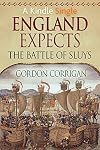
This is a short account of a sea battle early on in the Anglo-French conflict later called the Hundred Years War. The battle is hardly known today whereas other battles during this protracted conflict, such as Crecy, Poitiers and Agincourt are much better known, though arguably less decisive in a strategic sense. The author argues that Sluys in 1340 prevented a French invasion of England that would have altered the course of the next several centuries of French domination of England; instead show more of which the prospect of such an invasion was removed and the rest of the conflict took place on French soil rather than English, albeit with numerous twists and turns and, of course, eventual English defeat after losing all their possessions in France, except Calais. The course of the battle itself occupies only one chapter of this short work, but the reasons for English victory centre around more united and strategic leadership, better professionalisation of the armed forces and the superiority of English longbows against French crossbows.
The author's descriptions of the consequences of the battle and the counterfactual if it had gone the other way are vivid and worth quoting:
"the English victory at Sluys meant that the coming battles of the war would all be fought on French soil, with French towns and villages, and French peasants suffering the destruction, the burning, the pillage and the massacres, and not English ones. French lands would be laid waste, and not English ones. The threat of a French invasion of England was now no more, and would not re-emerge for another four hundred years."
"If the French fleet had put to sea and intercepted the English expeditionary force there can be little doubt that the English ships would have been scattered and the fleet defeated in detail. King Edward, had he not been killed, might have been captured and hauled off to Paris in chains. The French fleet could then have gone on to effect a landing in England where there was very little to oppose them. In conjunction with their reinvigorated and encouraged Scots allies they could well have taken London and declared Edward III deposed, and replaced him with one of the many claimants, or even by Isabella, ensuring a French client upon the English throne." show less
The author's descriptions of the consequences of the battle and the counterfactual if it had gone the other way are vivid and worth quoting:
"the English victory at Sluys meant that the coming battles of the war would all be fought on French soil, with French towns and villages, and French peasants suffering the destruction, the burning, the pillage and the massacres, and not English ones. French lands would be laid waste, and not English ones. The threat of a French invasion of England was now no more, and would not re-emerge for another four hundred years."
"If the French fleet had put to sea and intercepted the English expeditionary force there can be little doubt that the English ships would have been scattered and the fleet defeated in detail. King Edward, had he not been killed, might have been captured and hauled off to Paris in chains. The French fleet could then have gone on to effect a landing in England where there was very little to oppose them. In conjunction with their reinvigorated and encouraged Scots allies they could well have taken London and declared Edward III deposed, and replaced him with one of the many claimants, or even by Isabella, ensuring a French client upon the English throne." show less
Lists
You May Also Like


Statistics
- Works
- 21
- Members
- 768
- Popularity
- #33,142
- Rating
- 3.8
- Reviews
- 11
- ISBNs
- 40
- Languages
- 1
- Favorited
- 1