
Kenneth Estes
Author of Handbook for Marine NCOs
About the Author
Works by Kenneth Estes
M50 Ontos and M56 Scorpion 1956-70: US Tank Destroyers of the Vietnam War (New Vanguard) (2016) 21 copies
Marines Under Armor: The Marine Corps and the Armored Fighting Vehicle, 1916-2000 (2000) 21 copies, 2 reviews
German Heavy Fighting Vehicles of the Second World War: From Tiger to E-100 (2018) 13 copies, 1 review
A European Anabasis: Western European Volunteers in the German Army and SS, 1940-45 (2015) 12 copies, 1 review
Tagged
Common Knowledge
- Gender
- male
Members
Reviews
A European Anabasis: Western European Volunteers in the German Army and SS, 1940-45 by Kenneth Estes

Excellent book on the topic. I have to admit that author writes in a very clear and concise manner and uses reference data whenever possible. His books (this being second one I read) are truly joy to read.
Participation of the Western European volunteers in German Army and SS during WW2 is something that might be at best treated as uncomfortable subject.
For one part of population of given countries this is mark of pride (and therefore uncomfortable subject for the given population) while for show more others is shame (this being the uncomfortable part of population). Truth as always is in the middle.
If current war teaches us one thing is that participation of the foreign volunteers is a mixed bag for several reasons. First if they are hard-core political fanatics or soldiers for hire, it is very difficult to put them under the local command (professional troops also tend to just leave if they see that there is bigger chance of them leaving their lives on the battlefield, or if war will continue for a while without any benefits - i.e. move of several mercenary commands from Ukraine to Israel when Middle East conflict fired up after October 2023 - it is just more secure area to work in, lesser opposition and lower mortality rate for these mercenaries). Political/ideological fanatics tend to stay no matter what but then they are element that prove to be obstacle for anything local government might decide to do (like - just imagine - decide to seek peace).
After these you have adventurers, who if capable behave like professional troops and tend to live, or if they are incapable are then just used as cannon fodder.
And finally one ends up with people no-one wants, who just seek something, somewhere, some wealth or happiness, and who mostly die in droves.
Above categories also made the volunteers that decided to join the German Army and SS during WW2. As expected they fared in very different ways (and exceptionally large number of them survived the WW2 and I very doubt they changed their political views, just made them tamer and made them view themselves [which seems to be a popular view amongst these veterans] as a precursor to modern united Europe - this made me giggle like little kid! Who is believing this propaganda is beyond me).
As author explains, German Army did not want to do anything with these volunteers in a significant way (very similar reaction can be found in Franco's troops during Spanish Civil War). Reason is simple - why would anyone introduce foreign speaking volunteers into ones own drilled and organized troops and thus complicate everything, from march to direct combat, especially if these troops did not pass the selection for the army nor were trained/experienced to the same degree? Absolutely nobody. These were treated as second tier armed troops, armed with respective category of weapons and if they proved themselves in the field all the better otherwise they were held for second tier security or plug-the-front operations until actual combat ready troops arrived.
But then you had SS. Designed by Himmler to take over the control of military and to act as ideological and military champions, SS was a mixed bag because of several factors, one being need to spread over occupied territories and control it with iron fist. For that collaborators had to be found and these rather quickly swelled the ranks of SS security troops (opportunists will to work in flashy organization with great social standing always). While German Army was not ideologically controlled (although they supported all of the genocidal policies and supported SS in their war of extermination), SS acted on the ideological ground of New European Order (!) and need to fight the Judeo-Bolshevik menace (although, given German political/racial stand toward Slavs in general, this Judeo prefix was an overkill but I guess it was required for recruiting on territories with Slavic nations, who believed they will have some future with Germans (!)). SS just had to create some ideological link to tie all of these conquered people and use them for German needs and allow SS to grow and finally take primacy in the area of state control and violence.
What is problematic here is the ease of recruiting people (in the beginning) to go wage war against Russia (tendency that remained as is even in our modern times). Of course while French, Dutch, Belgian and Spanish contingents were mobilized as anti-Bolsheviks-liberators, those closer to Russia (Baltic, Scandinavia) joined for usual love-thy-neighbor reasons. As I said situation not so different from today. And while initial mobilization was big(ish) after initial battles followed by extreme bloody attrition, enthusiasm went down somewhat to say the least.
In a very analytical way author gives reasons why Western European volunteers decided to join the German Army and SS (reasons being from social issues, adventurism to true believers in German Reich), how they switched to ever-flashy SS in the end, their combat worth (Spanish Division was a surprise for me, although they were always looked down by Germans they actually did pretty good soldiering; another outfit being Wiking SS, but again these were Scandinavia/Baltic die-hard SS troops so no surprise here, they marched until death), and how they finished at the end (again, very interesting degradation of Spanish troops, from Blue Division to Spanish Legion (not their own Foreign Legion, but as Legion within German Army) and then small company level detachments of die-hards seeking [I guess] to die on the battlefields with their German allies.
Volunteers made up some very interesting units, and again Spain surprised me with providing actual pilot personnel to fight alongside Germans in the skies of the Eastern Front.
All in all while Germans could have decided to attract more foreign volunteers (especially from acceptable "races") it is questionable if that would end up in different result overall. Germans never wanted to share their exploits and victories so it is ridiculous to even think that nations providing volunteers would be semi or at all independent inside German Reich after the war. They were just resources and were utilized as such. Therefore some wider popular support outside Germany was something that was totally unrealistic - just look at almost constant reset of Dutch attempts fo establishing new national army structure; as soon as they would create some formations these were taken over by Germans and sent to the front.
I was surprised by the sizeable movement of collaborators and their families towards Germany as Normandy landings took place, France and Benelux countries were freed. It just explains how did Nazi rhetoric and ideology and attempts to deny any evil doing from SS in particular gained very impressive foothold in mind of people after WW2, with image of honorable soldier fighting the danger from the East.
Too many of these fighters survived but did not repent.
And this is the only weak spot in this otherwise very detailed and analytical work. Author interviewed a lot of survivors and veterans from these volunteer units (which at the end were predominantly SS) and very readily he discounts them as old men that only talk about their past. But everyone forgets they are old man when they were interviewed, but immediately after the war they were young men that still kept true to their oaths and ideology (as HIAG association showed very well). Poison remained and gestated, while saying to everyone it was not poison. Sad, very sad.
Excellent book, perhaps one of the best books on the subject I have read, very objective and written in a style that will keep you glued to the pages until you finish the book. Excellent book on phenomena of foreign volunteers in the armed conflict.
Highly recommended. show less
Participation of the Western European volunteers in German Army and SS during WW2 is something that might be at best treated as uncomfortable subject.
For one part of population of given countries this is mark of pride (and therefore uncomfortable subject for the given population) while for show more others is shame (this being the uncomfortable part of population). Truth as always is in the middle.
If current war teaches us one thing is that participation of the foreign volunteers is a mixed bag for several reasons. First if they are hard-core political fanatics or soldiers for hire, it is very difficult to put them under the local command (professional troops also tend to just leave if they see that there is bigger chance of them leaving their lives on the battlefield, or if war will continue for a while without any benefits - i.e. move of several mercenary commands from Ukraine to Israel when Middle East conflict fired up after October 2023 - it is just more secure area to work in, lesser opposition and lower mortality rate for these mercenaries). Political/ideological fanatics tend to stay no matter what but then they are element that prove to be obstacle for anything local government might decide to do (like - just imagine - decide to seek peace).
After these you have adventurers, who if capable behave like professional troops and tend to live, or if they are incapable are then just used as cannon fodder.
And finally one ends up with people no-one wants, who just seek something, somewhere, some wealth or happiness, and who mostly die in droves.
Above categories also made the volunteers that decided to join the German Army and SS during WW2. As expected they fared in very different ways (and exceptionally large number of them survived the WW2 and I very doubt they changed their political views, just made them tamer and made them view themselves [which seems to be a popular view amongst these veterans] as a precursor to modern united Europe - this made me giggle like little kid! Who is believing this propaganda is beyond me).
As author explains, German Army did not want to do anything with these volunteers in a significant way (very similar reaction can be found in Franco's troops during Spanish Civil War). Reason is simple - why would anyone introduce foreign speaking volunteers into ones own drilled and organized troops and thus complicate everything, from march to direct combat, especially if these troops did not pass the selection for the army nor were trained/experienced to the same degree? Absolutely nobody. These were treated as second tier armed troops, armed with respective category of weapons and if they proved themselves in the field all the better otherwise they were held for second tier security or plug-the-front operations until actual combat ready troops arrived.
But then you had SS. Designed by Himmler to take over the control of military and to act as ideological and military champions, SS was a mixed bag because of several factors, one being need to spread over occupied territories and control it with iron fist. For that collaborators had to be found and these rather quickly swelled the ranks of SS security troops (opportunists will to work in flashy organization with great social standing always). While German Army was not ideologically controlled (although they supported all of the genocidal policies and supported SS in their war of extermination), SS acted on the ideological ground of New European Order (!) and need to fight the Judeo-Bolshevik menace (although, given German political/racial stand toward Slavs in general, this Judeo prefix was an overkill but I guess it was required for recruiting on territories with Slavic nations, who believed they will have some future with Germans (!)). SS just had to create some ideological link to tie all of these conquered people and use them for German needs and allow SS to grow and finally take primacy in the area of state control and violence.
What is problematic here is the ease of recruiting people (in the beginning) to go wage war against Russia (tendency that remained as is even in our modern times). Of course while French, Dutch, Belgian and Spanish contingents were mobilized as anti-Bolsheviks-liberators, those closer to Russia (Baltic, Scandinavia) joined for usual love-thy-neighbor reasons. As I said situation not so different from today. And while initial mobilization was big(ish) after initial battles followed by extreme bloody attrition, enthusiasm went down somewhat to say the least.
In a very analytical way author gives reasons why Western European volunteers decided to join the German Army and SS (reasons being from social issues, adventurism to true believers in German Reich), how they switched to ever-flashy SS in the end, their combat worth (Spanish Division was a surprise for me, although they were always looked down by Germans they actually did pretty good soldiering; another outfit being Wiking SS, but again these were Scandinavia/Baltic die-hard SS troops so no surprise here, they marched until death), and how they finished at the end (again, very interesting degradation of Spanish troops, from Blue Division to Spanish Legion (not their own Foreign Legion, but as Legion within German Army) and then small company level detachments of die-hards seeking [I guess] to die on the battlefields with their German allies.
Volunteers made up some very interesting units, and again Spain surprised me with providing actual pilot personnel to fight alongside Germans in the skies of the Eastern Front.
All in all while Germans could have decided to attract more foreign volunteers (especially from acceptable "races") it is questionable if that would end up in different result overall. Germans never wanted to share their exploits and victories so it is ridiculous to even think that nations providing volunteers would be semi or at all independent inside German Reich after the war. They were just resources and were utilized as such. Therefore some wider popular support outside Germany was something that was totally unrealistic - just look at almost constant reset of Dutch attempts fo establishing new national army structure; as soon as they would create some formations these were taken over by Germans and sent to the front.
I was surprised by the sizeable movement of collaborators and their families towards Germany as Normandy landings took place, France and Benelux countries were freed. It just explains how did Nazi rhetoric and ideology and attempts to deny any evil doing from SS in particular gained very impressive foothold in mind of people after WW2, with image of honorable soldier fighting the danger from the East.
Too many of these fighters survived but did not repent.
And this is the only weak spot in this otherwise very detailed and analytical work. Author interviewed a lot of survivors and veterans from these volunteer units (which at the end were predominantly SS) and very readily he discounts them as old men that only talk about their past. But everyone forgets they are old man when they were interviewed, but immediately after the war they were young men that still kept true to their oaths and ideology (as HIAG association showed very well). Poison remained and gestated, while saying to everyone it was not poison. Sad, very sad.
Excellent book, perhaps one of the best books on the subject I have read, very objective and written in a style that will keep you glued to the pages until you finish the book. Excellent book on phenomena of foreign volunteers in the armed conflict.
Highly recommended. show less
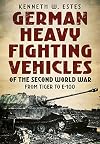
Excellent book on German heavy fighting vehicles - tanks and self propelled guns.
Author shows how Germans reacted to Russian T34 by going for bigger, better armored and better armed tanks. While this resulted in useful vehicles like Tiger I and II rest of the developed heavy hitters weren't that useful due to the sheer size, complexity, lacking means of in the field maintenance, even if they managed to get built and deployed.
All the relevant information on the tanks, production and testing, show more unavoidable political interference (Porsche played a really important role here) and of course actual fighting and use of these vehicles are given here. As author very well notes, even with relative low number of these tanks and other fighting vehicle due to the limitations of the production, main problem was lack of trained and experienced personnel, not to mention supporting infantry and combat engineers - for all these armed branches, they suffered losses that literary obliterated the original units that started war in 1939 and 1940 in Poland and France; after replacing them with the new, inexperienced troops lacking previous generation battle training and drills, German army found itself on a constant defensive. Without experienced and trained personnel, no matter how powerful these armored giants were nothing could be gained on the battlefield. This is something that is validated even today.
Especially interesting are attached allied intelligence reports on German tank industry (tanks, transmission and engines) and especially heavy tank production, data gathered by interrogating the captured engineers and investigating the industrial capacity. Chobham Armor Test Laboratory's analysis of quality of German tank armor was truly something.
Excellent book, highly recommended to all fans of armored vehicles and armored warfare. show less
Author shows how Germans reacted to Russian T34 by going for bigger, better armored and better armed tanks. While this resulted in useful vehicles like Tiger I and II rest of the developed heavy hitters weren't that useful due to the sheer size, complexity, lacking means of in the field maintenance, even if they managed to get built and deployed.
All the relevant information on the tanks, production and testing, show more unavoidable political interference (Porsche played a really important role here) and of course actual fighting and use of these vehicles are given here. As author very well notes, even with relative low number of these tanks and other fighting vehicle due to the limitations of the production, main problem was lack of trained and experienced personnel, not to mention supporting infantry and combat engineers - for all these armed branches, they suffered losses that literary obliterated the original units that started war in 1939 and 1940 in Poland and France; after replacing them with the new, inexperienced troops lacking previous generation battle training and drills, German army found itself on a constant defensive. Without experienced and trained personnel, no matter how powerful these armored giants were nothing could be gained on the battlefield. This is something that is validated even today.
Especially interesting are attached allied intelligence reports on German tank industry (tanks, transmission and engines) and especially heavy tank production, data gathered by interrogating the captured engineers and investigating the industrial capacity. Chobham Armor Test Laboratory's analysis of quality of German tank armor was truly something.
Excellent book, highly recommended to all fans of armored vehicles and armored warfare. show less
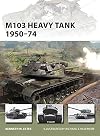
The M103 is a bit of a footnote in the history of US armour. Army support for the heavy tank was lukewarm at best, and the programme mainly survived because the USMC decided they needed very heavy tanks.
For a vehicle that had such a short production run and limited use, the New Vanguard format is ideal. This will likely answer all your questions on the M103.
For a vehicle that had such a short production run and limited use, the New Vanguard format is ideal. This will likely answer all your questions on the M103.
Tanks on the Beaches: A Marine Tanker in the Pacific War (Texas A&M University Military History Series, 85.) by Robert M. Neiman
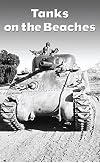
While this is more personal remembrance than tactical study you will learn a good bit about how the Marines went about the business of using tanks in combat, seeing as Neiman pretty much got in on the ground floor of Marine armor at the start of the war. Also adding to the flavor of the book is that Neiman is a pretty good story teller and has some good stories to tell, besides being fairly direct about command relationships that just didn't work.
You May Also Like


Associated Authors
Statistics
- Works
- 17
- Members
- 379
- Popularity
- #63,708
- Rating
- 3.7
- Reviews
- 7
- ISBNs
- 41
- Languages
- 1