
Gillian Freeman (1929–2019)
Author of The Leather Boys
About the Author
Gillian Freeman was born in London, England on December 5, 1929. She graduated from the University of Reading in 1951. Before becoming an author, she worked as copywriter and schoolteacher. Her first novel, The Liberty Man, was published in 1955. Her other novels included Fall of Innocence, Jack show more Would Be a Gentleman, The Leather Boys, The Leader, The Alabaster Egg, and Nazi Lady: The Diaries of Elisabeth von Stahlenberg, 1933-1948. She wrote several screenplays including The Leather Boys and That Cold Day in the Park. She also wrote scenarios for Kenneth MacMillan's ballets Mayerling and Isadora. She died from complications of dementia on February 23, 2019 at the age of 89. (Bowker Author Biography) show less
Works by Gillian Freeman
Associated Works
Tagged
Common Knowledge
- Other names
- George, Eliot (pseudonym)
Stahlenberg, Elisabeth von (pseudonym) - Birthdate
- 1929-12-05
- Date of death
- 2019-02-23
- Gender
- female
- Education
- University of Reading
- Occupations
- novelist
screenwriter
journalist
copywriter
teacher - Relationships
- Thorpe, Edward (husband)
- Short biography
- Gillian Freeman was born in London, England, a daughter of Jack Freeman, a dentist and physician, and his wife Freda. She attended Francis Holland School in London and Lynton House school in Maidenhead. She read English and philosophy at the University of Reading and graduated with honors in 1951. She then worked as a copywrighter in an advertising agency, as a schoolteacher in the East End of London, and as a reporter for the North London Observer. She wrote her debut novel, The Liberty Man, published in 1955, while working as a literary secretary to novelist Louis Golding. That same year, she married Edward Thorpe, a novelist and the ballet critic of the Evening Standard, with whom she had two daughters. One of Freeman's best-known books was the groundbreaking novel The Leather Boys (1961), published under the pseudonym Eliot George, a story of a marriage between two young working-class men. It was adapted into a 1964 film for which she wrote the screenplay under her own name. In 1978, she published a fictional work called Nazi Lady: The Diaries of Elisabeth von Stahlenberg, 1938–1948, which many readers believed was genuine. Freeman wrote more fiction, including an historical novel, The Alabaster Egg (1970); other screenplays including That Cold Day in the Park (1969), directed by Robert Altman; the scenarios for two ballets by Kenneth MacMillan, Mayerling and Isadora Duncan; and the collection of interviews Ballet Genius (with Thorpe, 1988). Her last book was the novel But Nobody Lives in Bloomsbury (2006).
- Cause of death
- complications of dementia
- Nationality
- England
UK - Birthplace
- London, England, UK
- Place of death
- London, England, UK
- Associated Place (for map)
- London, England, UK
Members
Reviews

This is an intriguing bit of history, both because it was written in the mid-1960s when sexual liberty was under discussion openly for the first time in decades and because of the subject matter - the types of pornographic literature available at the time.
The inclusion of women's magazines from a feminist perspective and Marvel Comics from a fetishistic perspective make it a true curiousity. It is not a great book. It is of its time. But it is useful to read because it shows how much we show more have changed since then. Intellectuals cannot now be quite so po-faced and mildly patronising about other people's sexual fantasies.
The violence implicit , often explicit, in the underground pornography marketed to a generation of males damaged by war and social disruption has become more ritualised and mainstream. We seem to have become nicer. The book works as an argument against suppression of vice.
Personally, I liked finding out how boringly 'normal' I am (despite best efforts to be more interesting) and the relevant chapter renewed sympathy for trans-gender people who went through more hell even than the gay and lesbian communities during the dark days from Queen Victoria to the 1950s. One for the library and for reference purposes. show less
The inclusion of women's magazines from a feminist perspective and Marvel Comics from a fetishistic perspective make it a true curiousity. It is not a great book. It is of its time. But it is useful to read because it shows how much we show more have changed since then. Intellectuals cannot now be quite so po-faced and mildly patronising about other people's sexual fantasies.
The violence implicit , often explicit, in the underground pornography marketed to a generation of males damaged by war and social disruption has become more ritualised and mainstream. We seem to have become nicer. The book works as an argument against suppression of vice.
Personally, I liked finding out how boringly 'normal' I am (despite best efforts to be more interesting) and the relevant chapter renewed sympathy for trans-gender people who went through more hell even than the gay and lesbian communities during the dark days from Queen Victoria to the 1950s. One for the library and for reference purposes. show less
Fascinating academic study of the fetish magazines available in Britain in the sixties. A real time-capsule piece of 'sexology' (what a word!), pitched in medical/psychoanalytic terms, but written sympathetically, and with not a little dry humor. A picture emerges of a rather lonely world, before the emergence of modern fetish culture, where everything was furtive and homespun. (And, I'm afraid, rather unsafe - female involvement seems restricted to indulgent wives and professionals.) An show more essential slice of history for anyone who has ever shared a dance-floor crowded with revellers in rubber and leather - kinky people have come a long, long way! show less
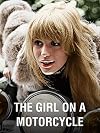
Faithfull, at the height of her beauty, is the only reason for watching this bizarre story directed (and adapted for the screen--his only writing credit) by famed cinematographer Cardiff. Faithfull is a pretty good actress as well, but the story of a woman torn between her boring husband (Mutton) and her dashing lover (Delon) lacks much drama. And the bizarre color-filled interludes, I guess, are supposed to be some sort of cinematic acid trip, appropriate for the time, perhaps, but show more definitely placing this film on the list of items well past their sell dates. But the scenes of the countryside and cities as Faithfull travels from Alsace to Heidelberg are nice. show less

The Leather Boys, set in England where Dick meets Reggie and he falls into the wrong crowd. The novel leaves much to the imagination of the reader. A description of an intimate moment between Dick and Reggie is limited to touching arms and a kiss and of course, regret on the next morning. While their relationship does drive the plot of the story, not much is revealed other than angst and possessiveness. Much of the story and the characters fall into cliched roles of the period. Although the show more novel does end with a twist on the typical gay morality tale of the early 1960s.
The 1964 movie, screen written by the same author, re-works the novel including a more palatable ending for the mores of 1960s Britain. show less
The 1964 movie, screen written by the same author, re-works the novel including a more palatable ending for the mores of 1960s Britain. show less
You May Also Like


Associated Authors
Statistics
- Works
- 18
- Also by
- 2
- Members
- 287
- Popularity
- #81,378
- Rating
- 3.1
- Reviews
- 4
- ISBNs
- 42