
William Kalush
Author of The Secret Life of Houdini: The Making of America's First Superhero
About the Author
William Kalush is the founder of the Conjuring Arts Research Center and publisher of Gibeciere
Works by William Kalush
Gibecière 17 copies
Tagged
Common Knowledge
- Birthdate
- 20th Century
- Gender
- male
- Organizations
- Conjuring Arts Research Center (founder)
Gibecière, a magic history journal (publisher) - Awards and honors
- The John Nevil Maskelyne Prize (2011)
- Nationality
- USA
- Places of residence
- Lansing, Michigan, USA
Manhatten, New York, USA - Map Location
- Michigan, USA
Members
Reviews
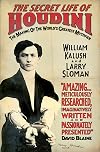
First published on Booking in Heels.
This is the only biography of Harry Houdini that I have read, so I have no idea how it measures up in comparison to any others. However, I can tell you how much I thoroughly enjoyed this book. I whipped through this thick, fairly heavy non-fiction in three days and enjoyed every second. It's engrossing, accessible and just generally fascinating throughout.
To begin with, it's thorough but not to the point of boredom. I don't feel the need for biographies to show more tell me the minutiae of the subject's life and Mr Kalush and Mr Sloman have respected my wishes in this area. It begins with Houdini's childhood but provides only a brief summary, for which I respect the book even more. Then we're straight onto his magic and escapism, which is conversely extremely in-depth.
It covers a lot of different areas - aviation, films, the Secret Service, the army, his challenges, his fellow magicians, etc. Naturally some are more interesting than others, but I never knew he dabbled in so many different things. Did you know he was the first person to a plane in Australia? Oh, and let's not forget the 'spy' rumours. I hadn't heard these before, but on the blurb of a different edition it says 'in exchange for his cooperation, the governments of these two countries (Britain and America) facilitated his rise to the top of the world stage.' Apparently it's A Thing that Harry Houdini was a secret agent. I would have automatically disbelieved it, but there is evidence (and I'm a lawyer - I'm holding them to a high standard of proof!) that he reported back to his government on the conditions of German jail cells and trained certain agents in escaping from restraints. I'm sceptical that he was involved any more than this, but it's still amazing that he actually was part of the war effort.
That's partly the conclusion I've come to, actually. I'm not sure he was a nice man (judging by his arrogance and how aggressively he denounced his competition), but I do think he was a good one. He spent $50,000 (back then!) just on entertaining the troops during the War and funded several charities with varying objectives, not to mention his perseverance in debunking fake mediums.
Ah yes. Spiritualists. I learnt an awful lot about this particular area and it was written absolutely amazingly. I had no idea he was so politically active - he tried to push a Bill through to prohibit phony mediums completely and attending every meeting to demonstrate how fake seances could be pulled off. He became such a threat that there were several attempts on his life by the spiritualists.
Which leads me neatly to Arthur Conan Doyle. Yes, that one. This part had me on the edge of my seat and opened my eyes to all sorts of new information. Did you know his wife was a medium and he was actually an active Spiritualist? He died with very little money due to opening a psychic bookstore near Westminster, just as an off-side. Anyway, apparently he and Houdini used to be good friends until this debacle exploded and well... spoilers! I didn't have a clue about any of this previously but now I think of it every time I see a Sherlock Holmes book. It just doesn't add up in my head with the methodical fictional detective!
I've somehow ended up reviewing the man instead of the book, haven't I? Sorry. Well, it's good, anyway. It's written in a strange mix of styles that actually works really well. A chapter will begin written almost like a story, with proper dialogue, thoughts and feelings but then switches almost seamlessly into standard non-fiction. It's weird, but I liked it. It might not be for everybody though - my boyfriend started to read this book but the style annoyed him to such an extent that he got distracted by something shiny and gave up.
Clearly Harry Houdini was the basis for books like Jonathan Strange & Mr Norrell. He created his own magical encyclopaedia, controlled his own magazine, refused to recognise any theories but his own... Sound familiar? He does seem like he should have been a fictional character, which makes reading a biography all the more entertaining. The fun of a story, but you're learning! *shocked face*
I've done it again, haven't I? *swooshes back to discussing the actual damn book* Anyway, believe it or not, there are facts about Harry Houdini that I haven't already told you in this review, so you should go buy the book and learn them. It's well-written, entertaining and impartial (for the most part), so it's an excellent place to learn more about the legend you thought you already knew. show less
This is the only biography of Harry Houdini that I have read, so I have no idea how it measures up in comparison to any others. However, I can tell you how much I thoroughly enjoyed this book. I whipped through this thick, fairly heavy non-fiction in three days and enjoyed every second. It's engrossing, accessible and just generally fascinating throughout.
To begin with, it's thorough but not to the point of boredom. I don't feel the need for biographies to show more tell me the minutiae of the subject's life and Mr Kalush and Mr Sloman have respected my wishes in this area. It begins with Houdini's childhood but provides only a brief summary, for which I respect the book even more. Then we're straight onto his magic and escapism, which is conversely extremely in-depth.
It covers a lot of different areas - aviation, films, the Secret Service, the army, his challenges, his fellow magicians, etc. Naturally some are more interesting than others, but I never knew he dabbled in so many different things. Did you know he was the first person to a plane in Australia? Oh, and let's not forget the 'spy' rumours. I hadn't heard these before, but on the blurb of a different edition it says 'in exchange for his cooperation, the governments of these two countries (Britain and America) facilitated his rise to the top of the world stage.' Apparently it's A Thing that Harry Houdini was a secret agent. I would have automatically disbelieved it, but there is evidence (and I'm a lawyer - I'm holding them to a high standard of proof!) that he reported back to his government on the conditions of German jail cells and trained certain agents in escaping from restraints. I'm sceptical that he was involved any more than this, but it's still amazing that he actually was part of the war effort.
That's partly the conclusion I've come to, actually. I'm not sure he was a nice man (judging by his arrogance and how aggressively he denounced his competition), but I do think he was a good one. He spent $50,000 (back then!) just on entertaining the troops during the War and funded several charities with varying objectives, not to mention his perseverance in debunking fake mediums.
Ah yes. Spiritualists. I learnt an awful lot about this particular area and it was written absolutely amazingly. I had no idea he was so politically active - he tried to push a Bill through to prohibit phony mediums completely and attending every meeting to demonstrate how fake seances could be pulled off. He became such a threat that there were several attempts on his life by the spiritualists.
Which leads me neatly to Arthur Conan Doyle. Yes, that one. This part had me on the edge of my seat and opened my eyes to all sorts of new information. Did you know his wife was a medium and he was actually an active Spiritualist? He died with very little money due to opening a psychic bookstore near Westminster, just as an off-side. Anyway, apparently he and Houdini used to be good friends until this debacle exploded and well... spoilers! I didn't have a clue about any of this previously but now I think of it every time I see a Sherlock Holmes book. It just doesn't add up in my head with the methodical fictional detective!
I've somehow ended up reviewing the man instead of the book, haven't I? Sorry. Well, it's good, anyway. It's written in a strange mix of styles that actually works really well. A chapter will begin written almost like a story, with proper dialogue, thoughts and feelings but then switches almost seamlessly into standard non-fiction. It's weird, but I liked it. It might not be for everybody though - my boyfriend started to read this book but the style annoyed him to such an extent that he got distracted by something shiny and gave up.
Clearly Harry Houdini was the basis for books like Jonathan Strange & Mr Norrell. He created his own magical encyclopaedia, controlled his own magazine, refused to recognise any theories but his own... Sound familiar? He does seem like he should have been a fictional character, which makes reading a biography all the more entertaining. The fun of a story, but you're learning! *shocked face*
I've done it again, haven't I? *swooshes back to discussing the actual damn book* Anyway, believe it or not, there are facts about Harry Houdini that I haven't already told you in this review, so you should go buy the book and learn them. It's well-written, entertaining and impartial (for the most part), so it's an excellent place to learn more about the legend you thought you already knew. show less
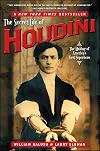
This book was an adventure in itself, as grueling, but also as entertaining and mystifying as the great Houdini himself must have been on stage. If only one word could be said, that word would be "Thorough". Kalush and Sloman say in their preface that they created, as best they could, a day-by-day time line of Houdini's life, and it is clear that they did exactly that. Almost every gig the magician every played is at least mentioned, if not detailed in this tome, making it certainly one of show more the most complete biographies ever written. At times, the sheer amount of information and number of names can be overwhelming, but they wisely include many anecdotes of the challenges and confrontations that Houdini made along the way to spice up the story a bit. Unfortunately, towards the end, things get a bit stroppy, with scenes and information being randomly shoved into the middle of chapters, having no-where else logical to put them.
The authors clearly respect Houdini, but I do not think that compromised their representation of him. For all of the wonder and amazing feats they describe, they also make it clear that he could have a vengefully temper, near superhuman stubbornness, and moments of incredible hypocrisy. It seems that one of the main arguments against this book is that Kalush and Sloman make some almost far fetched hypothesizes, including that Houdini served as a spy for both American and British intelligence in tours through Europe. I'm as sceptical as the next guy, but truth be told, it could almost be true. They do not try to make up evidence, they just find some rather telling coincidences and communications that could point to Harry having his hands in some pretty heavy stuff. Luckily, at least to my opinion, that did not hijack the book, but indeed increased some of the mystery and made me as the reader even more engrossed. There are a few more incidents they describe which have very little backup besides personal accounts told long after Houdini's death, but again, the added layers may enhance the story as opposed to disrupt it. Only later in the book do things seem to get a little over the top, but they cite sources in there online footnotes that seem reliable, and frankly, it is almost too outrageous to be invented.
By far, the only frustrating part about this book is that they only reveal the methods that Houdini used if the man reveled them himself in his lifetime. Every other trick, from the water-cell to some of his phony 'mind-reading' is left as a mystery. The authors often don't even acknowledge that we don't know what he did, they just take it as unknowable and move along. I suppose that that is just the nature of the magician, is it not?
All in all, this was a very engrossing and entertaining read, even if it sometimes got a little outlandish and a little full of minutiae. In many ways, it also forced me to ask more questions than it actually answered, but to that, we have to look at the subject. The true nature of Harry Houdini has been long lost. No one now alive was ever close to him, and most of the queries we have will never be answered. In a way, his entire life was one of his tricks: stunning and miraculous, but all of the solutions took place behind a curtain. We will never know if he was a spy, if he was murdered, if he really did have some sort of power beyond mortal ken (though he always denied it). These things and more will remain mysteries, and they rightly should do just that. Even in life, Houdini was more Myth than Man, and I do not think he would want it any other way. show less
The authors clearly respect Houdini, but I do not think that compromised their representation of him. For all of the wonder and amazing feats they describe, they also make it clear that he could have a vengefully temper, near superhuman stubbornness, and moments of incredible hypocrisy. It seems that one of the main arguments against this book is that Kalush and Sloman make some almost far fetched hypothesizes, including that Houdini served as a spy for both American and British intelligence in tours through Europe. I'm as sceptical as the next guy, but truth be told, it could almost be true. They do not try to make up evidence, they just find some rather telling coincidences and communications that could point to Harry having his hands in some pretty heavy stuff. Luckily, at least to my opinion, that did not hijack the book, but indeed increased some of the mystery and made me as the reader even more engrossed. There are a few more incidents they describe which have very little backup besides personal accounts told long after Houdini's death, but again, the added layers may enhance the story as opposed to disrupt it. Only later in the book do things seem to get a little over the top, but they cite sources in there online footnotes that seem reliable, and frankly, it is almost too outrageous to be invented.
By far, the only frustrating part about this book is that they only reveal the methods that Houdini used if the man reveled them himself in his lifetime. Every other trick, from the water-cell to some of his phony 'mind-reading' is left as a mystery. The authors often don't even acknowledge that we don't know what he did, they just take it as unknowable and move along. I suppose that that is just the nature of the magician, is it not?
All in all, this was a very engrossing and entertaining read, even if it sometimes got a little outlandish and a little full of minutiae. In many ways, it also forced me to ask more questions than it actually answered, but to that, we have to look at the subject. The true nature of Harry Houdini has been long lost. No one now alive was ever close to him, and most of the queries we have will never be answered. In a way, his entire life was one of his tricks: stunning and miraculous, but all of the solutions took place behind a curtain. We will never know if he was a spy, if he was murdered, if he really did have some sort of power beyond mortal ken (though he always denied it). These things and more will remain mysteries, and they rightly should do just that. Even in life, Houdini was more Myth than Man, and I do not think he would want it any other way. show less
I really enjoyed the progression the authors showed in Houdini's act from sleight of hand to the handcuff escapes that really started his career. However, while he was remembered for his magic, above all he was a showman that knew how to market himself as a brand. This began with free publicity by doing jail escapes in the towns he went to, but took on a more refined form with plants and public challenges (by competitors and press both funded by Houdini himself). The book is meticulous in show more its research about this latter form of the magician's art, doing a great job of revealing the mystery behind some of his tricks (and ruining their magic for the reader in the process), while paying only brief mention to others, keeping their trick locked up.
Houdini the magician is only part of the man, however, and the authors dispense with him in the first half of the book, making a smooth transition after his mother's death to Houdini the enemy of Spiritualism. We learn about how in the beginning of his career Houdini would speak to pastors and grave diggers and gossips before putting on a show in a town so that he could "divine" truths about audience members during his shows, but he quickly put this behind him when it saw how it could affect people and make him seem extra-human. He spent the time after his mother's death battling the growing religious movement of Spiritualism, which was really just a series of clever con men and women that used parlor tricks to bilk money out of grieving individuals.
The authors make a compelling case for Houdini being assassinated by the Spiritualists, although they admit it is shrouded in a lack of information, so it could have also been a tragic accident.
Overall the book is filled with a huge amount of new information about the author, all of it well researched and presented in a format that slips in and out of a narrative voice, a technique that is effective and lends itself well to the material. show less
Houdini the magician is only part of the man, however, and the authors dispense with him in the first half of the book, making a smooth transition after his mother's death to Houdini the enemy of Spiritualism. We learn about how in the beginning of his career Houdini would speak to pastors and grave diggers and gossips before putting on a show in a town so that he could "divine" truths about audience members during his shows, but he quickly put this behind him when it saw how it could affect people and make him seem extra-human. He spent the time after his mother's death battling the growing religious movement of Spiritualism, which was really just a series of clever con men and women that used parlor tricks to bilk money out of grieving individuals.
The authors make a compelling case for Houdini being assassinated by the Spiritualists, although they admit it is shrouded in a lack of information, so it could have also been a tragic accident.
Overall the book is filled with a huge amount of new information about the author, all of it well researched and presented in a format that slips in and out of a narrative voice, a technique that is effective and lends itself well to the material. show less
Wow. First, let me just congratulate myself on reading every word of this 560 page opus! It's been years since I've read anything this long. In fact, it's really possible that this is the longest book I've ever read.
Secondly, I'd like to note that it's also very possible that I now know more about the man who was Harry Houdini than I know about my own husband. The authors were extremely thorough in their investigations...and that's putting it mildly.
Overall, I'd have to say that I like the show more person Houdini was. What often comes across as arrogance is often superseded by charm. Although, if the medical diagnosis on record is correct regarding his death, I'd say it was ultimately his arrogance that did him in.
One of the most fascinating facts in the book, in my opinion, was that Houdini was the first person to pilot a plane over Australia. That's neat! The incident a couple pages over about knocking loose a submerged corpse was pretty interesting too!
I was amazed by Houdini's efforts to raise finances during the war. He truly was a go-getter and, the fact that this unstoppable attitude brought about a million dollars' worth of sold war bonds in just a year, blows my mind!
The authors devoted a lot of time to Houdini's debunking myths and exposing falsehoods. I liked this because it showed that he had a strong humanitarian side and that he spent his last days doing good for the sake of others. I was shocked, several times, by the gullibility of Sir Arthur Conan Doyle. I was actually embarrassed for him when the authors discussed his surprise at the "removable thumb" trick. What a sad life he must have led---he was obviously possessed, insane, or both.
Unanswered questions include: what was the deal with Dr. Crandon and the boys? It would have been nice to have some follow up there---but perhaps that whole subject is still a mystery.
As a whole, I was really impressed with this biography of the Great Houdini. I will set this aside to release soon. show less
Secondly, I'd like to note that it's also very possible that I now know more about the man who was Harry Houdini than I know about my own husband. The authors were extremely thorough in their investigations...and that's putting it mildly.
Overall, I'd have to say that I like the show more person Houdini was. What often comes across as arrogance is often superseded by charm. Although, if the medical diagnosis on record is correct regarding his death, I'd say it was ultimately his arrogance that did him in.
One of the most fascinating facts in the book, in my opinion, was that Houdini was the first person to pilot a plane over Australia. That's neat! The incident a couple pages over about knocking loose a submerged corpse was pretty interesting too!
I was amazed by Houdini's efforts to raise finances during the war. He truly was a go-getter and, the fact that this unstoppable attitude brought about a million dollars' worth of sold war bonds in just a year, blows my mind!
The authors devoted a lot of time to Houdini's debunking myths and exposing falsehoods. I liked this because it showed that he had a strong humanitarian side and that he spent his last days doing good for the sake of others. I was shocked, several times, by the gullibility of Sir Arthur Conan Doyle. I was actually embarrassed for him when the authors discussed his surprise at the "removable thumb" trick. What a sad life he must have led---he was obviously possessed, insane, or both.
Unanswered questions include: what was the deal with Dr. Crandon and the boys? It would have been nice to have some follow up there---but perhaps that whole subject is still a mystery.
As a whole, I was really impressed with this biography of the Great Houdini. I will set this aside to release soon. show less
You May Also Like


Associated Authors
Statistics
- Works
- 4
- Members
- 843
- Popularity
- #30,326
- Rating
- 4.1
- Reviews
- 13
- ISBNs
- 14
- Languages
- 1
