
Glen David Gold
Author of Carter Beats the Devil
About the Author
Image credit: By Mark Coggins from San Francisco - Glen David GoldUploaded by tripsspace, CC BY 2.0, https://commons.wikimedia.org/w/index.php?curid=9678272
Works by Glen David Gold
Associated Works
McSweeney's 12: Unpublished, Unknown, and/or Unbelievable (2003) — Contributor — 290 copies, 4 reviews
Turn Loose Our Death Rays And Kill Them All!: The Complete Works Of Fletcher Hanks (2016) — Foreword, some editions — 47 copies, 1 review
Secrets in the Shadows: The Art & Life of Gene Colan (2005) — Introduction, some editions — 18 copies, 1 review
Tagged
Common Knowledge
- Birthdate
- 1964-03-29
- Gender
- male
- Education
- University of California at Irvine (MFA|1998)
Wesleyan University
University of California, Berkeley (BA) - Occupations
- novelist
- Agent
- Susan Golomb (Susan Golomb Literary Agency)
- Relationships
- Sebold, Alice (ex-wife)
- Nationality
- USA
- Birthplace
- Corona Del Mar, California, USA
- Places of residence
- San Francisco, California, USA
Los Angeles, California, USA - Associated Place (for map)
- California, USA
Members
Reviews
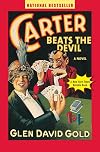
Another reread from over a decade ago. It was messy and meandering and glorious, just like a magic show. It was over-stimulating with plots that seem to go nowhere (and some of them don't) but it didn't matter, because sometimes big moonless nightskies can be as nice as (and necessary for!) spectacular fireworks.
At times the story read like a movie script, albeit one that would be difficult to adapt. I liked how the book took full advantage of the textual advantage in depicting magic show more ✨illusions✨. What a low-cost feast for the imagination and so much to imagine too!
Aside: (1) This came out around the same time as Kavalier and Clay, and it's a shame that this one is not as popular. It's definitely more sprawling and fun, perhaps more befitting of a historical fiction on magic. (2) The author was married to the Lovely Bones author! The early 2000s must have been a heady time for them. show less
At times the story read like a movie script, albeit one that would be difficult to adapt. I liked how the book took full advantage of the textual advantage in depicting magic show more ✨illusions✨. What a low-cost feast for the imagination and so much to imagine too!
Aside: (1) This came out around the same time as Kavalier and Clay, and it's a shame that this one is not as popular. It's definitely more sprawling and fun, perhaps more befitting of a historical fiction on magic. (2) The author was married to the Lovely Bones author! The early 2000s must have been a heady time for them. show less

A fictionalized biography which follows stage magician Charles Joseph Carter (AKA Carter the Great) from his humble beginnings when Harry Houdini takes him under his wings to his final performance, where he must genuinely beat the devil, albeit a worldly one, in order to save his own and his friends' lives. Carter is a great character and it is such fun to follow him around the world in all his adventures. It's been a while since I've read such a genuinely nice character that I still found show more interesting - most of the time I want an edge, but in Carter's case, it's his way of viewing the world that engages, not his shady dealings. The story does go on a walkabout on several occasions, following a few characters whose backstories could easily have been surmised from Carter's story rather than having focus of their own. However, as soon as the spotlight is back on Carter, the flow and interest is back as well. Other than the Phoebe-reveal (which is much too deus ex machina to be satisfactory), the ending has a great (and quite action-filled) resolution. show less
This is a wonderful blending of fact and fiction, focusing on Charles Carter, a magician in the early part of the 20th Century. The inspiration for Gold's story, aka the jumping off point, is the somewhat suspicious death of President Warren G. Harding. From that moment of historical significance, Gold weaves an amazing tale full of wonder, as well as perseverance, grief, and hope. It also makes clear that a magic trick is not the same as an illusion, while continually reminding the reader show more of the importance of misdirection.
Because Harding, in the book, attended Carter's show shortly before he died, participating in the mysterious final act of illusion, a determined Secret Service agent becomes convinced Carter is somehow involved in the president's death, a plot thread that gives the story most of its tension. A digression to Carter's childhood and early career, leading up to Harding's death and beyond, gives the story its soul. Carter quickly became one of my favorite characters, someone I couldn't help but root for, with his almost childlike sense of joy and confidence that things will work out.
I'd barely read the first hundred pages before turning to the "Program Notes" at the back, then Googling new characters as they appeared so I could know which characters were based on actual people. And as a Marx Brothers fan, I got a thrill when, during the time Carter worked on a vaudeville circuit, a comedy act titled "Fun in Hi Skule" and therefore, knew the Marx Brothers would show up. In fact, Julius (Groucho) does show up with a small speaking role. And that's all I'll say about the many delights found in this book.
Writing about magic and illusions can't be easy, but Gold pulled it off spectacularly, grounding the story in believable characters, the ones based on reality and the ones created to fill out the story. This book is one of the most entertaining books I've ever read. show less
Because Harding, in the book, attended Carter's show shortly before he died, participating in the mysterious final act of illusion, a determined Secret Service agent becomes convinced Carter is somehow involved in the president's death, a plot thread that gives the story most of its tension. A digression to Carter's childhood and early career, leading up to Harding's death and beyond, gives the story its soul. Carter quickly became one of my favorite characters, someone I couldn't help but root for, with his almost childlike sense of joy and confidence that things will work out.
I'd barely read the first hundred pages before turning to the "Program Notes" at the back, then Googling new characters as they appeared so I could know which characters were based on actual people. And as a Marx Brothers fan, I got a thrill when, during the time Carter worked on a vaudeville circuit, a comedy act titled "Fun in Hi Skule" and therefore, knew the Marx Brothers would show up. In fact, Julius (Groucho) does show up with a small speaking role. And that's all I'll say about the many delights found in this book.
Writing about magic and illusions can't be easy, but Gold pulled it off spectacularly, grounding the story in believable characters, the ones based on reality and the ones created to fill out the story. This book is one of the most entertaining books I've ever read. show less
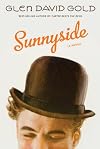
A fantastic addition to the epic Americana novel tradition. Vivid characters and deeply researched settings bring a fascinating time period to life. Gold is a wiz at turning historical figures into fiction; in this case Charlie Chaplin and a host of other silent film era folks rub shoulders with other, strictly fictional characters to paint a lush, multi-layered portrait of America between the Wars. Fans of E.L. Doctorow (Ragtime, Billy Bathgate), T.C. Boyle (The Road To Wellville), William show more Boyd (Any Human Heart, The New Confessions), and of course Gold's fantastic first novel, Carter Beats The Devil, should not pass this one up. show less
Lists
A Novel Cure (1)
Page Turners (1)
Awards


You May Also Like


Associated Authors
Statistics
- Works
- 7
- Also by
- 12
- Members
- 3,362
- Popularity
- #7,585
- Rating
- 3.8
- Reviews
- 84
- ISBNs
- 54
- Languages
- 7
- Favorited
- 7
