
Harry Houdini (1874–1926)
Author of Houdini on Magic
About the Author
Image credit: Courtesy of the NYPL Digital Gallery (image use requires permission from the New York Public Library)
Works by Harry Houdini
The Right Way to do Wrong: A Unique Selection of Writing by History`s Greatest Escape Artist (1906) 137 copies, 4 reviews
Magic 2 copies
Houdini's Strange Tales 2 copies
American magicians 1 copy
Occult science 1 copy
Conjurers' monthly magazine 1 copy
Trick drawings 1 copy
Scrap book made on road 1 copy
[Scrapbook on New York city] 1 copy
Odds and ends, notices 1 copy
The black art 1 copy
[Scrapbook] 1 copy
Associated Works
The Thing on the Doorstep and Other Weird Stories (2001) — Contributor, some editions — 1,081 copies, 13 reviews
Tagged
Common Knowledge
- Legal name
- Weiss, Ehrich
- Other names
- Weisz, Erik
- Birthdate
- 1874-03-24
- Date of death
- 1926-10-31
- Gender
- male
- Occupations
- magician
escapologist
stunt performer
actor
film producer - Organizations
- Society of American Magicians (president, 1917-1926)
Martinka & Co. (founder, America's oldest magic company) - Awards and honors
- Hollywood Walk of Fame
- Relationships
- Houdini, Beatrice (wife)
- Nationality
- Hungary (birth)
USA - Birthplace
- Budapest, Hungary
- Places of residence
- Budapest, Hungary (birth)
Appleton, Wisconsin, USA (youth)
Manhattan, New York, New York, USA - Place of death
- Montréal, Québec, Canada
- Burial location
- Machpelah Cemetery, Queens, New York, New York, USA
- Associated Place (for map)
- USA
Members
Reviews

This is essentially an exhibition catalogue, so I wasn't expecting an in-depth Houdini biography, which is just as well because this isn't.
What it is, is a series of essays on various aspects of Houdini's life and legacy, very well illustrated with many photographs, lobby cards and theatre posters which I (at least) haven't seen before.
The essays The Immigrant World of Harry Houdini, describing his status as a symbol of liberation and social mobility for immigrants to the United States, show more Houdini, the Rabbi's Son examining his relationship to his Jewish faith, were particularly good.
What loses this book a star (and-a-half) from my rating are the essay about, and the interviews with, contemporary artists, which I found pretentious. This is probably due to my own ignorance of contemporary art and lack of exposure to the language used when discussing it, but there we are. It's also possibly a little unfair, given the title of the book puts Art before Magic. Anyway, I would have preferred a greater focus on the development of Houdini's image and self-mythologising through contemporary theatre posters (which are quite well represented in the illustrations, if not sufficiently discussed), magazine articles and newspaper stories.
Despite these reservations, this is still a fascinating book and certainly one that I will return to. show less
What it is, is a series of essays on various aspects of Houdini's life and legacy, very well illustrated with many photographs, lobby cards and theatre posters which I (at least) haven't seen before.
The essays The Immigrant World of Harry Houdini, describing his status as a symbol of liberation and social mobility for immigrants to the United States, show more Houdini, the Rabbi's Son examining his relationship to his Jewish faith, were particularly good.
What loses this book a star (and-a-half) from my rating are the essay about, and the interviews with, contemporary artists, which I found pretentious. This is probably due to my own ignorance of contemporary art and lack of exposure to the language used when discussing it, but there we are. It's also possibly a little unfair, given the title of the book puts Art before Magic. Anyway, I would have preferred a greater focus on the development of Houdini's image and self-mythologising through contemporary theatre posters (which are quite well represented in the illustrations, if not sufficiently discussed), magazine articles and newspaper stories.
Despite these reservations, this is still a fascinating book and certainly one that I will return to. show less
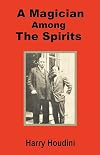
I acquired this as a free, legal download from archive.org.
In this fascinating book, first published in 1924, Harry Houdini lays out the evidence that the Spiritualism fad is bunk. The 1920s saw a rise in this religion in the aftermath of the Great War; many families were left grieving and desperate for contact with the beyond, and as ever, grifters emerge to take advantage of their plights.
Harry Houdini considered these people beyond despicable and did everything in his power to prove show more seances, levitation, dematerialization, spirit photography, and other tricks of the trade were pure bunk--the same sorts of sleight-of-hand he practiced in his own shows, only he made no claim that what he did was 'magic.' His voice comes across as emphatic and genuine. He's a man who, in truth, wants Spiritualism to be real so that he can be in contact with his beloved mother again, or talk with the other deceased friends with whom he developed secrets codes with in case they could indeed communicate with him from Summerland or whatever one wishes to call the next world. He had yet to find such proof.
In this book, he discusses not only how seance tricks are done--sometimes with explanatory illustrations--but also the psychology behind the trickery. In particular, he explores how highly intelligent people can succumb to the delusion--most notably his (former) friend Sir Arthur Conan Doyle--and how Spiritualism can drive people into poverty, insanity, and suicide.
Unlike many century-old books, Houdini's text is highly readable. This is really a fast and fascinating read, and not a short one, either. It's about 300 pages. I'm left with a profound sense of respect for Houdini. His passion and concern ring true. He did good work. show less
In this fascinating book, first published in 1924, Harry Houdini lays out the evidence that the Spiritualism fad is bunk. The 1920s saw a rise in this religion in the aftermath of the Great War; many families were left grieving and desperate for contact with the beyond, and as ever, grifters emerge to take advantage of their plights.
Harry Houdini considered these people beyond despicable and did everything in his power to prove show more seances, levitation, dematerialization, spirit photography, and other tricks of the trade were pure bunk--the same sorts of sleight-of-hand he practiced in his own shows, only he made no claim that what he did was 'magic.' His voice comes across as emphatic and genuine. He's a man who, in truth, wants Spiritualism to be real so that he can be in contact with his beloved mother again, or talk with the other deceased friends with whom he developed secrets codes with in case they could indeed communicate with him from Summerland or whatever one wishes to call the next world. He had yet to find such proof.
In this book, he discusses not only how seance tricks are done--sometimes with explanatory illustrations--but also the psychology behind the trickery. In particular, he explores how highly intelligent people can succumb to the delusion--most notably his (former) friend Sir Arthur Conan Doyle--and how Spiritualism can drive people into poverty, insanity, and suicide.
Unlike many century-old books, Houdini's text is highly readable. This is really a fast and fascinating read, and not a short one, either. It's about 300 pages. I'm left with a profound sense of respect for Houdini. His passion and concern ring true. He did good work. show less
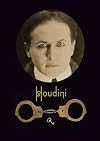
What this book does really well is make use of the amazing visual documentation of Houdini's life and career, including photographs, posters, film stills, and Houdini's magical props. The cover design alone, with the mesmerizing photograph of Houdini staring straight at the camera, eyes piercing the viewer, which we see through a cut-out hole in the front cover, is a compelling illustration of Houdini's charisma.
Silverman and Diner's essays document the lives of Houdini and his wife Bess, show more respectively, placing them in the context of immigrant Jewish and German life in the US, the flowering of popular entertainment in the forms of vaudeville, theater, and magic, gender, and the culture of celebrity. I found Brinkley's essay on "The Immigrant World of Harry Houdini" to be shallow, offering a fairly standard overview of turn-of-the-20th-century immigration, with some mentions of Jewish immigrant life and Houdini in specific, but nothing that is especially new or thoughtful. Houdini is clearly used as an example in this essay, but it seems as if instances in his life were merely plugged in, that the same could have been done for any notable immigrant without changing the text. General readers may learn something about immigrant life in America from Brinkley's essay, but it doesn't feel like Houdini's life offered Brinkley any new insights into it.
My problem with Brooke Rapaport's essay and the interviews with with writers, artists, and magicians influenced by Houdini is really the same as it was with the exhibit itself. The attempted juxtaposition between Houdini and his art with the works produced by several contemporary artists who are, in some way, his admirers seems off. Perhaps it's my lack of education in contemporary art, especially performance art, or simply that the pieces presented did not appeal, but I found the contemporary art uninteresting and not particularly insightful into either Houdini or the ideas communicated by his performances and career.
I was reminded of Art Spiegelman's review of the 1990 High Art Lowdown Exhibit at MoMA, which he discusses in MetaMaus (2011): that exhibit's side-by-side treatment of modern "high art" (paintings by Lichtenstein, MIro, etc) with "low art," specifically comics, trivialized the "low" and reinforced the idea that it was "low," interesting when set side-by-side with its more cultured cousin, but not worth understanding on its own terms. By bringing in the contemporary pieces "influenced" by Houdini's work, the Houdini exhibit implies that these works are Houdini's legacy in contemporary culture. Which is just odd. And wrong. Rather than the contemporary art pieces, which seem to me to be marginal to the popular cultural legacy of Houdini (as well as to art...), I would have loved to have seen, for example, posters and visual works related to Houdini's peers, like the circle of Jewish magicians that Silverman mentions, or the varied entertainment colleagues in the Jewish Theatrical Guild. How about something about how Houdini was memorialized by American culture after his death? How about clips from Houdini's films? Clips from the Tony Curtis Houdini biopic? Houdini's "self-liberation" would be much more interesting presented in context of his own era's culture than in the contemporary art pieces, where it seems deracinated.
The book is beautifully made and provides great visual delight, but as a book about Houdini and culture (whether American or Jewish), it is disappointing. show less
Silverman and Diner's essays document the lives of Houdini and his wife Bess, show more respectively, placing them in the context of immigrant Jewish and German life in the US, the flowering of popular entertainment in the forms of vaudeville, theater, and magic, gender, and the culture of celebrity. I found Brinkley's essay on "The Immigrant World of Harry Houdini" to be shallow, offering a fairly standard overview of turn-of-the-20th-century immigration, with some mentions of Jewish immigrant life and Houdini in specific, but nothing that is especially new or thoughtful. Houdini is clearly used as an example in this essay, but it seems as if instances in his life were merely plugged in, that the same could have been done for any notable immigrant without changing the text. General readers may learn something about immigrant life in America from Brinkley's essay, but it doesn't feel like Houdini's life offered Brinkley any new insights into it.
My problem with Brooke Rapaport's essay and the interviews with with writers, artists, and magicians influenced by Houdini is really the same as it was with the exhibit itself. The attempted juxtaposition between Houdini and his art with the works produced by several contemporary artists who are, in some way, his admirers seems off. Perhaps it's my lack of education in contemporary art, especially performance art, or simply that the pieces presented did not appeal, but I found the contemporary art uninteresting and not particularly insightful into either Houdini or the ideas communicated by his performances and career.
I was reminded of Art Spiegelman's review of the 1990 High Art Lowdown Exhibit at MoMA, which he discusses in MetaMaus (2011): that exhibit's side-by-side treatment of modern "high art" (paintings by Lichtenstein, MIro, etc) with "low art," specifically comics, trivialized the "low" and reinforced the idea that it was "low," interesting when set side-by-side with its more cultured cousin, but not worth understanding on its own terms. By bringing in the contemporary pieces "influenced" by Houdini's work, the Houdini exhibit implies that these works are Houdini's legacy in contemporary culture. Which is just odd. And wrong. Rather than the contemporary art pieces, which seem to me to be marginal to the popular cultural legacy of Houdini (as well as to art...), I would have loved to have seen, for example, posters and visual works related to Houdini's peers, like the circle of Jewish magicians that Silverman mentions, or the varied entertainment colleagues in the Jewish Theatrical Guild. How about something about how Houdini was memorialized by American culture after his death? How about clips from Houdini's films? Clips from the Tony Curtis Houdini biopic? Houdini's "self-liberation" would be much more interesting presented in context of his own era's culture than in the contemporary art pieces, where it seems deracinated.
The book is beautifully made and provides great visual delight, but as a book about Houdini and culture (whether American or Jewish), it is disappointing. show less
Magicians are strangely honest for a group who deceive professionally. It is therefore no surprise to find Harry Houdini exposing various criminals and fraudsters. However it does come as a surprise to find him hunting down rivals that claim to be better than him. Not only does he hunt them down, but challenges them to prove their claims. It is a surprising degree of insecurity expressed against a group of individuals whose names are all lost in the mists of time. It is worth ploughing show more through this to get to the final section. Here Houdini describes how the miracle workers “do it”. Brilliant insight if you want to know how to swallow swords, eat burning coals or drink boiling lead. A fascinating read. show less
 This review was written for LibraryThing Early Reviewers.
Lists
Awards

You May Also Like


Associated Authors
Statistics
- Works
- 50
- Also by
- 5
- Members
- 967
- Popularity
- #26,625
- Rating
- 3.9
- Reviews
- 30
- ISBNs
- 90
- Languages
- 3
- Favorited
- 2


