
Elizabeth Keckley (1818–1907)
Author of Behind the Scenes: or, Thirty Years a Slave and Four Years in the White House
About the Author
Image credit: Image from Behind the scenes, or, Thirty years a slave and four years in the White House (1868) by Elizabeth Keckley
Works by Elizabeth Keckley
Behind the Scenes: or, Thirty Years a Slave and Four Years in the White House (1868) 653 copies, 21 reviews
Associated Works
The Norton Anthology of African American Literature {2nd edition} (2003) — Contributor, some editions — 283 copies, 2 reviews
New Daughters of Africa: An International Anthology of Writing by Women of African Descent (2019) — Contributor — 116 copies, 1 review
Growing Up in Slavery: Stories of Young Slaves as Told by Themselves (2005) — Contributor — 104 copies, 1 review
The Portable Nineteenth-Century African American Women Writers (2017) — Contributor — 77 copies, 1 review
Tagged
Common Knowledge
- Birthdate
- 1818
- Date of death
- 1907-05-26
- Gender
- female
- Occupations
- slave
modiste
human rights activist
social worker
confidante to Mary Todd Lincoln - Organizations
- Contraband Relief Association (founder)
Ladies' Freedmen and Soldier's Relief Association (founder) - Relationships
- Lincoln, Mary Todd (employer)
- Nationality
- USA
- Places of residence
- Washington, D.C., USA
- Associated Place (for map)
- D.C., USA
Members
Reviews
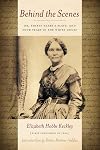
My previous book led me to pick up Behind the Scenes, a memoir written by Elizabeth Keckley in 1868 about her life of enslavement, how she bought her freedom, and how she made a life for herself subsequently.
Keckley was born a slave in Virginia in 1818. The first part of her memoir details her life a slave - the splitting up of her family, the abuse she faced, included rape that led to a pregnancy, and how she strove to keep her dignity. She eventually was able to purchase her freedom show more through her skill as a seamstress, learned through being forced to keep her owner's family of 17 clothed. While she was in St. Louis with this family, she was able to earn $1500 with her seamstress skills to purchase her freedom and that of her son's. She moved to Washington, D.C. and began a seamstress business, sewing dresses for the most well-known women of the day, such as Varina Davis, wife of Jefferson Davis who was soon to be President of the Confederacy. After the Lincolns came to the White House, she became Mary Lincoln's modiste and confidant. The two developed a close relationship - a friendship from Keckley's account. The middle of the book details her exclusive access to the Lincoln family. After Lincoln's assassination, she helps Mary Todd Lincoln sell some of her dresses to make money and the book becomes a bit of an exposé that Mary Lincoln apparently never forgave her for. She includes full letters written to her from Mary Lincoln. Unfortunately, this book seems to have hurt Keckley's reputation and she never financially recovered.
My feelings on this book are mixed. It's beautifully written and I want to know more. I want to know where she learned to read and write, how she managed to become so skilled as to be the best dress designer in Washington on her own, and more about the struggles and triumphs she faced personally. Unfortunately, a lot of the book is overshadowed by the Lincoln family, and especially by Mary Todd Lincoln's financial and emotional troubles after her husband's death.
I'm glad I read this because it's an important first person account of a woman's journey through and out of slavery and to personal success. But I think it's also good to know before you read it that Keckley's own intention in writing this was not just to tell her story, but also to give another view of the Lincolns. She does it well, but at 150 years removed, I personally wanted more of HER story - I can read about the Lincolns plenty of other places. show less
Keckley was born a slave in Virginia in 1818. The first part of her memoir details her life a slave - the splitting up of her family, the abuse she faced, included rape that led to a pregnancy, and how she strove to keep her dignity. She eventually was able to purchase her freedom show more through her skill as a seamstress, learned through being forced to keep her owner's family of 17 clothed. While she was in St. Louis with this family, she was able to earn $1500 with her seamstress skills to purchase her freedom and that of her son's. She moved to Washington, D.C. and began a seamstress business, sewing dresses for the most well-known women of the day, such as Varina Davis, wife of Jefferson Davis who was soon to be President of the Confederacy. After the Lincolns came to the White House, she became Mary Lincoln's modiste and confidant. The two developed a close relationship - a friendship from Keckley's account. The middle of the book details her exclusive access to the Lincoln family. After Lincoln's assassination, she helps Mary Todd Lincoln sell some of her dresses to make money and the book becomes a bit of an exposé that Mary Lincoln apparently never forgave her for. She includes full letters written to her from Mary Lincoln. Unfortunately, this book seems to have hurt Keckley's reputation and she never financially recovered.
My feelings on this book are mixed. It's beautifully written and I want to know more. I want to know where she learned to read and write, how she managed to become so skilled as to be the best dress designer in Washington on her own, and more about the struggles and triumphs she faced personally. Unfortunately, a lot of the book is overshadowed by the Lincoln family, and especially by Mary Todd Lincoln's financial and emotional troubles after her husband's death.
I'm glad I read this because it's an important first person account of a woman's journey through and out of slavery and to personal success. But I think it's also good to know before you read it that Keckley's own intention in writing this was not just to tell her story, but also to give another view of the Lincolns. She does it well, but at 150 years removed, I personally wanted more of HER story - I can read about the Lincolns plenty of other places. show less
Behind the Scenes: or, Thirty Years a Slave, and Four Years in the White House (Penguin Classics) by Elizabeth Keckley
I had first heard of Elizabeth Keckley at the Lincoln Presidential Library and Museum. Born a slave, yet ended up modiste and confidant of Mary Todd Lincoln in the White House. Now THAT has to be a story, I thought. So when I saw her book in the museum gift shop, I had to buy it.
The only frustrating thing about this book is that it is so short, and so narrowly focused on Keckley's motivation for writing it in the first place: which was a defense of the widowed Mrs. Lincoln's attempts to sell show more her gowns to provide for her family, which caused a significant scandal at the time. It hardly seems to occur to Keckley that it could be HER life that people would find interesting, a possibility she undermines by telling so few stories directly about herself, except where she feels they establish her character to make her a trustworthy narrator.
But some of the stories she tells! I can't possibly fit all of my favorite incidents here (or my feelings about them!), but I would be remiss to not mention the time she cooly decides that the curt summons she receives from Mrs. General McClellan on a Sunday afternoon can wait until Monday morning (not knowing Mrs. McClellan was inviting Keckley, who dreamed of working at the White House, to meet Mrs. Lincoln). Or that one of her first clients in D.C. was Mrs. Jefferson Davis! Who, when war is imminent, offers to take Keckley South with her, with a delusional speech about how Mrs. Davis herself will soon be living in the White House!
Keckley also founded what became the Ladies' Freedman and Soldier's Relief Association, organizing and raising funds to help the recently freed fleeing North, something so few were doing.
If only there were an expanded edition of this book, telling Keckley's story outside of and after Mrs. Lincoln's dress scandal! But even without, I found this book absolutely remarkable, and everyone I have talked to in the past three weeks has gotten an earful or more about her life. show less
The only frustrating thing about this book is that it is so short, and so narrowly focused on Keckley's motivation for writing it in the first place: which was a defense of the widowed Mrs. Lincoln's attempts to sell show more her gowns to provide for her family, which caused a significant scandal at the time. It hardly seems to occur to Keckley that it could be HER life that people would find interesting, a possibility she undermines by telling so few stories directly about herself, except where she feels they establish her character to make her a trustworthy narrator.
But some of the stories she tells! I can't possibly fit all of my favorite incidents here (or my feelings about them!), but I would be remiss to not mention the time she cooly decides that the curt summons she receives from Mrs. General McClellan on a Sunday afternoon can wait until Monday morning (not knowing Mrs. McClellan was inviting Keckley, who dreamed of working at the White House, to meet Mrs. Lincoln). Or that one of her first clients in D.C. was Mrs. Jefferson Davis! Who, when war is imminent, offers to take Keckley South with her, with a delusional speech about how Mrs. Davis herself will soon be living in the White House!
Keckley also founded what became the Ladies' Freedman and Soldier's Relief Association, organizing and raising funds to help the recently freed fleeing North, something so few were doing.
If only there were an expanded edition of this book, telling Keckley's story outside of and after Mrs. Lincoln's dress scandal! But even without, I found this book absolutely remarkable, and everyone I have talked to in the past three weeks has gotten an earful or more about her life. show less

Sadly, the author spends far too little time on her years in slavery and far too much time on the efforts she made on Mrs. Lincoln's behalf after the assassination. To give you an idea: one sentence on the death of Keckley's only child in a chapter dedicated to the death of the Lincoln's child. No doubt this reflects the interest of the public and the author when the book was written, but it just made me sad for her that she couldn't devote more time to her own life, which is show more fascinating.
Still, a worthwhile read for the brief and highly discrete version of her years in slavery, and a glimpse at how she bought her way out. The casualness with which she informs the reader that she was single-handedly supporting herself, and her child, as well as the entire family of her white owners with her dress-making in St Louis, is just gobsmacking.
Overall a much stronger effect on me as a white reader in the 21st century than the work of fiction that inspired me to give it a go.
Free copy for Kindle show less
Still, a worthwhile read for the brief and highly discrete version of her years in slavery, and a glimpse at how she bought her way out. The casualness with which she informs the reader that she was single-handedly supporting herself, and her child, as well as the entire family of her white owners with her dress-making in St Louis, is just gobsmacking.
Overall a much stronger effect on me as a white reader in the 21st century than the work of fiction that inspired me to give it a go.
Free copy for Kindle show less

This short memoir is a hodgepodge. However, it’s a unique and tantalizing hodgepodge. It offers the recollections of Elizabeth Keckley, a former slave who was Mary Todd Lincoln's dressmaker, confidante and quasi-companion during and after the Lincoln years in the White House. The tantalizing part is Keckley's intimate access to Mary (who liked to refer to herself as "Mrs. President") and the president. For me, the principal value of this little book is the candid representation of the show more non-public lives of the Lincolns and other celebrity characters in Washington during the Civil War era. Enjoy it for those historical tidbits, but don't expect much more.
A note on style: the memoir was written by Keckley with the assistance of James Redpath, an editor from New York and a friend of Frederick Douglass. Redpath's hand in the work seems obvious. The prose has a degree of literacy and verbal sophistication that seems uncharacteristic of an unschooled black woman of the mid-19th century. show less
A note on style: the memoir was written by Keckley with the assistance of James Redpath, an editor from New York and a friend of Frederick Douglass. Redpath's hand in the work seems obvious. The prose has a degree of literacy and verbal sophistication that seems uncharacteristic of an unschooled black woman of the mid-19th century. show less
Lists
Awards


You May Also Like


Associated Authors
Statistics
- Works
- 3
- Also by
- 6
- Members
- 658
- Popularity
- #38,342
- Rating
- 3.8
- Reviews
- 22
- ISBNs
- 91
- Languages
- 2
