
Susan Ewing
Author of Ten Rowdy Ravens
Works by Susan Ewing
Resurrecting the Shark: A Scientific Obsession and the Mavericks Who Solved the Mystery of a 270-Million-Year-Old Fossil (2017) 49 copies, 3 reviews
The Great Alaska Nature Factbook: A Guide to the State's Remarkable Animals, Plants and Natural Features (1996) 19 copies, 1 review
Associated Works
Tagged
Common Knowledge
- Gender
- female
Members
Reviews
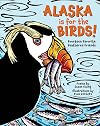
All in all, for a children's book, "Alaska is for the Birds!" was perfectly fine. The art of Evon Zerbetz steals the show; it's vibrant and eye-catching. The poetry style of Susan Ewing is fine for a young children's book, but even by that standard, it feels a bit clunky to read. Plus, occasional words like sonorous don't quite mesh with the age intended.
There is a section at the back with more traditional informational texts about the birds that I wish the book had been written with. show more Informational text with the lively drawings would make a wonderful book to read with a child interested in birds. I wouldn't mind other books in a series of different state birds. show less
 This review was written for LibraryThing Early Reviewers.
Resurrecting the Shark: A Scientific Obsession and the Mavericks Who Solved the Mystery of a 270-Million-Year-Old Fossil by Susan Ewing
Where do buzz saws come from, daddy?
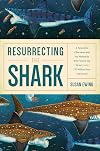
There’s nothing new under the sun, and all you have to do is observe evolution to see that. Nature has produced so many experiments and dead ends that 99.9% of species are extinct. Resurrecting the Shark is about a 300 million year old shark that thrived and died. We know it from its mouth, which housed a circular saw of ever larger teeth. The helicoprion was so specialized it probably did itself in, because it disappeared long before the great Permian show more Extinction. We know of it because its mouthful of teeth is uniquely spiral, making for absolutely stunning fossils, pictured in the book.
It turns out that sharks never stop growing; they grow until they die. So contrary to intuition, the smallest teeth on the helicoprion whorl are not the newest, but the oldest, and are in the front, not the back. (In modern sharks, the teeth work their way outwards and eventually fall out, with new ones constantly minted.) The whorl grew out from the back of the mouth, with the largest, sharpest teeth pushing the rest into its tight swirl. Even more bizarre is that all the teeth had one single root; they were actually crowns. And if that were not enough, it didn’t have any other teeth, just “pavement” teeth to grind against.
Ewing’s book is a delight of discovery. She profiles the players from the first discoveries in the 19th century, to the gathering point in Idaho (also not quite intuitive), where the most shark whorls have been found. The theories, the guesswork, and the deductions are all here, and you are there for the process and discoveries. Ewing’s style is to define terms right after their first use, which makes it easy to understand the technicalities and esoterica of paleontology.
It took a massive effort by team of extraordinarily knowledgeable and specialized scientists to pull this together, first individually, then at a marathon get-together. This mission impossible team had experts in mouth mechanics and even artists, making it a great machine to promulgate its findings. Their heart and soul producer was connected right back to the beginning of the discoveries. They figured out how the teeth fit in the body, how they processed prey and also avoided ripping the mouth apart or stabbing into the brain. Because sharks have cartilage instead of bone skeletons, we don’t have full bodies to examine, so there are still debates on gills and sex and what they preyed on. The current favorite is that it used the tooth whorl like a snail fork, extracting cephalopods from their shells. On 15-26 foot sharks, that’s a lot of feeding.
And finally, this being 2017, there will be an app for this, at google play, where you can make the color photos in the book come even more alive.
David Wineberg show less
There’s nothing new under the sun, and all you have to do is observe evolution to see that. Nature has produced so many experiments and dead ends that 99.9% of species are extinct. Resurrecting the Shark is about a 300 million year old shark that thrived and died. We know it from its mouth, which housed a circular saw of ever larger teeth. The helicoprion was so specialized it probably did itself in, because it disappeared long before the great Permian show more Extinction. We know of it because its mouthful of teeth is uniquely spiral, making for absolutely stunning fossils, pictured in the book.
It turns out that sharks never stop growing; they grow until they die. So contrary to intuition, the smallest teeth on the helicoprion whorl are not the newest, but the oldest, and are in the front, not the back. (In modern sharks, the teeth work their way outwards and eventually fall out, with new ones constantly minted.) The whorl grew out from the back of the mouth, with the largest, sharpest teeth pushing the rest into its tight swirl. Even more bizarre is that all the teeth had one single root; they were actually crowns. And if that were not enough, it didn’t have any other teeth, just “pavement” teeth to grind against.
Ewing’s book is a delight of discovery. She profiles the players from the first discoveries in the 19th century, to the gathering point in Idaho (also not quite intuitive), where the most shark whorls have been found. The theories, the guesswork, and the deductions are all here, and you are there for the process and discoveries. Ewing’s style is to define terms right after their first use, which makes it easy to understand the technicalities and esoterica of paleontology.
It took a massive effort by team of extraordinarily knowledgeable and specialized scientists to pull this together, first individually, then at a marathon get-together. This mission impossible team had experts in mouth mechanics and even artists, making it a great machine to promulgate its findings. Their heart and soul producer was connected right back to the beginning of the discoveries. They figured out how the teeth fit in the body, how they processed prey and also avoided ripping the mouth apart or stabbing into the brain. Because sharks have cartilage instead of bone skeletons, we don’t have full bodies to examine, so there are still debates on gills and sex and what they preyed on. The current favorite is that it used the tooth whorl like a snail fork, extracting cephalopods from their shells. On 15-26 foot sharks, that’s a lot of feeding.
And finally, this being 2017, there will be an app for this, at google play, where you can make the color photos in the book come even more alive.
David Wineberg show less

I'm not generally a big fan of poetry, but I found myself reading each page out loud, and thoroughly enjoying the descriptive bird rhymes. The pictures were striking, too.
Another one for my granddaughters' book shelves!
Another one for my granddaughters' book shelves!
This review was written for LibraryThing Early Reviewers.Poems and pictures about fourteen birds found in Alaska, in succinct ten-to-twelve line rhyming couplets by Susan Ewing, complemented in a double-page spread by colorful linocut prints by Evon Zerbetz. The clever poems capture the behaviors of the birds, and the detailed illustrations highlight some of their primary physical characteristics.
Many of the poems introduce new vocabulary (for me, words like pectinate and pelagic), and the meanings can be discerned from the context, but there is show more also a two-page glossary at the end of the book. The author has also included a half-page of additional information on each bird just before the glossary. I especially appreciate the inclusion of the collective nouns often used with each species. (For example, I never knew a group of hummingbirds is a bouquet, charm, glittering, or shimmer - all are appropriate!)
Although the publisher, West Margin Press, indicates in the book's study guide that it is aimed at ages 5–8 and grades K–3, I think it could be used by older children and students too, at least through ages 12 and grade 6. This book belongs in every Alaskan library, and could also be used in state studies in the rest of the country. show less
Many of the poems introduce new vocabulary (for me, words like pectinate and pelagic), and the meanings can be discerned from the context, but there is show more also a two-page glossary at the end of the book. The author has also included a half-page of additional information on each bird just before the glossary. I especially appreciate the inclusion of the collective nouns often used with each species. (For example, I never knew a group of hummingbirds is a bouquet, charm, glittering, or shimmer - all are appropriate!)
Although the publisher, West Margin Press, indicates in the book's study guide that it is aimed at ages 5–8 and grades K–3, I think it could be used by older children and students too, at least through ages 12 and grade 6. This book belongs in every Alaskan library, and could also be used in state studies in the rest of the country. show less
This review was written for LibraryThing Early Reviewers.Lists
Science: Zoology (1)
Awards


You May Also Like


Associated Authors
Statistics
- Works
- 9
- Also by
- 1
- Members
- 272
- Popularity
- #85,117
- Rating
- 4.1
- Reviews
- 29
- ISBNs
- 19
