
Elizabeth McCoy
Author of Gurps IOU : welcome to Illuminati University!
Series
Works by Elizabeth McCoy
Royal Jelly 2 copies
In Nomine Superiors: Lilith 1 copy
Associated Works
Tagged
Common Knowledge
- Birthdate
- 1973
- Gender
- female
- Nationality
- USA
- Places of residence
- Austin, Texas, USA
- Associated Place (for map)
- Texas, USA
Members
Reviews

This takes place quite some time after Herb-Wife – I can't remember if their exact age was ever stated, but my guess was that Kessa and Iathor's twin sons were at least in their late teens or early twenties. Jani is a grown roof-rat, hired to either assassinate Kessa (which she has no plans to do) or poison one of Iathor's servants. The poison is slow-acting, and the plan is to tell Iathor, who is known for being soft-hearted where his servants are concerned, that he can have the antidote show more if he disinherits Iontho, his heir.
What Jani doesn't realize is that the person she pegs as a servant is actually Iontho. Iontho is immune to the poison, but plays along and tracks Jani back to her hiding place, where she gives him what she thinks is either a temporary loyalty potion or a truth potion. Iontho is shocked to realize it's the dramsman's draught, a permanent loyalty potion. He drinks it all (again, he's immune) and plans to find out who Jani got the draught from, and why they wanted him disinherited or his mother dead. In an effort to test whether the potion has worked, Jani orders Iontho to kiss her (a moment of surprising stupidity on her part), which very slightly binds her to Iontho. Iontho, meanwhile, pretends to be a servant named Yan, and Jani's new dramsman.
So now Jani has (she thinks) an illegal dramsman and an employer who is involved in deadly politics and is therefore more trouble than he's worth. She comes up with a plan to cut herself loose and maybe make a bit of profit, while at the same time hopefully escaping punishment for having an illegal dramsman, however accidental.
I know all this sounds complicated, but I do think newbies to this world could start with this book, if they wanted, rather than McCoy's Lord Alchemist duology. Some character relationships and history might go over new readers' heads, but McCoy gives enough background information about those things and stuff like the dramsman's draught that it shouldn't be too much of a problem.
My feelings about this book are complicated. On the one hand, I thought it was better written and more tightly plotted than McCoy's Lord Alchemist duology, which I still feel would have been better edited down and released as a single book. I also loved Jani's creche and all the “pantsboys” stuff (roof-rat girls who dress as boys and who etiquette therefore dictates should be treated and referred to as boys). On the other hand, the romance in this book made me uncomfortable.
Part of my problem was that I wasn't sure what the dividing line was between a dramsman's wishes and his or her master's wishes. If a dramsman could tell that his or her master really wanted something, would a dramsman be influenced to want to do or provide that thing, even if his or her master didn't explicitly give them an order?
Let me back up a bit. Jani thought Iontho was her dramsman, although, as a commoner, she didn't always seem to understand exactly how deep a dramsman's loyalty went. I gave her a bit of leeway for that, even though I couldn't help but feel that it was unethical for her to begin a sexual relationship with her accidental dramsman. I didn't feel quite as charitable towards Iontho. He knew that Jani had tasted a little of the draught via their kiss and that she'd therefore had at least some of her ability to consent taken away. Whether he was attracted to Jani or not should have been irrelevant.
In some ways, I preferred Jani to Kessa – although Kessa was a more interesting and complex character, Jani had fewer jagged edges. However, I definitely preferred Iathor to Iontho. Iontho flubbed a few things that Iathor would never have been careless about (granted, I primarily know Iathor from his older and more experienced days). Also, Iathor would never have allowed sex to further complicate a relationship already complicated by the draught.
McCoy tried to work around that by making sure that Iontho always waited for Jani's permission and stopped whenever she said they should stop. The first couple sex scenes (yes, there were graphic sex scenes) were entirely about Iontho making sure that Jani was enjoying herself, and, in general, Jani's pleasure always came first. I appreciated that...but I was never able to forget that she was also being influenced by the dramsman's draught to an unknown extent.
This book is tagged as fantasy romance, but I think it would be more accurate to call it fantasy with romantic aspects, with the added caveat that it's HFN (happy for now) romance at best. I knew early on that Jani and Iontho's relationship probably wasn't going to end with marriage and babies. Iontho was his father's heir and would therefore be expected to marry an immune woman in the hope that he'd have equally immune children. There were no indications that Jani was an immune, and I wasn't sure that Iathor would approve of his son having a dramsman bride. I suppose a part of me never gave up hope, however, because the ending disappointed me. It was the best that Jani and Iontho could have hoped for, but for me it still wasn't enough.
Oh, I wish the dramsman's draught hadn't been a factor in Jani and Iontho's romance. I'd have liked this book so much more, otherwise. That said, despite the problems I've had with this series so far, I've generally enjoyed McCoy's characters and detailed world-building. I already own the next book, Crucible, and am interested to see how well that one works for me.
Extras:
- A glossary/cast list.
Rating Note:
This is one of my "I don't even know" 3-star ratings. I didn't dislike the book, but my discomfort with the romance kept me from liking it too.
(Original review, with read-alikes, posted on A Library Girl's Familiar Diversions.) show less
What Jani doesn't realize is that the person she pegs as a servant is actually Iontho. Iontho is immune to the poison, but plays along and tracks Jani back to her hiding place, where she gives him what she thinks is either a temporary loyalty potion or a truth potion. Iontho is shocked to realize it's the dramsman's draught, a permanent loyalty potion. He drinks it all (again, he's immune) and plans to find out who Jani got the draught from, and why they wanted him disinherited or his mother dead. In an effort to test whether the potion has worked, Jani orders Iontho to kiss her (a moment of surprising stupidity on her part), which very slightly binds her to Iontho. Iontho, meanwhile, pretends to be a servant named Yan, and Jani's new dramsman.
So now Jani has (she thinks) an illegal dramsman and an employer who is involved in deadly politics and is therefore more trouble than he's worth. She comes up with a plan to cut herself loose and maybe make a bit of profit, while at the same time hopefully escaping punishment for having an illegal dramsman, however accidental.
I know all this sounds complicated, but I do think newbies to this world could start with this book, if they wanted, rather than McCoy's Lord Alchemist duology. Some character relationships and history might go over new readers' heads, but McCoy gives enough background information about those things and stuff like the dramsman's draught that it shouldn't be too much of a problem.
My feelings about this book are complicated. On the one hand, I thought it was better written and more tightly plotted than McCoy's Lord Alchemist duology, which I still feel would have been better edited down and released as a single book. I also loved Jani's creche and all the “pantsboys” stuff (roof-rat girls who dress as boys and who etiquette therefore dictates should be treated and referred to as boys). On the other hand, the romance in this book made me uncomfortable.
Part of my problem was that I wasn't sure what the dividing line was between a dramsman's wishes and his or her master's wishes. If a dramsman could tell that his or her master really wanted something, would a dramsman be influenced to want to do or provide that thing, even if his or her master didn't explicitly give them an order?
Let me back up a bit. Jani thought Iontho was her dramsman, although, as a commoner, she didn't always seem to understand exactly how deep a dramsman's loyalty went. I gave her a bit of leeway for that, even though I couldn't help but feel that it was unethical for her to begin a sexual relationship with her accidental dramsman. I didn't feel quite as charitable towards Iontho. He knew that Jani had tasted a little of the draught via their kiss and that she'd therefore had at least some of her ability to consent taken away. Whether he was attracted to Jani or not should have been irrelevant.
In some ways, I preferred Jani to Kessa – although Kessa was a more interesting and complex character, Jani had fewer jagged edges. However, I definitely preferred Iathor to Iontho. Iontho flubbed a few things that Iathor would never have been careless about (granted, I primarily know Iathor from his older and more experienced days). Also, Iathor would never have allowed sex to further complicate a relationship already complicated by the draught.
McCoy tried to work around that by making sure that Iontho always waited for Jani's permission and stopped whenever she said they should stop. The first couple sex scenes (yes, there were graphic sex scenes) were entirely about Iontho making sure that Jani was enjoying herself, and, in general, Jani's pleasure always came first. I appreciated that...but I was never able to forget that she was also being influenced by the dramsman's draught to an unknown extent.
This book is tagged as fantasy romance, but I think it would be more accurate to call it fantasy with romantic aspects, with the added caveat that it's HFN (happy for now) romance at best. I knew early on that Jani and Iontho's relationship probably wasn't going to end with marriage and babies. Iontho was his father's heir and would therefore be expected to marry an immune woman in the hope that he'd have equally immune children. There were no indications that Jani was an immune, and I wasn't sure that Iathor would approve of his son having a dramsman bride. I suppose a part of me never gave up hope, however, because the ending disappointed me. It was the best that Jani and Iontho could have hoped for, but for me it still wasn't enough.
Oh, I wish the dramsman's draught hadn't been a factor in Jani and Iontho's romance. I'd have liked this book so much more, otherwise. That said, despite the problems I've had with this series so far, I've generally enjoyed McCoy's characters and detailed world-building. I already own the next book, Crucible, and am interested to see how well that one works for me.
Extras:
- A glossary/cast list.
Rating Note:
This is one of my "I don't even know" 3-star ratings. I didn't dislike the book, but my discomfort with the romance kept me from liking it too.
(Original review, with read-alikes, posted on A Library Girl's Familiar Diversions.) show less
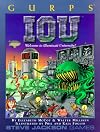
GURPS IOU is a worldbook for GURPS 3rd Edition, set in at a university where anything can happen. It is a comedy book, where anything can happen and humorous allusions abound. It's designed around 100-150 point characters, where anything goes. (An advertising blurb: "where Unusual Background isn't just an Advantage, it's a way of life.")
Does this work? It is definitely an excellent read. The world is very interesting and well defined, with humor and weirdness abounding. And unlike many other show more roleplaying books, the art actually adds to the book, instead of adding nothing or actually detracting from the book (Smif (Dan Smith) has done this. I love Phil & Kaja Foglio as the artists on this; they went along with the humor excellently.) However, don't let a mundane get a hold of the book - if they don't get the College of Temporal Happenstance, Ultimate Lies & Historical Undertakings (C.T.H.U.L.H.U), they won't get anything.
As for playability, that's more questionable. The book only offers 5 pages of adventure notes, and a GURPS IOU Adventures seems unlikely. Some practice in running a humorous campaign would help. They offer a 'Dark' campaign style in a discussion on playing IOU, but that isn't really supported by most of the book, which tends to the 'Silly' campaign style.
This book is hard to steal from for other campaigns unless you need a weird university around. It's based around GURPS 3rd Edition, but it's trivial to update it to 4th Edition. It should be simple enough to adapt to FUDGE or any other system; it has very little crunch to worry about. (The system has got to be able to handle modern weaponry, post-modern weaponry, magic and psionics, and detailed combat seems a little pointless when both you and your opponent will be fixed or resurrected by tomorrow.)
Overall - a great book. If you regularly buy books without expecting to use them, like me, grab it. If you are a GURPS game-master looking for a setting to use Ultra-Tech, Martial Arts, Magic, Psionics, and any other book you have around, grab it. If you're familiar with GURPS and want a comedy setting, grab it. Otherwise ... show less
Does this work? It is definitely an excellent read. The world is very interesting and well defined, with humor and weirdness abounding. And unlike many other show more roleplaying books, the art actually adds to the book, instead of adding nothing or actually detracting from the book (Smif (Dan Smith) has done this. I love Phil & Kaja Foglio as the artists on this; they went along with the humor excellently.) However, don't let a mundane get a hold of the book - if they don't get the College of Temporal Happenstance, Ultimate Lies & Historical Undertakings (C.T.H.U.L.H.U), they won't get anything.
As for playability, that's more questionable. The book only offers 5 pages of adventure notes, and a GURPS IOU Adventures seems unlikely. Some practice in running a humorous campaign would help. They offer a 'Dark' campaign style in a discussion on playing IOU, but that isn't really supported by most of the book, which tends to the 'Silly' campaign style.
This book is hard to steal from for other campaigns unless you need a weird university around. It's based around GURPS 3rd Edition, but it's trivial to update it to 4th Edition. It should be simple enough to adapt to FUDGE or any other system; it has very little crunch to worry about. (The system has got to be able to handle modern weaponry, post-modern weaponry, magic and psionics, and detailed combat seems a little pointless when both you and your opponent will be fixed or resurrected by tomorrow.)
Overall - a great book. If you regularly buy books without expecting to use them, like me, grab it. If you are a GURPS game-master looking for a setting to use Ultra-Tech, Martial Arts, Magic, Psionics, and any other book you have around, grab it. If you're familiar with GURPS and want a comedy setting, grab it. Otherwise ... show less

Considering how disappointing Herb-Witch turned out to be, I was a little worried about reading this. I ended up liking it a lot more, but it hurts to think how much better Herb-Wife and the duology as a whole could have been, had McCoy had an excellent editor. I'm not talking about typos – although I noticed a few (mostly, missing words), there really weren't that many. My problem is with the story, which would have been much better if it had been tightened up.
Herb-Wife continues right show more where Herb-Witch left off. Kessa is at Iathor's house, recovering from being attacked and almost raped. Her shop has been burned down. She knows that Iasen was probably the one who ordered the attack and that he had probably done it out of a hatred for her barbarian blood and a desire to continue to be Iathor's heir. She knows there is nothing she can do to him directly, but marrying Iathor and giving him a son would provide her with some form of revenge. Because she's an immune, there's a good chance she won't survive childbirth, but there's comfort in knowing that her child would be well taken care of.
Plot-wise, the whole book is basically just about Kessa's goals and Iathor's efforts to find out what's really going on. Kessa begins to fall for Iathor but figures he'd hate her if he knew the truth about why she agreed to marry him. Iathor knows Kessa is hiding things and is determined to keep her safe and make their marriage a happy one, despite society's prejudices against half-barbarians and his own brother's hatred of Kessa.
I really think Herb-Witch and Herb-Wife would have been better as a single book. There just wasn't enough story, and I felt like McCoy loved her characters so much that she couldn't bring herself to do the kind of ruthless editing that would have been necessary to tighten everything up. I appreciated the slow-developing affection between Iathor and Kessa and came to understand Kessa much better in this book, but the story's pacing was, overall, pretty terrible. Did we really need to see Iathor and Kessa's entire trip to Cym? And did we need to hear so much about Kessa's bleeding? It seemed like she spent half the book either menstruating (from the effects of Purgatorie) or bleeding from her and Iathor's cringe-worthy wedding night.
Even so, McCoy is really, really good at writing compelling characters and interesting worlds, and those things were what kept me reading, even when nothing much new seemed to be happening. Iathor was my favorite character in the book, and it wasn't long before I developed a literary crush on him. He carried his power as Lord Alchemist well. I loved how he tried to balance his strong sense of duty and his growing feelings for Kessa.
Kessa was more subdued this time around, due both to her feelings of guilt about the things she was hiding from Iathor and her belief that she would soon die in childbirth. I appreciated that she no longer tried to bite Iathor's head off at every opportunity, even as the reason for the shift in her behavior hurt. I hated that it took her so long (almost the whole book!) to truly trust Iathor, and I desperately wanted her to have a greater sense of her own self-worth.
I spent half of Herb-Witch trying to get a handle on the characters and the world, so it was a relief that this was no longer an issue for me in Herb-Wife. I was fascinated by Kessa and Iathor's world, even as some aspects repelled me. For example, the reliance of dry tea and men's tea (contraceptives) on maiden's blood bugged me. In this world, the menstrual blood of a maiden (very strict definition of maiden – no kissing, no sex, no sexual behavior of any kind) was somehow different from other blood. I had so many questions about that. The glossary mentioned that it doesn't just have to be menstrual blood, but I still wondered, why maidens? What about virginal men? And why would kissing interfere with the blood's properties?
The dramsmen were another thing that both fascinated and repelled me. Herb-Witch just talked about them, whereas Herb-Wife actually showed the dramsman's draught in action. Nobles like Iathor were very conscious of their responsibilities towards their dramsmen, but it was still hard to imagine anyone who had a choice about it willingly agreeing to take the draught.
Because it badly needed to be tightened up, I hesitate to recommend this duology, but I became so attached to the characters and this world that I plan to read the related works that McCoy has written.
Extras:
A combined cast list and glossary is included at the end of the book.
Rating Note:
Part of me thinks I'm being too generous with my rating. I've been wavering between 2.5 and 3 stars. The story gets somewhere between 1.5 and 2 stars. The characters and world get somewhere between 4 and 4.5 stars. You see my dilemma? I'm more of a character-oriented reader, so I decided to give a little more weight to my rating for the characters and world.
(Original review, with read-alikes, posted on A Library Girl's Familiar Diversions.) show less
Herb-Wife continues right show more where Herb-Witch left off. Kessa is at Iathor's house, recovering from being attacked and almost raped. Her shop has been burned down. She knows that Iasen was probably the one who ordered the attack and that he had probably done it out of a hatred for her barbarian blood and a desire to continue to be Iathor's heir. She knows there is nothing she can do to him directly, but marrying Iathor and giving him a son would provide her with some form of revenge. Because she's an immune, there's a good chance she won't survive childbirth, but there's comfort in knowing that her child would be well taken care of.
Plot-wise, the whole book is basically just about Kessa's goals and Iathor's efforts to find out what's really going on. Kessa begins to fall for Iathor but figures he'd hate her if he knew the truth about why she agreed to marry him. Iathor knows Kessa is hiding things and is determined to keep her safe and make their marriage a happy one, despite society's prejudices against half-barbarians and his own brother's hatred of Kessa.
I really think Herb-Witch and Herb-Wife would have been better as a single book. There just wasn't enough story, and I felt like McCoy loved her characters so much that she couldn't bring herself to do the kind of ruthless editing that would have been necessary to tighten everything up. I appreciated the slow-developing affection between Iathor and Kessa and came to understand Kessa much better in this book, but the story's pacing was, overall, pretty terrible. Did we really need to see Iathor and Kessa's entire trip to Cym? And did we need to hear so much about Kessa's bleeding? It seemed like she spent half the book either menstruating (from the effects of Purgatorie) or bleeding from her and Iathor's cringe-worthy wedding night.
Even so, McCoy is really, really good at writing compelling characters and interesting worlds, and those things were what kept me reading, even when nothing much new seemed to be happening. Iathor was my favorite character in the book, and it wasn't long before I developed a literary crush on him. He carried his power as Lord Alchemist well. I loved how he tried to balance his strong sense of duty and his growing feelings for Kessa.
Kessa was more subdued this time around, due both to her feelings of guilt about the things she was hiding from Iathor and her belief that she would soon die in childbirth. I appreciated that she no longer tried to bite Iathor's head off at every opportunity, even as the reason for the shift in her behavior hurt. I hated that it took her so long (almost the whole book!) to truly trust Iathor, and I desperately wanted her to have a greater sense of her own self-worth.
I spent half of Herb-Witch trying to get a handle on the characters and the world, so it was a relief that this was no longer an issue for me in Herb-Wife. I was fascinated by Kessa and Iathor's world, even as some aspects repelled me. For example, the reliance of dry tea and men's tea (contraceptives) on maiden's blood bugged me. In this world, the menstrual blood of a maiden (very strict definition of maiden – no kissing, no sex, no sexual behavior of any kind) was somehow different from other blood. I had so many questions about that. The glossary mentioned that it doesn't just have to be menstrual blood, but I still wondered, why maidens? What about virginal men? And why would kissing interfere with the blood's properties?
The dramsmen were another thing that both fascinated and repelled me. Herb-Witch just talked about them, whereas Herb-Wife actually showed the dramsman's draught in action. Nobles like Iathor were very conscious of their responsibilities towards their dramsmen, but it was still hard to imagine anyone who had a choice about it willingly agreeing to take the draught.
Because it badly needed to be tightened up, I hesitate to recommend this duology, but I became so attached to the characters and this world that I plan to read the related works that McCoy has written.
Extras:
A combined cast list and glossary is included at the end of the book.
Rating Note:
Part of me thinks I'm being too generous with my rating. I've been wavering between 2.5 and 3 stars. The story gets somewhere between 1.5 and 2 stars. The characters and world get somewhere between 4 and 4.5 stars. You see my dilemma? I'm more of a character-oriented reader, so I decided to give a little more weight to my rating for the characters and world.
(Original review, with read-alikes, posted on A Library Girl's Familiar Diversions.) show less

I really enjoyed McCoy's Queen of Roses, so I decided to buy her Lord Alchemist Duology as well. Herb-Witch turned out to be incredibly difficult to get into, although I did eventually find my footing in this new world. I became invested in the characters...and then the ending happened. To say it was disappointing is putting it mildly. I'll have to read Book 2 to be sure, but so far I'd have to say that this book is not for romance fans, despite the "romance" tag I've seen applied to it.
show more Iathor, the Lord Alchemist, first meets Kessa Herbsman in a prison cell. She has been accused of disminding a moneylender with one of her potions. Iathor uses a truth potion on her and realizes that she is an immune, someone on whom most potions have little or no effect. There are only two known immunes at the moment: Iathor (the Lord Alchemist is required to be immune) and his heir and brother, Iasen. Iathor has been searching for an immune woman for decades, because he must either marry an immune woman or take a dramswife, a woman who has drunk the dramsman's draught in order to make her completely loyal to him. The thought of a wife who has no choice but to be by his side horrifies him.
Ugly, half-barbarian Kessa never expected to receive a marriage proposal from anyone, much less the Lord Alchemist, but she's not about to fall gratefully into his arms. She has no idea what it means to be immune or how rare it is. All she wants is to take care of her sickly foster sister and to be left alone. Iathor attempts to woo Kessa by feeding her, taking care of her when she's ill or in pain, and generally making her life easier. Even if she decides not to be his wife, he'd at least like to make her his student.
Here's how I thought the story would go: Kessa would agree to become Iathor's student. She'd gradually make friends with Nicia, another trainee. She'd work with Iathor to stop the activities of the gray watch and discover who had dosed the moneylender prior to her meeting with him. She'd eventually come to trust Iathor with her secrets and her family, and, finally, she'd agreed to marry him. What could have just been a marriage of convenience would end up being a love match. Book 2 would feature Kessa trying to adjust to life among the wealthy and titled, Iathor adjusting to Kessa's family, and both of them facing Iasen's hatred of Kessa's half-barbarian heritage.
Some things went the way I thought they would. Others, not so much.
At first, I was on Kessa's side. Iathor seemed to accept it as a given that Kessa would agree to marry him. Never mind that this would turn her world upside down. Never mind that her immunity meant that the children he wanted her to bear might kill her. I wasn't entirely sure about how immunity worked – a potion designed to heal Kessa's arm worked, for instance, but most pain-relievers didn't. At the very least, giving birth would be awful. What if there were complications during her pregnancy, and her immunity prevented potions from helping her?
Iathor's accommodating attitude and Kessa's intense prickliness and bucket-loads of paranoia eventually put me more on Iathor's side. She snarled at him at every opportunity, despite the fact that he did almost nothing to deserve it. It was very difficult to like her, and I began to wish that Laita, Kessa's foster sister, was the immune main character instead. Kessa's resistance to Iathor dragged on an on, while the much more practical, mercenary, and charming Laita would have seen an opportunity for her and her family to move up in the world and would have cheerfully grabbed it.
I could imagine Iathor marrying Laita for political reasons and the immune children she might give him, Laita marrying him for his political power and money, and their relationship either blossoming into love or not. Either way, it would have felt better than what Kessa did at the end of this book. Kessa told Nicia not to feign immunity because it would be cruel to Iathor, but I felt that what she did was almost as cruel. Not to mention possibly unnecessary, if she had only unbent enough to finally trust Iathor even a little.
McCoy went way, way overboard with Kessa, both in terms of her prickliness towards Iathor and her ugliness. Readers were reminded over and over again that Kessa's eyes were hideous – the color of dog-vomit, or rotting herbs, or dead leaves. She hid them both because she was self-conscious about them about them and because the full force of her gaze could be effective as a weapon. The bit that really got me was that her own foster siblings flinched away from her gaze. Unless her eyes were magically repellent, which I don't think they were, this was too much.
I had a lot of issues with McCoy's writing. I had to go back and reread certain earlier parts of the book several times because details necessary for understanding those bits weren't revealed until much later. The rhythm of characters' speech and thoughts (especially Kessa's) sometimes made things harder to follow than they should have been. I spent the first quarter of the book trying to find my footing and didn't truly feel sure about my knowledge of the world until I was halfway through.
In general, I felt that the story would have been much improved had an editor gone through and tightened certain parts up and placed some of the world explanations earlier in the book. Considering how much fun I had with Queen of Roses, I had expected to love this book. While I liked several of the characters and their interactions, enjoyed Kessa's alchemy training, and wanted to see how and whether Iathor could win Kessa over, adjusting to this world took more work than it should have, and the ending wasn't worth it. If I didn't already own Book 2, I don't know that I could bring myself to buy it. However, since I do own it, I'll read it and see if the duology as a whole is worth the trouble, even if this first book was a disappointment.
Extras:
A combined cast list and glossary is included at the end of the book. In my opinion, the glossary should have been listed at the beginning. It might have made the first quarter of the book less confusing.
(Original review, with read-alikes, posted on A Library Girl's Familiar Diversions.) show less
show more Iathor, the Lord Alchemist, first meets Kessa Herbsman in a prison cell. She has been accused of disminding a moneylender with one of her potions. Iathor uses a truth potion on her and realizes that she is an immune, someone on whom most potions have little or no effect. There are only two known immunes at the moment: Iathor (the Lord Alchemist is required to be immune) and his heir and brother, Iasen. Iathor has been searching for an immune woman for decades, because he must either marry an immune woman or take a dramswife, a woman who has drunk the dramsman's draught in order to make her completely loyal to him. The thought of a wife who has no choice but to be by his side horrifies him.
Ugly, half-barbarian Kessa never expected to receive a marriage proposal from anyone, much less the Lord Alchemist, but she's not about to fall gratefully into his arms. She has no idea what it means to be immune or how rare it is. All she wants is to take care of her sickly foster sister and to be left alone. Iathor attempts to woo Kessa by feeding her, taking care of her when she's ill or in pain, and generally making her life easier. Even if she decides not to be his wife, he'd at least like to make her his student.
Here's how I thought the story would go: Kessa would agree to become Iathor's student. She'd gradually make friends with Nicia, another trainee. She'd work with Iathor to stop the activities of the gray watch and discover who had dosed the moneylender prior to her meeting with him. She'd eventually come to trust Iathor with her secrets and her family, and, finally, she'd agreed to marry him. What could have just been a marriage of convenience would end up being a love match. Book 2 would feature Kessa trying to adjust to life among the wealthy and titled, Iathor adjusting to Kessa's family, and both of them facing Iasen's hatred of Kessa's half-barbarian heritage.
Some things went the way I thought they would. Others, not so much.
At first, I was on Kessa's side. Iathor seemed to accept it as a given that Kessa would agree to marry him. Never mind that this would turn her world upside down. Never mind that her immunity meant that the children he wanted her to bear might kill her. I wasn't entirely sure about how immunity worked – a potion designed to heal Kessa's arm worked, for instance, but most pain-relievers didn't. At the very least, giving birth would be awful. What if there were complications during her pregnancy, and her immunity prevented potions from helping her?
Iathor's accommodating attitude and Kessa's intense prickliness and bucket-loads of paranoia eventually put me more on Iathor's side. She snarled at him at every opportunity, despite the fact that he did almost nothing to deserve it. It was very difficult to like her, and I began to wish that Laita, Kessa's foster sister, was the immune main character instead. Kessa's resistance to Iathor dragged on an on, while the much more practical, mercenary, and charming Laita would have seen an opportunity for her and her family to move up in the world and would have cheerfully grabbed it.
I could imagine Iathor marrying Laita for political reasons and the immune children she might give him, Laita marrying him for his political power and money, and their relationship either blossoming into love or not. Either way, it would have felt better than what Kessa did at the end of this book. Kessa told Nicia not to feign immunity because it would be cruel to Iathor, but I felt that what she did was almost as cruel. Not to mention possibly unnecessary, if she had only unbent enough to finally trust Iathor even a little.
McCoy went way, way overboard with Kessa, both in terms of her prickliness towards Iathor and her ugliness. Readers were reminded over and over again that Kessa's eyes were hideous – the color of dog-vomit, or rotting herbs, or dead leaves. She hid them both because she was self-conscious about them about them and because the full force of her gaze could be effective as a weapon. The bit that really got me was that her own foster siblings flinched away from her gaze. Unless her eyes were magically repellent, which I don't think they were, this was too much.
I had a lot of issues with McCoy's writing. I had to go back and reread certain earlier parts of the book several times because details necessary for understanding those bits weren't revealed until much later. The rhythm of characters' speech and thoughts (especially Kessa's) sometimes made things harder to follow than they should have been. I spent the first quarter of the book trying to find my footing and didn't truly feel sure about my knowledge of the world until I was halfway through.
In general, I felt that the story would have been much improved had an editor gone through and tightened certain parts up and placed some of the world explanations earlier in the book. Considering how much fun I had with Queen of Roses, I had expected to love this book. While I liked several of the characters and their interactions, enjoyed Kessa's alchemy training, and wanted to see how and whether Iathor could win Kessa over, adjusting to this world took more work than it should have, and the ending wasn't worth it. If I didn't already own Book 2, I don't know that I could bring myself to buy it. However, since I do own it, I'll read it and see if the duology as a whole is worth the trouble, even if this first book was a disappointment.
Extras:
A combined cast list and glossary is included at the end of the book. In my opinion, the glossary should have been listed at the beginning. It might have made the first quarter of the book less confusing.
(Original review, with read-alikes, posted on A Library Girl's Familiar Diversions.) show less
Lists
You May Also Like


Associated Authors
Statistics
- Works
- 22
- Also by
- 4
- Members
- 376
- Popularity
- #64,174
- Rating
- 3.7
- Reviews
- 13
- ISBNs
- 11