
Fawzia Gilani-Williams
Author of Yaffa and Fatima: Shalom, Salaam
About the Author
Series
Works by Fawzia Gilani-Williams
Tagged
Common Knowledge
There is no Common Knowledge data for this author yet. You can help.
Members
Reviews

Generally speaking, I am delighted when I stumble upon some new retelling of a traditional tale, as I love to compare different interpretations of the same story. I am particularly pleased when I see that the folk or fairy-tale in question is long out-of-print, and that the new edition is making it available to young readers once again. Unfortunately, it looks like Fawzia Gilani-Williams' Nabeel's New Pants will be the rare exception to that rule.
The story of Nabeel the Shoemaker, who sets show more out to buy his wife, mother, and daughter gifts for Eid, it is clearly a retelling of the Turkish story of Trousers Too Long and Too Short, collected by Prof. Ahmet E. Uysal in a small village in southern Turkey, and retold in 1974 by Barbara K. Walker, in New Patches for Old. Some of the details have been changed: in the Ahmet/Walker version, Hasan the Shoemaker buys his wife a blouse, his mother a scarf, and his daughter some hair ribbons; whereas Nabeel buys his wife a burqa (some things apparently don't improve with age), his mother a dupatta (a head scarf), and his daughter some bangles. Ms. Gilani-Williams also gives her retelling a more specific time-line, making the upcoming festival a celebration of Eid, rather than the generic "holiday" anticipated by Hasan.
But although they differ in some details, these two stories are clearly the same, both in their structure, and in their resolution. The Library of Congress data on the colophon of Nabeel's New Pants even lists "Turkey-fiction" as the fourth subject heading for the book, indicating that someone involved in the production of this title knew about the story's origin. And therein lies the crux of the problem. Nowhere - in the jacket blurbs, on the title page or colophon, or in the text itself - is it made plain that this is a folktale. The "retold by" that precedes Ms. Gilani-Williams' name is the only hint that this is not her own original creation.
I've railed at folkloric retellings before, complaining of lack of attribution, but I don't think I've ever seen one that so completely obscured its source material, and the fact that it even was a folktale! If I hadn't been familiar with the Walker/Ahmet book - long out-of-print and not readily available - I would have just assumed that this story was Gilani-Williams' own, and I suspect young readers would do the same. There are far better Eid and Ramadan stories out there, and more straightforward folkloric retellings as well - I recommend the reader seek those titles out instead. show less
The story of Nabeel the Shoemaker, who sets show more out to buy his wife, mother, and daughter gifts for Eid, it is clearly a retelling of the Turkish story of Trousers Too Long and Too Short, collected by Prof. Ahmet E. Uysal in a small village in southern Turkey, and retold in 1974 by Barbara K. Walker, in New Patches for Old. Some of the details have been changed: in the Ahmet/Walker version, Hasan the Shoemaker buys his wife a blouse, his mother a scarf, and his daughter some hair ribbons; whereas Nabeel buys his wife a burqa (some things apparently don't improve with age), his mother a dupatta (a head scarf), and his daughter some bangles. Ms. Gilani-Williams also gives her retelling a more specific time-line, making the upcoming festival a celebration of Eid, rather than the generic "holiday" anticipated by Hasan.
But although they differ in some details, these two stories are clearly the same, both in their structure, and in their resolution. The Library of Congress data on the colophon of Nabeel's New Pants even lists "Turkey-fiction" as the fourth subject heading for the book, indicating that someone involved in the production of this title knew about the story's origin. And therein lies the crux of the problem. Nowhere - in the jacket blurbs, on the title page or colophon, or in the text itself - is it made plain that this is a folktale. The "retold by" that precedes Ms. Gilani-Williams' name is the only hint that this is not her own original creation.
I've railed at folkloric retellings before, complaining of lack of attribution, but I don't think I've ever seen one that so completely obscured its source material, and the fact that it even was a folktale! If I hadn't been familiar with the Walker/Ahmet book - long out-of-print and not readily available - I would have just assumed that this story was Gilani-Williams' own, and I suspect young readers would do the same. There are far better Eid and Ramadan stories out there, and more straightforward folkloric retellings as well - I recommend the reader seek those titles out instead. show less
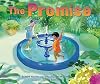
The power of true friendship lasts through time and distance.
Two boys who are forever friends of differing cultures and living in a small rural area of Morocco are forced apart by world events. Even after two generations they remain committed friend awaiting reunion. Very moving and reassuring that good remains in the world.
The illustrations by Cinzia Battistel are delightful, clear, imaginative, striking, and brilliantly colorful.
Well suited for reading WITH someone of any age including show more ESL, and is great for gifting to anyone, but especially to a school or public library!
I requested and received a free temporary e-book on Adobe Digital Editions from Lerner Publishing Group/Kar-Ben Publishing via NetGalley. Thank you! show less
Two boys who are forever friends of differing cultures and living in a small rural area of Morocco are forced apart by world events. Even after two generations they remain committed friend awaiting reunion. Very moving and reassuring that good remains in the world.
The illustrations by Cinzia Battistel are delightful, clear, imaginative, striking, and brilliantly colorful.
Well suited for reading WITH someone of any age including show more ESL, and is great for gifting to anyone, but especially to a school or public library!
I requested and received a free temporary e-book on Adobe Digital Editions from Lerner Publishing Group/Kar-Ben Publishing via NetGalley. Thank you! show less
"A garden is a prayer. It is also a promise. In a Moroccan village, a Jewish boy and a Muslim boy are best friends. Jacob and Hassan play together every day in the cool shade of Jacob’s family garden. They take care of the garden together, watching the roses and the orange trees grow tall. When news of terrible things happening to Jews in Europe reaches their little village, Jacob’s family must leave Morocco. Hassan promises to care for their beloved garden. “While the garden lives, show more our friendship will never die," Jacob says. Years pass until, one day, the prayer of the garden is answered." show less
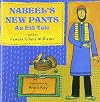
One of the difficulties in being an adult who reviews children's books is an inability to truly understand what a child will find interesting. Sometimes, the sheer style of words and pictures can take the most mundane activity (e.g., baking a cake in the morning) and make it magical. Then there are stories about pants. Not even magic pants. Just pants that are, at first too long (spoiler alert!) then MUCH too short.
This book gets positive points for its exploration of another culture, but show more without any kind of glossary or further explanation, it's not even clear that this is focusing, probably, on South Asian Islam. Given that Islam is not an homogenous religion or culture (just like Christianity), the reader is left adrift. The word "Islam" doesn't even get mentioned in this book.
The illustrations are well done and present characters that seem likeable enough. The depictions of typical (unidentified) South Asian Muslim dress and food can likely lead to discussion if the book is read aloud in a classroom and includes questions and discussions. Since we also see three women, one in a burqa, one with a head-scarf, and one with uncovered hair, kudos for showing that Muslim women don't all dress alike. Again, no explanations, just ambiguous exposition.
I much prefer, and would recommend, My First Ramadan or Golden Domes and Silver Lanterns: A Muslim Book of Colors as being more direct and more interesting books for exposing younger children to Islamic culture and art.
I can only give this book 3 out of 5 stars because, in the end, it's just a tale about a pair of pants.
Note: I received a free copy of this book from the publisher for review purposes. show less
This book gets positive points for its exploration of another culture, but show more without any kind of glossary or further explanation, it's not even clear that this is focusing, probably, on South Asian Islam. Given that Islam is not an homogenous religion or culture (just like Christianity), the reader is left adrift. The word "Islam" doesn't even get mentioned in this book.
The illustrations are well done and present characters that seem likeable enough. The depictions of typical (unidentified) South Asian Muslim dress and food can likely lead to discussion if the book is read aloud in a classroom and includes questions and discussions. Since we also see three women, one in a burqa, one with a head-scarf, and one with uncovered hair, kudos for showing that Muslim women don't all dress alike. Again, no explanations, just ambiguous exposition.
I much prefer, and would recommend, My First Ramadan or Golden Domes and Silver Lanterns: A Muslim Book of Colors as being more direct and more interesting books for exposing younger children to Islamic culture and art.
I can only give this book 3 out of 5 stars because, in the end, it's just a tale about a pair of pants.
Note: I received a free copy of this book from the publisher for review purposes. show less
Lists
Awards


You May Also Like


Associated Authors
Statistics
- Works
- 28
- Members
- 560
- Popularity
- #44,619
- Rating
- 4.1
- Reviews
- 23
- ISBNs
- 53
- Languages
- 4