
Sonia Faleiro
Author of Beautiful Thing: Inside the Secret World of Bombay's Dance Bars
Works by Sonia Faleiro
Associated Works
Tagged
Common Knowledge
- Gender
- female
- Occupations
- reporter
author - Awards and honors
- Karmaveer Puraskar for Social Justice (2011), CNN Young Journalist of the Year (2005)
- Agent
- The Wylie Agency
- Short biography
- Sonia Faleiro is an award-winning reporter and writer. She is the author of a book of fiction, The Girl (Viking, 2006) and a contributor to numerous anthologies including AIDS Sutra: Untold Stories from India (Random House, 2008).
Beautiful Thing is her first work of non-fiction and is based on five years of research in the secretive world of Bombay's dance bars. Critics in India hailed Beautiful Thing as 'a brilliant, unforgettable book by a writer who is one of the best of her generation'. The Sunday Times called it ‘a tour de force of reportage, whose depth, insight and resonance make it the equal of the best fiction’ while The Observer praised it as a ‘brilliant investigative foray into the dance bars of Bombay.
Beautiful Thing is available in the Indian Subcontinent, Australia and New Zealand, the UK and the Netherlands, and is forthcoming in the US (March 2012, Grove) as well as in translation in several Indian and European languages.
It is an Observer, Guardian, and Economist Book of the Year, Time Out Subcontinental Book of the Year, and The Sunday Times Travel Book of the Year, 2011.
Sonia was born in Goa, studied in Edinburgh, worked in Bombay, and now lives in San Francisco. - Nationality
- India
- Birthplace
- Goa, India
- Places of residence
- San Francisco, California, USA
Bombay, India
Edinburgh, Scotland, UK - Associated Place (for map)
- India
Members
Reviews
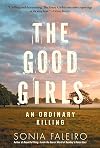
In May 2014, at a remote hamlet named Katra in the Badaun district of western Uttar Pradesh, two young girls were found hanging from a mango tree in a neighbour's orchard. This incident is infamous in recent history as the 2014 Badaun rape.
The two girls, given pseudonyms of Padma and Lalli in this book to cater to government rules of not naming victims of sexual assaults, were 16 and 14 years old. The elder girl had been taken out of school after the 8th grade and her family was looking out show more for a suitable match for her when they incident occurred. After the bodies were found hanging, the family opted for an unexpected method of seeking relief: they refused to allow the bodies to be brought down until justice was served.
With the information I've given you so far, assuming you have no detailed memory of the actual case, you would have reached your own conclusions about the girls' deaths. I did too when the book started. And I was proven wrong, again and again.
You must have read thrillers with unreliable narrators. Now imagine a true life story with unreliable narrators who seem to have their own private agenda behind everything they publicly claim. Who/what do you believe?
This book doesn't offer you an insight into sexual assaults against women or caste rivalries or political manipulations or police mishandling of cases or the medical bungling in the hinterland, though all of these are included to varying degrees. What it gives you is a detailed timeline of what happened on May 27th 2014 up to a few months later. You feel like you are a part of the ongoing investigation and the happenings around you are spinning out of control. You won't understand whom to trust, you won't know whom to point fingers at, you won't understand where to hit your head in frustration. You would assume that two girls disappearing in the middle of the night would unify everyone in the quest to locate them. But no, there are still so many things to consider first: the family name, the girls' reputation, the fear of police, the caste of the possible kidnappers... You just keep taking in fact after fact, hoping to make sense of the situation. But you won't be able to. Because whatever happened is utterly, shamefully senseless and your urban mind simply won't be able to digest the ridiculous thinking that passes in the name of honour in this country.
I couldn't read the book at a stretch though I found it difficult to keep aside. I kept needing breathers to calm myself down because some of the scenes were simply too aggravating. Even something that I take for granted in my life - a mobile phone - took on a very different meaning when viewed from the eyes of these villagers.
The author has done a lot of research and it shows. I don't know how far this book will work for a non-Indian reader. The casteist mentality is something only we will understand (to whatever extent it can be justifiably understood.) Though the author has a tendency to include too much information at times, I felt it was necessary so that even those without an understanding of how rural India functions will be able to get the situation as it unfolded. She doesn't hesitate in calling a spade a spade. I admire her for going to the heartland of the case and interviewing all the people involved, in spite of knowing their mentality about women. That was brave! There are some grammatical errors in the book but I kept those aside willingly; this is one instance where the content is more important than the language.
Don't read this to know what girls go through in this country; you already know that. Read it to understand the psyche of people in rural India, especially of men when it comes to the women in their lives. You must have heard the term "comedy of errors" many times. This book will give you an example of a "tragedy of errors."
As regards Padma and Lalli, they will forever be enshrined as "the good girls"; you will know the significance of my statement only if you read the book.
Thank you, NetGalley and Grove Atlantic, for the Advanced Review Copy of the book in exchange for an honest review.
***********************
Join me on the Facebook group, Readers Forever!, for more reviews, book-related discussions and fun.
Follow me on Instagram: RoshReviews show less
The two girls, given pseudonyms of Padma and Lalli in this book to cater to government rules of not naming victims of sexual assaults, were 16 and 14 years old. The elder girl had been taken out of school after the 8th grade and her family was looking out show more for a suitable match for her when they incident occurred. After the bodies were found hanging, the family opted for an unexpected method of seeking relief: they refused to allow the bodies to be brought down until justice was served.
With the information I've given you so far, assuming you have no detailed memory of the actual case, you would have reached your own conclusions about the girls' deaths. I did too when the book started. And I was proven wrong, again and again.
You must have read thrillers with unreliable narrators. Now imagine a true life story with unreliable narrators who seem to have their own private agenda behind everything they publicly claim. Who/what do you believe?
This book doesn't offer you an insight into sexual assaults against women or caste rivalries or political manipulations or police mishandling of cases or the medical bungling in the hinterland, though all of these are included to varying degrees. What it gives you is a detailed timeline of what happened on May 27th 2014 up to a few months later. You feel like you are a part of the ongoing investigation and the happenings around you are spinning out of control. You won't understand whom to trust, you won't know whom to point fingers at, you won't understand where to hit your head in frustration. You would assume that two girls disappearing in the middle of the night would unify everyone in the quest to locate them. But no, there are still so many things to consider first: the family name, the girls' reputation, the fear of police, the caste of the possible kidnappers... You just keep taking in fact after fact, hoping to make sense of the situation. But you won't be able to. Because whatever happened is utterly, shamefully senseless and your urban mind simply won't be able to digest the ridiculous thinking that passes in the name of honour in this country.
I couldn't read the book at a stretch though I found it difficult to keep aside. I kept needing breathers to calm myself down because some of the scenes were simply too aggravating. Even something that I take for granted in my life - a mobile phone - took on a very different meaning when viewed from the eyes of these villagers.
The author has done a lot of research and it shows. I don't know how far this book will work for a non-Indian reader. The casteist mentality is something only we will understand (to whatever extent it can be justifiably understood.) Though the author has a tendency to include too much information at times, I felt it was necessary so that even those without an understanding of how rural India functions will be able to get the situation as it unfolded. She doesn't hesitate in calling a spade a spade. I admire her for going to the heartland of the case and interviewing all the people involved, in spite of knowing their mentality about women. That was brave! There are some grammatical errors in the book but I kept those aside willingly; this is one instance where the content is more important than the language.
Don't read this to know what girls go through in this country; you already know that. Read it to understand the psyche of people in rural India, especially of men when it comes to the women in their lives. You must have heard the term "comedy of errors" many times. This book will give you an example of a "tragedy of errors."
As regards Padma and Lalli, they will forever be enshrined as "the good girls"; you will know the significance of my statement only if you read the book.
Thank you, NetGalley and Grove Atlantic, for the Advanced Review Copy of the book in exchange for an honest review.
***********************
Join me on the Facebook group, Readers Forever!, for more reviews, book-related discussions and fun.
Follow me on Instagram: RoshReviews show less

The Good Girls is a powerful, heartrending and compelling work of investigative journalism from award winning author Sonia Faleiro.
On May 27th 2014, cousins and best friends 16 year old Padma* and 14 year old Lalli* went into the fields to relieve themselves before bedtime, as was their habit, and never returned. In the early hours of the morning their body’s were found hanging in the mango tree orchard belonging to their families in the tiny Indian village of Katra Sadatgani. And there show more they would remain for days as their family demanded justice.
* The girls’ names have been changed in accordance with Indian law which requires that the identity of victims of certain crimes remain private.
Drawing on official documents, news reports, and personal interviews, Faleiro attempts to piece together the events that led up to the girl’s deaths, and the extraordinary events that followed. Faleiro does her best to establish a timeline and unravel the often contradictory information that is a hallmark of this investigation. This is a complex case that involves a large number of people, and is forced to take into account issues of family structure, tradition, poverty, caste, religion, and political corruption to explain both its origin and its development.
The Good Girls is not the easiest of reads, from a position of western privilege it’s confronting to learn about the circumstances in which Padma and Lalli lived. This not only includes their immediate environs in a village with no running water, sanitation, or electricity, but also a society that considers them as little more than chattel.
Crimes against women, and girls, are ubiquitous in India, both in public and at home. Despite attempts to lawfully curb the violence (largely as a consequence of the ‘Delhi Bus Rape’ in 2012) when caste, tradition and religion insist that women are little more than the property of men, the law is often ignored, abetted by corrupt politicians and a venal police force who lack the skills, resources or motivation to investigate complaints.
To be honest I have little faith in the official findings in this case, given the falsehoods, contradictions, and grievous errors that dogged every step of the investigation. I don’t think any conclusion can be reached with confidence, but I appreciate Faleiro’s attempt to shed light on what happened to Padma and Lalli.
The Good Girls is a well written, disturbing yet fascinating narrative that provides insight not only into an individual tragedy, but also into a culture and a country. Incidentally I strongly suggest you don’t Google the case, or if you do be careful which articles you view as many are accompanied by a photo of the two girls hanging from the mango tree. show less
On May 27th 2014, cousins and best friends 16 year old Padma* and 14 year old Lalli* went into the fields to relieve themselves before bedtime, as was their habit, and never returned. In the early hours of the morning their body’s were found hanging in the mango tree orchard belonging to their families in the tiny Indian village of Katra Sadatgani. And there show more they would remain for days as their family demanded justice.
* The girls’ names have been changed in accordance with Indian law which requires that the identity of victims of certain crimes remain private.
Drawing on official documents, news reports, and personal interviews, Faleiro attempts to piece together the events that led up to the girl’s deaths, and the extraordinary events that followed. Faleiro does her best to establish a timeline and unravel the often contradictory information that is a hallmark of this investigation. This is a complex case that involves a large number of people, and is forced to take into account issues of family structure, tradition, poverty, caste, religion, and political corruption to explain both its origin and its development.
The Good Girls is not the easiest of reads, from a position of western privilege it’s confronting to learn about the circumstances in which Padma and Lalli lived. This not only includes their immediate environs in a village with no running water, sanitation, or electricity, but also a society that considers them as little more than chattel.
Crimes against women, and girls, are ubiquitous in India, both in public and at home. Despite attempts to lawfully curb the violence (largely as a consequence of the ‘Delhi Bus Rape’ in 2012) when caste, tradition and religion insist that women are little more than the property of men, the law is often ignored, abetted by corrupt politicians and a venal police force who lack the skills, resources or motivation to investigate complaints.
To be honest I have little faith in the official findings in this case, given the falsehoods, contradictions, and grievous errors that dogged every step of the investigation. I don’t think any conclusion can be reached with confidence, but I appreciate Faleiro’s attempt to shed light on what happened to Padma and Lalli.
The Good Girls is a well written, disturbing yet fascinating narrative that provides insight not only into an individual tragedy, but also into a culture and a country. Incidentally I strongly suggest you don’t Google the case, or if you do be careful which articles you view as many are accompanied by a photo of the two girls hanging from the mango tree. show less
What is the cost of shame when confronting unyielding social inflexibilities?
The Good Girls: An Ordinary Killing by Sonia Faleiro is about the case of two teenaged girls from Uttar Pradesh, India that were found dead shortly after they went missing. The author, herself from India, provides us with shocking insights on the course of events that took place. Shocking, because to our western sensitivities, the cast-oriented beliefs and structures of the villagers, the modus operandi of the show more police and overall, their indifference, the botched postmortem examinations, in a word the circumstances are simply incomprehensible.
The 2014 Uttar Pradesh killing has completely gone by me but after browsing the net I was quickly confronted with pictures of two girls dressed in colorful sarongs hanging from a tree. Needless to say, my initial reaction was sadness, then an all-consuming anger for in the aftermath of the New Delhi bus rape, suspicion pointed to something similar horrendous. However, as I read on and the narrative progresses this becomes increasingly unlikely.
In the end, the exact circumstances of the tragic deaths remain a mystery. Be that as it may, by the author’s careful analysis of situation and event progression, the reader is able to infer a terrible truth unspoken; the tacit truth of a crime perpetrated not by a score of criminals but by a whole nation and its cultural history conspiring against two innocent girls on the cusp of adulthood.
Sonia Faleiro describes the characters objectively but with great subjective insight. Naturally, the girls’ family is in the limelight of her literary scrutiny. We get to know all the necessary information to comprehend how family members, neighbors and village elders relate to each other in rural India.
In addition, the author, known for several other non-fiction books of quality about her native land India, has perfected an amalgam of great true crime prose with clever literary techniques and devices that make the reader think, reflect and ultimately come to his/her own conclusions.
Reading this book, your beliefs and perceptions of progress and human development flip like a pancake at the International Pancake House – if you allow it that is. And you certainly should, for the ability to confront yourself with perceptions and points of views foreign to your own is the precursor not only to change but also to empathy.
This work of non-fiction goes beyond the terrible deaths of the two teenagers; it is also a portrait of village life in rural India with the complexities of the Hindu society in mind written straight from “the horse’s mouth.”
In the West we only now start to understand the cost of freedom without strength.
But what if you don’t have any freedom at all – like these two poor girls from whom an obsolete, encrusted and most of all callously unfair society extracted the ultimate price. Heartrending and infinitely sad. show less
The Good Girls: An Ordinary Killing by Sonia Faleiro is about the case of two teenaged girls from Uttar Pradesh, India that were found dead shortly after they went missing. The author, herself from India, provides us with shocking insights on the course of events that took place. Shocking, because to our western sensitivities, the cast-oriented beliefs and structures of the villagers, the modus operandi of the show more police and overall, their indifference, the botched postmortem examinations, in a word the circumstances are simply incomprehensible.
The 2014 Uttar Pradesh killing has completely gone by me but after browsing the net I was quickly confronted with pictures of two girls dressed in colorful sarongs hanging from a tree. Needless to say, my initial reaction was sadness, then an all-consuming anger for in the aftermath of the New Delhi bus rape, suspicion pointed to something similar horrendous. However, as I read on and the narrative progresses this becomes increasingly unlikely.
In the end, the exact circumstances of the tragic deaths remain a mystery. Be that as it may, by the author’s careful analysis of situation and event progression, the reader is able to infer a terrible truth unspoken; the tacit truth of a crime perpetrated not by a score of criminals but by a whole nation and its cultural history conspiring against two innocent girls on the cusp of adulthood.
Sonia Faleiro describes the characters objectively but with great subjective insight. Naturally, the girls’ family is in the limelight of her literary scrutiny. We get to know all the necessary information to comprehend how family members, neighbors and village elders relate to each other in rural India.
In addition, the author, known for several other non-fiction books of quality about her native land India, has perfected an amalgam of great true crime prose with clever literary techniques and devices that make the reader think, reflect and ultimately come to his/her own conclusions.
Reading this book, your beliefs and perceptions of progress and human development flip like a pancake at the International Pancake House – if you allow it that is. And you certainly should, for the ability to confront yourself with perceptions and points of views foreign to your own is the precursor not only to change but also to empathy.
This work of non-fiction goes beyond the terrible deaths of the two teenagers; it is also a portrait of village life in rural India with the complexities of the Hindu society in mind written straight from “the horse’s mouth.”
In the West we only now start to understand the cost of freedom without strength.
But what if you don’t have any freedom at all – like these two poor girls from whom an obsolete, encrusted and most of all callously unfair society extracted the ultimate price. Heartrending and infinitely sad. show less
Padma and Lalli, inseparable cousins and friends, were only 16 and 14 when they were killed. As their small village in Uttar Pradesh was rather underdeveloped in hygienic and housing terms, the girls needed to go to the nearby fields to relieve themselves. One night in 2014, they went missing and were found hanging in the orchard a couple of hours later. Rumours spread fast about what might have happened and who could be responsible for their deaths, however, even though national media show more became interested in the case, investigations took their time and the police only reluctantly tried to solve the case. Girls from lower classes have never been high priority and their death seemed to cause more nuisance than alarm.
“This negligence contributed to an epidemic of missing and exploited children, many of them trafficked within and outside the country.”
Sonia Faleiro’s book is a true crime account of how the girls’ lives might have looked like in their last hours, the immediate reaction of the families and villagers and also a lot of facts which help to understand the circumstances in which this crime could take place. The subheading “An Ordinary Killing” already gives away a lot: the murder of girls and women had become to ordinary in India that people didn’t bat an eyelid anymore. However, the events of 2012, when a student was violated in a bus, made worldwide headlines and stirred protests which finally made people aware of the hostile and misogynist climate they were living in.
“Although Delhi was notoriously unsafe, stories about sexual assault didn’t often make the news.”
There are a lot of factors which enabled the murder of Padma and Lalli, their status as girls, their belonging to an inferior class, the remoteness and backwardness of their village – many standards and rights we in the western world take for granted simply do not apply there. But it is not only the crime itself which is abhorrent, also the situation of the police – understaffed, ill-equipped, prone to bribery – and even more of the medical examiner – without any training, just doing the job because nobody else would do it with the logical result of a post-mortem which is simply absurd – are just incredible.
What I found most interesting was actually not the girls’ story and the dynamics in the village afterwards but the background information. Sonia Faleiro convincingly integrates them into the narrative which thus becomes informative while being appealing to read. I’d rather call it a journalistic piece of work than fiction and it is surely a noteworthy contribution to the global discussion on women’s rights. show less
“This negligence contributed to an epidemic of missing and exploited children, many of them trafficked within and outside the country.”
Sonia Faleiro’s book is a true crime account of how the girls’ lives might have looked like in their last hours, the immediate reaction of the families and villagers and also a lot of facts which help to understand the circumstances in which this crime could take place. The subheading “An Ordinary Killing” already gives away a lot: the murder of girls and women had become to ordinary in India that people didn’t bat an eyelid anymore. However, the events of 2012, when a student was violated in a bus, made worldwide headlines and stirred protests which finally made people aware of the hostile and misogynist climate they were living in.
“Although Delhi was notoriously unsafe, stories about sexual assault didn’t often make the news.”
There are a lot of factors which enabled the murder of Padma and Lalli, their status as girls, their belonging to an inferior class, the remoteness and backwardness of their village – many standards and rights we in the western world take for granted simply do not apply there. But it is not only the crime itself which is abhorrent, also the situation of the police – understaffed, ill-equipped, prone to bribery – and even more of the medical examiner – without any training, just doing the job because nobody else would do it with the logical result of a post-mortem which is simply absurd – are just incredible.
What I found most interesting was actually not the girls’ story and the dynamics in the village afterwards but the background information. Sonia Faleiro convincingly integrates them into the narrative which thus becomes informative while being appealing to read. I’d rather call it a journalistic piece of work than fiction and it is surely a noteworthy contribution to the global discussion on women’s rights. show less
Lists
True Crime (1)
Awards


You May Also Like


Associated Authors
Statistics
- Works
- 6
- Also by
- 5
- Members
- 321
- Popularity
- #73,714
- Rating
- 3.7
- Reviews
- 22
- ISBNs
- 35
- Languages
- 5