
Ruth Thomson
Author of The Usborne Complete First Book of Nature
About the Author
Ruth Thomson is an award-winning educational author and editor, who specializes in writing books on art and history. She has an MA in Museum and Gallery Learning, and has written titles and art packs for the National Gallery, the Tate Galleries, and the Imperial War Museum. Her history books show more include a series about Victorian childhood, and books about the Plains Indians and Aztecs. Thomson's title, Terezin: Voices from the Holocaust, has garnered many accolades, including being named to the 2012 ALA Notable Children's Books list and winning the 2012 ALCS Educational Writers' Award. Her interest in Terezin was sparked by research for an educational pack on Holocaust art for the London Gallery of Jewish Art. (Bowker Author Biography) show less
Series
Works by Ruth Thomson
Dinosaur's Day (Dorling Kindersley Readers, Level 1: Beginning to Read) (2000) 696 copies, 2 reviews
Four Freckled Frogs: A Book about Consonants (Adventures in Literacy: Start Reading) (2000) 14 copies, 1 review
Why Can't I... Take My Plant for a Walk?: And Other Questions about Plants (Why Cant I...?) (2001) 9 copies
Science and Inventions Pocket Activity Fun and Games: Games and Puzzles, Fold-out Scenes, Patterned Paper, Stickers! (2014) 4 copies
My Holiday Library Slipcase: At the Zoo, On the Farm, At the Seaside, In the Park, Play Time Poems (1982) 3 copies
Chatting Cheetahs And Jumping Jellyfish (Adventures in Literacy: Speaking and Listening) (2004) 2 copies
On The Farm (My Holiday Library) 2 copies
Whose Shoes? 1 copy
Paper and printing 1 copy
I Know... Do You? 1 copy
The jungle 1 copy
Reka Mereka Serangga 1 copy
At Home 1 copy
Hanibal 1 copy
Vi ser på insekter 1 copy
Tagged
Common Knowledge
- Legal name
- Thomson, Ruth Frances
- Other names
- Lawton, Frances
- Birthdate
- 1949-04-30
- Gender
- female
Members
Reviews
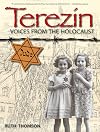
"Terezin: Voices From The Holocaust" is an incredible collage of primary source documents that tells the story of a Czechoslovakian city that was transformed into a Jewish ghetto and transit camp. While I would not probably not use it as an anchor text (given its format), the book could certainly be used as a value-adding support text for any unit on WWII, the Holocaust, identity, marginalization, poverty, or power. Virtually the entire narrative is made up of firsthand accounts, photos, show more drawings, journal entries, poetry, and documents that depict the atrocious conditions of the camp, and the events that took place within.
Over the course of the semester, several of my classmates have discussed teaching units on "Night," or other books related to the Holocaust. A book like "Terezin" could really help to create a multisensory experience for the students. When you flip through the pages, read the journals, and look at the images, it is impossible not have some type of reaction. There is great power in being exposed to primary sources, or “firsthand information” -- it makes events, people and voices feel so much more authentic and real. In fact, while reading "Terezin" I needed to take several breaks due to authenticity of the accounts -- a couple of the documents shook me to the core.
A good work of nonfiction is a condensed blast of information that can stimulate learning in multiple directions and open the door for interdisciplinary connections. While reading, I had this amazing vision of a class reading a book like "Terezin," and then simultaneously jumping into an ELA unit on "Night" and a history unit on WWII. Informational texts can help to create these connection points between subjects that allow teachers to weave their curriculums together to create a richer experience for the students. While logistically this may require more work and coordination, it seems like the end result of synchronizing curriculums would be well worth it for everyone involved. show less
Over the course of the semester, several of my classmates have discussed teaching units on "Night," or other books related to the Holocaust. A book like "Terezin" could really help to create a multisensory experience for the students. When you flip through the pages, read the journals, and look at the images, it is impossible not have some type of reaction. There is great power in being exposed to primary sources, or “firsthand information” -- it makes events, people and voices feel so much more authentic and real. In fact, while reading "Terezin" I needed to take several breaks due to authenticity of the accounts -- a couple of the documents shook me to the core.
A good work of nonfiction is a condensed blast of information that can stimulate learning in multiple directions and open the door for interdisciplinary connections. While reading, I had this amazing vision of a class reading a book like "Terezin," and then simultaneously jumping into an ELA unit on "Night" and a history unit on WWII. Informational texts can help to create these connection points between subjects that allow teachers to weave their curriculums together to create a richer experience for the students. While logistically this may require more work and coordination, it seems like the end result of synchronizing curriculums would be well worth it for everyone involved. show less
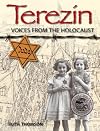
A fitting companion book to "I Never Saw Another Butterfly," this 64-page beautifully illustrated nonfiction work gives a brief history of the Holocaust as seen through one of the less horrific of the Nazi concentration camps. Relying heavily on the work of the professional artists who were interned in Theresienstadt and drew the truth as well as the propaganda required of them, "Terezin" nonetheless avoids the gruesome images and details of life and death in the ghetto.
One emphasis is on show more the contribution of art and culture to the well-being of those imprisoned at Terezin. A brief chapter on Friedl Dicker-Brandeis tells how the artist worked with children. Some of the art thus produced also graces these pages. Before Friedl was sent to Auschwitz, "she hid two suitcases containing more than 4,000 children's works. Today, these are on show at the Jewish Museum in Prague," for which we all owe the artist a great debt.
One question this well-written and presented history raises is what age group should be its audience. Adults who are not of the postwar generation should read it, as well as teens and perhaps pre-teens. But though it is in a picturebook format, even the gently presented reality is too horrifying for the young. Not remembering when I *didn't* know about what the Nazis did to the Jews of Europe, I would hesitate to share this with a child under 12. show less
One emphasis is on show more the contribution of art and culture to the well-being of those imprisoned at Terezin. A brief chapter on Friedl Dicker-Brandeis tells how the artist worked with children. Some of the art thus produced also graces these pages. Before Friedl was sent to Auschwitz, "she hid two suitcases containing more than 4,000 children's works. Today, these are on show at the Jewish Museum in Prague," for which we all owe the artist a great debt.
One question this well-written and presented history raises is what age group should be its audience. Adults who are not of the postwar generation should read it, as well as teens and perhaps pre-teens. But though it is in a picturebook format, even the gently presented reality is too horrifying for the young. Not remembering when I *didn't* know about what the Nazis did to the Jews of Europe, I would hesitate to share this with a child under 12. show less
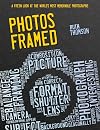
The stories behind twenty-seven iconic photographs with brief discussions of their artistic and/or historic relevance. Thomson groups the photos into the four thematic sections of portraits, nature, documentary, and art. I particularly like the questions Thomson poses to readers challenging them to consider such concepts as aesthetics, composition, perspective, and intentions of the photographer.
This story documents man’s inhumanity to man. I dare anyone to read it and remain dry-eyed. This first account telling documents the concentration camp of Terezin, Czechoslovakia from 1941-1944, through excerpts of diaries, artwork, and excerpts of memoirs of survivors and victims’ alike. It gives the reader a limited perspective of the condition of the camp and the inhuman treatment of the Jewish prisoners who were sent there. Some of the stories were horrific and some were surprising. show more One of the stories that made a big impression was the lengths to which the Germans would go to hide the atrocities behind fake facades for the Red Cross visit. Throughout the book there are color blocked sections which contain pictures of the camp back then and today, maps, color or black and white illustrations and even primary documents. This book contains a Table of Contents, Timeline, Glossary and a Source list which documents the writer’s research. I’m not sure for what age I would recommend this book, perhaps 6th grade on up. It would easily fit in a social studies or language arts class. Teaching ideas include: the Holocaust, World War II, concentration camps, atrocities of war, or use as examples of primary documents. show less
Lists
Awards


You May Also Like


Associated Authors
Statistics
- Works
- 277
- Members
- 4,186
- Popularity
- #6,013
- Rating
- 4.0
- Reviews
- 40
- ISBNs
- 716
- Languages
- 15