
Founding Fathers
Author of The Constitution of the United States
About the Author
Image credit: Declaration of Independence, a painting by John Trumbull depicting the Committee of Five presenting their draft to the Congress on June 28, 1776[1] By John Trumbull - US Capitol, Public Domain, https://commons.wikimedia.org/w/index.php?curid=180069
Works by Founding Fathers
The Constitution of the United States of America: The Declaration of Independence, The Bill of Rights (2020) 233 copies
The U.S. Constitution and Other Key American Writings (Word Cloud Classics) (1620) 208 copies, 2 reviews
The Declaration of Independence, the United States Constitution, the Bill of Rights & Amendments, & Other Historical Documents (2017) 40 copies
Declaration of Independence, Constitution of the United States of America, Bill of Rights and Constitutional Amendments (2014) 19 copies
The U.S. Constitution with The Declaration of Independence and The Articles of Confederation (2010) 11 copies, 1 review
The Constitution of the United States with index and the Declaration of Independence (2024) 8 copies
The Constitution of the United States, Bill of Rights, Declaration of Independence, and Articles of Confederation (1998) 7 copies
Associated Works
Tagged
Common Knowledge
- Canonical name
- Founding Fathers
- Other names
- Founding Fathers of the United States
- Birthdate
- n/a
- Date of death
- n/a
- Gender
- male
- Nationality
- USA
- Places of residence
- USA
- Associated Place (for map)
- USA
Members
Discussions
US Constitution In Print in Fine Press Forum (September 2024)
Reviews
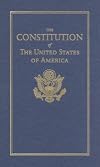
I've taken Con Law classes and read pieces and parts of The Constitution, but recently decided it's high time I read the whole thing! And I feel pretty good having done so! I made some notes on a few things I want to research, but on the whole I was rather pleased to confirm that I had a solid grasp of my own Constitutional rights even before this reading. I did, however, make some surprising (to me) observations...
The scant number (27) of amendments is rather impressive when one considers show more that it took THREE of them for Congress to wholly grant citizenship rights to non-whites born here (and even then, additional and ongoing legislation is still necessary to accomplish that end. ) Alas, I don't see where all the "excluding Indians" language was ever actually removed and I wonder about that?
Toss in the two Amendments wasted on prohibition and its repeal, and several addressing logistics (like representation for D.C. and appointing a new VP if the old VP assumes the Presidency in an emergency,) and we're pretty much left with Income Tax (1913) and Votes for Women (1920) after the big ten of The Bill of Rights.
Which brings me to the observation that most troubles my feeble mind...
Unlike the scores of legal documents I read in my past professional life, the Constitution fails to define its own terms! It never actually defines "people," or "person" much less "citizen." I find this to be exceedingly baffling!
The document starts out "We the People," and ends with the signatures of individuals selected to represent the population at-large immediately following the Revolution. I suppose this usage of "The People" harks back to the Articles of Confederation, and perhaps I'll find some answers there regarding that flowery opening proclamation and what gave those yahoos the idea that they could speak for everybody.
But what MOST astonishes me is the frequent use of "persons," and not "citizens," throughout the Constitution. I am so embarrassed to admit I never noticed this distinction (or lack thereof) before, and it significantly affects my previous personal positions regarding things like the treatment of suspected terrorists and similar timely topics. To my mind, the Constitution has always enumerated the rights of "Citizens" of the United States. However, it clearly extends those rights and protections beyond that. And now the question is, how far??
Looks like I've got more Important Documents to read...
** I read an edition with ratification notes and the full text of amendments, which was published for the Constitution's Bicentennial in 1987. ** I made a point of confirming that we've passed one amendment since then....only took Congress nearly TWO HUNDRED AND THREE FREAKIN' YEARS to pass a prohibition against raising their own salaries. Course, unless we establish term limits it doesn't really make any difference that Congressional raises don't take place until after subsequent elections. I note that Term Limits for Congressional reps has never even been presented for ratification....doubt I'll see that in my lifetime.
P.S. The documents also fails to define "militia." Regardless, I am still absolutely, positively, incontrovertibly in favor of much stronger gun control! show less
The scant number (27) of amendments is rather impressive when one considers show more that it took THREE of them for Congress to wholly grant citizenship rights to non-whites born here (and even then, additional and ongoing legislation is still necessary to accomplish that end. ) Alas, I don't see where all the "excluding Indians" language was ever actually removed and I wonder about that?
Toss in the two Amendments wasted on prohibition and its repeal, and several addressing logistics (like representation for D.C. and appointing a new VP if the old VP assumes the Presidency in an emergency,) and we're pretty much left with Income Tax (1913) and Votes for Women (1920) after the big ten of The Bill of Rights.
Which brings me to the observation that most troubles my feeble mind...
Unlike the scores of legal documents I read in my past professional life, the Constitution fails to define its own terms! It never actually defines "people," or "person" much less "citizen." I find this to be exceedingly baffling!
The document starts out "We the People," and ends with the signatures of individuals selected to represent the population at-large immediately following the Revolution. I suppose this usage of "The People" harks back to the Articles of Confederation, and perhaps I'll find some answers there regarding that flowery opening proclamation and what gave those yahoos the idea that they could speak for everybody.
But what MOST astonishes me is the frequent use of "persons," and not "citizens," throughout the Constitution. I am so embarrassed to admit I never noticed this distinction (or lack thereof) before, and it significantly affects my previous personal positions regarding things like the treatment of suspected terrorists and similar timely topics. To my mind, the Constitution has always enumerated the rights of "Citizens" of the United States. However, it clearly extends those rights and protections beyond that. And now the question is, how far??
Looks like I've got more Important Documents to read...
** I read an edition with ratification notes and the full text of amendments, which was published for the Constitution's Bicentennial in 1987. ** I made a point of confirming that we've passed one amendment since then....only took Congress nearly TWO HUNDRED AND THREE FREAKIN' YEARS to pass a prohibition against raising their own salaries. Course, unless we establish term limits it doesn't really make any difference that Congressional raises don't take place until after subsequent elections. I note that Term Limits for Congressional reps has never even been presented for ratification....doubt I'll see that in my lifetime.
P.S. The documents also fails to define "militia." Regardless, I am still absolutely, positively, incontrovertibly in favor of much stronger gun control! show less
Our Constitution is a great document, well worth examining. Since much has been said in our time concerning what priority Christianity should have in our governing process, I thought it would be worth finding out what the Constitution says on the subject. Here’s how I proceeded.
First, I found the text of the Constitution online and searched for “God” and then added some other relevant words. Here’s the list:
• God
• Creator
• Savior
• Christianity (or Christian or show more Christ)
• Jesus
• Holy
• Bible
• Church
• Sin
Next, the text of the Bill of Rights online, again searching for the following:
• God
• Creator
• Savior
• Christianity (or Christian or Christ)
• Jesus
• Holy
• Bible
• Church
• Sin
If you’re an American you may be surprised by the results. I was.
The words “God” and “Creator” and “Savior” and “Christianity” and “Christian” and “Christ” and “Jesus” and “Holy” and “Bible” and “Church” and “Sin” do not appear anywhere in the Constitution.
Nowhere. Not one of them. Not even once.
The words “God” and “Creator” and “Savior” and “Christianity” and “Christian” and “Christ” and “Jesus” and “Holy” and “Bible” and “Church” and “Sin” do not appear anywhere in the Bill of Rights.
Nowhere. Not one of them. Not even once.
Even “religion” isn’t in the Constitution. The word “religious” occurs exactly once, in Article VI: “no religious Test shall ever be required as a Qualification to any Office or public Trust under the United States.” Mind you, it says “ever.”
The Bill of Rights does of course have a provision in the First Amendment concerning religion. But note how it uses “religion” as a general term, not as one to single out a specific faith: “Congress shall make no law respecting an establishment of religion, or prohibiting the free exercise thereof.”
It’s inescapable. In these documents no one religion is identified as having a claim to a privileged status compared to any other religion, of any kind. That is the law of the land, as written by the Founding Fathers.
Huh. show less
First, I found the text of the Constitution online and searched for “God” and then added some other relevant words. Here’s the list:
• God
• Creator
• Savior
• Christianity (or Christian or show more Christ)
• Jesus
• Holy
• Bible
• Church
• Sin
Next, the text of the Bill of Rights online, again searching for the following:
• God
• Creator
• Savior
• Christianity (or Christian or Christ)
• Jesus
• Holy
• Bible
• Church
• Sin
If you’re an American you may be surprised by the results. I was.
The words “God” and “Creator” and “Savior” and “Christianity” and “Christian” and “Christ” and “Jesus” and “Holy” and “Bible” and “Church” and “Sin” do not appear anywhere in the Constitution.
Nowhere. Not one of them. Not even once.
The words “God” and “Creator” and “Savior” and “Christianity” and “Christian” and “Christ” and “Jesus” and “Holy” and “Bible” and “Church” and “Sin” do not appear anywhere in the Bill of Rights.
Nowhere. Not one of them. Not even once.
Even “religion” isn’t in the Constitution. The word “religious” occurs exactly once, in Article VI: “no religious Test shall ever be required as a Qualification to any Office or public Trust under the United States.” Mind you, it says “ever.”
The Bill of Rights does of course have a provision in the First Amendment concerning religion. But note how it uses “religion” as a general term, not as one to single out a specific faith: “Congress shall make no law respecting an establishment of religion, or prohibiting the free exercise thereof.”
It’s inescapable. In these documents no one religion is identified as having a claim to a privileged status compared to any other religion, of any kind. That is the law of the land, as written by the Founding Fathers.
Huh. show less

This is a review of the Penguin Little Black Classics edition!
How can you rate such a relevant, influential and world-famous text? I certainly don't feel up to the task, but I wanted to rate my reading experience.
The Penguin Little Black Classics edition includes the Constitution, the Preamble to the Bill of Rights, the amendments, and the Declaration of Independence. I think it was very interesting to read the whole text as opposed to just extracts and quotes, especially now at this point show more in history. I had no real idea what exactly the amendments were, or that the first ten amendments are the Bill of Rights (I'm sure I learned this in school years ago, but forgot about it). It was also interesting to see which amendment was added when, as it gives an overview of how politics developed (and I did a little jump when 1920 came up and women gained the right to vote!).
I think it would be useful to have an introduction or an afterword, but the Little Black Classics usually don't have that kind of addition, so it's not an aspect to criticize.
Of course this was a quick read as it is just a slim volume, but it was very worthwhile. show less
How can you rate such a relevant, influential and world-famous text? I certainly don't feel up to the task, but I wanted to rate my reading experience.
The Penguin Little Black Classics edition includes the Constitution, the Preamble to the Bill of Rights, the amendments, and the Declaration of Independence. I think it was very interesting to read the whole text as opposed to just extracts and quotes, especially now at this point show more in history. I had no real idea what exactly the amendments were, or that the first ten amendments are the Bill of Rights (I'm sure I learned this in school years ago, but forgot about it). It was also interesting to see which amendment was added when, as it gives an overview of how politics developed (and I did a little jump when 1920 came up and women gained the right to vote!).
I think it would be useful to have an introduction or an afterword, but the Little Black Classics usually don't have that kind of addition, so it's not an aspect to criticize.
Of course this was a quick read as it is just a slim volume, but it was very worthwhile. show less
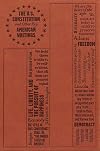
This is a hard book to write a review for because it’s just a collection of writings.
The overall selection of writings was pretty good. Although I did find that the rules of baseball was an odd pick to include. I love baseball and all (it’s my favorite sport) but I don’t think it’s that important. Baseball isn’t that groundbreaking. I would have also loved to have seen more Supreme Court rulings since there was only one (Brown v. Board of Education). However, that’s just a show more personal preference because I love reading the Supreme Court Justices’ opinions.
One of my favorite writings was the Susan B. Anthony one. There were few female writings in here so it was nice to see Susan B. Anthony included.
My least favorite by far was the Social Security Act. That was a total snooze fest. It was over 40 pages and so dry. I also felt that it could have been replaced by a few, more interesting writings.
All in all, this is a really solid collection of fundamental American writings. I definitely recommend it if you are looking for a comprehensive collection of American documents and speeches. show less
The overall selection of writings was pretty good. Although I did find that the rules of baseball was an odd pick to include. I love baseball and all (it’s my favorite sport) but I don’t think it’s that important. Baseball isn’t that groundbreaking. I would have also loved to have seen more Supreme Court rulings since there was only one (Brown v. Board of Education). However, that’s just a show more personal preference because I love reading the Supreme Court Justices’ opinions.
One of my favorite writings was the Susan B. Anthony one. There were few female writings in here so it was nice to see Susan B. Anthony included.
My least favorite by far was the Social Security Act. That was a total snooze fest. It was over 40 pages and so dry. I also felt that it could have been replaced by a few, more interesting writings.
All in all, this is a really solid collection of fundamental American writings. I definitely recommend it if you are looking for a comprehensive collection of American documents and speeches. show less
Lists
You May Also Like


Associated Authors
Statistics
- Works
- 36
- Also by
- 2
- Members
- 2,204
- Popularity
- #11,638
- Rating
- 4.4
- Reviews
- 21
- ISBNs
- 80
- Languages
- 3
- Favorited
- 1