
M. Eugene Boring
Author of Revelation (Interpretation: A Bible Commentary for Teaching & Preaching)
About the Author
M. Eugene Boring (PhD, Vanderbilt) served as pastor for congregations in Kentucky, Indiana, and Tennessee and as professor at Phillips University (1967-1986), Texas Christian University (1987-1992), and Brite Divinity School (1992-2003). He is author or translator of numerous books including, most show more recently, Hearing Paul's Voice (2020), Hearing John's Voice (2019), and I and II Thessalonians: A Commentary (2015). show less
Works by M. Eugene Boring
Revelation (Interpretation: A Bible Commentary for Teaching & Preaching) (1989) 469 copies, 2 reviews
Disciples and the Bible: A History of Disciples Biblical Interpretation in North America (1997) 62 copies
The Continuing Voice of Jesus: Christian Prophecy and the Gospel Tradition (1991) 27 copies, 1 review
Associated Works
Tagged
Common Knowledge
- Birthdate
- 1935-08-13
- Gender
- male
- Occupations
- clergy
professor - Organizations
- Society of Biblical Literature
Society of New Testament Studies - Nationality
- USA
- Birthplace
- Maryville, Tennessee, USA
- Associated Place (for map)
- Tennessee, USA
Members
Reviews
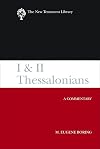
I received this from Edelweiss in exchange for an honest review.
The very first paragraph brings into question the entire premise of this commentary:
"All meaning is contextual. “The” context of every biblical text is multidimensional. Four overlapping and interwoven aspects of the context of 1 Thessalonians call for recognition and exploration: (1) the reader’s context; (2) the canonical context; (3) the context in the history of interpretation; (4) the original historical context. In show more the lived experience of interpreting the Bible, these contexts overlap and interpenetrate, but for purposes of clarification and discussion, they may be distinguished—though they cannot be separated."
The reader's context must never be part of biblical interpretation. Doing so makes scripture relative rather than absolute. 2 Peter 1:20 tells us this: "Knowing this first, that no prophecy of the scripture is of any private interpretation."
Since the author takes this view of reader's context and private interpretation, I cannot recommend this commentary at all. show less
The very first paragraph brings into question the entire premise of this commentary:
"All meaning is contextual. “The” context of every biblical text is multidimensional. Four overlapping and interwoven aspects of the context of 1 Thessalonians call for recognition and exploration: (1) the reader’s context; (2) the canonical context; (3) the context in the history of interpretation; (4) the original historical context. In show more the lived experience of interpreting the Bible, these contexts overlap and interpenetrate, but for purposes of clarification and discussion, they may be distinguished—though they cannot be separated."
The reader's context must never be part of biblical interpretation. Doing so makes scripture relative rather than absolute. 2 Peter 1:20 tells us this: "Knowing this first, that no prophecy of the scripture is of any private interpretation."
Since the author takes this view of reader's context and private interpretation, I cannot recommend this commentary at all. show less
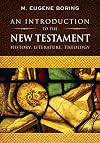
A thorough and extensive introduction to all aspects of the New Testament: historical context, text, literary conventions, etc.
The author has clearly devoted his life to New Testament studies and brings much research to bear upon his analysis. Each section is replete with a full bibliography. The author is conversant with all the major issues involved in New Testament studies; his textual comments do betray a strong emphasis on the Gospel of John and Revelation.
While there are many show more interesting themes to be explored based on the book, on the whole, the author's adherence to modern assumptions regarding textual authorship and literary criticism make it impossible to recommend the book as a great resource for NT studies unless one is interested in seeing the arguments made by modern scholars against the integrity of the New Testament in terms of its own claims. It should be noted that the author does attempt to preserve an "ecclesial" concept of the NT as the Word of God, as expressed in the epilogue, but only after he has shown contempt for any who wish to honor the integrity of the NT and thoroughly humanizing the NT to the point of being a rag-tag collection of texts reflecting intra-communal quarrels among the "Pauline", "Petrine", and "Johannine" communities. If the "historical Jesus" and the "Jesus of faith and the church" are so different, one might as well dispense with the entire facade and find some more productive matter regarding which to study.
Then again, that has been the challenge for liberal Protestantism for years, and why liberal Protestantism is dying.
**--book received as part of early review program. show less
The author has clearly devoted his life to New Testament studies and brings much research to bear upon his analysis. Each section is replete with a full bibliography. The author is conversant with all the major issues involved in New Testament studies; his textual comments do betray a strong emphasis on the Gospel of John and Revelation.
While there are many show more interesting themes to be explored based on the book, on the whole, the author's adherence to modern assumptions regarding textual authorship and literary criticism make it impossible to recommend the book as a great resource for NT studies unless one is interested in seeing the arguments made by modern scholars against the integrity of the New Testament in terms of its own claims. It should be noted that the author does attempt to preserve an "ecclesial" concept of the NT as the Word of God, as expressed in the epilogue, but only after he has shown contempt for any who wish to honor the integrity of the NT and thoroughly humanizing the NT to the point of being a rag-tag collection of texts reflecting intra-communal quarrels among the "Pauline", "Petrine", and "Johannine" communities. If the "historical Jesus" and the "Jesus of faith and the church" are so different, one might as well dispense with the entire facade and find some more productive matter regarding which to study.
Then again, that has been the challenge for liberal Protestantism for years, and why liberal Protestantism is dying.
**--book received as part of early review program. show less
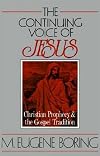
The author traces in masterful fashion the role the early Christian prophets played in the transmission of sayings of Jesus and in the way these sayings were taken up into the canonical Gospels. He examines Jesus' sayings to uncover the imprint that any might bear of having been handed on by early Christian prophets.
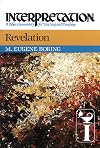
A robust commentary on Revelation.
As fits the genre a large portion of the commentary introduces Revelation and seeks to explain not only how it came about but also some of the history of interpretation and the unique challenges of Revelation.
The author considers the text in a unitary, linear progression, with frequent foreshadowing of final judgment. He seeks to understand the text fully in its context and thus sees Rome as the primary "opponent" in view in terms of the beast and Babylon, show more etc. He would consider John as premillennial but the proper view of the millennium as amillennial (and does well to show its comparative insignificance in the text as compared to the attention devoted to it in Christendom).
Overall, though, worth exploring when engaging in a full study of Revelation. show less
As fits the genre a large portion of the commentary introduces Revelation and seeks to explain not only how it came about but also some of the history of interpretation and the unique challenges of Revelation.
The author considers the text in a unitary, linear progression, with frequent foreshadowing of final judgment. He seeks to understand the text fully in its context and thus sees Rome as the primary "opponent" in view in terms of the beast and Babylon, show more etc. He would consider John as premillennial but the proper view of the millennium as amillennial (and does well to show its comparative insignificance in the text as compared to the attention devoted to it in Christendom).
Overall, though, worth exploring when engaging in a full study of Revelation. show less
You May Also Like


Associated Authors
Statistics
- Works
- 26
- Also by
- 3
- Members
- 1,011
- Popularity
- #25,499
- Rating
- 3.4
- Reviews
- 6
- ISBNs
- 30
- Languages
- 1
- Favorited
- 1