
Madeline Ffitch
Author of Stay and Fight: A Novel
Works by Madeline Ffitch
Associated Works
Property Will Cost Us the Earth: Direct Action and the Future of the Global Climate Movement — Contributor — 6 copies
Tagged
Common Knowledge
- Canonical name
- Ffitch, Madeline
- Birthdate
- 1981
- Gender
- female
- Occupations
- Co-Founder, Missoula Oblongata theatre company
- Organizations
- Appalachia Resist!
- Places of residence
- Seattle, Washington, USA
Athens, Ohio, USA - Associated Place (for map)
- USA
Members
Reviews
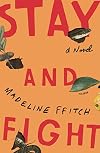
I know these characters. Almost literally. This book is set in the part of SE Ohio that I consider home and I can almost assign real names to the people featured here. Ffitch captures the magic and weirdness (not a pejorative at all) of the region with an underlying sense of doom and hopelessness that is left to resemble home and hope in some form in the future.
I would recommend this book for anyone interested in strong characters, back-to-the-land scenarios, geographic concreteness, black show more snakes, and elves. show less
I would recommend this book for anyone interested in strong characters, back-to-the-land scenarios, geographic concreteness, black show more snakes, and elves. show less
I considered not finishing this book for quite a while, which oddly made it easier to keep reading. At that point I thought the writing was good, so good that she managed to really bring to life a group of characters I found utterly and overwhelmingly irritating. And that's not even anything bad about the characters; I was also convinced she could write me into a story and I would be railing at the me-character to get over herself and be reasonable.
So yeah, as rough and provocative (as in show more provoking a reaction) as the story is, I became invested in these characters and hoped for a positive ending to a desperate situation. Some good points are made along the way, some smart comments on the state of the world, and I think it really earns its title.
3.5 show less
So yeah, as rough and provocative (as in show more provoking a reaction) as the story is, I became invested in these characters and hoped for a positive ending to a desperate situation. Some good points are made along the way, some smart comments on the state of the world, and I think it really earns its title.
3.5 show less
"Stay and Fight" is a very curious and funny book that goes deep into a group of people living almost off-the-grid in Appalachia, just trying to live as free as possible. But they have a constant struggle against certain aspects of our society and their always precarious finances. This is a completely fascinating collection of characters who have formed a community around a family of two moms, Lily and Karen, and their young boy, Perley. The boy was born in the rough house that this small show more group built mostly all on their own. A generous woman, Helen, offered part of her nearby land for the house they built without many of the skills and the knowledge needed to produce a house that is straight, square, and capable of keeping out winter’s cold and the many black snakes seeking warmth.
Rudy is a true “character” and friend who lived nearby in the beginning, and then almost on their crooked doorstep when he pitches a tent near the young fruit trees he planted down one side of Helen’s plot. Old Rudy is a rough and freethinking man who simply doesn’t understand the clients of his arbor business who refuse the free fruit trees he offers with every job he does. Eventually he takes it upon himself to play an aggressive version of Johnny Appleseed, one who comes secretly in the night to plant fruit trees on his ungrateful clients’ land. Rudy is known far and wide as being resolutely odd, and he’s taken this small, independent group somewhat under his wing. He sometimes hires one of them to help with his tree work, and he offers them help and advice—if they want it or not.
The black snakes gather in ever-increasing numbers inside the porous house, and play a major role in the plot. The normally friendly snake that shared Perley’s bed, bites him badly in the night when the boy rolls on top of him. When the school he’s just started sees his injuries and asked him about his home life, the answers got Children’s Services involved very quickly, and he’s removed to a foster home. The couple is given a 90-day plan of required improvements to bring the house up to snuff. The snakes are definitely on the list, along with the sad state of the house and a number of other items, but it’s their concern about the in-house five-gallon shit bucket is the biggest problem. The thousands needed for a septic system are far beyond their current income.
I won’t continue with the plot, just know that the novel’s action soon splits as Karen leaves to raise the funds for the septic system. The book also brings one of the oddest lawyers in literary history into their fight to get Perley back, which was entirely understandable when you know that Rudy had recommended his close friend for the job.
I related strongly to these people’s struggles when they constantly did things counter to our society’s norms. There was also a definite kinship to their constant search for the funds to live a life that they valued. There are so many things that I loved about Ffitch’s first book, just know that it’s well worth the reading for its multifaceted and fascinating characters, and some extraordinary writing that will stay in your head for some time. show less
Rudy is a true “character” and friend who lived nearby in the beginning, and then almost on their crooked doorstep when he pitches a tent near the young fruit trees he planted down one side of Helen’s plot. Old Rudy is a rough and freethinking man who simply doesn’t understand the clients of his arbor business who refuse the free fruit trees he offers with every job he does. Eventually he takes it upon himself to play an aggressive version of Johnny Appleseed, one who comes secretly in the night to plant fruit trees on his ungrateful clients’ land. Rudy is known far and wide as being resolutely odd, and he’s taken this small, independent group somewhat under his wing. He sometimes hires one of them to help with his tree work, and he offers them help and advice—if they want it or not.
The black snakes gather in ever-increasing numbers inside the porous house, and play a major role in the plot. The normally friendly snake that shared Perley’s bed, bites him badly in the night when the boy rolls on top of him. When the school he’s just started sees his injuries and asked him about his home life, the answers got Children’s Services involved very quickly, and he’s removed to a foster home. The couple is given a 90-day plan of required improvements to bring the house up to snuff. The snakes are definitely on the list, along with the sad state of the house and a number of other items, but it’s their concern about the in-house five-gallon shit bucket is the biggest problem. The thousands needed for a septic system are far beyond their current income.
I won’t continue with the plot, just know that the novel’s action soon splits as Karen leaves to raise the funds for the septic system. The book also brings one of the oddest lawyers in literary history into their fight to get Perley back, which was entirely understandable when you know that Rudy had recommended his close friend for the job.
I related strongly to these people’s struggles when they constantly did things counter to our society’s norms. There was also a definite kinship to their constant search for the funds to live a life that they valued. There are so many things that I loved about Ffitch’s first book, just know that it’s well worth the reading for its multifaceted and fascinating characters, and some extraordinary writing that will stay in your head for some time. show less
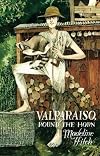
It’s taken me a while to write this review and these stories have grown in my mind since I read them. They are engaging, funny and a little strange, and it takes a while to absorb the complexity that underlies them.
The author has a very distinctive prose style. There is a beautiful rhythm to the writing. This hits you from the first sentence of the first story, a long, meandering statement that includes three lines of dialogue. Grammar geeks might lie awake wondering if it even is a show more sentence. I just wanted to keep reading and find out where it would take me.
The characters in these stories are outsiders. Sometimes they have rebelled, but often they stand apart from others without conscious choice, or even awareness. They look at the world aslant but they are rounded and real, never kooky or contrived. Their difference is echoed in the distinctive prose and the sly, surprising humour.
The narrator of “A Sow, on the Lam” is an academic monitoring the decline into extinction of a turtle so unappreciated that even her fellow marine biologists are content to let its demise pass unmarked. She is thrilled when a public radio journalist comes to cover the turtles’ story but the journalist is more interested in the pig farmers whose work is destroying the turtles’ habitat.
In “Fort Clatsop” a girl lives with her father who works at a progressive school as a janitor (or as they would have it, custodian). He tells her vivid stories about his past and rails against the “plain people”. When her teacher makes the class write about why they would like to be a janitor (custodian), the girl suddenly sees her father as others see him.
In “The Big Woman” a man is caught between worlds. He is building the dream home of an overachieving obsessive who makes him shout out what he is doing as he performs each task, in the name of productivity. He lives uneasily next to a family of thieves. All the while he is waiting for his own dream to be fulfilled by a big woman coming out of the woods.
Be warned, these stories, with their insistent rhythm and unique perspective, stay with you like a tune you can’t get out of your head.
-
This review first appeared on the TNBBC blog http://thenextbestbookblog.blogspot.co.uk/2015/06/kate-reviews-valparaiso-round-...
TNBBC received a free copy from the publisher in exchange for an honest review show less
The author has a very distinctive prose style. There is a beautiful rhythm to the writing. This hits you from the first sentence of the first story, a long, meandering statement that includes three lines of dialogue. Grammar geeks might lie awake wondering if it even is a show more sentence. I just wanted to keep reading and find out where it would take me.
The characters in these stories are outsiders. Sometimes they have rebelled, but often they stand apart from others without conscious choice, or even awareness. They look at the world aslant but they are rounded and real, never kooky or contrived. Their difference is echoed in the distinctive prose and the sly, surprising humour.
The narrator of “A Sow, on the Lam” is an academic monitoring the decline into extinction of a turtle so unappreciated that even her fellow marine biologists are content to let its demise pass unmarked. She is thrilled when a public radio journalist comes to cover the turtles’ story but the journalist is more interested in the pig farmers whose work is destroying the turtles’ habitat.
In “Fort Clatsop” a girl lives with her father who works at a progressive school as a janitor (or as they would have it, custodian). He tells her vivid stories about his past and rails against the “plain people”. When her teacher makes the class write about why they would like to be a janitor (custodian), the girl suddenly sees her father as others see him.
In “The Big Woman” a man is caught between worlds. He is building the dream home of an overachieving obsessive who makes him shout out what he is doing as he performs each task, in the name of productivity. He lives uneasily next to a family of thieves. All the while he is waiting for his own dream to be fulfilled by a big woman coming out of the woods.
Be warned, these stories, with their insistent rhythm and unique perspective, stay with you like a tune you can’t get out of your head.
-
This review first appeared on the TNBBC blog http://thenextbestbookblog.blogspot.co.uk/2015/06/kate-reviews-valparaiso-round-...
TNBBC received a free copy from the publisher in exchange for an honest review show less
Lists
New Fiction (1)
Awards


You May Also Like


Associated Authors
Statistics
- Works
- 4
- Also by
- 3
- Members
- 275
- Popularity
- #84,338
- Rating
- 3.9
- Reviews
- 12
- ISBNs
- 8