
Regina Doman
Author of Angel in the Waters
Series
Works by Regina Doman
Tagged
Common Knowledge
- Birthdate
- 1970-01-01
- Gender
- female
- Education
- Franciscan University of Steubenville, Ohio, 1992 - BA in Communications, concentrating on Television Production, with a minor in Theater Arts.
- Organizations
- Chesterton Press (owner; defunct)
- Birthplace
- Havertown, Pennsylvannia, USA
- Places of residence
- New York, New York, USA
Shenandoah Valley, Virginia, USA - Associated Place (for map)
- USA
Members
Reviews
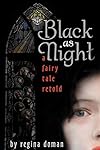
I loved this book. I've read one other book by Doman, Waking Rose - and while I adored the characters in that book, it did have a few shortcomings. But this one - well, I obviously read the wrong Doman book before. This one had all of the things I loved about the last one, and none of the shortcomings (which basically boiled down to what I felt was an oversimplified theological view - the same characters in this book feel much more human, while just as faithful, and also - don't write about show more Pittsburgh if it seems you've never been there - this one was about New York, and I'VE never been there, so it sounded good to me!). Great story. I was on the edge of my seat. Think modern-day fairy tale retelling with Catholic overtones and a Robin Cook plot. Sounds weird, I know. But it works. If you like a good mystery with a happy ending, try it out. show less
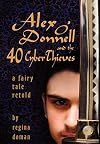
An extremely well-written modern fairy tale, arguably one of Doman's best. She does manage to completely miss the point of the Internet and draw a standard "tech bad, real life good" moral from specious arguments, and there is some uncomfortable Big Bad Government plottery that's insufficiently subverted. But she's definitely pulled well away from the Brier/Denniston romances that seemed to entrap her for a while and moved on to creating new, interesting characters with their own lives; "40 show more Cyber Thieves" also marks a notable shift away from all-white central casts to match the shift away from Eurocentric fairy tales.
The book is especially compelling if one is familiar with the original "Ali Baba"; Doman's level of detail work is incredible, and I spent about fifty pages before the climax wondering how on earth she was going to make the obvious-to-me twist work. (Answer: brilliantly.) Highly recommended, with the caveat that readers active in Internet culture may find themselves refuting the story's moral in detail for the next few hours after finishing... or maybe that's just me. show less
The book is especially compelling if one is familiar with the original "Ali Baba"; Doman's level of detail work is incredible, and I spent about fifty pages before the climax wondering how on earth she was going to make the obvious-to-me twist work. (Answer: brilliantly.) Highly recommended, with the caveat that readers active in Internet culture may find themselves refuting the story's moral in detail for the next few hours after finishing... or maybe that's just me. show less
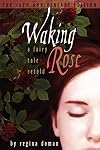
I liked the plot and the story in this book almost as much as I hated the author's callous and wrongheaded treatment of my alma mater. Good first - it is a neat story, with interesting characters you will come to care about - a retelling of the story of Sleeping Beauty, completely translating every element of it into a parallel situation that was moderately believable in the world today. From fairy tale, to Robin Cook thriller with more sympathetic, multi-dimensional characters. The author show more took a controversial stance on homosexuality that is probably out there for some (she is uber-Catholic), but you had to really be paying attention to even notice that that was, in fact, what she was talking about, so for me, anyway, it didn't really interfere with my enjoyment of the book. Everyone in the story was very Catholic. Again, this worked for me. In all fairness, so am I. But not since birth, and I thought that it made for an interesting look into a culture, plot points aside. In the same way that, say, All-of-a-Kind Family would tell you what it was to be a Jewish family, or Persepolis would offer an insight into life as an Iranian family. Literature and cultural study almost always combine well, as far as I'm concerned.
But as for the bad - most of the characters in her book attend a place called Mercy College, which the author states in the acknowledgments is a fictional place. It is so well described that you do feel you'd recognize it if you found yourself there. But when she uses a REAL place, in this case the University of Pittsburgh, it is apparent that she didn't ever feel the need to set foot on the campus before setting it up as an easy target for unfair maligning of the 'evil big city'. Apparently everyone in Pittsburgh hates Catholics, which is interesting since as a great big town with a significant Polish, Irish and Italian population, there are a ton of Catholics living there. I met more Catholics during my four years at Pitt than I have in all the time since, unless you count each and every member of my own parish. And at the time I attended Pitt, I was Lutheran - the religion of my birth. The hapless character Doman forces to attend Pitt thinks it's a shame he can't get to church any more since, in his own words, "there isn't a chapel close to campus." Apparently he has overlooked the existence of the Heinz Chapel, a very, very nice chapel which sits RIGHT NEXT TO the building where I, as an English major (like the aforesaid character) had most of my classes. And where I witnessed one of the most beautiful Christmas masses ever, my first year at school. Apparently, the guy has also overlooked the existence of the Newman Center, named after Cardinal Newman - a very active organization which serves Catholic kids on campus. Doman also mentions how Pitt, which she oddly persists in calling the University of Pitt, a sure sign she's never been there, "has its own protesters, he [Fish] thought of the grafitti by the campus goldfish pond". Campus goldfish pond??? Where? There is a very nice fountain outside the Frick Fine Arts Building, and a little grotto with a pond inside Phipps Conservatory (which is not part of the campus, but is closeby - and not filled with fish, to the best of my knowledge). But the campus is really mostly grafitti free, though if she wanted an example of student protest, the campus socialists who invariably hand out pamphlets in front of the library would have done nicely.
Doman also takes care to describe a student society called Cor - a lot of boys whose attitude is a throwback to the days of chivalry, and whose idea of good clean fun involves swords, martial arts, and Japanese films. She thinks that it's too bad societies and people like this don't exist outside of wholesome Catholic colleges. The funny thing is - MOST of my friends in college, at Pitt, were like this. Most of them belonged to the Society for Creative Anachronism, an organization where swordplay and chivalry play a large part. Many of them were even Catholic. I admire Doman's eagerness to translate her ideals to the page in a readable way. But I think she needs to do her research. She seems to have made herself a box of religious provincialism that doesn't wholly suit her. It seems to me that she has concerned herself too much with telling a tale that will hold its readers to the straight and narrow path, without allowing that if you are looking, God can be found everywhere. show less
But as for the bad - most of the characters in her book attend a place called Mercy College, which the author states in the acknowledgments is a fictional place. It is so well described that you do feel you'd recognize it if you found yourself there. But when she uses a REAL place, in this case the University of Pittsburgh, it is apparent that she didn't ever feel the need to set foot on the campus before setting it up as an easy target for unfair maligning of the 'evil big city'. Apparently everyone in Pittsburgh hates Catholics, which is interesting since as a great big town with a significant Polish, Irish and Italian population, there are a ton of Catholics living there. I met more Catholics during my four years at Pitt than I have in all the time since, unless you count each and every member of my own parish. And at the time I attended Pitt, I was Lutheran - the religion of my birth. The hapless character Doman forces to attend Pitt thinks it's a shame he can't get to church any more since, in his own words, "there isn't a chapel close to campus." Apparently he has overlooked the existence of the Heinz Chapel, a very, very nice chapel which sits RIGHT NEXT TO the building where I, as an English major (like the aforesaid character) had most of my classes. And where I witnessed one of the most beautiful Christmas masses ever, my first year at school. Apparently, the guy has also overlooked the existence of the Newman Center, named after Cardinal Newman - a very active organization which serves Catholic kids on campus. Doman also mentions how Pitt, which she oddly persists in calling the University of Pitt, a sure sign she's never been there, "has its own protesters, he [Fish] thought of the grafitti by the campus goldfish pond". Campus goldfish pond??? Where? There is a very nice fountain outside the Frick Fine Arts Building, and a little grotto with a pond inside Phipps Conservatory (which is not part of the campus, but is closeby - and not filled with fish, to the best of my knowledge). But the campus is really mostly grafitti free, though if she wanted an example of student protest, the campus socialists who invariably hand out pamphlets in front of the library would have done nicely.
Doman also takes care to describe a student society called Cor - a lot of boys whose attitude is a throwback to the days of chivalry, and whose idea of good clean fun involves swords, martial arts, and Japanese films. She thinks that it's too bad societies and people like this don't exist outside of wholesome Catholic colleges. The funny thing is - MOST of my friends in college, at Pitt, were like this. Most of them belonged to the Society for Creative Anachronism, an organization where swordplay and chivalry play a large part. Many of them were even Catholic. I admire Doman's eagerness to translate her ideals to the page in a readable way. But I think she needs to do her research. She seems to have made herself a box of religious provincialism that doesn't wholly suit her. It seems to me that she has concerned herself too much with telling a tale that will hold its readers to the straight and narrow path, without allowing that if you are looking, God can be found everywhere. show less
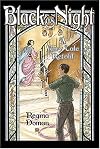
This long-awaited sequel to Shadow of the Bear returns us to the life-like yet fairy tale inspired world of Blanche, Rose, Bear and Fish. Rose and Blanche have both finished high school now and Blanche is spending the summer trying to earn some money for college. Bear, unsure about what he wants to do with his life and having trouble forgiving injuries from his past, is brooding his way around Europe. When Blanche is left alone (while Rose and their mother leave on vacation) her fears and show more sense of danger start to catch up with her until she disappears into a world that seems upside down to her. A mystery unfolds which she needs to solve before she can return home (with the help of a band of friars, a couple of dogs and the grace of God). Meanwhile, realizing that Blanche is missing, her family and friends return to try and find her. But someone's been planting illegal drugs in places where Blanche has been, Bear is being shadowed and ... there seems to be a lot of trouble going on in New York City.
This is a delightful, page-turning story in and of itself. But the depth of the story is quite remarkable too. You'll recognize a very well known fairy tale along with hints of Lewis Carroll's Through the Looking Glass. There are many interesting themes about good and evil, discerning a vocation and the dignity of life for the gravely ill. The story could also be looked upon as somewhat allegorical because, although most people won't find themselves in such dramatic circumstances, the basic process the characters struggle through offers some insight into what we should do when we find outselves in times of crisis.
This story, perhaps more so than Shadow of the Bear, is quite relevant to teenage boys and girls alike. Highly recommended! Best for ages 14 and up. show less
This is a delightful, page-turning story in and of itself. But the depth of the story is quite remarkable too. You'll recognize a very well known fairy tale along with hints of Lewis Carroll's Through the Looking Glass. There are many interesting themes about good and evil, discerning a vocation and the dignity of life for the gravely ill. The story could also be looked upon as somewhat allegorical because, although most people won't find themselves in such dramatic circumstances, the basic process the characters struggle through offers some insight into what we should do when we find outselves in times of crisis.
This story, perhaps more so than Shadow of the Bear, is quite relevant to teenage boys and girls alike. Highly recommended! Best for ages 14 and up. show less
Awards

You May Also Like


Associated Authors
Statistics
- Works
- 16
- Members
- 1,373
- Popularity
- #18,735
- Rating
- 4.3
- Reviews
- 24
- ISBNs
- 34
- Languages
- 3
- Favorited
- 7