

Louis De Wohl (1903–1961)
Author of The Quiet Light: A Novel About Saint Thomas Aquinas
About the Author
Works by Louis De Wohl
The Living Wood: A Novel about Saint Helena and the Emperor Constantine (1947) 164 copies, 4 reviews
i follow my stars 2 copies
℗L'℗ultimo crociato 1 copy
Zlatá nit 1 copy
Fundada Sobre Roca 1 copy
Corazón Inquieto 1 copy
El Segundo Asalto 1 copy
Plunge into Life 1 copy
The Resurrection and After 1 copy
La lancia di Longino 1 copy
Het stille licht 1 copy
Tagged
Common Knowledge
- Legal name
- von Wohl, Lajos Theodor Gaspar Adolf
- Other names
- Wohl, Ludwig von
- Birthdate
- 1903-01-24
- Date of death
- 1961-06-02
- Gender
- male
- Occupations
- writer
- Nationality
- Germany
- Birthplace
- Berlin, Germany
- Places of residence
- England, UK
- Place of death
- Lucerne, Switzerland
- Associated Place (for map)
- Germany
Members
Reviews
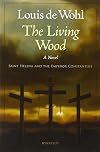
Absolutely enthralling! I feel this book was not deeply historical but what to me was most important the personalities and spiritual development of the characters. The author follows a British legend in making St. Helena, Constantine's mother, a British princess, daughter of wise old King Coel. She marries Constantius Chlorus ["Paleface"] and has Constantine by him. King Coel prophecies he will be greater than his father, own all the land he can ride on, be a "bliss to his mother", and be show more "death to his son". Most of what is in the novel about Helena's life in Britain through the years the author fictionalized. The novel follows all three and it turns out as prophesied. Helena is set aside for the daughter of the Roman Emperor since Contantius' ambition is to be emperor. He finally reigns for a short time and is very mild against Christians during the "Great Persecution". Constantine spends many years in the army under the Eastern Emperor, Galerius. But he and the stalwart Favonius make a harrowing journey across the whole of the Empire to return to Britain. Helena has become Christian. At Constantius' deathbed the three reunite and there is a touching scene where he names Constantine as successor. Helena goes to the Holy Land in search of the "living wood", the Cross. I loved the banter among the soldiers before Battle of Milvian Bridge. Sharp, incisive writing, very descriptive; I felt like I could have known these people. Christianity is a theme but it's not treated in a saccharine manner.
Highly recommended. Arguably, the author's masterpiece. show less
Highly recommended. Arguably, the author's masterpiece. show less
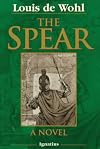
Comparisons with [b:The Robe|219919|The Robe|Lloyd C. Douglas|https://d202m5krfqbpi5.cloudfront.net/books/1388708276s/219919.jpg|467637] are inevitable. I didn't like The Spear quite as much; it hasn't aged as well, for one thing--especially where female characters are concerned. I'm still not quite sure what I think of the scene where the main character, Cassius (later to become Saint Longinus), practically rapes the love interest Naomi. The author attempts to sanitize it by having Naomi show more admit she loves Cassius, but she was clearly taken advantage of and she just isn't given enough of a voice for me to find it convincing--particularly when she promptly forgets about Cassius after meeting Jesus. I'd have liked to see more of her own inner conflict: if she really did love Cassius, as the author wants us to believe, I think it would be more compelling if this had complicated her devotion to Christ a little more. As it is she comes off as too perfect, too holy, therefore unrelatable. But some of the characters are compellingly drawn, Cassius in particular. I didn't care for him at first, but I warmed to him as he matured through hardship and lost his naive idealism; I wanted to see him find catharsis and redemption. And the story is cleverly plotted (though the omniscient narration clunks a bit). show less

This 1949 novel about Attila the Hun is from a deeply Catholic perspective, but a rollicking good tale nonetheless. It involves a clandestine romance between Attila and a Roman princess named Honoria. Later Honoria sends Attila a letter asking when he will come to claim his bride. Attila makes war on the Western Roman Empire trying to get to Honoria, but the ill-fated lovers are destined never to meet again. All sorts of epic battles and tragedy. The parts about Roman politics and the show more Church, portrayed as completely benevolent, can be a slog to get through, but the action is very satisfying in general. The Huns are savage, cruel and sadistic. They eat raw horse meat. They have no written language or architecture, just tent encampments. They are described as yellow and brown like very old parchment. So it includes the racist stereotypes of "savage" "mongols" common to the literature of the time period. Attila lived from approximately 395-453 and the historical sources for the period are fairly limited. De Wohl had to make a lot up and his spin on things shows a clear bias towards the early Roman Catholics as white and superior, and an admiration for the military skill of the yellow/brown people, but a general impression of them as inferior and uncivilized. show less
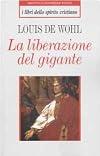
I read the Italian version of this book, and I find the Italian title to be more meaningful than "The quiet light". The Italian title translates to "The freeing of the giant", a title that captures two main themes in the book: 1) the power of Saint Thomas's work in reconciling catholic faith with Aristotelian philosophy (Aristotle being the giant); and 2) the story of how Saint Thomas, as a kid, had been imprisoned by his own family who didn't want him to join the Dominican order, and how he show more ultimately escapes and goes on to become one of the most brilliant stars of the catholic world.
"The freeing of the giant" is a historical novel. Luis De Wohl was a German-Hungarian writer who, in the '30s, left Germany and moved to live in London. His specialty were historical novels, and after WWII he committed to writing about the life of the saints. He was himself a catholic and had a face to face chat with the Pope before writing this book. The Pope asked him to write about St Thomas, and so he did with this book. It should be noted that this is not a novel about religion, but rather about history.
I found this book really enjoyable, well researched and also well balanced between history, philosophy/religion, and romance, to the point that I'm wondering why this auhor is not better known.
Writing a historical novel is no easy feat, even if you know your history well. You need to get the details right, and the spirit of the time you are writing about. Moreover, writing a novel about a Dominican Saint who did little else in his life other than read, pray and write, sounds like a real challenge.
But i think De Wohl nailed it. He uses only one fictional character, Sir Piers, to give the novel the dynamism it needs, a little romance, but most of all as a tool that allows him to weave together in one coherent plot various historical characters like emperor Frederick II, his court, Saint Albert the great, and even some contemporary muslim characters.
The second half of the 13th century was a very interesting time: Frederick II had an immense power over Europe, however the European region was under a lot of pressure from Islam, that was pushing from both the west (Spain) and the East (Turkey). Muslim culture was peaking. On one hand, you had the real conflicts, between the Sacred Roman Empire and Islam, through the Crusades and other battles. On the other, there were cultural battles, no less fierce, among the various intellectuals of that time: on one hand, Averroe and his school of thought were trying to use Aristotle as a way to weaken Christianity, by separating everything religious from what was "rational", and arguing that Aristotle would have never given in to anything but pure rationality and experimentation. On the other, you had the Church, who specifically requested Saint Thomas, one of the finest minds of those times, to find a way to reconcile Aristotle with the Christian faith. And that's what he did, in his "Summa Theologica".
To make things even more complicated, the emperor's relationship with the Church kept worsening, ultimately resulting in a real conflict, that had Frederick II as the end loser, and Italy torn between pro-church and pro-emperor factions.
De Wohl touches on all of these historical and philosophical elements with great simplicity, but never with a heavy hand or in a tacky way, always respecting the known facts in a graceful manner.
In particular, St Thomas's personality comes out of this book as a shining light, as he is depicted as a truly humble, shy, good and highly intelligent man. Yes it is a work of fiction but these personality traits have been well documented.
Sometimes I do think that back in those days, "intelligent" people were much smarter than what we are on average today. Or perhaps, they were intelligent in a very different way. They used to have dialectical, rethorical, and mnemonic skills that today you probably cannot even find (maybe because they are not required anymore?).
You don't really learn history by reading these type of books. It will help enjoying the book more if you already know the main historical facts (Wikipedia helped me a lot!). However, this kind of book is able to bring history to life in such a vivid way, that in a sense you DO learn about history. It's history for right-brainers!
Overall, a truly great read for lovers of quality historical novels. show less
"The freeing of the giant" is a historical novel. Luis De Wohl was a German-Hungarian writer who, in the '30s, left Germany and moved to live in London. His specialty were historical novels, and after WWII he committed to writing about the life of the saints. He was himself a catholic and had a face to face chat with the Pope before writing this book. The Pope asked him to write about St Thomas, and so he did with this book. It should be noted that this is not a novel about religion, but rather about history.
I found this book really enjoyable, well researched and also well balanced between history, philosophy/religion, and romance, to the point that I'm wondering why this auhor is not better known.
Writing a historical novel is no easy feat, even if you know your history well. You need to get the details right, and the spirit of the time you are writing about. Moreover, writing a novel about a Dominican Saint who did little else in his life other than read, pray and write, sounds like a real challenge.
But i think De Wohl nailed it. He uses only one fictional character, Sir Piers, to give the novel the dynamism it needs, a little romance, but most of all as a tool that allows him to weave together in one coherent plot various historical characters like emperor Frederick II, his court, Saint Albert the great, and even some contemporary muslim characters.
The second half of the 13th century was a very interesting time: Frederick II had an immense power over Europe, however the European region was under a lot of pressure from Islam, that was pushing from both the west (Spain) and the East (Turkey). Muslim culture was peaking. On one hand, you had the real conflicts, between the Sacred Roman Empire and Islam, through the Crusades and other battles. On the other, there were cultural battles, no less fierce, among the various intellectuals of that time: on one hand, Averroe and his school of thought were trying to use Aristotle as a way to weaken Christianity, by separating everything religious from what was "rational", and arguing that Aristotle would have never given in to anything but pure rationality and experimentation. On the other, you had the Church, who specifically requested Saint Thomas, one of the finest minds of those times, to find a way to reconcile Aristotle with the Christian faith. And that's what he did, in his "Summa Theologica".
To make things even more complicated, the emperor's relationship with the Church kept worsening, ultimately resulting in a real conflict, that had Frederick II as the end loser, and Italy torn between pro-church and pro-emperor factions.
De Wohl touches on all of these historical and philosophical elements with great simplicity, but never with a heavy hand or in a tacky way, always respecting the known facts in a graceful manner.
In particular, St Thomas's personality comes out of this book as a shining light, as he is depicted as a truly humble, shy, good and highly intelligent man. Yes it is a work of fiction but these personality traits have been well documented.
Sometimes I do think that back in those days, "intelligent" people were much smarter than what we are on average today. Or perhaps, they were intelligent in a very different way. They used to have dialectical, rethorical, and mnemonic skills that today you probably cannot even find (maybe because they are not required anymore?).
You don't really learn history by reading these type of books. It will help enjoying the book more if you already know the main historical facts (Wikipedia helped me a lot!). However, this kind of book is able to bring history to life in such a vivid way, that in a sense you DO learn about history. It's history for right-brainers!
Overall, a truly great read for lovers of quality historical novels. show less
Lists
You May Also Like


Associated Authors
Statistics
- Works
- 46
- Members
- 3,374
- Popularity
- #7,552
- Rating
- 4.0
- Reviews
- 43
- ISBNs
- 138
- Languages
- 8
- Favorited
- 5
