
Andrew Marin
Author of Love Is an Orientation: Elevating the Conversation with the Gay Community
About the Author
Andrew Marin graduated in 2003 from the University of Illinois at Chicago with a degree in psychology. He has taught at the Moody Bible Institute and is the founder and president of The Marin Foundation, a non-profit organization working towards greater cooperation between gay, lesbian, bisexual, show more transgender, and religious communities. (Bowker Author Biography) show less
Works by Andrew Marin
Love Is an Orientation: Elevating the Conversation with the Gay Community (2009) 331 copies, 5 reviews
Tagged
Common Knowledge
- Gender
- male
Members
Reviews
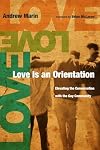
If there was ever a moment to take a Marie Kondo razor to a book and keep only its best parts, this would be that moment. Marin does a great job at addressing homophobic Christians, breaking down barriers, and helpfully explaining why building bridges is the best way to reach people and share God's love.
Less effective are his multiple examples of "changed" and "ex-gay" Christians, who, while not emphasized, are forwarded enough to be a not-so-subtle hint at the ideal to which Marin leans. show more I'm frankly disappointed that celibate gay Christians receive so much airtime here when they comprise so little of LGBT Christians today, ESPECIALLY in 2016, ESPECIALLY after DOMA was struck down and SCOTUS ruled that marriage is a civil right to all adults, regardless of orientation. There are some deeply essentializing stereotypes that are not indicative of all LGBT individuals, especially LGBT Christians, many of whom are married to same-sex partners and have families.
This book would be helpful to Evangelical Christians who don't know anyone gay and still think that being LGBT is a choice and a "lifestyle" (ugh, I feel grossed out just typing that). But if you've done your own Bible study and have wrestled with the questions that Marin brings up, time to wrestle with something much more complex and more multi-faceted. show less
Less effective are his multiple examples of "changed" and "ex-gay" Christians, who, while not emphasized, are forwarded enough to be a not-so-subtle hint at the ideal to which Marin leans. show more I'm frankly disappointed that celibate gay Christians receive so much airtime here when they comprise so little of LGBT Christians today, ESPECIALLY in 2016, ESPECIALLY after DOMA was struck down and SCOTUS ruled that marriage is a civil right to all adults, regardless of orientation. There are some deeply essentializing stereotypes that are not indicative of all LGBT individuals, especially LGBT Christians, many of whom are married to same-sex partners and have families.
This book would be helpful to Evangelical Christians who don't know anyone gay and still think that being LGBT is a choice and a "lifestyle" (ugh, I feel grossed out just typing that). But if you've done your own Bible study and have wrestled with the questions that Marin brings up, time to wrestle with something much more complex and more multi-faceted. show less
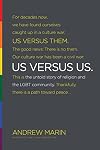
As someone with little religious inclination, this book didn't speak to me. The author's desire for reconciliation between the two communities and neutrality in the discussion too often led to a simple fact being overlooked: the two parties are not equal. One party is the oppressor and the other the oppressed. It is why Marin's "I'm sorry" campaign worked so well and why this book does not.
Though I am certain that Andrew Marin would open his door to and bestow an embrace upon just about anyone, Love Is an Orientation: Elevating the Conversation with the Gay Community is marketed mostly towards straight evangelical Christians. It's important to remember that. Look at the title: "the Gay Community" is clearly the Other, although Marin doesn't mean it in a bad way.
To lay all the cards on the table, I should mention that I'm a gay post-evangelical Christian, although when I read show more this in June, I may not have been as firmly post-evangelical as I am now. So, not quite the intended audience for Love Is an Orientation. Still, in general, I enjoyed what Marin had to say.
In the foreward, Brian McLaren (whose name alone would cause members of my childhood church to put on the armor and start readying the guns) says that when the book is over, "some of you will be disappointed that Andrew didn't go further. And others of you will be concerned that Andrew went to far." And that's certainly true. It's not a book that would make either myself or my parents 100% happy. But it's not Marin's job to make us happy. As McLaren says, "If Andrew simply fulfilled your script, or someone else's, this book would hardly be worth reading; it would just say things that have been said before." (For what it's worth, stylistically I find McLaren a far better writer than Marin. In ways I found his foreward more engaging than the actual book.)
In other words, Marin never answers the question of whether being gay is sinful or not. That's what a lot of people approaching this book will want to see answered, but that's not what this book is about. If Marin were pressed for an answer, my guess is that he would start by asking what is meant by the phrase "being gay," and start talking about the distinction between orientation, identity, and behavior. If further pressed, he'd probably say, "It's none of our f***ing business." By omitting that discussion from the book, he is effectively saying so. Which, after some thought, I find refreshing.
Since I am post-evangelical, I did feel like there was a little too much emphasis placed on conversion—not from straight to gay, but from non-Christian to Christian. And his multiple statements that we can never know what is "God's best ending to someone else's story" made me wonder if he does envision a different ending for some of the Side A (aka non-celibate) gay Christians he interacts with. But maybe I'm just paranoid.
I love this quote and feel it should be shared in churches everywhere (with perhaps a few stylistic revisions):
Very few times are these truly sacred moments shared between people. "I have cancer," "We lost the baby," "I'm getting married," "I am gay"—all brief moments in time when a person chooses to speak their life-changing revelation out loud. Participating in such a moment is an eternal bond regardless of what happens from that moment forward. If we desecrate that trust and violate that moment by turning the focus onto ourselves, we have lost much of what our faith allows us to be.
Too many Christians do make their loved one's sexuality about themselves, about how it affects or even threatens them. Too many treat gays as projects, not people. But the gay community sometimes fails in seeing its members fully as people too. In his book, Marin tells the stories of many different sorts of GLBT people, regardless of how they fit into either side's rhetoric. Take Maddie, a young woman publicly identifying as lesbian who tells Marin that her father chained her to a toilet for three months and later raped her repeatedly. "I'm not attracted to girls," she said, "but no man will ever touch me ever again."
Of course, the physically-abused-child-turned-gay-adult is a stereotype beloved by Christians, and like most stereotypes, it's far from being true across the board and can even be dangerous. As Marin states, people like Maddie rightly "anticipate that we [Christians] will respond to them not as victims of abuse but as just one more person whose abuse made them gay." At the same time, gay activists might want to repress such stories for the same reason: because of the gay-vs-Christian cultural war, they don't want anyone talking about reasons they turned to same-sex relationships other than I was born gay.
You know something's gotten out of hand when rhetoric becomes more important than people.
Gay or straight, Baptist or Episcopalian, Christian or atheist, that's something we all need to learn. And so this book definitely has value, even if I tired of it in spots. Recommended especially to Christian friends and family of GLBTs. For Christians in the process of figuring out their own sexuality and how it fits with their faith, though, Torn by Justin Lee is the place to start. show less
To lay all the cards on the table, I should mention that I'm a gay post-evangelical Christian, although when I read show more this in June, I may not have been as firmly post-evangelical as I am now. So, not quite the intended audience for Love Is an Orientation. Still, in general, I enjoyed what Marin had to say.
In the foreward, Brian McLaren (whose name alone would cause members of my childhood church to put on the armor and start readying the guns) says that when the book is over, "some of you will be disappointed that Andrew didn't go further. And others of you will be concerned that Andrew went to far." And that's certainly true. It's not a book that would make either myself or my parents 100% happy. But it's not Marin's job to make us happy. As McLaren says, "If Andrew simply fulfilled your script, or someone else's, this book would hardly be worth reading; it would just say things that have been said before." (For what it's worth, stylistically I find McLaren a far better writer than Marin. In ways I found his foreward more engaging than the actual book.)
In other words, Marin never answers the question of whether being gay is sinful or not. That's what a lot of people approaching this book will want to see answered, but that's not what this book is about. If Marin were pressed for an answer, my guess is that he would start by asking what is meant by the phrase "being gay," and start talking about the distinction between orientation, identity, and behavior. If further pressed, he'd probably say, "It's none of our f***ing business." By omitting that discussion from the book, he is effectively saying so. Which, after some thought, I find refreshing.
Since I am post-evangelical, I did feel like there was a little too much emphasis placed on conversion—not from straight to gay, but from non-Christian to Christian. And his multiple statements that we can never know what is "God's best ending to someone else's story" made me wonder if he does envision a different ending for some of the Side A (aka non-celibate) gay Christians he interacts with. But maybe I'm just paranoid.
I love this quote and feel it should be shared in churches everywhere (with perhaps a few stylistic revisions):
Very few times are these truly sacred moments shared between people. "I have cancer," "We lost the baby," "I'm getting married," "I am gay"—all brief moments in time when a person chooses to speak their life-changing revelation out loud. Participating in such a moment is an eternal bond regardless of what happens from that moment forward. If we desecrate that trust and violate that moment by turning the focus onto ourselves, we have lost much of what our faith allows us to be.
Too many Christians do make their loved one's sexuality about themselves, about how it affects or even threatens them. Too many treat gays as projects, not people. But the gay community sometimes fails in seeing its members fully as people too. In his book, Marin tells the stories of many different sorts of GLBT people, regardless of how they fit into either side's rhetoric. Take Maddie, a young woman publicly identifying as lesbian who tells Marin that her father chained her to a toilet for three months and later raped her repeatedly. "I'm not attracted to girls," she said, "but no man will ever touch me ever again."
Of course, the physically-abused-child-turned-gay-adult is a stereotype beloved by Christians, and like most stereotypes, it's far from being true across the board and can even be dangerous. As Marin states, people like Maddie rightly "anticipate that we [Christians] will respond to them not as victims of abuse but as just one more person whose abuse made them gay." At the same time, gay activists might want to repress such stories for the same reason: because of the gay-vs-Christian cultural war, they don't want anyone talking about reasons they turned to same-sex relationships other than I was born gay.
You know something's gotten out of hand when rhetoric becomes more important than people.
Gay or straight, Baptist or Episcopalian, Christian or atheist, that's something we all need to learn. And so this book definitely has value, even if I tired of it in spots. Recommended especially to Christian friends and family of GLBTs. For Christians in the process of figuring out their own sexuality and how it fits with their faith, though, Torn by Justin Lee is the place to start. show less
Much good and needed information and perspective. A bit challenging, but worth reading.
Awards

You May Also Like


Associated Authors
Statistics
- Works
- 5
- Members
- 399
- Popularity
- #60,804
- Rating
- 4.0
- Reviews
- 6
- ISBNs
- 14