
Mat Johnson
Author of Pym
About the Author
Image credit: By Larry D. Moore, CC BY-SA 3.0, https://commons.wikimedia.org/w/index.php?curid=17167730
Series
Works by Mat Johnson
The Great Negro Plot: A Tale of Conspiracy and Murder in Eighteenth-Century New York (2007) 52 copies, 1 review
Associated Works
The Word: Black Writers Talk About the Transformative Power of Reading and Writing (2011) — Contributor — 35 copies, 2 reviews
Tagged
Common Knowledge
- Birthdate
- 1970
- Gender
- male
- Education
- Earlham College (BA)
Columbia University (MFA) - Occupations
- fiction writer
comics writer
professor - Awards and honors
- John Dos Passos Prize (2011)
- Nationality
- USA
- Birthplace
- Philadelphia, Pennsylvania, USA
- Places of residence
- Philadelphia, Pennsylvania, USA
Houston, Texas, USA - Associated Place (for map)
- USA
Members
Reviews
Pym by Mat Johnson
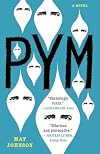
A complete inversion of Edgar Allen Poe’s The Narrative of Arthur Gordon Pym of Nantucket, Mat Johnson’s Pym is a brilliant satire of race relations in America from a black perspective, one that’s embedded in a creative, fantastical tale, picking up on the enigmatic ending to Poe’s novel. Here it’s not a group of white explorers going to Antarctica and discovering a secret island of black “savages” who betray them, it’s a group of black explorers who follow in their footsteps show more and discover an albino race of yeti-like creatures who enslave them. While that may sound heavy, it’s really not – the story is playful, there is a lot of humor, and Mat Johnson also touches on other things, like the main character’s failed relationship with his ex-wife.
Just as America loves to think about itself in an idealized way, in this story there is a painter of saccharine landscapes, likely a stand-in for Thomas Kinkade, who has built a giant, idyllic dome down in Antarctica. It’s meant to be self-sustaining but we find out they run it on gas and don’t think of turning the temperature down from 72. It’s a refuge for the explorers but we soon see they’re second-class citizens in a sharecropper type of arrangement, and never completely out of danger. I thought it was a pretty clever metaphor for America, and also allowed for drama that would make a pretty good movie someday.
Throughout the book Johnson’s writing is scholarly, sharp as a tack, and there are no punches pulled in his satire. He explores what it means to be black, “the fact that our ethnic group is the product of a conspiracy theory,” and the nuances of mixed heritage, often skewering people in his own community along the way. Aside from analyzing Poe’s story for context (even including a lengthy excerpt in the appendix), I loved his literary references to black authors, including various slave narratives but also Frank J. Webb’s The Garies and Their Friends, on black experiences with racism in the north. It’s a very satisfying read, one that serves as a rejoinder to a text filled with racist overtones from an American literary giant nearly two centuries later, all of which is still relevant today.
Quotes:
On representation in literature:
“I like Poe, I like Melville, I like Hemingway, but what I like the most about the great literature created by the Americans of European descent is the Africanist presence within it. I like looking for myself in the whitest of pages. I like finding evidence of myself there, after being told my footprints did not exist on that sand. I think the work of the great white writers is important, but I think it’s most important when it’s negotiating me and my people, because I am as arrogant and selfish a reader as any other.”
On white people:
“That is how they stay so white: by refusing to accept blemish or history. Whiteness isn’t about being something, it is about being no thing, nothing, an erasure. Covering over the truth with layers of blank reality just as the snowstorm was now covering our tent, whipping away all traces of our existence from this pristine landscape.”
And this one:
“My cousin felt that a white liberal was a Caucasian who said to himself or herself every day, ‘Don’t hate niggers. Don’t hate niggers.’ And the rest of white America’s racial perspective was ‘Don’t let the niggers hear you say ‘nigger’ out loud.’” show less
Just as America loves to think about itself in an idealized way, in this story there is a painter of saccharine landscapes, likely a stand-in for Thomas Kinkade, who has built a giant, idyllic dome down in Antarctica. It’s meant to be self-sustaining but we find out they run it on gas and don’t think of turning the temperature down from 72. It’s a refuge for the explorers but we soon see they’re second-class citizens in a sharecropper type of arrangement, and never completely out of danger. I thought it was a pretty clever metaphor for America, and also allowed for drama that would make a pretty good movie someday.
Throughout the book Johnson’s writing is scholarly, sharp as a tack, and there are no punches pulled in his satire. He explores what it means to be black, “the fact that our ethnic group is the product of a conspiracy theory,” and the nuances of mixed heritage, often skewering people in his own community along the way. Aside from analyzing Poe’s story for context (even including a lengthy excerpt in the appendix), I loved his literary references to black authors, including various slave narratives but also Frank J. Webb’s The Garies and Their Friends, on black experiences with racism in the north. It’s a very satisfying read, one that serves as a rejoinder to a text filled with racist overtones from an American literary giant nearly two centuries later, all of which is still relevant today.
Quotes:
On representation in literature:
“I like Poe, I like Melville, I like Hemingway, but what I like the most about the great literature created by the Americans of European descent is the Africanist presence within it. I like looking for myself in the whitest of pages. I like finding evidence of myself there, after being told my footprints did not exist on that sand. I think the work of the great white writers is important, but I think it’s most important when it’s negotiating me and my people, because I am as arrogant and selfish a reader as any other.”
On white people:
“That is how they stay so white: by refusing to accept blemish or history. Whiteness isn’t about being something, it is about being no thing, nothing, an erasure. Covering over the truth with layers of blank reality just as the snowstorm was now covering our tent, whipping away all traces of our existence from this pristine landscape.”
And this one:
“My cousin felt that a white liberal was a Caucasian who said to himself or herself every day, ‘Don’t hate niggers. Don’t hate niggers.’ And the rest of white America’s racial perspective was ‘Don’t let the niggers hear you say ‘nigger’ out loud.’” show less
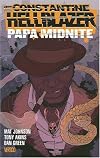
I've always wondered where Papa Midnite got his power, so I'm really glad that they decided to give him a mini-series and a proper backstory. His story traces all the way back to the origins of the New York settlement, where as a child magician he betrayed his own people who wanted to revolt against the slave masters. As a young boy who had taken his freedom thorugh the power of his magic Midnite clearly had no concept of the suffering of his people, so he earned himself the curse of show more everlasting life until he could reverse the world order. His attempt to do so a mere 10 years later was met with absolutelt disaster and his first "death;" he may have gained immense power by that time, but his arrogance and misunderstanding of the situation are not lessons easily learned. Even with the additional power and knowledge that he has gathered by the modern age he still has not freed himself of his curse - though black people in America no longer live in slavery. Maybe Papa Midnite has become content to be the powerful magician with neverending life, since he doesn't seem to be working on anything close to a major plan. Or maybe it's the long game? show less
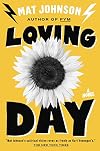
Mat Johnson is a gifted writer who is nothing if not funny, even if his humor leaves the reader unsure of whether he's laughing at you, with you or at himself. In 'Loving Day' the humor is still there but there is a bitter edge to it just out of reach.
Loving Day (so named after the famous Virginia couple who overturned miscegenation laws in the US) begins with homecoming of the reluctantly bi-racial Warren Duffy, fresh off of the failure of his personal, business and artistic aspirations. show more Coming home after the death of his father, to a derelict mansion haunted by entities unknown, he's confronted with with the existence of a teenage daughter who's been raised as white and has runaway from her grandfather to live with the father she's never known. Caught between a white past in his Irish-American father and a white future in his hitherto Jewish-American daughter Duffy fights hard to retain a black identity for himself while his daughter comes to terms with her bi-racial identity.
Johnson gives the conflict physical form in the the two major settings he uses in the novel; Duffy's dead father's house in what was once a neighborhood for wealthy whites but had become a black neighborhood down on its luck by the time his father bought it , and a school for biracial children that his daughter initially chose because she didn't want to go to a black school. Johnson captures an older generation's sense of bi-racial unease and need to identify as one or the other and a younger generation's refusal to choose. Even opinions on the presence in his house is divided, his daughter see apparitions as the ghosts of the first inter-racial couple while Warren thinks they may be crackheads, given the neighborhood.
The novel reads as one of his most personal, though admittedly as the mother of two biracial boys I may be projecting. In ways both Zane Pinchback from 'Incognegro' and Warren Duffy are alter egos of the author himself. Both extremely pale black men who could pass for white, but where 'Incognegro' manages to be almost self amused 'Loving Day' has a frustrated anger. I can't wait to see what Johnson writes next. show less
Loving Day (so named after the famous Virginia couple who overturned miscegenation laws in the US) begins with homecoming of the reluctantly bi-racial Warren Duffy, fresh off of the failure of his personal, business and artistic aspirations. show more Coming home after the death of his father, to a derelict mansion haunted by entities unknown, he's confronted with with the existence of a teenage daughter who's been raised as white and has runaway from her grandfather to live with the father she's never known. Caught between a white past in his Irish-American father and a white future in his hitherto Jewish-American daughter Duffy fights hard to retain a black identity for himself while his daughter comes to terms with her bi-racial identity.
Johnson gives the conflict physical form in the the two major settings he uses in the novel; Duffy's dead father's house in what was once a neighborhood for wealthy whites but had become a black neighborhood down on its luck by the time his father bought it , and a school for biracial children that his daughter initially chose because she didn't want to go to a black school. Johnson captures an older generation's sense of bi-racial unease and need to identify as one or the other and a younger generation's refusal to choose. Even opinions on the presence in his house is divided, his daughter see apparitions as the ghosts of the first inter-racial couple while Warren thinks they may be crackheads, given the neighborhood.
The novel reads as one of his most personal, though admittedly as the mother of two biracial boys I may be projecting. In ways both Zane Pinchback from 'Incognegro' and Warren Duffy are alter egos of the author himself. Both extremely pale black men who could pass for white, but where 'Incognegro' manages to be almost self amused 'Loving Day' has a frustrated anger. I can't wait to see what Johnson writes next. show less
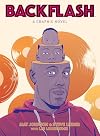
(Full disclosure: I received a free e-ARC for review through Edelweiss. Content warning for the death of a parent.)
--- 3.5 stars, rounded up to 4 where necessary --
When we first meet Devin, he's about to fall into his newly deceased mother's grave - right on top of her, in fact. To say that he's a sad sack doesn't quite do it justice: he'll be the first to tell you that he's a college dropout with an ex-wife, a semi-estranged adult daughter, and a mounting pile of debt - but no marketable show more skills. He's spent the past decade or two caring for his aging mother Irene and, now that's she gone, he's left without purpose or direction. Just the house that his late mom purchased in 1970, which he's now in danger of losing thanks to a reverse mortgage. It's no wonder that Devin would rather bury himself in the past.
That's just what he's doing when Devin discovers his superpower: heavy doses of nostalgia allow him to revisit certain moment in the past. Once he discovers the "backflash" community, Devin enlists fellow time traveler Marcos to be his guide into the past. His goal? Find out the identity of his absent bio dad, so that he can sue the guy for back child support.
BACKFLASH is a really interesting idea with a lot to love. At 45 years young (lol), Devin's just a year younger than me (maybe not even? I think we were both born in 1978.), and we share so many cultural touchstones (fruit barrels! I'd forgotten about those). The concept of time-traveling-but-not-really is a fun one, and the mystery of Devin's father is engaging (especially with the introduction of the mob element).
Devin is eminently relatable, but also frustrating AF. As much as it hurts to admit, I see myself in him. I haven't lost a parent (yet), but after my husband died unexpectedly I dealt (am still dealing with) many of the same issues as Devin, including un-/under-employment, a lack of confidence in one's ability to adult, a feeling of aimlessness, and general malaise. And it's tempting to look outside yourself for somewhere to place the blame - and responsibility. So I get why Devin decided to hunt down his dad - not for connection, but money - but that didn't make it any less painful to watch. You kind of just want to shake the guy and tell him to grow up already.
Of course, Devin has a cheat code none of us mere mortals ever will: the ability to backflash. Before long, he'll be able to buy back his mother's home, along with every house on the whole damn block. Since it never quite feels like Devin earned it (he does express a desire to be there for his daughter Lark, but the story ends before we can witness his follow through), this makes for a rather unsatisfying deus ex machina.
That said, BACKFLASH is still well worth the read. It's a novel idea with lots of oblations for the GenX crowd. show less
--- 3.5 stars, rounded up to 4 where necessary --
When we first meet Devin, he's about to fall into his newly deceased mother's grave - right on top of her, in fact. To say that he's a sad sack doesn't quite do it justice: he'll be the first to tell you that he's a college dropout with an ex-wife, a semi-estranged adult daughter, and a mounting pile of debt - but no marketable show more skills. He's spent the past decade or two caring for his aging mother Irene and, now that's she gone, he's left without purpose or direction. Just the house that his late mom purchased in 1970, which he's now in danger of losing thanks to a reverse mortgage. It's no wonder that Devin would rather bury himself in the past.
That's just what he's doing when Devin discovers his superpower: heavy doses of nostalgia allow him to revisit certain moment in the past. Once he discovers the "backflash" community, Devin enlists fellow time traveler Marcos to be his guide into the past. His goal? Find out the identity of his absent bio dad, so that he can sue the guy for back child support.
BACKFLASH is a really interesting idea with a lot to love. At 45 years young (lol), Devin's just a year younger than me (maybe not even? I think we were both born in 1978.), and we share so many cultural touchstones (fruit barrels! I'd forgotten about those). The concept of time-traveling-but-not-really is a fun one, and the mystery of Devin's father is engaging (especially with the introduction of the mob element).
Devin is eminently relatable, but also frustrating AF. As much as it hurts to admit, I see myself in him. I haven't lost a parent (yet), but after my husband died unexpectedly I dealt (am still dealing with) many of the same issues as Devin, including un-/under-employment, a lack of confidence in one's ability to adult, a feeling of aimlessness, and general malaise. And it's tempting to look outside yourself for somewhere to place the blame - and responsibility. So I get why Devin decided to hunt down his dad - not for connection, but money - but that didn't make it any less painful to watch. You kind of just want to shake the guy and tell him to grow up already.
Of course, Devin has a cheat code none of us mere mortals ever will: the ability to backflash. Before long, he'll be able to buy back his mother's home, along with every house on the whole damn block. Since it never quite feels like Devin earned it (he does express a desire to be there for his daughter Lark, but the story ends before we can witness his follow through), this makes for a rather unsatisfying deus ex machina.
That said, BACKFLASH is still well worth the read. It's a novel idea with lots of oblations for the GenX crowd. show less
Lists
Black Authors (1)
Five star books (1)
Awards


You May Also Like


Associated Authors
Statistics
- Works
- 25
- Also by
- 7
- Members
- 2,064
- Popularity
- #12,452
- Rating
- 3.7
- Reviews
- 101
- ISBNs
- 46
- Languages
- 3
- Favorited
- 6
