
Boris Fishman
Author of A Replacement Life
About the Author
Series
Works by Boris Fishman
Savage Feast: Three Generations, Two Continents, and a Dinner Table: A Memoir with Recipes (2019) 78 copies, 3 reviews
Tagged
Common Knowledge
- Canonical name
- Fishman, Boris
- Birthdate
- 1979
- Gender
- male
- Education
- Princeton University (BA, Slavic Languages)
New York University (MA, Creative Writing) - Nationality
- Russia (birth)
USA - Birthplace
- Minsk, Byelorussia, USSR
- Places of residence
- New York, USA
- Map Location
- USA
Members
Reviews
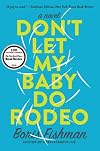
This is my third book by Boris Fishman (his second novel chronologically: I started with his recent memoir "Savage Feast", then followed with his debut novel "A Replacement Life" - both of which I loved - and now found this novel, his second). Here he surprised me by going out on a limb and getting very insightful with a female protagonist (unlike his other two books - where he seems to be more comfortable with getting into the psyche of male characters). So that was a surprise for me - his show more getting so deep into the mind of Maya, an ex-Soviet immigrant in this novel and into the plight she is in. As in the other two books, his writing is noteworthy, genuinely intuitive, and truly eloquent. If one were to find a single flaw, I would say that his tendency to insert long fragments (separated by dashes on both sides) into sentences might be considered as one; but then, again, Jose Saramago's sentences tend to run a whole page (!), and his writing is brilliant... So, all in all, another great read from Boris Fishman. show less
Savage Feast: Three Generations, Two Continents, and a Dinner Table (a Memoir with Recipes) by Boris Fishman
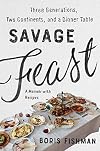
You don't have to be Jewish to love this book (I am not - and I truly, truly loved it). Although, it might help to be ex-Soviet to genuinely relate to this narrative. (This is not to discourage anybody else - it's a wonderful memoir altogether!). Boris Fishman (a Jewish immigrant from Belarus, arriving in U.S. at the age of 9 with his parents) masterfully recreates the life of his grandparents, parents and his own up to this point and through all the hardships and indecencies of the show more immigration process (incomprehensible to a child and yet forever imprinted in his memory), and then describes the life that the family made for themselves in America, his own private relationship troubles, his relations with his parents and grandparents. And all of it peppered with incredible Jewish/Soviet/Ukrainian recipes throughout the book! (Ukrainian - due to his aging grandfather having a Ukrainian caretaker Oksana, who is a super talented cook).
What is also striking in this memoir, is how Fishman describes the most intimate nuances of the Russian language, gestures and even meaningful glances of people in his immediate family - so that while reading, I couldn't help nodding in total recognition of those typical phrases (I imagined them in Russian - though he translates them into English... and that's why I say that, in this regard, being ex-Soviet helps a bit with reading this memoir...), appreciating his wonderful sense of humor (specifically Jewish and otherwise!) and also his self-deprecating frankness - both about himself and his family, not sparing his dear ones from unflattering portrayal that goes along with endearing one.
(I have to say, I have already tried one of the recipes from the book - the Liver Pie!... it's awesome!... and it's not at all what you might imagine from the name... Can't wait to try more!)
Easily 5 stars. And I can't wait to read Fishman's other books. show less
What is also striking in this memoir, is how Fishman describes the most intimate nuances of the Russian language, gestures and even meaningful glances of people in his immediate family - so that while reading, I couldn't help nodding in total recognition of those typical phrases (I imagined them in Russian - though he translates them into English... and that's why I say that, in this regard, being ex-Soviet helps a bit with reading this memoir...), appreciating his wonderful sense of humor (specifically Jewish and otherwise!) and also his self-deprecating frankness - both about himself and his family, not sparing his dear ones from unflattering portrayal that goes along with endearing one.
(I have to say, I have already tried one of the recipes from the book - the Liver Pie!... it's awesome!... and it's not at all what you might imagine from the name... Can't wait to try more!)
Easily 5 stars. And I can't wait to read Fishman's other books. show less
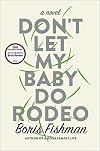
What does it mean to belong? To a family? To a country? Does belonging impact your sense of who you are, your very identity? Is this something bred deep in the bone or is it dependent on your environment? These are just some of the thoughtful, philosophical questions asked in Boris Fishman's new novel, Don't Let My Baby Do Rodeo.
Maya Shulman came to the US as a Ukrainian exchange student. Her dream to open a cafe and be a chef had to take a back seat to her medical studies. When her student show more visa was about to run out, she met and married Alex Rubin, a fellow Russian who himself came to this country with his parents when he was just a tiny boy. Alex had his own dreams that he suppressed to go into the family import business. When Alex and Maya discover they can't have children, they adopt a baby. But Max's advent in their family brings up many questions. Alex's parents, and Alex himself, are against adopting, arguing that you don't know what you're getting with someone else's child. Maya wonders if she's an imposter, not really a mother, not having carried and given birth to Max. And when Max at age eight starts to exhibit some strange behaviours, the Rubins decide that they need to go to Montana to track down Max's birth parents, a teenaged couple they met once before, to see if there are any genetic explanations for Max's predilections.
The farther they get from New Jersey, the more Maya is gripped with a desire to break free of the stultifying and constrained life she's been living. The open space and the wildness speak to something in her, much as she imagines it must call to Max, being the land of his birth. The road trip to Montana is bizarre and fanciful and sometimes surreal, as is the narrative as a whole. Fishman addresses issues of identity and immigrant life, the feeling of not being Russian anymore but not really being American yet either. Maya, in looking for answers about her strange and quirky son, is really on a voyage of self-discovery, one that will surprise her and her solid, often unimaginative husband both. The dynamics between the elder Rubins and their comparison to everything back home and the younger Rubins, settling for a passionless existence in almost every area of their lives, is well done and realistic. They are separated by not only a generation but also their cultural identification, Russian versus American. Max, as an adopted child, is the literal personification of this, a Rubin by law but not by blood so that he is forever a mystery to them. Fishman has certainly captured a sense of dislocation with its question of belonging and what that means here, both literally and figuratively. Each of the characters is fully formed even if they aren't always terribly sympathetic. The narrative meanders from the present to Alex and Maya's past and has dreamlike sequences along the way that interrupt the otherwise smooth flow. And the road map of where the Rubin family will go in the end feels more hopeful than the tone of the rest of the novel would have suggested. This is, without a doubt, a complex and complicated story with many levels to it, many questions, and a realistic lack of answers. show less
Maya Shulman came to the US as a Ukrainian exchange student. Her dream to open a cafe and be a chef had to take a back seat to her medical studies. When her student show more visa was about to run out, she met and married Alex Rubin, a fellow Russian who himself came to this country with his parents when he was just a tiny boy. Alex had his own dreams that he suppressed to go into the family import business. When Alex and Maya discover they can't have children, they adopt a baby. But Max's advent in their family brings up many questions. Alex's parents, and Alex himself, are against adopting, arguing that you don't know what you're getting with someone else's child. Maya wonders if she's an imposter, not really a mother, not having carried and given birth to Max. And when Max at age eight starts to exhibit some strange behaviours, the Rubins decide that they need to go to Montana to track down Max's birth parents, a teenaged couple they met once before, to see if there are any genetic explanations for Max's predilections.
The farther they get from New Jersey, the more Maya is gripped with a desire to break free of the stultifying and constrained life she's been living. The open space and the wildness speak to something in her, much as she imagines it must call to Max, being the land of his birth. The road trip to Montana is bizarre and fanciful and sometimes surreal, as is the narrative as a whole. Fishman addresses issues of identity and immigrant life, the feeling of not being Russian anymore but not really being American yet either. Maya, in looking for answers about her strange and quirky son, is really on a voyage of self-discovery, one that will surprise her and her solid, often unimaginative husband both. The dynamics between the elder Rubins and their comparison to everything back home and the younger Rubins, settling for a passionless existence in almost every area of their lives, is well done and realistic. They are separated by not only a generation but also their cultural identification, Russian versus American. Max, as an adopted child, is the literal personification of this, a Rubin by law but not by blood so that he is forever a mystery to them. Fishman has certainly captured a sense of dislocation with its question of belonging and what that means here, both literally and figuratively. Each of the characters is fully formed even if they aren't always terribly sympathetic. The narrative meanders from the present to Alex and Maya's past and has dreamlike sequences along the way that interrupt the otherwise smooth flow. And the road map of where the Rubin family will go in the end feels more hopeful than the tone of the rest of the novel would have suggested. This is, without a doubt, a complex and complicated story with many levels to it, many questions, and a realistic lack of answers. show less
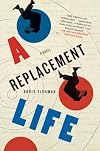
A marvelous debut novel from a writer who recently caught my eye with his riveting memoir called "Savage Feast" (2019). "A Replacement Life" is also quite autobiographical, although the names (and maybe certain other things) are changed. Boris Fishman's talent shines in both works.
In this novel, there is a moral dilemma, a love dilemma, an age-old dilemma of belonging and fitting in - for an immigrant (specifically here for an ex-Soviet Jewish person), and all this is crafted, with show more stirring insight, in the inimitable style of narration that draws you in from page one.
Here's an example of a poignant truth about numerous ex-Soviet immigrants in New York (all kinds, not just Jewish), offered by the author quite eloquently:
"These unlike people had been tossed together like salad by the cupidity of the Soviet government, and now, in America, they were forced to keep speaking Russian, their sole bond, if they wanted to understand each other.... The brethren who had remained in the old world had moved forward in history - they were now citizens of independent countries, their native languages withdrawn from under the rug, buffed, spit-shined, returned to first place, but here in Brooklyn, they were stuck forever in Soviet times. They have gotten marooned on a new island except for what their children would do..." show less
In this novel, there is a moral dilemma, a love dilemma, an age-old dilemma of belonging and fitting in - for an immigrant (specifically here for an ex-Soviet Jewish person), and all this is crafted, with show more stirring insight, in the inimitable style of narration that draws you in from page one.
Here's an example of a poignant truth about numerous ex-Soviet immigrants in New York (all kinds, not just Jewish), offered by the author quite eloquently:
"These unlike people had been tossed together like salad by the cupidity of the Soviet government, and now, in America, they were forced to keep speaking Russian, their sole bond, if they wanted to understand each other.... The brethren who had remained in the old world had moved forward in history - they were now citizens of independent countries, their native languages withdrawn from under the rug, buffed, spit-shined, returned to first place, but here in Brooklyn, they were stuck forever in Soviet times. They have gotten marooned on a new island except for what their children would do..." show less
Lists
Awards


You May Also Like


Associated Authors
Statistics
- Works
- 9
- Members
- 608
- Popularity
- #41,353
- Rating
- 3.2
- Reviews
- 15
- ISBNs
- 47
- Languages
- 2