

David Bezmozgis
Author of Natasha
About the Author
Image credit: Photo credit: David Franco
Works by David Bezmozgis
Associated Works
Object Lessons: The Paris Review Presents the Art of the Short Story (2012) — Introduction — 253 copies, 9 reviews
The New Diaspora: The Changing Landscape of American Jewish Fiction (2015) — Contributor — 17 copies
Tagged
Common Knowledge
- Birthdate
- 1973-06-02
- Gender
- male
- Education
- McGill University
University of Southern California (Cinema) - Occupations
- writer
filmmaker - Awards and honors
- Guggenheim Fellowship (2005)
- Nationality
- Canada
- Birthplace
- Riga, Latvia
- Places of residence
- Canada
- Associated Place (for map)
- Riga, Latvia
Members
Reviews

I can't remember how this ended up on my library wish list, and in reading the description as I was searching for a new audiobook to listen to, I wasn't sure it would be for me. I'm glad I gave it a chance, as it is a smart, thoughtful AND page-turning novel about morality, culpability, sacrifice, and identity.
Baruch Kotler is a former Soviet dissident who spent years in jail after being betrayed to the KGB by a "friend." Once released, he fled to Israel, where he became a notable show more politician. The book opens with Baruch in Yalta with his young mistress; their affair has just been exposed in the Israeli press, pay-back for his refusal to agree to the government's plan to withdraw from some settlements. While in Yalta, Baruch meets the man who betrayed him so many years ago.
In fewer than 250 pages, Bezmozgis paints a compelling portrait of a man at once undone by, and celebrated for, his imprisonment and subsequent re-emergence. I found the discussion of Jewish identity and the complex realities of Soviet, post-Soviet, Ukrainian, and Israeli society fascinating, especially given the current situation. The serious themes and dark history are alleviated by some dry humor and the real humanity of Baruch, the good and the bad, shines through. show less
Baruch Kotler is a former Soviet dissident who spent years in jail after being betrayed to the KGB by a "friend." Once released, he fled to Israel, where he became a notable show more politician. The book opens with Baruch in Yalta with his young mistress; their affair has just been exposed in the Israeli press, pay-back for his refusal to agree to the government's plan to withdraw from some settlements. While in Yalta, Baruch meets the man who betrayed him so many years ago.
In fewer than 250 pages, Bezmozgis paints a compelling portrait of a man at once undone by, and celebrated for, his imprisonment and subsequent re-emergence. I found the discussion of Jewish identity and the complex realities of Soviet, post-Soviet, Ukrainian, and Israeli society fascinating, especially given the current situation. The serious themes and dark history are alleviated by some dry humor and the real humanity of Baruch, the good and the bad, shines through. show less
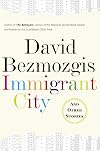
In David Bezmozgis’s immensely satisfying story collection, Immigrant City, echoes of the past are being heard in the present day, evoking memories both pleasant and painful as characters grapple with the implications of deeds left undone. Most of the characters are immigrants to Canada. Others are the children of immigrants. In each case it is a profoundly personal history that impacts the character’s perception of and approach to the situation he’s facing. In the title story, a young show more husband and father has damaged the door of his car and on the internet finds a replacement door suitable for his make and model offered for sale. He takes his four-year-old daughter with him on the excursion to the city’s west end and is both shaken and heartened when he encounters a haunting mirror image of his own immigrant past in the family of the Somalian man selling the door. “Little Rooster” is the story of a writer who, while sorting through his deceased grandfather’s papers, discovers evidence that the old man, a Latvian Jew who emigrated to Canada after WWII, may have had an affair. He then tracks down the woman’s daughter to find out more about what may, or may not, have happened, and in the process learns more than he’d bargained for. In “A New Gravestone for an Old Grave,” Victor Shulman travels to Riga, Latvia—the city of his birth—at the behest of his father, to oversee the erection of a new marker on his grandfather’s grave. Victor, who has done well for himself, lives a comfortable life in Los Angeles, and his resistance to the assignment his father has given him, he realizes, stems in part from his unwillingness to be reminded of his impoverished origins. And “The Russian Riviera” is the story of Kostya, a former boxer with a record featuring more failure than success who works as a bouncer at a high-end Toronto restaurant catering to Soviet immigrants. Like many immigrants, Kostya find himself at a confusing juncture, trapped between a past that’s dead and gone and a present that offers little chance of advancement, leaving him stagnating in a place where the talents he developed in the old country are of no use as he tries to improve his lot in the new. Broadly speaking, these are stories of discovery. Bezmozgis’s characters set out to fulfill an obligation or complete a task, mundane in nature, and in the process encounter something in themselves that had long been buried. The disclosures are both subtle and overt. The volume’s sustained brilliance resides in the gradual accumulation of detail that finally tips the character over the edge, from ignorance or denial to revelation. Throughout, Bezmozgis writes prose that sings in old-world cadences reminiscent of iconic Jewish writers like Saul Bellow and Bernard Malamud. This makes the book a quick and delightful read. But as we read them, the stories uncover deeper complexities about life, love and family, so when we reach the end, it is tempting to return to the beginning. Immigrant City is impressive from start to finish. Essential reading for fans of the contemporary short story and anyone interested in the literature of the 20th-century Jewish diaspora. show less

Bezmozgis has written a story akin to Matryoshka (Russian nesting) dolls. The story follows, on an individual level, each family member, their personal backstory and the tough choices they have faced. At the family unit level, the story presents a richly complex multi-generational family where differences can rock but never completely break the family bond. At the community level, we experience connections between other Latvian Jewish emigrants who also find themselves in limbo in Italy. At show more a country level, we experience, through the Krasnansky family, their life in Latvia under communism and, through their forced extended stay in Italy, a sense of dislocation, language, cultural, and societal barriers as they find ways to live and earn money while they wait for their immigration papers to come through. At a world level, we learn about the complex (and frustrating) red tape, which I am sure is just as much as maze now as it was in the 1970’s setting of this story. Bezmozgis, while a skilled storyteller, takes certain things for granted, like the reader having knowledge of Russian/ Soviet Jewish history. I also struggled to understand the focus of Bezmozgis’s story. The story seems to use the Krasnansky family as mere characters to represent a broader “emigrant experience” type of story. The story message is a good one, and the characters come across as more "real" than likeable (interpret that anyway you choose to). I can see how this story may have different meaning for different readers, just like how “The Free World” can mean different things to different people.
Overall, a good read if you are looking for a fictional read of a Russian emigration experience. show less
Overall, a good read if you are looking for a fictional read of a Russian emigration experience. show less

The set-up for the main action in David Bezmozgis’s second novel (and Giller Prize finalist), The Betrayers, takes only a few pages. Baruch Kotler, a minister in the Israeli government, and his young mistress Leora have left Israel for Ukraine, fleeing the scandal and resulting media frenzy that their exposed romance has unleashed. Kotler, born in the Soviet Union, a Jew who was initially denied permission to emigrate to Israel and instead jailed as a spy for the Americans, and whose show more eventual release and move to Israel made him a national hero, has made the curious decision to return to the land of his birth out of “nostalgia.” In Yalta, when they discover that the hotel has no record of their booking, Kotler makes a further curious decision: to return to the bus station and seek alternative accommodations from one of the locals who make a practice of meeting newly arrived tourists with a sign advertising rooms to let. They go with middle-aged Svetlana, another decision, made purely at random, that proves fateful because of the unresolved antagonism that, as it turns out, exists between Kotler and Svetlana’s husband, Vladimir, antagonism rooted in actions of fifty years earlier: the distant, tragic, but never to be forgotten past. From this compelling premise, Bezmozgis weaves a spellbinding tale in which past and present collide, in the process generating great narrative tension and a dizzying moral conundrum for Kotler, not to mention immense anguish and distress for all the main players. It would be unfair to give away more of the plot than that. Bezmozgis, whose unadorned prose in this book recalls the measured, old-world cadences of Jewish novelists like Bernard Malamud and Saul Bellow, draws a vivid if dispiriting portrait of present-day Ukraine, where infrastructure is in shambles and impoverished citizens compete with one another for government handouts and elusive tourist dollars. It will be difficult, however, for readers to shrug off the coincidence that sets the story into motion. Bezmozgis makes no attempt to cloak or apologize for the plot device that brings Kotler into uncomfortable proximity with a past that he is then forced to reassess. The reader must make of it what he/she will. show less
Lists
Awards


You May Also Like


Associated Authors
Statistics
- Works
- 5
- Also by
- 11
- Members
- 1,259
- Popularity
- #20,383
- Rating
- 3.7
- Reviews
- 45
- ISBNs
- 63
- Languages
- 7